
The marketing team thought the product was ready. The tech team thought it wasn’t. The CEO thought both had agreed. By Friday, the launch went live, with last month’s version. It wasn’t a technical glitch. It was workplace communication gone wrong; the quiet chaos that hides behind polite nods and half-read emails.
That’s how most problems in business start: not with bad intentions, but with missed information. Messages move fast, but meaning gets lost somewhere in between.
Let me offer a solution to these issues.
In this blog, I’ll help you understand how to:
- Build stronger employee communication that keeps everyone aligned.
- Apply simple, real-world habits that make collaboration seamless.
- Use internal communication tools that turn confusion into clarity.
Fix the talk, and everything else starts falling into place.
Sounds good? Let’s start with the basics:
What Is Workplace Communication?
Workplace communication is the way information, ideas, and feedback move through your organization, between managers, teams, and individual employees. It includes every exchange, from one-on-one talks and project updates to digital chats and company-wide announcements.
Good employee communication goes beyond messages; it’s about clarity, trust, and shared understanding. When internal communication flows freely, teams collaborate better, decisions move faster, and everyone feels involved.
Whether it’s a quick note on Slack, a video meeting, or a thoughtful feedback loop, the goal is always the same: keep people connected and informed.
And I must tell you, choosing the right communication channels and promoting an open communication culture helps build psychological safety, genuine team communication, and lasting engagement.
11 Smart Tricks to Foster Workplace Communication
Strong workplace communication doesn’t come from fancy tools or long policies; it grows from genuine human connection. When teams talk openly, listen actively, and share ideas freely, everything runs smoothly.
You start to see fewer misunderstandings, faster decisions, and a more positive energy across departments.
Whether you manage five people or fifty, these simple, human-centered habits can turn ordinary conversations into lasting trust.
1. Hold Regular One-on-One Meetings
Let’s be honest—emails and team chats can’t replace a good one-on-one talk. A few minutes of focused conversation can do more for employee communication than a dozen messages in Slack. These short catch-ups help you understand what’s really going on with your team, not just what’s written in reports.
Where many managers trip up:
- They assume employees will speak up if something’s wrong. Most don’t.
- Conversations happen only when performance dips, which makes people defensive.
- In remote settings, those casual “how’s everything?” moments often disappear completely.
Why it’s worth the effort:
When you meet regularly, employees feel seen and valued. You create a safe space for open two-way communication and honest feedback. Over time, that trust becomes the heartbeat of effective communication at work. It strengthens your feedback loop and builds the kind of collaboration and trust that makes teams stronger.
Make your one-on-ones count:
- Keep it relaxed and personal—this isn’t a performance review.
- Ask simple questions like, “What’s been going well?” or “What could make your week easier?”
- Take notes and follow up on what was discussed.
- If you’re remote, turn on your camera—seeing faces helps rebuild that open communication culture.
As one HR leader put it, “Consistency in communication shows care. Silence breeds assumptions.” Regular one-on-one meetings show that you value connection over control—and that’s what true employee engagement looks like in action.
Looking to know more about employee engagement? Here’s a quick video for you:
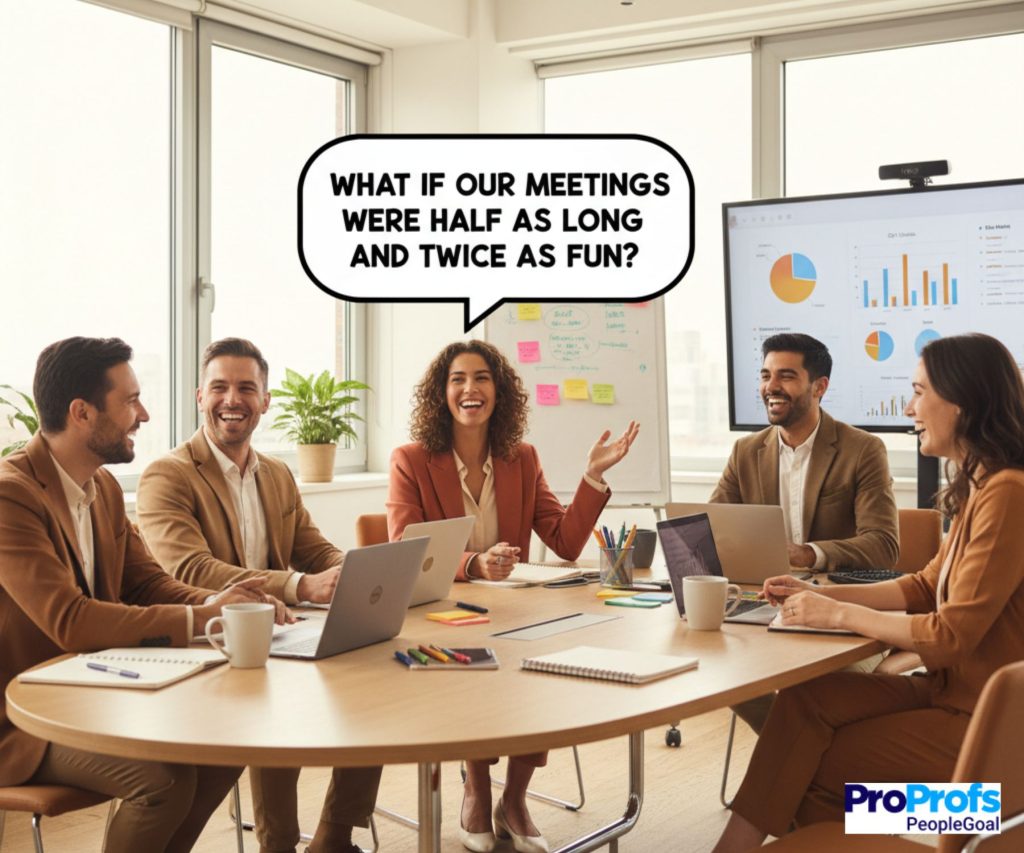
2. Run Team Meetings That People Actually Enjoy
Team meetings are meant to bring people together, not wear them out. The best ones feel like open discussions, not speeches. When employees can question, share, and respond freely, workplace communication starts to flow naturally. A few minutes of honest exchange often reveal more than a dozen progress slides ever could.
Why most meetings miss the mark:
- They’re too one-sided—leaders talk, everyone else listens.
- Questions are brushed aside or saved for “later,” which never comes.
- People stay quiet, unsure if it’s safe to speak their mind.
Turning meetings into real conversations:
Give every person a reason to join, not just attend. Pause between updates and ask, “What do you think?” or “Would this work better another way?” Those small pauses invite two-way communication and create genuine team communication.
Ways to make your meetings feel open:
- Begin with something light, like a quick win or a story from the week.
- Keep an open slot for Q&A—no skipping it, even when time runs tight.
- Rotate who leads the discussion to build transparent leadership communication.
- Use chat tools or polls for hybrid teams to keep everyone involved.
Meetings that encourage curiosity build confidence and psychological safety. People start sharing ideas instead of holding them back, and that’s when employee engagement grows. When meetings are built on trust and openness, you don’t just exchange updates—you strengthen effective communication at work.
3. Turn Feedback Into a Two-Way Street
Feedback isn’t meant to travel in one direction. When it does, people stop talking—and start guessing. Great workplace communication happens when feedback flows freely between leaders and employees.
It’s how teams stay honest, aware, and connected. In short, two-way feedback turns communication from a task into a conversation.

Why feedback often falls flat:
- Performance reviews happen once a year, long after the real issues have appeared.
- Employees stay quiet, assuming their opinions won’t change anything.
- Managers collect feedback but never circle back with results.
What actually works:
Make feedback short, simple, and frequent. A quick employee feedback survey, a Slack poll, or even a five-minute chat can spark big insights. The key is to listen and then show people what changed because of their input. That visible response builds trust faster than any team memo.
Try building your own feedback rhythm:
- Ask, “What’s one thing we could do better as a team?” after big projects.
- Share what you heard and how you’ll act on it.
- Celebrate employees who give thoughtful suggestions—it encourages others to speak up.
- Mix formal surveys with casual check-ins to keep the feedback loop alive.
When feedback becomes part of everyday life, people stop holding back and start engaging. The result is a more open communication culture, stronger employee engagement, and genuine two-way communication that helps everyone grow.
4. Set Clear Expectations and Explain the “Why”
One of the biggest causes of poor workplace communication isn’t disagreement—it’s confusion. Employees might know what to do, but not why they’re doing it. When the purpose behind a task or decision is unclear, motivation fades, and mistakes multiply.
As an employer or HR leader, your job isn’t just to share instructions—it’s to connect the dots between actions and meaning.

Where communication goes off track:
- Managers hand out tasks without explaining the bigger picture.
- Teams work in silos, unsure how their work contributes to company goals.
- Employees feel left out of decisions, so their effort becomes mechanical instead of motivated.
How to bring clarity and purpose together:
People respond best when they understand the “why” behind the “what.” When you link a project to a real business or cultural goal, employees take ownership. They see how their work fits into something larger than their checklist. Clear expectations build collaboration and trust, and clarity builds confidence.
Try weaving this approach into your daily employee communication:
- Before assigning a task, share the goal it supports. For example: “This update helps us improve customer experience, which means fewer support tickets.”
- Confirm understanding instead of assuming it. Ask, “Does this make sense?” or “How do you see your part in this?”
- Use consistent communication channels—don’t leave vital updates scattered across emails, chats, and calls.
- Recognize when someone goes beyond expectations and share why their work mattered.
A quick example:
A manager once started every project kickoff with a slide titled “Why This Matters.” It became the team’s favorite part—not because of the data, but because they understood how their effort tied to the company’s success. That simple step turned routine communication into effective communication at work—focused, transparent, and energizing.
Clarity is contagious. When leaders communicate the “why,” employees don’t just follow—they commit. And that’s how strong internal communication becomes the quiet force behind real employee engagement.
5. Build a Culture Where People Feel Safe to Speak Up
Every company says it wants open workplace communication, but few realize that openness only exists when people feel safe to tell the truth.
This is where psychological safety comes in; the sense that employees can ask questions, share ideas, or admit mistakes without fear of embarrassment or blame. It’s the foundation of real two-way communication and lasting employee engagement.

Why safety matters more than slogans:
When employees worry about being judged or ignored, they stay silent. That silence costs companies valuable ideas, honest feedback, and early warnings about problems. Teams that lack trust don’t just miscommunicate—they stop communicating altogether.
How to create genuine trust and openness:
- Model humility as a leader. Admit when you don’t have all the answers. It shows that imperfection is normal.
- Invite disagreement. Say, “I’d like to hear different perspectives on this.” When employees see that their views are welcomed, they participate more.
- React with curiosity, not criticism. If someone raises a tough point, thank them first before diving into solutions.
- Hold “no-blame” reviews. Focus on what went wrong in the process, not who’s at fault.
A quick reflection:
Google’s Project Aristotle found that high-performing teams all shared one thing—psychological safety. People worked better together when they knew they could speak up freely. The same applies to every organization, large or small.
Your communication goal as a leader:
Turn fear into trust. Replace hierarchy with dialogue. When employees believe their voice truly matters, they’ll bring you not just problems but solutions. Over time, that courage spreads, creating a culture of open communication where honesty, innovation, and connection thrive.
A safe space to talk is the most powerful form of internal communication—because when people feel heard, they stop holding back and start helping your business move forward.
6. Listen Like You Mean It
Most communication problems don’t come from what’s said; they come from what isn’t heard. In busy workplaces, people often listen just enough to reply, not enough to understand.
Yet genuine active listening is one of the simplest ways to strengthen team communication and improve communication in the workplace. It tells employees, “Your voice matters.”

Where listening breaks down:
- Managers multitask during conversations—half an eye on emails, half on the person talking.
- Employees feel dismissed when their ideas are met with quick answers instead of real attention.
- Feedback meetings turn into monologues instead of discussions.
How to practice active listening every day:
- Give full attention—close the laptop, put the phone aside, and look at the person speaking.
- Show interest through short affirmations like “I see” or “Go on.”
- Paraphrase what you heard: “So you’re saying the new schedule feels rushed—did I get that right?”
- Ask open questions that invite reflection instead of yes/no answers.
Here’s what happens when you start listening well:
Conversations shift from surface-level updates to real understanding. Conflicts de-escalate faster because people feel acknowledged. Teams begin to collaborate naturally, without reminders or forced check-ins.
Example:
One HR director at a mid-size company started ending her one-on-one meetings by asking, “What haven’t I asked that you wish I had?” It became the question everyone looked forward to, because it showed she cared about the whole picture, not just the agenda.
Active listening isn’t flashy, but it’s transformative. It builds empathy, strengthens collaboration and trust, and helps leaders communicate with authenticity.
In the end, people don’t just want to be informed—they want to be understood. Listening well is how you make that happen.
7. Match the Message to the Medium — Stop Letting Your Tools Talk Over Each Other
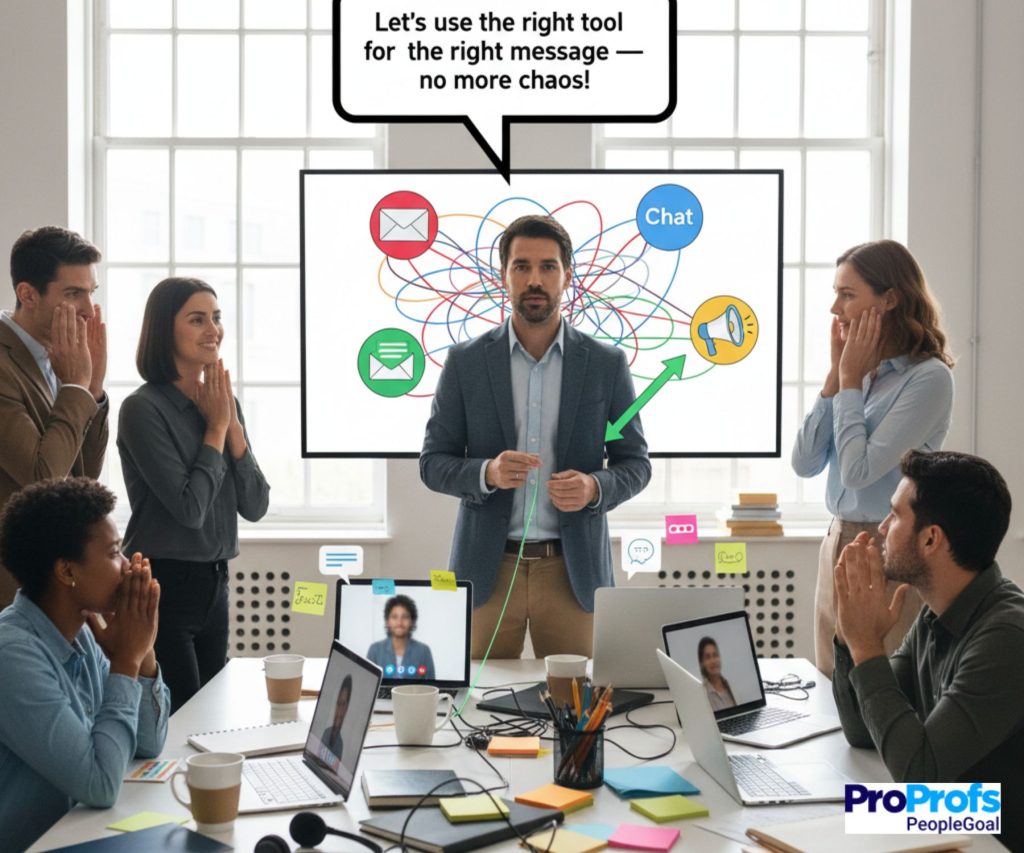
If your team feels like it’s drowning in pings, emails, and “quick calls,” you’re not alone. Modern workplace communication can feel like a noisy kitchen—everyone’s talking, but no one’s hearing the same thing.
The trick isn’t to add more tools; it’s to tame them. When you match the message to the right medium, your internal communication stops being chaos and starts becoming clarity.
Where things usually fall apart:
- Urgent updates vanish in a sea of unread emails.
- Casual chats turn into meeting marathons that drain everyone’s time.
- Important files live in random DMs that no one can find later.
Sound familiar? You’re not facing a communication problem—you’re facing a channel problem.
How to bring order to the noise:
- Use employee communication software for quick questions, small wins, or updates that keep the energy flowing.
- Reserve email for formal or cross-department messages that need a digital paper trail.
- Make meetings sacred—only for brainstorming, problem-solving, or decisions that need live input.
- Keep projects visible with tools like ProProfs Project or Trello, so everyone knows who’s doing what.
A quick story:
One HR manager joked that her inbox had turned into a graveyard for unread updates. So she created a rule: “If it’s urgent, message me. If it’s official, email me. If it’s something we’ll forget, document it.” Within two weeks, her team stopped missing deadlines—and started thanking her for the peace and quiet.
Here’s the real takeaway:
Communication overload kills clarity. The more scattered your tools, the more disconnected your people feel. A smart internal communications strategy isn’t about using every app—it’s about making each one count.
So ask yourself: does every message in your workplace really deserve a meeting? When you start using the right communication channels, you’ll notice fewer “Did you see that?” messages—and a lot more work getting done.
Before moving forward, check out this quick video on employee engagement software and how it works for you:
8. Let Tech Do the Talking (So You Don’t Have To Repeat Yourself)
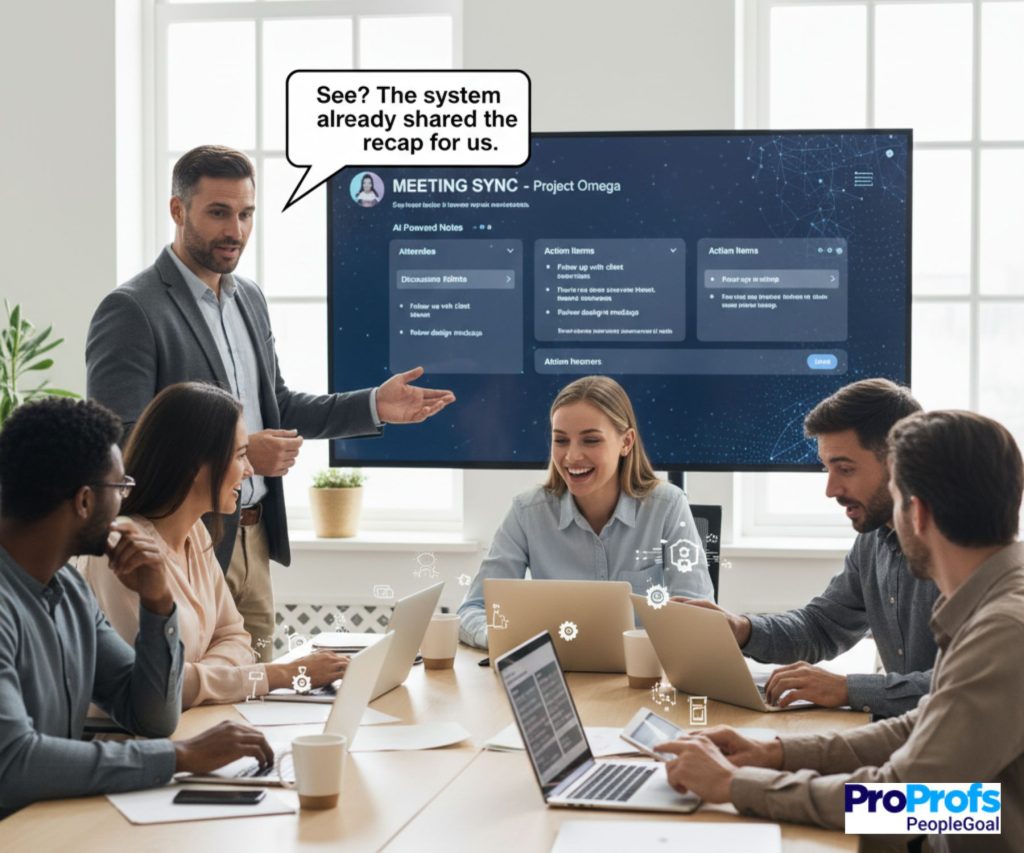
In today’s hybrid offices, workplace communication runs through a web of apps, messages, and notifications. Yet somehow, the more tools we use, the harder it feels to stay aligned.
The real trick isn’t adding another platform—it’s getting your technology to work for you, not against you.
Where teams hit the wall:
- Every update lives in a different place, and no one knows which one matters most.
- Tools are introduced faster than people can learn them.
- Important company-wide updates get buried under emojis and “quick FYIs.”
Sound familiar?
In such a case, you’re not short on communication—you’re short on clarity.
How to make tech your communication ally:
- Keep it simple. Choose a few tools that everyone actually uses and loves—Slack or Teams for chats, ProProfs Project or Notion for project clarity, Zoom for human connection.
- Automate what drains time: meeting reminders, onboarding steps, or internal alerts.
- Use analytics to see which posts people are reading from your updates. If not, change how or where you share them.
- Blend communication tools so updates reach employees wherever they are, without spamming them.
Example:
One logistics firm realized half its team never opened company emails. They switched to a mobile-friendly internal app that pushed short, visual updates instead. Within weeks, engagement shot up, and the HR team spent less time chasing replies.
The smart leader’s takeaway:
Good employee communication isn’t about having the fanciest system—it’s about reducing friction. Technology should clear the fog, not add to it. When you use it right, messages reach people at the right time, feedback loops open naturally, and employees stop saying, “I didn’t get the memo.”
That’s when tech becomes invisible—and your internal communication strategy finally clicks into place.
9. Bring Back the Human Side of Work
Not every great conversation has to happen in a meeting room or Slack thread. Sometimes, the most effective workplace communication starts with a laugh over coffee or a chat about weekend plans.
Social connection is the quiet fuel behind strong teams—it builds collaboration and trust, keeps morale high, and makes people actually want to communicate.
Why many workplaces feel disconnected:
- Hybrid and remote setups have erased the casual hallway hellos.
- Leaders undervalue “non-work” talk, seeing it as wasted time.
- Employees hesitate to reach out unless it’s strictly about tasks.
As a result, teams that know each other’s job titles, but not each other as people. And when people don’t feel connected, communication becomes mechanical.
How to make work feel human again:
- Create informal spaces for interaction: a casual Slack channel (#coffeechat or #random), weekly team huddles, or 10-minute “off-topic” segments in meetings.
- Host small virtual hangouts—online trivia, “show and tell” sessions, or quick icebreaker Fridays.
- Celebrate together. Birthdays, work anniversaries, or small wins are perfect chances to bring teams closer.
- Encourage leaders to show up, too—when managers join casually, employees feel it’s safe to be themselves.
- Improve internal communication by creating quick training clips or explainer content using a video maker tool
Here’s an example worth remembering:
At a mid-sized tech firm in Austin, HR noticed rising turnover and plummeting engagement scores after moving to hybrid work. They discovered employees felt “invisible” to one another—interactions were purely transactional.
So, they launched “Coffee Buddies,” a weekly random pairing that matched employees across departments for a 15-minute chat. Within three months, participation hit 80%. Conversations sparked between engineers and marketers, mentorships formed naturally, and project collaboration improved without any new tool or policy.
Surveys showed a 25% boost in “sense of belonging.”
Why it works:
When employees connect as humans first, team communication becomes easier and more honest. People share ideas faster, flag problems earlier, and resolve conflicts more gracefully.
The best open communication culture isn’t built in spreadsheets—it’s built in small, genuine moments of connection. Bring those back, and you’ll watch your internal walls crumble in the best possible way.
10. Turn Feedback Into a Habit, Not a Headache
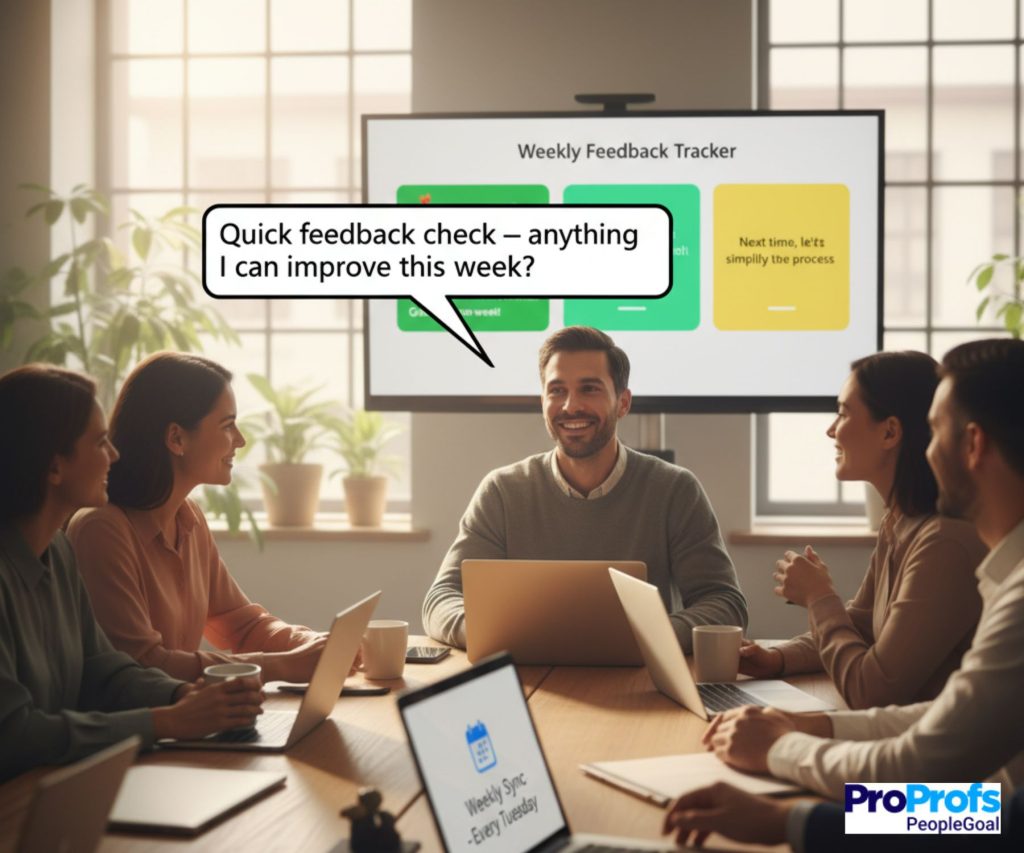
Ask any manager what they wish employees did more, and they’ll say “communicate.” Ask employees the same question, and they’ll say “listen.” That’s why employee feedback, both giving and receiving it, is the heartbeat of good workplace communication.
When feedback becomes a regular, two-way rhythm instead of a rare event, it builds trust, drives employee engagement, and keeps teams aligned.
Why most feedback efforts fall flat:
- It only happens during annual reviews, when it’s too late to fix anything.
- Managers focus only on what went wrong, forgetting to recognize what went right.
- Employees see feedback as judgment instead of growth.
How to build a feedback culture that actually works:
- Make feedback frequent and bite-sized. A quick “Great job clarifying that point in the meeting” carries more impact than an annual summary.
- Keep it specific and actionable—focus on behaviors, not personalities. For example: “Your weekly updates are clear and helpful, but let’s try summarizing key takeaways at the top.”
- Create space for two-way communication. Ask, “What feedback do you have for me?” to model openness.
- Use tools like PeopleGoal and ProProfs Survey Maker to gather input and close the feedback loop.
The key takeaway:
Feedback isn’t a performance form; it’s a conversation. When done with empathy and consistency, it builds a culture of trust and collaboration where employees feel heard, valued, and motivated to grow.
So, treat every piece of feedback as a bridge, not a verdict. The more you normalize it, the smoother your communication in the workplace will become—because nothing silences a team faster than the feeling that their words don’t matter.
11. Train People to Communicate Better — and Show Them How It’s Done
Strong employee communication doesn’t happen by accident. It’s a skill—and like any skill, it needs practice, guidance, and good examples. When leaders invest in communication training and model what great communication looks like, it sets the tone for the entire organization. Employees learn not just what to say, but how to say it with clarity and respect.

Why communication training is often overlooked:
- Leaders assume people “just know how to talk.”
- Training budgets go to technical skills, not soft skills.
- Managers expect others to communicate well while failing to lead by example.
How to build communication confidence across your company:
- Offer short, practical sessions on active listening, email etiquette, or giving feedback. Keep it real—use actual workplace examples.
- Run workshops on cross-cultural communication if your teams are global.
- Teach leaders to handle difficult conversations with empathy and composure.
- Create a “Communication Handbook” or internal guide outlining your internal communication strategy, tone guidelines, and preferred tools.
A real-world example:
A consulting firm in Chicago realized client satisfaction was dropping, not because of poor delivery, but because teams weren’t communicating well internally. They launched a company-wide initiative called Speak to Lead.
It included monthly workshops on public speaking, listening labs where managers practiced one-on-one conversations, and leadership “office hours” where employees could ask anything without hierarchy.
Within six months, project turnaround times improved, cross-team friction dropped, and employee surveys showed a 40% rise in confidence around communication.
Why this works:
Employees mirror what they see. When leaders model transparent leadership communication, people follow suit. When HR prioritizes communication skills, it signals that listening and empathy are as valuable as hitting quarterly targets.
Training people to communicate isn’t about scripts or slogans—it’s about consistency. When communication becomes a shared standard, not an afterthought, it transforms your culture from the top down.
In 2026, that’s what defines employee communication best practices—clarity, authenticity, and leaders who don’t just talk about communication, but live it every day.
Real Life Case Study
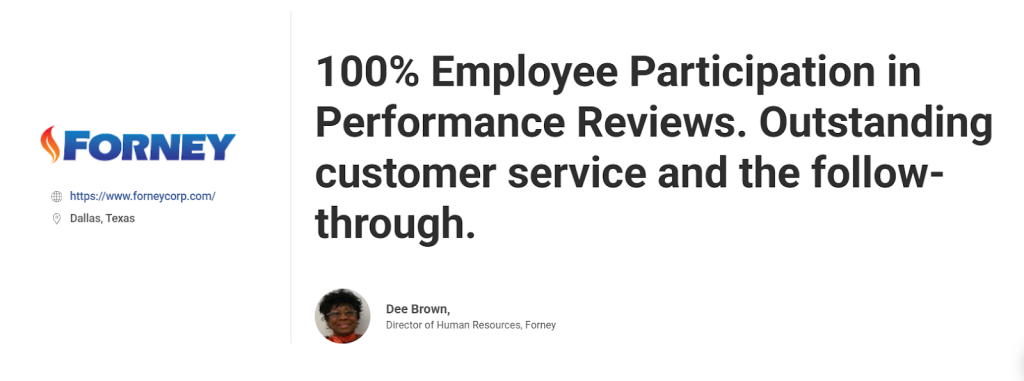
Forney Corporation: Achieved 100% employee participation in performance reviews after adopting a customizable, user-friendly performance management software.
Talk Less, Connect More — Let Communication Work for You
In the end, great workplace communication isn’t about sending more messages. It’s about creating conversations that move people—conversations built on trust, clarity, and purpose. When your team knows what’s happening, why it matters, and feels safe to speak up, everything else: engagement, productivity, culture, falls into place.
And here’s the best part: you don’t have to do it all manually. The right employee engagement tools can take the heavy lifting off your plate. Think real-time updates on Slack or Teams, automated feedback loops, and company-wide updates that actually reach everyone.
With smart software and a human-first mindset, communication stops being noise—and becomes the spark that keeps your workplace alive, connected, and unstoppable.
Ready to 3x Your Teams' Performance?
Use the best performance management software to align goals, track progress, and boost employee engagement.