

The most effective performance reviews do not have to feel like a yearly headache. Let me make it easy for you.
In this blog, I am sharing 50+ practical performance review tips to help you plan those dreaded sessions well, involve employees, deliver feedback clearly, stay fair, and turn every conversation into a real growth plan.
But before that, here’s a quick video I recorded to help you get a better idea of the subject:
Now, let’s begin with where it all begins.
Preparation and Planning
Preparation and planning are the quiet mechanics behind a review that feels fair and useful, not tense or vague. When you do this stage well, the meeting itself becomes a clear, grounded conversation about growth instead of a scramble for facts.
1. Set Clear Expectations Early So Everyone Knows the Target
Great reviews begin on day one. When you define what “good” looks like in plain, measurable terms, employees spend the year aiming at something real, not guessing your standards. That clarity sets up effective performance reviews because the conversation later is about results, not interpretations.
Example: At the start of a quarter, a manager and a content marketer agree on three outcomes: four publish-ready pieces each month, no more than two revision rounds per piece, and steady SEO accuracy. The manager revisits these in monthly check-ins and adjusts if priorities shift. By review time, the employee already knows where they stand, and both sides are working off the same scoreboard.
2. Give Regular Feedback So Reviews Feel Like a Recap, Not a Reveal
A review should never be a surprise package. Frequent feedback keeps performance on track and makes the formal meeting a calm summary of what both sides saw all year. This is one of the simplest performance review best practices, and it protects trust.
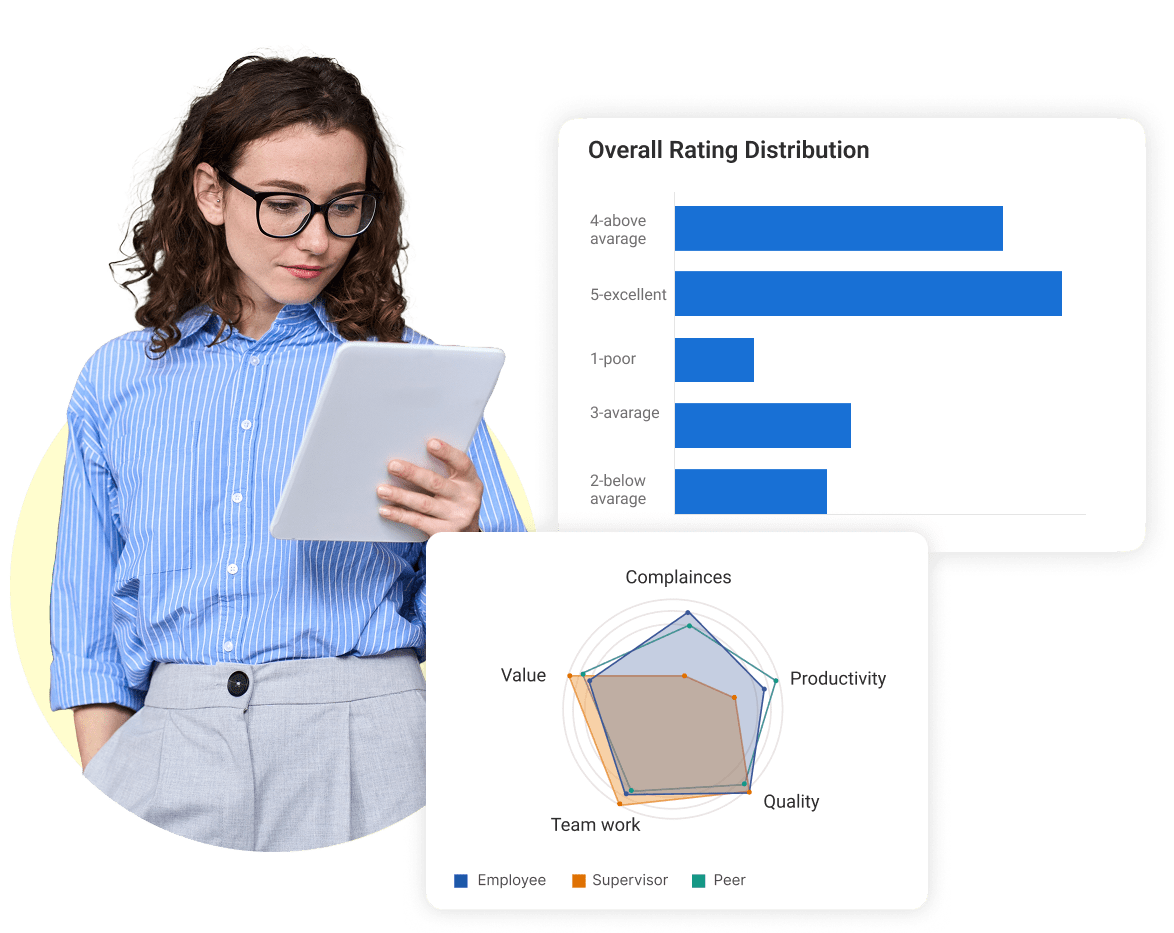
Example: In February, a sales manager notices a rep’s follow-ups are slipping. The issue is addressed in a one-on-one, with two real instances discussed and a tighter routine agreed on. Over the next months, progress is nudged and praised in real time. In the annual review, the rep is not blindsided. Both review the improvement arc and set the next goal.
3. Review New Hires Early to Shape Strong Habits While They Are Fresh
Do not wait a year to course-correct. A 3 to 6 month review helps new employees settle faster and prevents small misalignments from turning into long-term weak spots.
Example: A customer success associate reaches month four. The manager reviews onboarding goals, live client notes, and early retention signals. The associate’s tone and clarity are praised, while gaps in internal documentation are flagged. A better note format is demonstrated, a 30-day practice goal is set, and a follow-up is booked. By the next cycle, the habit is locked in.
4. Share Review Topics Ahead of Time to Invite Better Thinking
When employees know the agenda early, they reflect more honestly and bring evidence, not excuses. It turns the meeting into a dialogue instead of a memory test, which improves the conduct of employee evaluations.
Example: Two weeks before a review, a manager shares a short list of focus areas: goal progress, cross-team work, delivery quality, and growth aims. The employee arrives with a structured self-summary and project outcomes. The discussion goes deeper because neither side is scrambling to recall events on the spot.
5. Refresh Job Descriptions Before Reviews So You Judge the Real Role
Roles change quietly, then explode at review time if you do not update the baseline. A quick job-scope refresh keeps standards fair and stops you from rewarding or penalizing the wrong work.
Example: A marketing ops specialist was hired primarily for reporting but now runs automation half the week. Before the review, the specialist drafts a revised role snapshot. The manager confirms the new scope, updates success measures, and evaluates performance against the work actually carried out.
6. Anchor the Review to Role Standards to Keep Feedback Clean and Objective
Using the job description as your map prevents drifting into personal preference. It also helps you spot where the role itself needs to evolve. This is a core employee performance appraisal best practices move.
Example: In the meeting, a manager walks through each role’s responsibilities. For stakeholder updates, the expected weekly rhythm is compared with real project behavior. For mentoring juniors, peer notes are reviewed. The employee sees a fair, role-based assessment rather than a mood-based one.
7. Bring Objective Data So the Review Rests on Proof, Not Hunches
Data steadies judgment. Track the few metrics that truly signal impact in that role, then use them to ground the conversation. Good performance feedback techniques always start with evidence.
Example: While reviewing a support lead, a manager pulls resolution time, satisfaction scores, and escalation accuracy. The dashboard shows a 12 percent speed gain and strong CSAT, but a Q2 dip in escalation quality. The manager praises the growth, then examines the dip using real cases and agrees on a fix.
8. Track Performance Lightly All Year So You Capture the Full Story
Memory favors the recent and the loud. A simple running log of wins, setbacks, and learning moments gives you a true year-long view and makes performance review tips like “avoid recency bias” easy to apply.
Example: After major sprints, a manager adds short notes to a private log. At review time, the full arc is visible: a strong Q1 delivery, a tough Q2 outage recovery, quiet mentoring in Q3, and a late-year slowdown tied to shifting requirements. The review reflects the whole year, not just the last month.
9. Hold Reviews Live So Tone, Context, and Questions Land Right
Written-only reviews can feel cold and final. A live meeting, in person or on video, lets tone and context land right. That is essential for effective performance reviews in remote teams, too.
Example: A manager schedules a video review with cameras on. Notes are shared, pauses are built in for questions, and any uncertainty about a rating is addressed with specific examples in the moment. The meeting ends with clarity and alignment.
10. Protect the Setting So the Employee Feels This Conversation Matters
A rushed or noisy review signals that the employee is an afterthought. A focused setting says the opposite and makes hard feedback easier to accept.
Example: A manager books a quiet room for 75 minutes, blocks the calendar, and silences notifications. The employee is encouraged to do the same. With no pressure to rush, they cover results, root causes, and next goals. The employee shares workload strain, and priorities are adjusted together.
Now that we know how to set the stage in Preparation and Planning, let’s step into Employee Involvement and Two-Way Feedback, where performance reviews become something employees help shape, not just receive.
Employee Involvement and Two-Way Feedback
The best reviews feel like a joint investigation into what worked, what did not, and what comes next. When employees participate fully, the review stops being a verdict and starts becoming a growth tool, which is the heart of effective performance reviews.
11. Start With the Employee’s Self-Review to Spark Ownership and Honest Context
Opening with the employee’s view shifts the tone from defense to partnership. It shows how they see their impact and where their self-awareness is sharp or blurry. This is one of the simplest performance review tips for setting trust early and keeping the rest of the conversation grounded.

Example: In an annual review, an employee opens with a short self-summary: a faster vendor onboarding process, a successful interim lead stretch during a launch, and one missed stakeholder update during a hectic month. The manager then adds observations. Because both sides start from the same map of wins and gaps, the meeting moves quickly into “what to keep” and “what to fix,” without tension.
12. Let Employees Lead the First Half to Turn Reviews Into a Two-Way Narrative
When employees present first, they own the arc of their performance instead of waiting for a score to drop. It also surfaces contributions that managers might miss in fast-moving or hybrid teams.
Example: A remote employee brings a five-minute “year story” to the review: one redesign that lifted sign-ups, one project that slipped due to shifting specs, and one handoff improvement that saved time. The manager listens, asks two clarifying questions, and then shares their notes. The review feels like building a shared timeline, not defending a rating.
13. Invite Upward Feedback to Improve Management and Unblock Performance
A review is incomplete if feedback only flows downhill. Asking for upward input shows maturity and often reveals friction the employee was carrying quietly. It also strengthens a feedback culture that lasts beyond review season.
Example: Mid-review, the manager asks what support would help most. The employee explains that midweek priority changes derail focus. The manager recognizes the pattern, agrees to lock weekly priorities on Monday unless there is a true emergency, and sets a quick “change-note” rule for any swaps. The employee leaves with a clearer runway, and the team’s workflow improves.
14. Keep the Review Conversational So Employees Engage Instead of Enduring
Reviews become useless when they turn into speeches. A conversational rhythm lets employees process, question, and add nuance. That is how employee evaluation stays accurate, not performative.

Example: A manager notes that delivery was strong, but collaboration dipped on one launch. Instead of pushing ahead, they ask what happened. The employee points to unclear decision ownership and repeated brief changes. They agree that future kickoffs will name one decision owner in writing. The review ends with a practical process fix, not a vague “be more collaborative” note.
15. Hold Regular Micro Check-Ins to Make Formal Reviews Low-Stress and Accurate
One big review cannot carry a year of silence. Short, regular check-ins keep goals fresh and feedback timely. They also make formal reviews feel like a recap of a journey already discussed.
Example: A manager runs monthly 20-minute growth chats. Early overload gets corrected in March, a skill gap gets addressed with mentoring by June, and progress is tracked along the way. When the annual review arrives, both sides already know the story, so the discussion stays calm and future-focused.
16. Encourage a Shared Performance Log to Capture the Full Year, Not Just the Loud Parts
A light log keeps both sides honest and prevents recency bias. It also gives employees a place to record invisible work that might never show up on dashboards.
Example: An employee keeps a simple monthly record: a client rescue that prevented churn, a workflow tweak that cut onboarding time, and a stretch project that built a new skill. The manager keeps parallel notes. In the review, they compare timelines and build a complete year view. The evaluation feels fair because it reflects steady impact, not just recent headlines.
Now that we have seen how to make reviews a shared, two-way process, let’s move into Effective Communication and Feedback Delivery, where the words, tone, and structure decide whether feedback actually changes performance.
Effective Communication and Feedback Delivery
Even the most accurate evaluation can fall flat if it is delivered poorly. This category focuses on performance feedback techniques that keep employees receptive, clear-headed, and motivated, which is the real engine behind effective performance reviews.
17. Open With Warmth to Lower Defenses and Invite Real Conversation
The first few minutes shape everything that follows. A warm, respectful opening reduces tension and signals that the review is meant to help, not corner. It also makes it easier for the employee to stay present through tougher parts of the discussion, instead of mentally bracing for impact.
Example: A manager starts by acknowledging a concrete win from the year, then says, “I want this to be a clear look at what worked, what did not, and how we build your next step.” The employee relaxes, stops waiting for a hidden blow, and begins speaking openly instead of giving safe, short answers.
18. Balance Praise and Critique to Keep Feedback Fair and Motivating
A review that only highlights gaps feels lopsided, even when the gaps are real. Naming strengths alongside improvements shows fairness, reinforces the right behaviors, and keeps the employee motivated to act on the tougher feedback. This balance is a quiet hallmark of strong performance review best practices.
Example: In a quarterly review, a manager first calls out reliable delivery and strong client trust, then shifts to two specific areas for growth. The employee leaves with a clear sense of what to keep doing and a focused plan for what to improve, rather than carrying only the weight of criticism.
19. Be Direct About Gaps So Employees Know Exactly What Must Change
Vague criticism creates vague improvement. Direct feedback, stated calmly and tied to clear standards, tells employees where the line is and why it matters. It also prevents misunderstandings and keeps the conversation honest, which is central to conducting employee evaluations with credibility.
Example: A manager states that deadlines were missed in five of eight cycles, explains how it affected dependent teams, and avoids fuzzy phrases like “be more proactive.” The employee understands the exact issue and its cost, so the next steps feel necessary rather than optional.
20. Pair Each Critique With a Concrete Fix So Improvement Feels Possible
Pointing out a problem without showing a way forward leaves people stuck or resentful. Practical fixes turn sharp feedback into usable coaching. They also signal that the review is about growth, not punishment, which makes change more likely.
Example: A manager notes that stakeholder updates were unclear, then introduces a simple weekly format: one paragraph on progress, one on risks, and asks. They agree to review the next two updates together. The employee walks out knowing what “better” looks like and how to reach it.
21. Avoid Promising Outcomes You Cannot Guarantee to Protect Trust
Performance reviews often drift into raises, promotions, or role changes. The right move is to be transparent about what performance supports and what still depends on business decisions. Over-promising may feel kind in the moment, but it damages trust later.
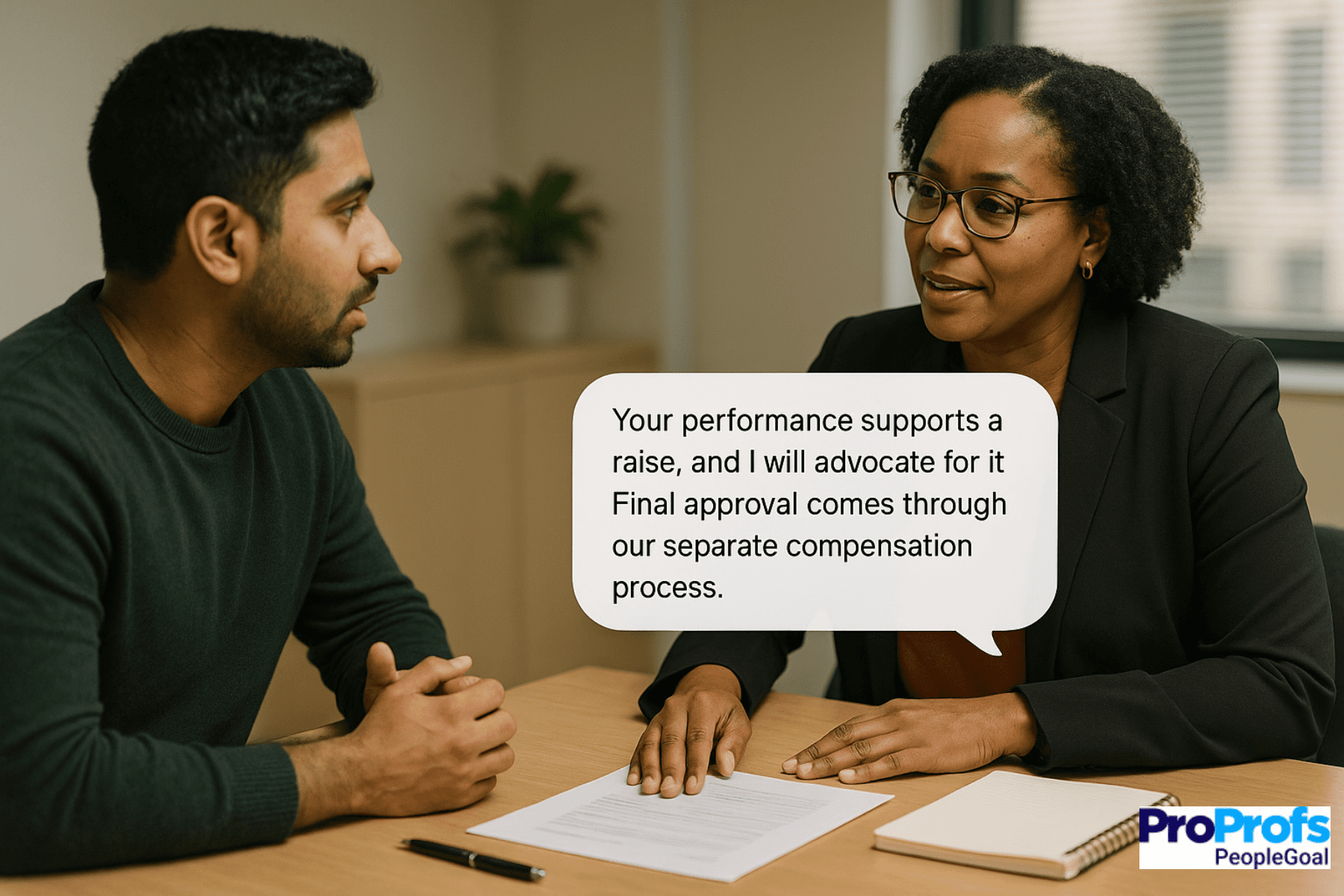
Example: When asked about a raise, a manager says performance strongly supports it, and they will advocate for it, but explains that final approvals happen in a separate compensation process. The employee leaves informed, not misled, and does not build expectations on guesswork.
22. Keep Feedback Individual to Prevent Toxic Comparisons
Comparing employees to each other poisons morale and teamwork. Effective performance reviews measure people against role goals and their own progress, not against a coworker’s pace or style. This keeps feedback useful, fair, and actionable.
Example: Instead of saying, “Others handle this faster,” a manager points to the agreed target and shows how the employee tracked against it over the quarter. The employee sees a clear benchmark without feeling humiliated or pitted against peers.
23. Welcome Pushback and Questions to Strengthen Clarity and Buy-In
Questions and disagreements are not a threat. They are proof that the employee is engaged. When a manager welcomes pushback calmly, they turn resistance into clarity and strengthen commitment to the final plan.
Example: An employee challenges a rating on a project. The manager walks through the evidence, listens to the missing context, and agrees to re-check one data point after the meeting. The employee feels heard, and the outcome feels earned rather than imposed.
24. Use a Simple Structure for Tough Feedback to Keep It Factual
Frameworks like Situation, Behavior, Impact keep difficult feedback clean and specific. They stop the conversation from drifting into personality judgments and help the employee see exactly what happened and why it mattered.
Example: A manager explains that in last month’s client demo, the employee interrupted the client three times, which caused the client to disengage and delayed resolution. The employee sees a clear event, a clear behavior, and a clear impact, so the fix feels straightforward.
25. Describe Behaviors, Not Personality, to Make Feedback Actionable
People cannot change a label. They can change an action. Focusing on behavior keeps the review respectful and gives the employee something concrete to improve, which is one of the most reliable performance review tips for real progress.
Example: A manager points to late reports and inconsistent data checks, rather than calling the employee careless. The employee knows what to adjust in their process instead of wasting energy defending their character.
26. Back Big Points With Evidence to Remove Doubt and Debate
Evidence turns feedback into truth that employees can work with. It also protects against bias, since the review is tied to real events and outcomes rather than mood.
Example: A manager cites two missed handoffs, one customer complaint, and a trend showing quality dips in a specific month. They connect each point to the performance standard. The employee may disagree with the rating, but cannot dismiss the feedback as vague or unfair.
27. Choose Calm, Precise Language to Keep Reviews Respectful
Tone is part of the message. Respectful language keeps employees open, while sharp or sloppy wording makes them shut down. Staying precise also prevents accidental exaggeration.

Example: A manager avoids phrases like “you never communicate” and instead says, “In three project updates this quarter, key decisions were not shared early enough.” The employee stays focused on the fix instead of reacting to the tone.
28. Acknowledge Context to Show Empathy Without Excusing Results
Empathy does not mean lowering standards. It means recognizing the conditions people worked through, then judging performance with that reality in view. This keeps reviews humane and accurate.
Example: A manager notes that a staffing gap doubled the workload, appreciates the employee for keeping projects moving, and still addresses where quality slipped under pressure. The employee feels understood and also sees the standard clearly.
29. Own the Evaluation to Keep Authority and Transparency Intact
Employees deserve feedback from the person responsible for it. Hiding behind “HR says” or “leadership decided” drains trust and makes the review feel political. Owning the evaluation keeps it clean.
Example: A manager explains the rating as their call based on tracked outcomes and stakeholder input, even if calibration happened later. The employee knows who stands behind the feedback and why.
30. Close With Encouragement and a Clear Summary to Leave Momentum
Endings stick longer than openings. A strong close summarizes key strengths, highlights the main growth focus, and makes the employee feel supported going forward. That final tone often decides whether motivation rises or drops after the meeting.
Example: A manager wraps by restating two standout contributions, naming one priority improvement area, and confirming the next goals and check-in dates. The employee leaves with direction and energy, not a foggy sense of “so what now.”
With clear, well-delivered feedback in place, the next question is whether the review is truly fair. Let’s move into Fairness and Objectivity, where strong standards and clean judgment protect trust in the performance appraisal process.
Fairness and Objectivity
Even skilled managers can slip into bias without realizing it. These tips keep employee evaluation grounded in evidence, consistent standards, and multiple viewpoints, so reviews feel credible instead of personal.
31. Spot and Correct Your Biases to Keep Reviews Truly Fair
Judgment can skew through fresh memories, personal liking, or one standout moment that colors everything else. Recognizing these traps is essential if you want reviews to reflect reality. A fair review pulls from the full year, separates emotion from evidence, and checks whether the same standard is being applied to everyone.
Example: A manager starts drafting an annual review right after a messy client incident. The frustration feels recent and loud, so the employee’s rating lands harsher than usual. Before finalizing, the manager re-reads quarterly notes and metrics, and realizes the employee delivered strong outcomes for nine months and only slipped during a high-load period. The rating is adjusted, and the feedback focuses on preventing a repeat rather than rewriting the whole year as a failure.
32. Use 360-Degree Feedback to See Performance You Do Not Witness Directly
Managers rarely see every interaction, especially in cross-functional or remote work. Pulling in structured peer, client, or stakeholder feedback gives a fuller picture and reduces blind spots. Done well, 360-degree feedback strengthens fairness by showing patterns beyond one manager’s lens.
Example: A product specialist looks average on output metrics, but peer feedback highlights that they quietly unblock other teams, train new hires, and prevent recurring mistakes. The manager includes this in the review, recognizing the impact that dashboards missed. The employee feels seen, and the evaluation becomes more accurate.
33. Calibrate Ratings With Other Managers to Align Standards
Without calibration, “excellent” means different things in different rooms. Calibration sessions create shared definitions so employees are not rewarded or penalized based on which manager they happen to report to. This is one of the most overlooked performance review best practices in growing organizations.
Example: Two managers rate similar performers differently. In calibration, they compare notes and realize one manager treats “exceeds expectations” as rare, while the other uses it freely. They align on examples for each level, revise a couple of ratings, and prevent uneven outcomes across teams.
34. Treat Ratings as a Summary Tool, Not the Center of the Review
Ratings can be useful for consistency, but they should not dominate the conversation. A number without context is noise. A review should focus on specific behaviors, outcomes, and growth plans, with ratings playing a small supporting role.
Example: A manager shares the employee’s rating briefly, then spends most of the meeting walking through evidence, strengths, missed targets, and a development plan. The employee leaves remembering what to improve and how, not just what score they received.
35. Review the Entire Performance Cycle to Avoid Recency Bias
Humans naturally overweigh the last few weeks. That is why documentation and a full-period scan matter. Looking at the whole cycle is key to conducting employee evaluations that are balanced, especially when performance rose or dipped late in the year.
Example: An employee had a rough September after a role change, but performed strongly from January through August. The manager uses quarterly notes to map the full arc, acknowledges the late slump, and frames it as a transition challenge rather than a defining trait. Goals for the next cycle focus on stability in the new scope.
36. Train Managers in Objective Reviewing to Raise Quality Across the Board
Even smart leaders need practice in giving clean, bias-aware feedback. Training helps managers separate behavior from personality, use evidence consistently, and handle difficult reviews with skill. When managers improve, effective performance reviews become the norm instead of the exception.
Example: After a short internal workshop on bias and feedback structure, managers begin using clear evidence logs and a shared rubric. Over the next cycle, employees report fewer “unfair rating” complaints, and performance conversations feel more consistent and useful across teams.
Now that fairness and objectivity are locked in, the real payoff is using the review to shape what happens next. Let’s step into Future-Focused Development, where performance reviews stop being a report card and start becoming a growth plan.
Future-Focused Development
A review that only looks backward wastes its best moment. Future-focused reviews help employees see a path, build skills, and stay invested. These tips turn performance appraisal into momentum, not closure, which is why they sit at the core of effective performance reviews.
37. Spend More Time on Future Growth Than on Past Scoring to Keep Reviews Energizing
Past performance is useful as a reference, but it is not where change happens. A growth-heavy review shifts the emotional weight from “what went wrong” to “what can be built next.” When most of the meeting is future-facing, the employee leaves with direction, curiosity, and a reason to improve, rather than a dull replay of old outcomes.

Example: In a year-end review, the manager briefly revisits last year’s goals, confirming what was achieved and what fell short. Then the conversation moves quickly into next-year priorities, new responsibilities, and two employee development themes that will matter for promotion readiness. By the end, the employee is talking about upcoming projects and skills to sharpen, not defending the past.
38. Co-Create a Development Plan So Feedback Turns Into Clear Action
Feedback becomes powerful only when it turns into a plan that both sides believe in. A co-created development plan links each improvement area to a concrete action, timeline, and support system. This turns the review into a working roadmap instead of a polite conversation that fades by Monday.
Example: After discussing a gap in stakeholder communication, the manager and employee design a three-part plan together. First, the employee will shadow a senior lead for two client calls. Second, they will use a shared weekly update template for eight weeks. Third, they will review the results in monthly check-ins, adjusting the approach if it still feels clunky. The plan is written down, owned by both, and tracked like any real project.
39. Discuss Career Aspirations to Connect Daily Work With Long-Term Direction
Employees grow faster when they see how today’s work feeds tomorrow’s role. A review is the right place to explore where they want to head, what skills they need for that path, and what evidence will prove readiness. This keeps the employee evaluation rooted in ambition, not just compliance.
Example: A strong analyst shares an interest in people leadership. The manager talks through what that step would actually require: leading a small project, mentoring a junior colleague, and running one stakeholder meeting end to end. They agree to assign the analyst as project lead on a contained initiative next quarter, with coaching built in, so the aspiration becomes a measurable track instead of a vague wish.
40. Tie Performance to Purpose to Make Growth Feel Meaningful
Numbers matter, but meaning motivates. When employees understand how their work moved the team or company forward, they feel pride and responsibility, which fuels better performance in the next cycle. Connecting outcomes to purpose also helps feedback land as a shared mission rather than a personal critique.
Example: In the review, the manager highlights that a redesigned onboarding flow reduced client drop-off by 9 percent and directly supported the company’s retention goals. They explain how that impact mattered to customers and to the wider roadmap. The employee stops seeing the work as “just tasks” and starts seeing it as a contribution with a clear ripple effect.
41. Recognize High Performers Clearly to Protect Their Motivation and Retention
Top performers not only want praise. They want clarity that their impact is visible, valued, and linked to meaningful future opportunities. Clear recognition in performance reviews prevents quiet disengagement and keeps high talent from feeling overlooked.
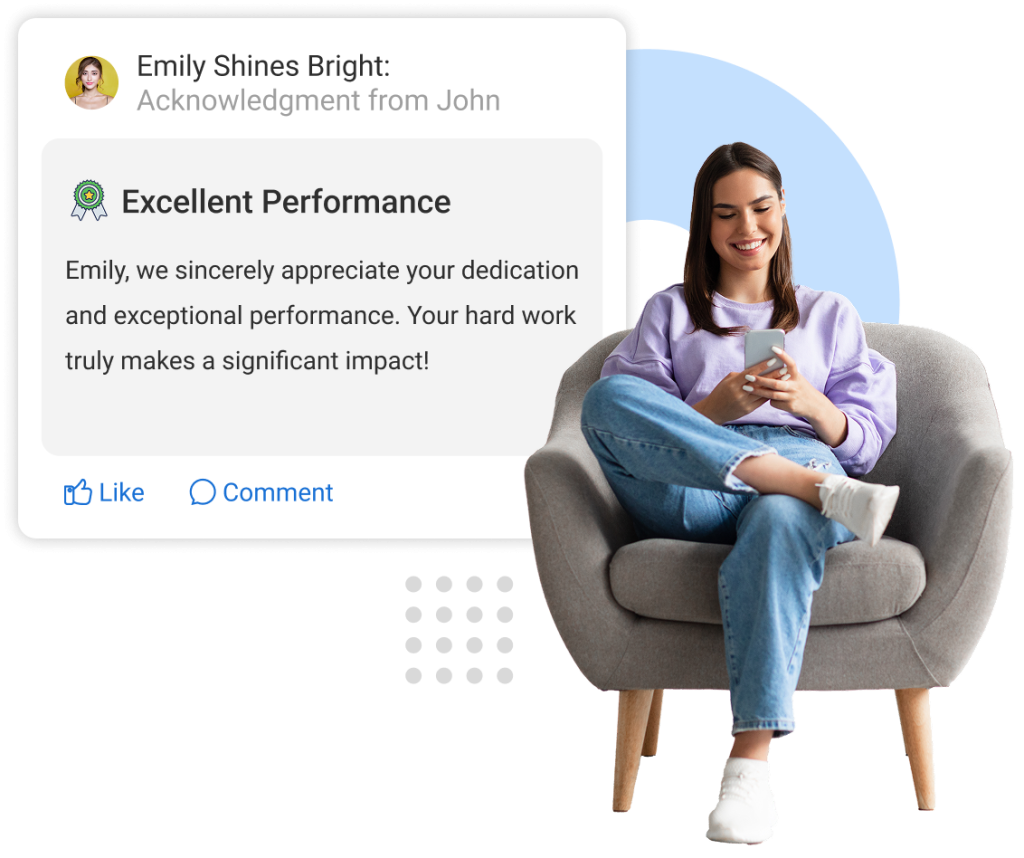
Example: A manager points to two standout wins, names them as above-bar impact, and explains why they mattered to business results. Then they outline a tougher stretch assignment for the next quarter, framed as trust and investment, not an extra burden. The high performer leaves feeling appreciated and challenged, not taken for granted.
42. Offer Real Resources for Improvement So Development Feels Supported
It is unfair to ask for growth without making growth possible. Pair each development area with resources such as training, mentoring, shadowing, or structured practice time. This turns performance feedback techniques into real capability-building instead of wishful advice.
Example: After noticing a gap in data storytelling, the manager approves a short course, pairs the employee with a mentor for two presentations, and protects time in the next project schedule for rehearsal. With tools in hand, the employee has a realistic path to improvement before the next review cycle.
43. Set Specific Next-Period Goals So Progress Can Be Measured Fairly
Future goals give the employee a clean target and give you a clean yardstick for the next evaluation. The more specific and measurable the goals are, the less room there is for confusion or bias later. This is one of the sharpest performance review best practices for keeping cycles consistent.
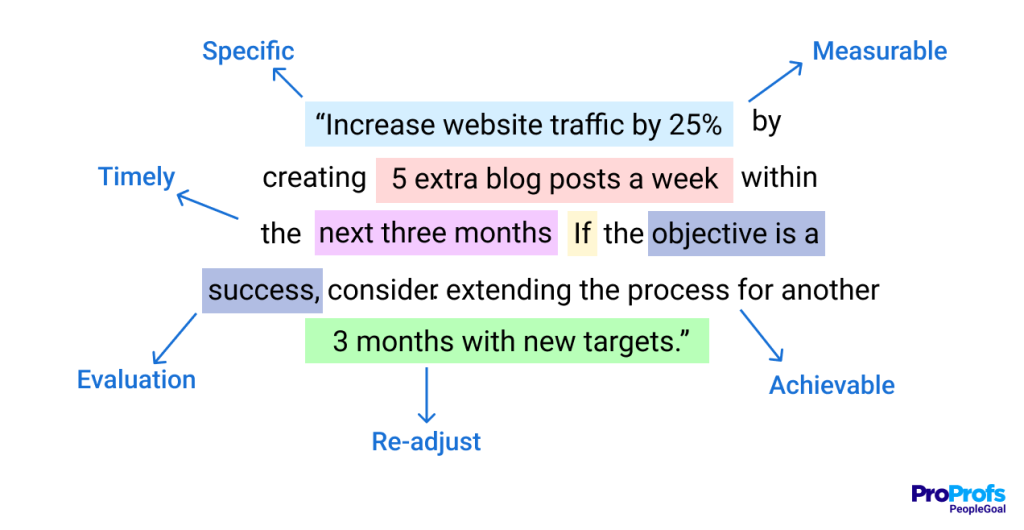
Example: The review ends with three SMART goals that are agreed and documented: deliver two cross-team launch plans by Q2, lift customer satisfaction by 0.2 points by year-end, and lead one internal training session by September. The employee knows exactly what success looks like next, and the manager knows exactly what to track.
44. Close With Mutual Commitment to Keep Accountability and Confidence High
A strong close signals that the review is a start line, not a finish line. Summarizing the plan, confirming support, and setting follow-ups keeps accountability alive. It also leaves the employee feeling backed rather than judged and dismissed.
Example: At the end of the meeting, the manager restates the main strengths, the key growth focus, and the agreed goals. They schedule a follow-up in 90 days, confirm what support will be provided, and ask the employee to flag blockers early. The employee leaves with clarity, confidence, and a sense that progress will be noticed, not forgotten.
After turning the review into a forward-looking growth plan, the final step is making sure the overall system stays strong year after year. Let’s close with Organizational Best Practices and Continuous Improvement, where the structure behind your process decides whether performance management stays helpful or quietly turns into a burden.
Organizational Best Practices and Continuous Improvement
Even the best managers struggle within a weak system. These practices help HR leaders, founders, and team heads build a review rhythm that stays fair, light, and useful over time. Think of this section as the long-range wiring for effective performance reviews.
45. Separate Performance Reviews From Pay Talks to Keep Each Conversation Clear
When pay and performance share the same room, money often steals the spotlight. Employees start filtering every word through a single anxious question: “How much is this worth?” That makes it harder for them to really hear coaching, and it makes managers feel pressured to soften feedback.
Splitting the conversations lets you talk about performance with honesty and depth, while discussing compensation with proper context later.
Example: A company schedules performance reviews in early November. The meetings focus only on goals, outcomes, strengths, and growth areas. Compensation discussions happen in December after budgets and market benchmarks are finalized.
Managers notice employees ask sharper development questions in the review because their minds are not stuck on salary guesses. Employees also report feeling less defensive because the meeting feels like a serious career conversation, not a negotiation.
46. Schedule a Follow-Up Meeting to Make the Review Matter After the Room Clears
A review that ends without a future checkpoint often fades into good intentions. Follow-ups turn promises into practice. They keep goals alive, help remove new blockers early, and show employees that development is not a one-day event. This is one of the simplest performance review best practices for ensuring real change between cycles.
Example: After an annual review, a manager books a 30-minute follow-up exactly 90 days later. In that check-in, they revisit the main improvement goal and look at progress with real examples from recent work.
If the employee is on track, the manager raises the bar slightly. If progress is slow, they adjust the plan early instead of waiting a full year. Over time, employees start viewing the review as the start of a growth loop rather than a paperwork finish line.
47. Build a Continuous Feedback Culture So Reviews Feel Natural
Formal reviews work best when they sit inside a culture where feedback flows regularly. When praise and correction happen in real time, the annual review stops being heavy theater. It becomes a structured recap of conversations you have already been having. This kind of feedback culture is what makes conducting employee evaluations feel normal instead of stressful.
Example: A team begins using quick feedback rituals: a short debrief after every major project, weekly shout-outs for visible wins, and direct course-correction when something slips. Managers do not wait months to address issues. Over two cycles, employees report that annual reviews feel lighter because they are not hearing anything new. Managers also find they spend less time “proving” feedback because the year has been full of small, consistent performance conversations.
48. Improve the Review Process Each Cycle Instead of Treating It as Fixed
A review process that never changes quietly becomes outdated. Priorities shift, roles evolve, and old forms start asking the wrong questions. Treat the process like any system worth improving: gather feedback, note friction points, and refine. This keeps employee performance appraisal best practices aligned with the real work people are doing now.
Example: After a review round, HR sends a short survey. Employees say the form is too long and the rating scale feels confusing. Managers add that half the questions overlap. HR trims the form to fewer, sharper prompts, rewrites rating definitions with clearer examples, and adds a section for “impact beyond role” to capture cross-team work. The next cycle is faster, feedback feels more specific, and employee trust rises because the system is clearly listening.
49. Tailor Reviews to Your Culture and Business Reality
A rigid one-size model rarely survives contact with real workplaces. The best performance appraisal systems match the organization’s pace, structure, and values. Tailoring does not mean lowering standards. It means choosing the right format, timing, and focus so reviews reflect how work actually happens.
Example: A fast-scaling startup finds annual reviews too slow for quickly shifting priorities. They adopt quarterly goal resets with narrative feedback, then keep a lighter annual summary. A large enterprise keeps annual reviews but introduces mid-year check-ins to handle long project cycles. In both places, performance management improves because the review rhythm matches business reality instead of fighting it.
50. Keep the Process Simple So People Focus on Conversation, Not Bureaucracy
Complexity drains energy from what matters. When review forms are long, scoring is rigid, and prep feels like homework, managers rush, and employees disengage. A simpler process creates room for clearer thinking, better evidence, and real dialogue. In practice, simplicity is one of the strongest performance review tips for making the system sustainable.
Example: A company cuts a ten-section review form down to four clean prompts: outcomes, strengths, growth areas, and next goals. Managers spend their prep time gathering evidence and thinking through coaching rather than filling boxes. Employees report that the meeting feels more personal and less scripted because the discussion is not forced to follow a bloated checklist.
51. Include Well-Being and Workload, So the Review Reflects the Whole Picture
Performance is shaped by the environment people work in. Ignoring workload, burnout, or resource gaps leads to unfair evaluations and repeated problems. Bringing well-being into the review does not excuse weak performance. It helps you understand what drove it and whether the system needs fixing alongside the person.
Example: In reviews across one department, several employees mention that an unrealistic timeline forced repeated overtime and caused quality slips. HR notices the pattern and flags it as a staffing and planning issue, not an individual flaw. The next cycle includes better resource planning and clearer scope control. Employees feel their strain was recognized, and performance improves because the underlying pressure was addressed.
52. Embrace Continuous Performance Management to Stay Agile
Annual reviews alone are too slow for modern work. Continuous performance management uses shorter cycles, faster feedback, and flexible goal updates. It helps employees correct course sooner and keeps teams aligned with shifting priorities. Over time, it also makes formal reviews less stressful because nothing piles up.
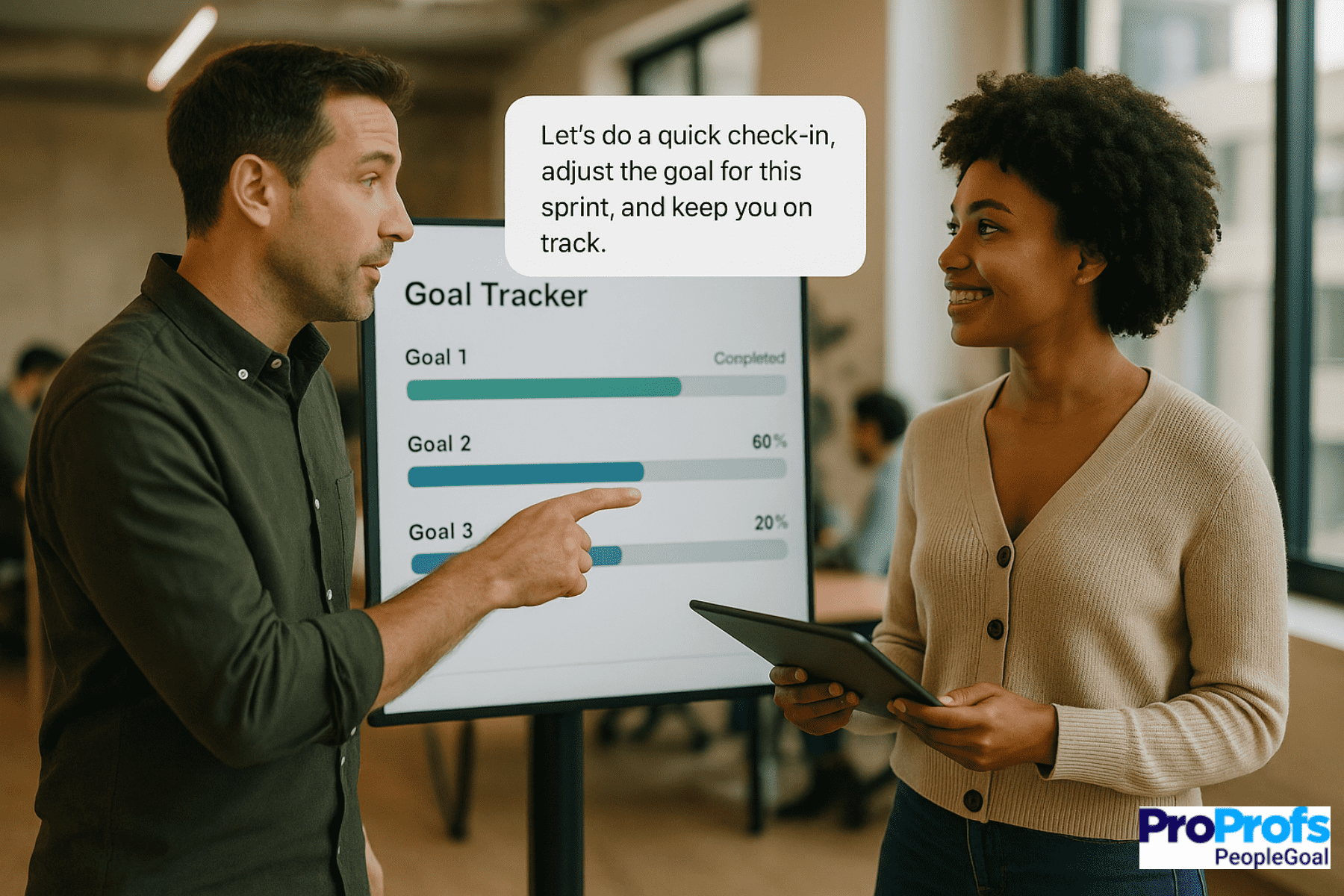
Example: A company introduces quarterly performance touchpoints focused on goal progress, blockers, and one growth skill. Managers give feedback in smaller doses, so employees do not dread year-end meetings. By the time the annual review comes around, both sides already share a detailed view of performance. The annual review becomes a clean summary and future plan rather than a heavy, emotional audit.
53. Handle Underperformance With Clarity, Context, and Real Support
Underperformance must be addressed honestly, but a strong system looks for causes before conclusions. Skill gaps, unclear expectations, poor workload balance, or personal strain can all play a role. A fair approach names the gap, explores why it exists, sets a supportive improvement plan, and gives a clear timeline. This protects dignity and increases recovery chances.
Example: An employee shows a steady dip in delivery quality across two quarters. In the review, the manager walks through the evidence, then asks what is driving the pattern. They discover the employee never received training on a new tool and has also been carrying extra work since a teammate left.
Together, they create a 60-day improvement plan: formal tool training, a lighter scope for one project cycle, and bi-weekly check-ins. If performance lifts, the employee stabilizes with confidence. If not, the next steps are taken with fairness because support was real, not symbolic.
54. Evaluate Collaboration So Team Impact Counts, Not Just Solo Output
Modern performance is rarely individual-only. Reviews should include how someone supports teammates, shares knowledge, resolves friction, and improves group outcomes. Otherwise, you reward loud personal output while missing the people who keep the system healthy. This is a crucial part of effective performance reviews in cross-functional teams.
Example: A developer’s personal feature count looks average, but stakeholder feedback shows they repeatedly unblock others, catch early defects, and guide junior engineers through tricky issues. The review recognizes that contribution as a high team impact. The employee feels valued for real business value, and the team learns that collaboration is part of success, not an optional extra.
55. Use Visual Aids to Make Review Conversations Clear, Especially Remotely
A simple visual summary keeps both sides aligned on what is being discussed. It reduces misunderstandings, anchors feedback in evidence, and helps employees track the flow of the meeting. In remote reviews, where shared context can slip, visuals act like a shared map.
Example: A manager shares a one-page screen during the review showing the last period’s goals, a short outcomes snapshot, a few performance highlights, one key growth area, and the next goals. The employee can follow the narrative without guessing where the conversation is heading.
They ask better questions because they can see the evidence in front of them. After the meeting, the same page is sent as a reference, making the review feel structured and lasting rather than fleeting.
To see how these ideas work in a real organization, here’s a quick example from the field.
Real Life Case Study:
Forney Corporation: 100% Employee Participation in Performance Reviews
Ready to Deliver Effective Performance Reviews?
If you have read this far, you already know that performance reviews are not a single meeting. They are a chain of good habits: clear planning, shared ownership, well-phrased feedback, fair judgment, and a forward-looking plan that actually gets followed.
When those habits are in place, reviews stop feeling like a stressful audit and start feeling like a sharp, motivating conversation about better work. Employees leave with clarity instead of confusion, and managers leave with alignment instead of loose ends.
You can even use tools like PeopleGoal to make things easier with ready-made review and self-assessment templates, anonymous 360-degree feedback, goal and OKR tracking, probation and annual cycle management, automated reminders, reviewer assignment, and clean dashboards with exportable reports.
All these features can really help deliver the most effective performance reviews: the ones that translate to growth results.
Ready to 3x Your Teams' Performance?
Use the best performance management software to align goals, track progress, and boost employee engagement.