
Employee retention improves when people feel valued, see growth opportunities, trust their managers, and believe the workplace supports their success. This guide explains practical ways to reduce turnover, strengthen engagement, and keep your best employees longer.
I’ve spent years working with HR teams across industries, and one question comes up repeatedly: how to improve employee retention in a way that actually works long term.
I always tell them this simple fact: you can stock the kitchen with kombucha, add a ping pong table, and offer unlimited PTO. But if your managers don’t give consistent feedback, if employees have no idea how to grow, and if your performance reviews happen once a year in a panic, people will leave.
And they’ll leave for a competitor who has figured out the basics.
In this guide, I will answer your question, “How can we overcome poor retention?” Using the insights, you can then improve employee retention by implementing systems that address feedback, career development, leadership quality, and the employee experience.
What Is Employee Retention?
Employee retention is an organization’s ability to keep its workforce over a given period. It’s typically measured using this formula:
| Employee Retention Rate = ((Employees at End of Period – New Hires During Period) / Employees at Start of Period) x 100 |
Understanding the retention rate is the first step in learning how to improve employee retention because it helps HR leaders identify where turnover risks exist. A retention rate above 90% is generally considered healthy. Anything below 80% is a signal that something structural needs fixing.
Why Do Employees Actually Leave? (The Real Reasons)
Before jumping into strategies, it’s worth understanding what’s actually driving turnover. I’ve seen the same patterns repeat across industries, company sizes, and geographies. The root causes are almost always the same:
| Root Cause | What Employees Say |
|---|---|
| Poor management | "I didn't leave the company. I left my manager." |
| No career growth | "There's no path forward here, so I found one elsewhere." |
| Compensation lag | "I got a 40% raise by switching jobs. I asked for 10% and got nothing." |
| Lack of recognition | "I worked 60-hour weeks on the product launch. No one said a word." |
| Burnout | "I was doing the job of three people. I couldn't sustain it." |
| Rigid work policies | "They mandated five days in office. I was more productive at home." |
| Cultural disconnect | "The values on the wall had nothing to do with how leadership actually behaved." |
| Poor onboarding | "I felt lost for the first three months. That set the tone." |
Notice what’s not on this list: free lunch, gym memberships, and office aesthetics. The pattern is clear. Employees leave when they feel undervalued, unsupported, and unable to grow.
The fix is structural, not cosmetic. Understanding these patterns helps organizations focus on ways to improve employee retention that address real employee concerns rather than superficial perks.
What Are the Best Ways to Improve Employee Retention?
Below are 15 proven ways to improve employee retention that organizations use to reduce turnover and build stronger teams.
1. Run Structured Performance Reviews (Not Just Annual Check-Ins)
One of the most common complaints I hear from employees at small and mid-sized companies is that their performance review process is either nonexistent or a once-a-year exercise in awkward conversation.
Structured performance reviews are one of the most practical ways to increase employee retention because they give employees clarity about expectations, growth, and progress. Without this, employees operate in a vacuum. They don’t know if they’re doing well. They don’t know how to improve. And when a competitor calls with an offer, they have no compelling reason to stay.
What good performance reviews look like in practice:
- Reviews happen at least quarterly, not just annually
- Goals are set collaboratively at the start of each cycle
- Feedback is specific and tied to observable behaviors, not vague impressions
- Both the manager and employee have input in the conversation
- Development actions are agreed upon and followed up on
Case in point:
PeopleGoal’s performance management software automates this entire cycle. You set the cadence, the templates, and the goal structures. Managers get reminded to complete reviews. Employees get visibility into their progress. The whole process becomes consistent, scalable, and actually useful.
How to Run a Structured Performance Review (Step-by-Step)
- Step 1: Set clear goals at the start of the cycle
Align on 3–5 measurable goals with the employee. Make sure both sides agree on what success looks like. - Step 2: Collect inputs before the review
Ask the employee for a self-assessment. Gather feedback from peers or stakeholders if relevant. This makes the conversation balanced, not one-sided. - Step 3: Evaluate based on specific examples
Instead of general feedback, come prepared with real situations. What did they do well? Where did they struggle? Tie everything to outcomes. - Step 4: Have a two-way conversation
Don’t make it a monologue. Ask questions like “What challenges did you face?” or “What support do you need?” This builds trust and clarity. - Step 5: Agree on development actions
Identify 2–3 concrete next steps. This could be skill development, new responsibilities, or process improvements. - Step 6: Document and follow up
Write down key takeaways and revisit them in the next check-in. This is where most teams fail. Without follow-up, reviews lose impact.
2. Build a Continuous Feedback Culture
Annual reviews are a snapshot. Continuous feedback is the full picture.
Companies that wait 12 months to tell employees what’s working and what isn’t are setting themselves up for surprise resignations. By the time someone hands in their notice, the disengagement has usually been building for months.
Continuous feedback means:
- Regular 1:1 check-ins between managers and direct reports (weekly or biweekly)
- Real-time recognition when employees do something worth noting
- Constructive feedback delivered close to the event, not six months later
- A safe environment where employees can raise concerns without fear of consequences
This last point, psychological safety, is underrated. People stay where they feel safe to speak up. When employees know their voice matters, they invest more deeply in the organization.
There is also a clear productivity benefit. Frequent, specific feedback helps teams focus on the right priorities, catch misalignments early, and correct mistakes before they grow. Acknowledging employees for their contributions during regular feedback conversations also reinforces positive behaviors, boosts motivation, and helps people feel valued.
Many teams see output improve simply because people spend less time working on the wrong things. Continuous feedback supports retention and improves performance at the same time.
To explore how to give feedback better, check out our guide on continuous feedback.
3. Implement 360-Degree Feedback
Most feedback flows in one direction: manager to employee. But some of the most valuable insights about how an employee is performing come from peers, cross-functional colleagues, and even direct reports.
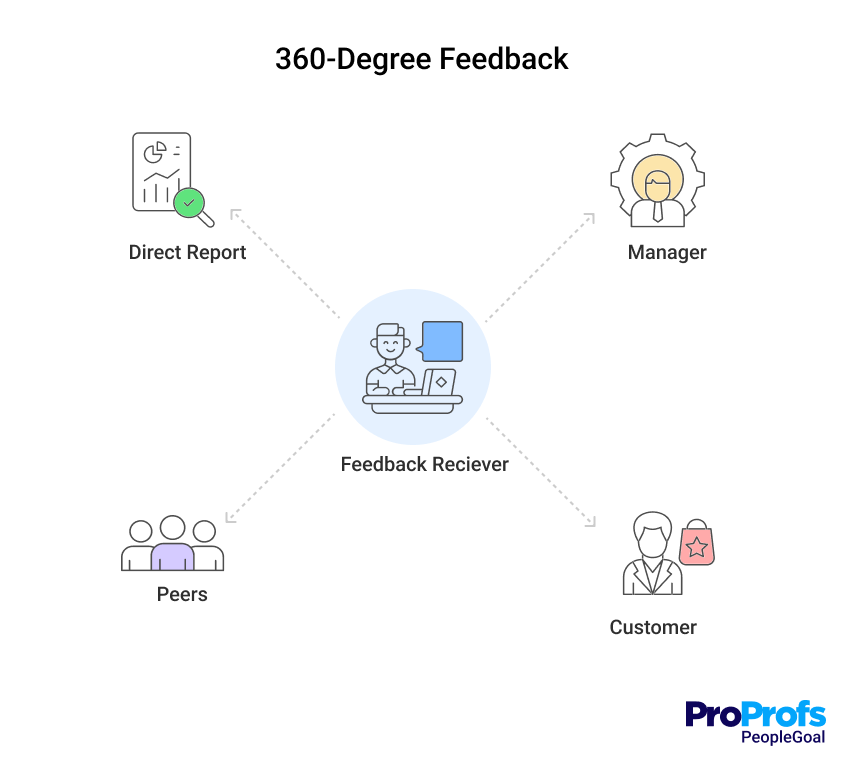
360-degree feedback collects input from every direction. It gives employees a more complete and fair picture of their strengths and blind spots. It also reduces bias, because no single manager’s opinion is the only data point in the room.
For retention, 360-degree feedback matters because it surfaces leadership issues early. If a manager is creating a toxic dynamic on their team, 360 reviews will catch it before half the team quits. That’s a significant retention tool in itself.
4. Set Clear Goals and Align Them Company-Wide (OKRs)
When employees clearly understand how their work contributes to company goals, it directly answers the question of what improves employee retention in growing organizations.
OKRs (Objectives and Key Results) make this possible by creating a visible line of sight from company goals to team goals to individual goals. Every employee can see how their work ladders up.
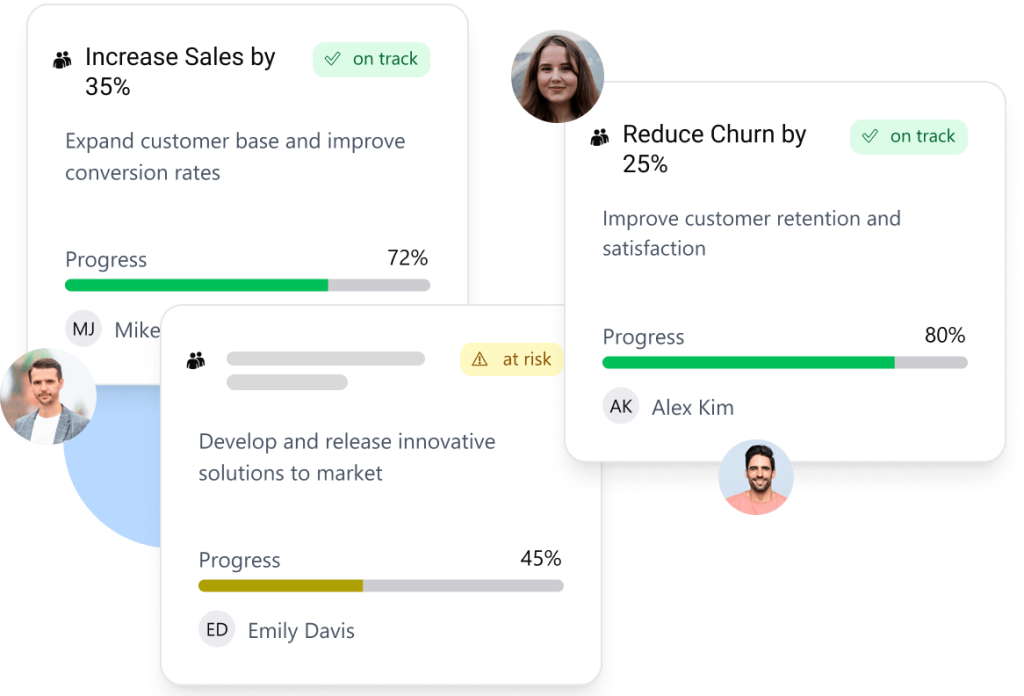
The retention impact here is real. Employees who understand their contribution to the organization’s mission are significantly more engaged. And engagement is the single strongest predictor of retention.
A practical OKR setup for a growing company:
- Company sets 3-5 Objectives each quarter with measurable Key Results
- Each team aligns its own OKRs to the company-level objectives
- Individuals set personal OKRs that connect to their team’s goals
- Progress is tracked and reviewed regularly, not just at quarter-end
Example of Company-Level OKR
Objective: Improve customer retention
Key Results:
- Increase customer renewal rate from 75% to 85%
- Reduce churn from 25% to 15%
- Improve NPS from 30 to 50
5. Conduct Stay Interviews Proactively
Exit interviews tell you why someone left. Stay interviews tell you why someone might leave before they’ve made the decision.
A stay interview is a simple, structured conversation between a manager and an employee. The goal is to understand what’s working, what isn’t, and what the company can do to make the employee’s experience better.
Most organizations skip this entirely. Those who do it consistently have far lower turnover.
Suggested stay interview questions:
- What do you look forward to when you come to work?
- What keeps you here?
- What would make you consider leaving?
- What would make your work more meaningful?
- What’s getting in the way of doing your best work?
The key is to actually act on the answers. A stay interview that leads to no action is worse than no stay interview at all, because it signals that leadership doesn’t really care.
Stay Interview Template (Simple & Repeatable)
- Employee Name:
- Role / Team:
- Manager:
- Date:
1. What’s Working Well
- What do you enjoy most about your role?
- What keeps you motivated to stay here?
2. Friction Points
- What’s getting in the way of doing your best work?
- Are there any recurring challenges or frustrations?
3. Growth & Career
- Do you feel you’re growing in your role?
- What skills or opportunities would you like to explore next?
4. Risk Signals
- Have you considered leaving recently? If yes, why?
- What might cause you to look for another opportunity?
5. Manager & Team Support
- What can I do better as your manager?
- Do you feel supported by your team?
6. Action Plan (Fill After Discussion)
- Key takeaways:
- Agreed actions:
- Owner (Manager/Employee):
- Timeline for follow-up:
6. Create Transparent Career Development Paths
The number one reason employees leave mid-sized companies? They can’t see a future for themselves there.
Career development is not about promises. It’s about visibility. Employees want to know: what does it take to move from here to there? What skills do I need? What would a promotion look like? How long does it realistically take?
When that information is opaque or inconsistent, employees go looking for clarity somewhere else, usually at a competitor who is willing to show them a roadmap.
Transparent career development looks like:
- Documented role levels with clear competency expectations at each stage
- Regular career conversations between managers and employees (not just performance reviews)
- Stretch assignments that build skills for the next level
- Internal mobility as an active practice, not an afterthought
- A dedicated learning budget for each employee
Companies that invest in career development retain employees longer because they’ve made the cost of leaving higher. Why go through the uncertainty of a new company when you have a clear path where you are?
7. Train Your Managers (This Is the Big One)
The research is unambiguous: people leave managers, not companies.
Investing in manager training is the highest-leverage retention intervention most companies ignore. Mid-level managers have the most direct impact on employee experience. They control the quality of feedback, the workload distribution, how recognition is given, and whether employees feel heard.
A manager who lacks emotional intelligence, doesn’t communicate expectations, or plays favorites will destroy retention on their team, regardless of how good the company-level culture is.
Manager development should cover:
- Giving effective, specific feedback
- Running 1:1s that actually build trust
- Coaching employees through challenges rather than just directing
- Identifying burnout and addressing it before it becomes a resignation
- Managing performance conversations with empathy and clarity
Common manager failure patterns to watch for:
- The Avoider: Cancels 1:1s, avoids difficult feedback, and lets problems grow until employees disengage.
- The Micromanager: Checks every detail, struggles to delegate, and unintentionally signals distrust.
- The Favorites Player: Gives opportunities and recognition unevenly, creating quiet resentment within the team.
- The Burnout Driver: Consistently overloads employees and treats exhaustion as a personal weakness rather than a workload issue.
Early warning signs of struggling managers:
- Higher absence or sick-day patterns within one team
- Consistently negative engagement survey feedback from a department
- Employees requesting internal transfers away from a specific manager
- Repeated themes in 360-degree feedback about the same leadership issues
- Lower goal completion rates compared with the rest of the company
When these signals appear, the right response is investigation and support. If the pattern continues, leadership must act. A manager who repeatedly drives attrition is not just a culture issue. It becomes a measurable business cost.
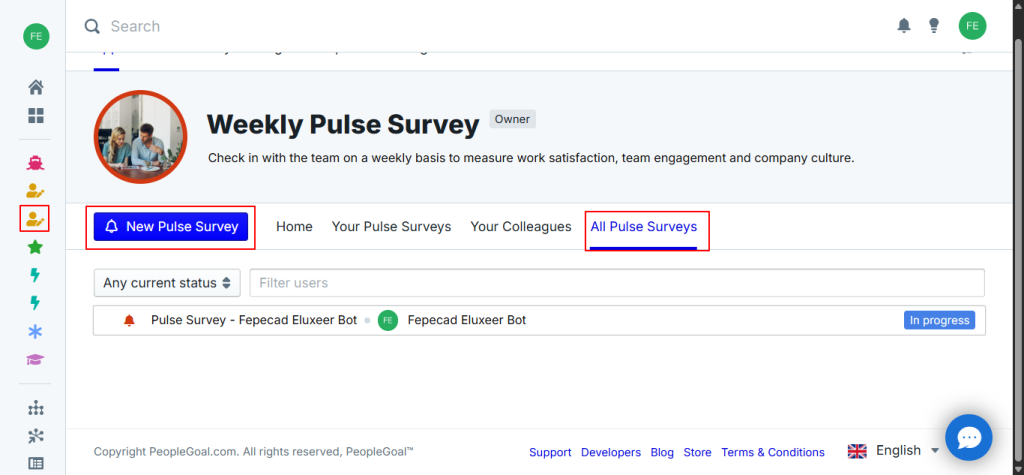
8. Use Employee Engagement Surveys Regularly
You cannot manage what you don’t measure. Employee engagement surveys give HR leaders and managers a regular pulse on how the team is feeling, what’s working, and where there are risks.
The best engagement survey programs are:
- Short enough that employees actually complete them (5-15 employee engagement questions)
- Run consistently, either quarterly or monthly pulse-style
- Followed up with visible action, so employees know their input matters
- Anonymous, so employees feel safe being honest
The worst thing you can do is run a survey, see concerning results, and go quiet. I’ve watched that mistake erode more trust faster than almost anything else — it tells employees their voice doesn’t actually matter.
PeopleGoal’s engagement survey tools let you build custom surveys, track trends over time, and benchmark sentiment across departments. This kind of visibility is what separates reactive HR from proactive people operations.
9. Offer Competitive Pay to Reduce Attrition
Culture matters. Recognition matters. Growth matters. But none of those things compensate for being paid significantly below market.
I think of competitive compensation as the cover charge — you have to pay it just to be in the room. Once that baseline is met, other factors like growth, culture, and recognition become the differentiators. But if compensation lags the market, everything else becomes noise.
Practical compensation strategies for improving retention:
- Conduct market salary benchmarking at least annually
- Implement transparent pay bands and communicate how raises are calculated
- Address pay compression proactively before long-tenured employees discover they’re underpaid
- Consider profit sharing or equity for senior roles to give employees a stake in the outcome
- Use total compensation statements, so employees see the full picture, including benefits, bonuses, and PTO value
10. Invest in Onboarding (The First 90 Days Set Everything)
Poor onboarding is one of the most underrated causes of early attrition. Employees who have a strong onboarding experience are significantly more likely to still be with the company a year later.
The problem is that most onboarding I’ve seen is a firehose — paperwork, system logins, and orientation decks that explain what the company does but leave new hires completely in the dark about how to actually succeed in their role.
Effective onboarding for retention:
- Starts before day one (offer letter through to first week is a critical window)
- Includes a 30/60/90 day plan with clear milestones
- Connects the new hire to their team and cross-functional colleagues early
- Sets expectations explicitly so there are no surprises
- Includes a feedback loop so the new hire can raise concerns early
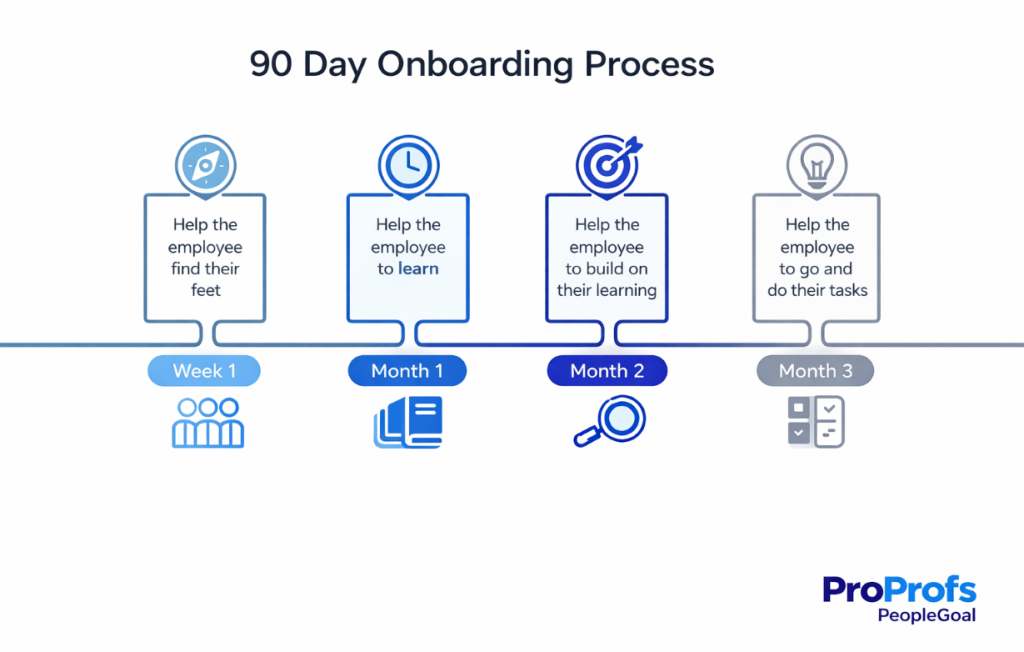
A structured onboarding process using a platform like PeopleGoal ensures no one falls through the cracks, especially in fast-growing companies where every manager handles onboarding differently.
11. Recognize and Reward Employees Consistently
Employee recognition is one of the cheapest and most effective retention tools available. And most companies still get it wrong.
In my experience, the issue is almost always inconsistency. When recognition happens randomly, tied to the mood of individual managers, or only flows from the top down, it loses its impact. Employees in departments with disengaged managers go unnoticed for months.
An effective employee recognition program:
- Is built into the workflow, not an afterthought
- Allows peer-to-peer recognition, not just top-down
- Connects recognition to specific behaviors tied to company values
- Includes both formal rewards (bonuses, promotions) and informal acknowledgments
- Happens frequently enough to maintain momentum
The goal is to make employees feel seen on a regular basis, not just during performance reviews or when they’re about to quit.
To dive into some interesting ideas, check out our guide on employee recognition.
12. Support Work-Life Balance and Flexibility
Here’s something I’ve seen play out repeatedly: employees who have built their lives around flexible work will leave if you take that flexibility away without a compelling reason.
This does not mean every company needs to be fully remote. It means being intentional about flexibility and treating adults like adults.
Practical flexibility strategies:
- Offer hybrid arrangements where the role permits
- Trust employees to manage their own time and output, not their hours
- Provide clear expectations around availability and communication norms
- Actively encourage employees to use their PTO and disconnect on vacation
- Consider compressed workweeks or flex Fridays for non-customer-facing roles
Flexible work policies are also effective ways to increase employee retention, particularly for employees balancing work with personal responsibilities. The issue is rarely remote work itself. The real question is whether your people systems work equally well regardless of where someone sits.
Common problems in distributed teams include:
- Proximity bias: Remote employees often receive less informal recognition and fewer visibility opportunities. Managers need to deliberately include remote team members in recognition, projects, and leadership conversations.
- Async overload: Teams relying heavily on Slack and email without clear communication norms create constant interruptions. When employees cannot predict when work will spill into personal time, burnout grows quickly.
- Weak remote onboarding: New hires working remotely miss the informal cultural learning that happens in offices. Strong onboarding programs are essential to help remote employees build relationships and understand how the organization operates.
Companies that retain distributed talent well tend to focus on a few consistent practices:
- Documented processes: Decisions, expectations, and context are written down so remote employees are never working with incomplete information.
- Fair opportunity distribution: Managers ensure recognition, growth opportunities, and visibility are shared across both remote and office-based employees.
- Intentional communication: Teams use structured updates, video check-ins, and asynchronous collaboration tools to stay connected across locations and time zones.
- Stronger onboarding: New hires receive a structured onboarding experience designed to build relationships and cultural understanding from day one.
Burnout is one of the most common reasons employees leave, particularly in startups and small businesses where one person often wears multiple hats. Protecting recovery time is a retention strategy.
13. Build Leadership Pipelines Through Talent Management
High-potential employees are your highest flight risk. They’re ambitious, capable, and they know their options in the job market. If they don’t see a path to leadership at your company, they’ll find one somewhere else.
Proactive talent management means identifying your high-performers early and investing in their development deliberately, not waiting until they hand in their notice. A talent management program for retention includes:
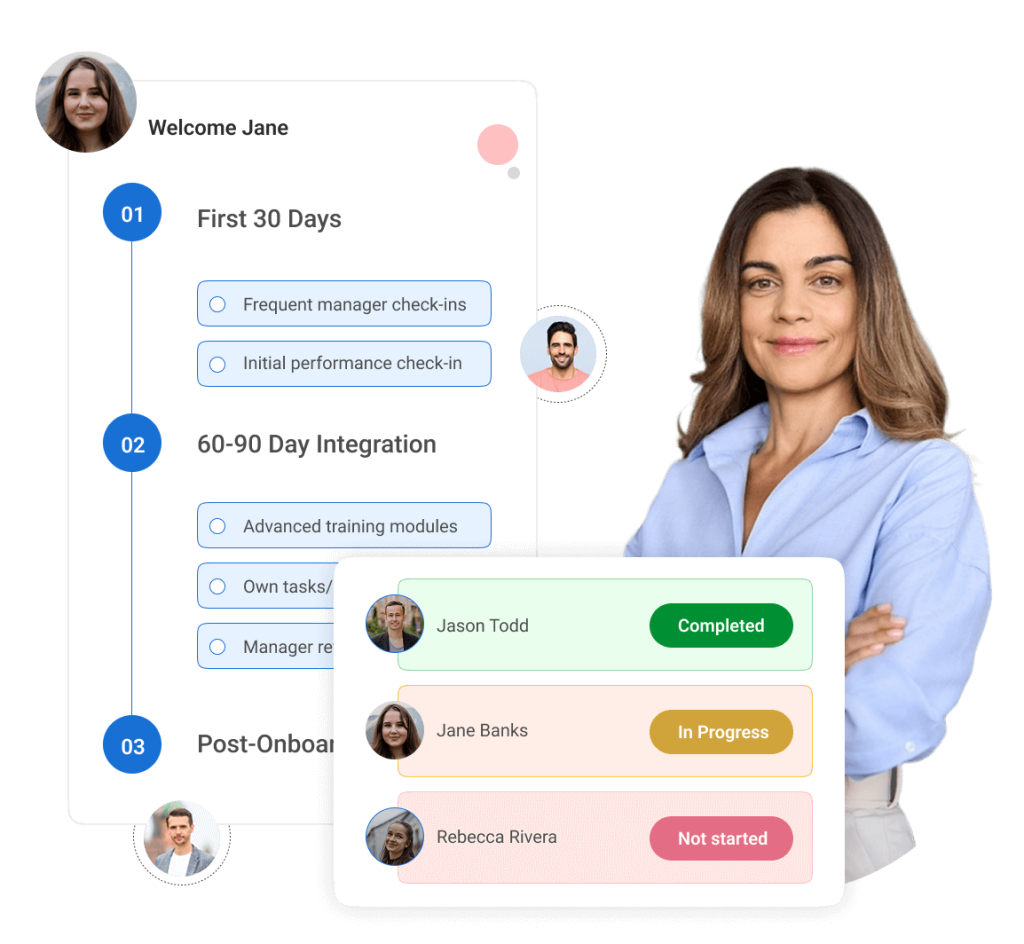
- Identifying high-potential employees through performance data and manager input
- Providing stretch assignments and cross-functional projects to build breadth
- Offering mentorship or coaching from senior leaders
- Creating clear succession planning so high-performers know they’re being considered for future roles
- Having honest conversations about ambition and timeline
PeopleGoal’s talent management tools help you build talent matrices, track development progress, and ensure your most valuable people have a visible future at the company.
14. Strengthen Your Organizational Culture (Values In Practice, Not On a Wall)
Culture is not what’s written in your employee handbook. It’s what happens when things go wrong, who gets promoted, how conflict is handled, and whether leadership’s actions match their stated values.
I’ve spoken with employees at companies with genuinely impressive-sounding values — and some of them had the worst retention I’ve seen. The culture on paper had nothing to do with what happened day to day. Employees noticed. And then they left.
Building a culture that retains people requires:
- Leaders modeling the values publicly and consistently
- Addressing toxic behavior quickly, regardless of the perpetrator’s seniority
- Being honest with employees about challenges and business performance
- Creating psychological safety so employees can raise problems without career risk
- Celebrating wins in ways that reinforce the behaviors that got the company there
Culture is also highly personal. What retains a 25-year-old software engineer (autonomy, craft, mission) often differs from what retains a 45-year-old operations manager (stability, influence, respect). Great HR leaders understand this and personalize where they can.
How to Build This Culture in Practice
- Audit the reality, not the intent: Run anonymous surveys, exit interviews, and skip-level conversations to understand how culture actually shows up today. Look for gaps between stated values and lived experiences.
- Translate values into behaviors: Define what each value looks like in day-to-day actions. For example, if “ownership” is a value, clarify how it shows up in decision-making, accountability, and feedback.
- Align managers first: Culture is shaped at the manager level. Train managers on how to handle feedback, conflict, recognition, and performance conversations in line with your values.
- Build systems that reinforce culture: Embed values into hiring, promotions, performance reviews, and rewards. If your systems reward the wrong behaviors, culture will drift no matter what you say.
- Create consistent feedback loops: Regularly collect employee feedback and act on it visibly. When people see change happening, trust builds.
- Call out and correct misalignment early: Address behaviors that go against your values immediately, even if the person is a high performer. This sets the real standard.
- Recognize and scale what works: Highlight real examples of teams or individuals living the values. Make those stories visible so others can follow.
15. Use HR Technology to Systematize Retention Efforts
The biggest difference I see between companies with high retention and those with chronic turnover is whether their retention efforts are systematized or ad hoc.
Companies that rely on spreadsheets, email chains, and the memory of individual managers to handle performance reviews, goal tracking, and engagement surveys will always have inconsistent results. The quality of the employee experience depends entirely on the quality of each individual manager.
HR technology like PeopleGoal changes this by building consistent processes into the workflow. Every employee gets the same quality of performance management regardless of which team they’re on. Managers are prompted to run reviews, check in with their reports, and track goals. HR leaders get visibility across the entire organization.
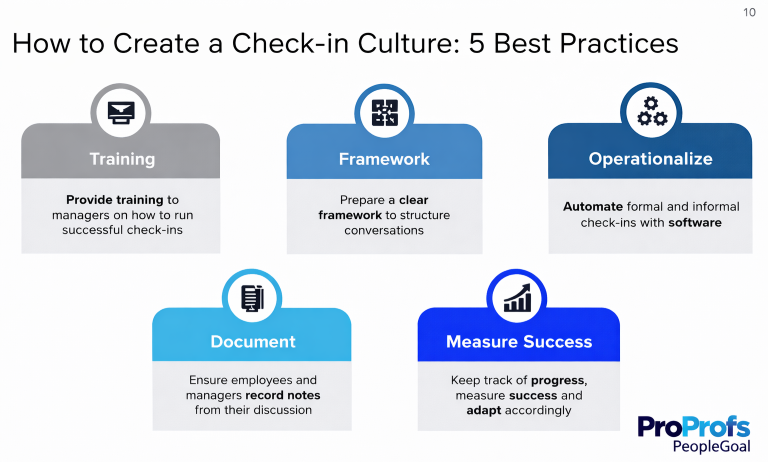
For small and mid-sized companies in particular, where building scalable HR systems is often the biggest challenge, the right platform creates a retention infrastructure that would otherwise require a much larger team to maintain manually.
What Employees Actually Need to Feel Loyal
Many retention strategies focus on systems like reviews, surveys, and management training. These matters only work when the human experience at work is healthy.
Employees stay when they feel connected to their team, see meaning in their work, and trust their environment. Here are the requirements:
- Belonging: People want to feel valued beyond their output. Simple actions like a manager checking in, teammates offering help, or leaders being transparent create a sense of belonging.
- Purpose: Employees commit more when they understand how their work contributes to larger goals. Clear goal frameworks help connect daily tasks to company outcomes.
- Psychological Safety: Employees stay when they can share ideas or concerns openly and know their feedback will be taken seriously.
Reduce Turnover by Fixing the Right Systems
Improving employee retention is rarely about perks or quick fixes. The organizations that retain great people focus on building strong systems around performance, feedback, growth, and leadership.
Structured performance reviews, continuous feedback, clear goal alignment, and transparent career paths give employees the clarity and direction they need to stay engaged.
Just as importantly, investing in manager development, fair recognition, and flexible work practices strengthens the day-to-day employee experience.
At the same time, retention improves when companies treat it as an ongoing process rather than a one-time initiative. Tools like PeopleGoal help organizations maintain that consistency by bringing performance reviews, goal tracking, feedback, surveys, and talent development into one structured workflow.
For growing companies that want to move from reactive HR practices to a scalable people strategy, having that system in place can make retention efforts far more effective.
Ready to 3x Your Teams' Performance?
Use the best performance management software to align goals, track progress, and boost employee engagement.