
The first review cycle I ran in Effy AI took me less time than my morning coffee break. I typed a short prompt, the review form appeared, and I sent it out to the team before lunch. It was so painless that I almost didn’t believe it. A few months later, though, my team had grown, and I started asking for things like deeper goal tracking and better 1:1 tools. That’s usually the moment people start searching for Effy AI alternatives, and it’s exactly where I was too.
I’ve set up performance tools for teams of all sizes, and I’ve noticed one pattern again and again. A simple tool is a gift when you’re small, and a bit of a squeeze when you’re not. Effy AI is great at getting a first review process off the ground quickly. The real question is what you want next, and whether the tool can grow with you.
So I wrote this guide the way I’d explain it to a friend over coffee. I compared pricing, walked through the setup of each tool, and thought about what each one is really like to use week after week. By the end, you’ll know which Effy performance management alternative deserves your free trial.
What Are the Best Effy AI Alternatives?
The best Effy AI alternatives in 2026 are PeopleGoal, PerformYard, Teamflect, 15Five, Lattice, and Leapsome. These performance management platforms suit teams that have outgrown a quick, lightweight review tool and want deeper goals, 1:1s, and development in the same place. If you’re comparing options, our guide to performance review software is a handy companion read.
Why Switch From Effy AI?
A study by Gallup in 2026 shows that only 32% of US employees are engaged at work, compared with a global average of 20%. That’s a good reminder that the way we run reviews and feedback has a real effect on how people feel about their jobs. Effy AI holds a high 4.8 out of 5 on G2, though that rating comes from a smaller group of 37 reviews. Here are the things that tend to come up when growing teams look beyond it:
- It’s built for simple review cycles. Effy AI uses AI in performance management to build annual, mid-year, 360, and quarterly reviews quickly. But when you want a bigger system that also covers development plans, engagement, and learning, you’ll likely need other tools alongside it.
- There’s a smaller review base to learn from. With only a few dozen public reviews on G2, it’s harder to hear from teams like yours before you commit. Larger tools have thousands of reviews to read through.
- Pricing is modular. Effy AI charges per seat and lets you pay only for the features you pick. That’s a nice idea, but it also means your bill can change as you add features, so it’s worth pricing out the full setup.
- Some features sit on the Enterprise plan. Things like HRIS integration, premium support, and a dedicated account manager are part of the custom-priced Enterprise plan, which matters once your team needs those.
- 1:1 and project tools are lighter. If your managers want shared agendas, running notes, and project tracking, you’ll find more of that in other tools on this list.
- Roadmap preferences differ. In a G2 head-to-head, reviewers preferred the product direction of another HR tool over Effy AI, which is something to keep in mind if you want a platform that keeps adding features quickly.
None of this makes Effy AI a bad choice. It makes it a smart pick for small teams that want reviews up and running fast. If you’re growing and want more room, one of the tools below is worth a look.
12 Best Effy AI Alternatives
Here’s a quick side-by-side of how each Effy AI alternative stacks up on use case and pricing, before we get into the details.
| Tool | Best For | Starting Price | G2 Rating |
| PeopleGoal | Fully customizable performance reviews, OKRs & employee development | Free plan available. Paid plans start at $4/user/month. | 4.5/5 |
| PerformYard | Straightforward, HR-run review cycles | $5 to $15/person/month | 4.7/5 |
| Teamflect | Performance management inside Microsoft Teams | Free tier, paid from $7/user/month | 4.5/5 |
| 15Five | Continuous check-ins and manager coaching | $4/user/month | 4.6/5 |
| Lattice | Connecting performance reviews directly to OKRs | Starts at $11/seat/month | 4.7/5 |
| Leapsome | All-in-one performance, learning & engagement | Custom quote | 4.8/5 |
| Small Improvements | Lightweight performance management & 360s | Starts at $3/user/month | 4.3/5 |
| Culture Amp | People-science-backed engagement analytics | Custom quote | 4.5/5 |
| Officevibe | Continuous engagement feedback | Starts at $5/user/month | 4.3/5 |
| Peoplebox.ai | Tying OKRs directly to everyday work tools | Starts at $7/user/month | 4.5/5 |
| Betterworks | Enterprise OKR alignment and calibration | Starts around $8/user/month | 4.4/5 |
| Trakstar | Deep, customizable review cycles | Custom quote | 4.3/5 |
Ratings sourced from G2.com as of 2026. Pricing changes often, so confirm current rates directly with each vendor before you buy.
1. PeopleGoal – Fully Customizable Platform for Performance Reviews, OKRs & Employee Development
I moved a growing team to PeopleGoal when we needed more than a quick review form, and what I liked right away was how much room there was to grow. Reviews were just the start. I could add goals, development plans, and engagement surveys in the same place without bolting on another tool.
The App Store is where I spent most of my setup time. I picked a template close to our process, then changed the questions, rating scale, and approval steps with a drag-and-drop builder. It felt a lot like Effy’s “build it in minutes” speed, but with far more control over the details.
I also loved the anonymous feedback links. I sent a 360 form to a couple of outside partners who had no login, and they filled it out in minutes, which saved me from creating accounts for people who’d only use the tool once.
Pros:
- Align goals with OKRs, SMART goals, and cascading tasks, tracked in real time.
- Collect 360-degree feedback, including anonymous no-login forms, and run structured 1-to-1 meetings.
- Run pulse surveys and eNPS, then link results to development plans, skills tracking, and succession planning.
- Build custom forms, multi-step approvals, and HR apps with the no-code workflow builder and App Store.
- Sync with BambooHR, Workday, ADP, Slack, Teams, and Jira, with real-time dashboards and custom reports.
Cons:
- No downloadable or on-premise version
- Dark user interface option is not available
How PeopleGoal Compares to Effy AI: Effy AI is a quick way to get reviews going, and PeopleGoal gave me that same speed with a lot more to grow into. Effy AI builds review forms with AI from a prompt, while PeopleGoal lets you shape the whole process yourself, from forms and approvals to goals, engagement surveys, and development plans. Instead of picking features one by one, I got everything at one flat, published price, with automated onboarding and an open API on top. Effy AI still makes sense if you only need simple AI-built review forms for a very small team.
G2 Rating: 4.5/5
Pricing:
Free plan available. Paid plans start at $4/user/month.
2. PerformYard – Best for Straightforward, HR-Run Review Cycles
I reached for PerformYard when I wanted to keep the simplicity I liked in Effy but get more control. I rebuilt our existing review process almost exactly as it was, and my managers barely noticed the change, which is a big compliment for any tool.
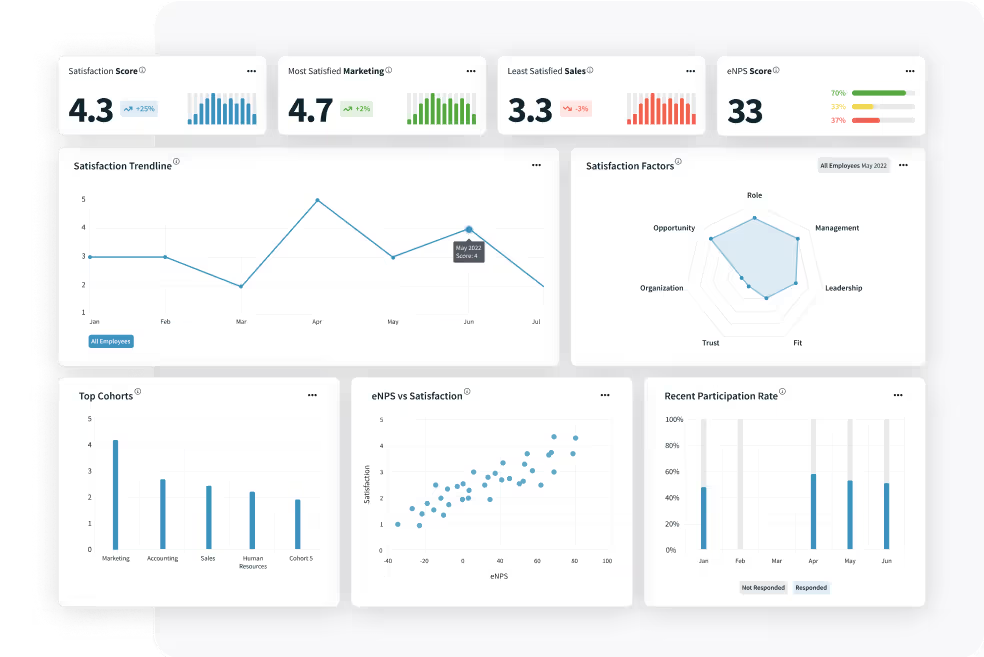
Running annual, 360, and project reviews side by side was a relief. It meant I didn’t have to set up a new tool for each type of review.
Where I felt the limits was engagement. It’s not built for pulse surveys, so if you want those, plan on a second tool.
Pros:
- Rebuild your exact review forms, rating scales, and approval steps.
- Run annual, 360, continuous, and project-based reviews side by side.
- AI help drafts review comments and meeting notes.
- Integrates with ADP, BambooHR, Workday, Gusto, Rippling, and Slack.
Cons:
- Engagement surveys and goal tracking are lighter than in dedicated tools.
- There’s no built-in learning management system.
How PerformYard Compares to Effy AI: Both tools keep reviews simple, but they get there in different ways. Effy AI generates review forms for you from a prompt, while PerformYard lets HR rebuild the exact process they already use, then adds AI help for drafting comments. PerformYard also offers more native integrations with payroll and HR systems, which Effy AI reserves for its Enterprise plan. I’d pick PerformYard if you want more control over your review design without a big learning curve.
G2 Rating: 4.7/5
Pricing:
Starts at $5 to $15 per person per month.
3. Teamflect – Best for Performance Management Inside Microsoft Teams
I tried Teamflect with a team that lived in Microsoft Teams all day, and the biggest win was that nobody had to go anywhere new. Goals, 1:1s, and feedback all happened right inside the tool they already had open.
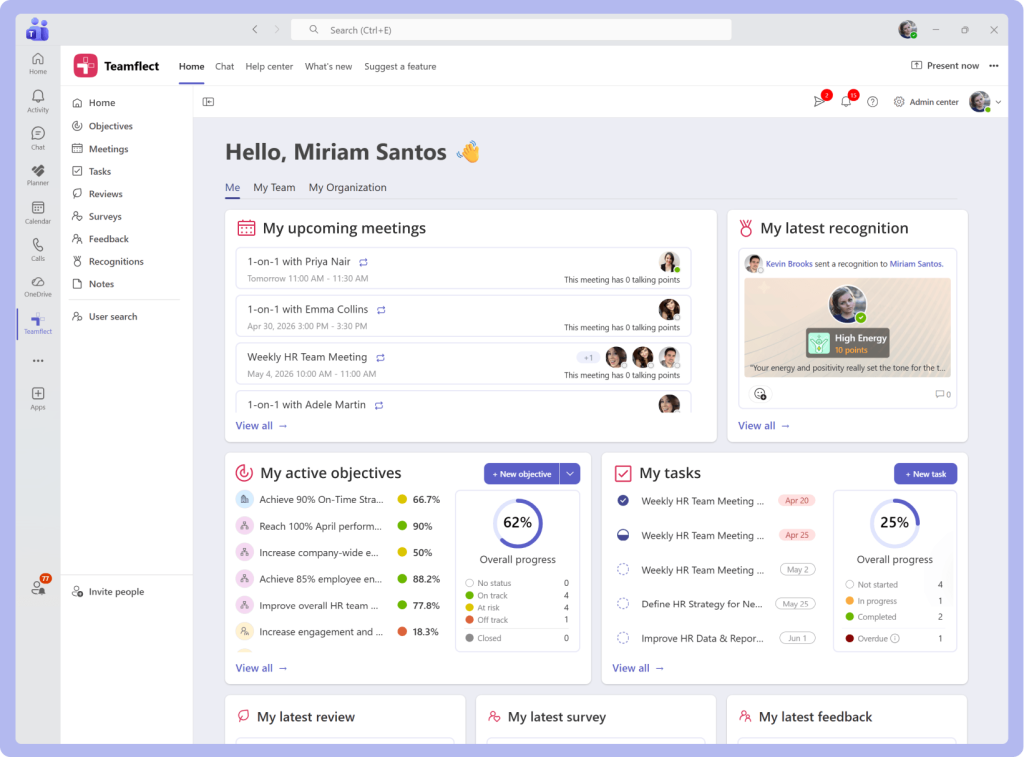
Setting up 1:1 meetings was easy, and the public praise feature gave the team a small daily lift. It was the first time I saw people voluntarily post recognition without a reminder.
The catch is obvious. If your company doesn’t use Microsoft Teams, much of the magic fades, so I’d only pick this if Microsoft is already your home base.
Pros:
- Runs natively inside Microsoft Teams and Outlook.
- Schedule 1:1s with shared agendas, notes, and action items.
- Set and track goals and OKRs with progress updates.
- Give public praise and recognition in the flow of work.
Cons:
- Value drops if your team doesn’t use Microsoft Teams.
- Reporting and benchmarking are lighter than in larger platforms.
How Teamflect Compares to Effy AI: Effy AI connects with Slack and Microsoft Teams, while Teamflect is built directly inside Teams, so adoption felt more natural for my Microsoft-heavy team. Effy AI shines at generating review forms and summaries quickly, but Teamflect covers more of the day-to-day work with 1:1s, goals, recognition, and surveys in one place. Both have free options for small teams. Choose Teamflect if your company already lives in Microsoft Teams, and stick with Effy AI if you want AI-built reviews that work with any setup.
G2 Rating: 4.5/5
Pricing:
Free tier available, paid plans start at $7 per user per month.
4. 15Five – Best for Continuous Check-Ins and Manager Coaching
I rolled out 15Five to a team where managers only talked about performance twice a year. Within a month, the short weekly check-ins had become a habit, mostly because they took about five minutes and nobody felt put on the spot.
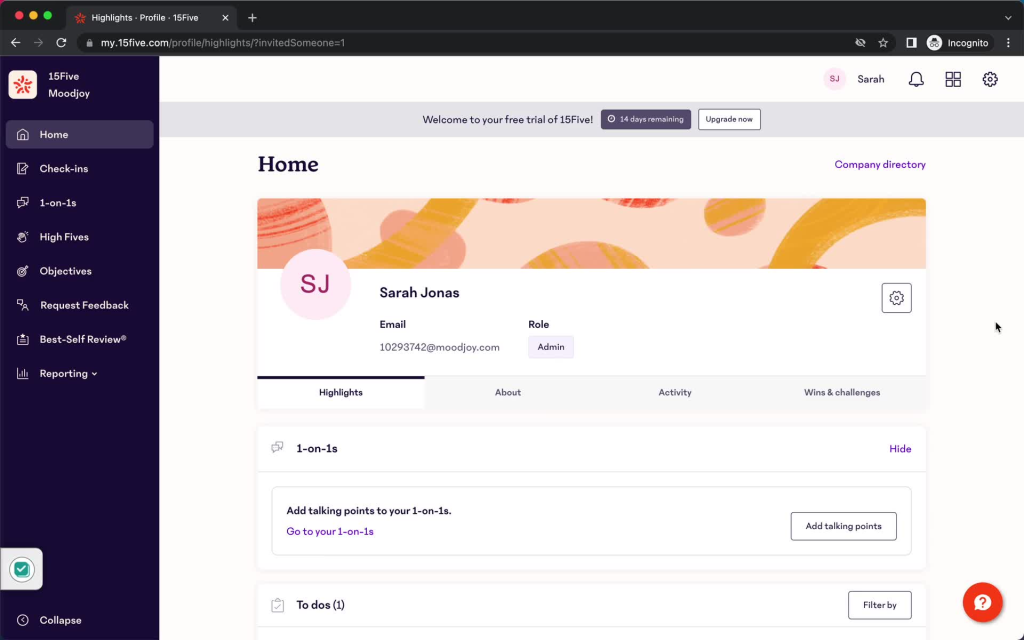
The coaching prompts surprised me. I’m not someone who naturally knows what to ask in a 1:1, and having gentle suggestions right there made my conversations feel less stiff and more useful.
It took my managers a few cycles to trust the Best-Self Review approach. It leans toward reflection and growth rather than hard scores, which felt unfamiliar at first.
Pros:
- Short weekly check-ins keep managers and employees talking between reviews.
- Built-in coaching prompts help new managers run better 1:1s.
- AI Copilot suggests talking points during 1:1 prep.
- Pulse surveys are included in the entry plan.
Cons:
- Advanced reporting and configuration sit in higher tiers.
- It can feel pricey for very small teams.
How 15Five Compares to Effy AI: Effy AI focuses on getting review cycles done fast, while 15Five focuses on the everyday conversation between managers and their teams. Effy AI creates forms and summaries with AI, but 15Five adds weekly check-ins, coaching content, and manager effectiveness insights that help the weeks between reviews feel useful too. Both start at a similar entry price. If your reviews are fine but the rest of the year feels quiet, 15Five fixed that for me.
G2 Rating: 4.6/5
Pricing:
Starts at $4 per user per month, billed annually.
5. Lattice – Best for Connecting Performance Reviews Directly to OKRs
I used Lattice during a quarter when our goals and our reviews felt like two separate worlds. Seeing each person’s goal progress sitting right next to their review made calibration chats so much easier. I stopped digging through old spreadsheets to remember what someone had promised in January.
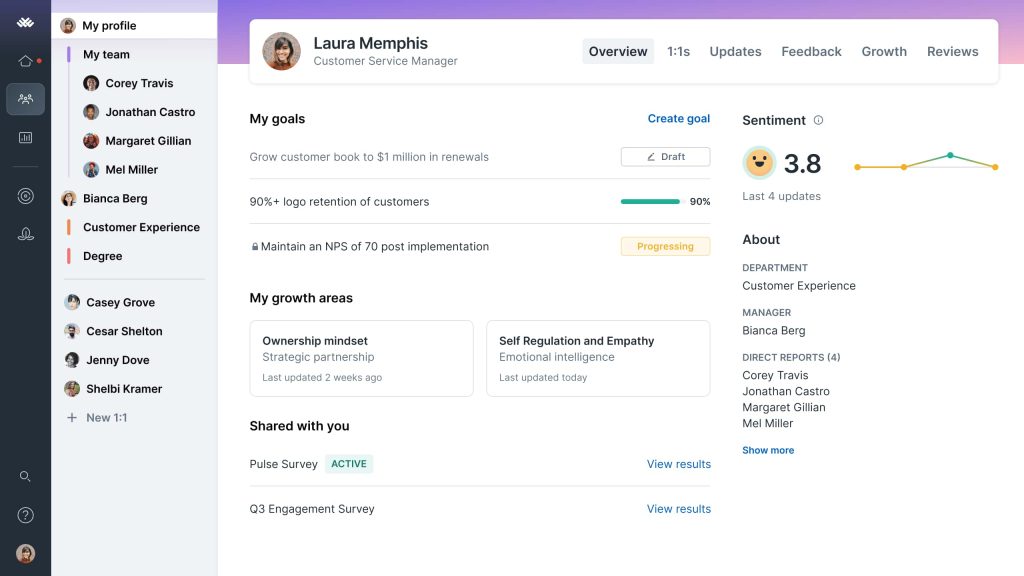
The 1:1 agendas were a quiet favorite. My managers actually used them, mostly because they pulled in goals and past notes automatically, so nobody had to start from a blank page.
The part I’d warn you about is cost creep. I started with the core plan, then added engagement and growth modules later, and the total was noticeably higher than the number I first saw.
Pros:
- Goal progress shows inside each review, a link explained in our guide to OKR software.
- Start with core performance and add engagement, growth, or compensation later.
- Built-in 1:1 agendas pull in goals and past notes automatically.
- Custom review templates, calibration, and sentiment analysis on comments.
Cons:
- Contracts are mostly annual with limited monthly flexibility.
- Costs climb as you add engagement, growth, and compensation modules.
How Lattice Compares to Effy AI: Lattice is a bigger, more polished platform with deeper goals, calibration, and 1:1 tools, while Effy AI is lighter and faster to start. Effy AI wins on speed and price for small teams, with a free plan for up to five seats and AI-built review forms. Lattice wins once you need goals and reviews to work together, with sentiment analysis, calibration, and agendas built in. I’d move to Lattice when my team grew past the point where simple reviews were enough.
G2 Rating: 4.7/5
Pricing:
Starts at $11 per seat per month.
6. Leapsome – Best for All-in-One Performance, Learning and Engagement
I tried Leapsome when I wanted reviews and learning to finally talk to each other. After a review, I could assign a learning path based on the skills gap we’d spotted, and that felt like the first time development was actually connected to feedback.
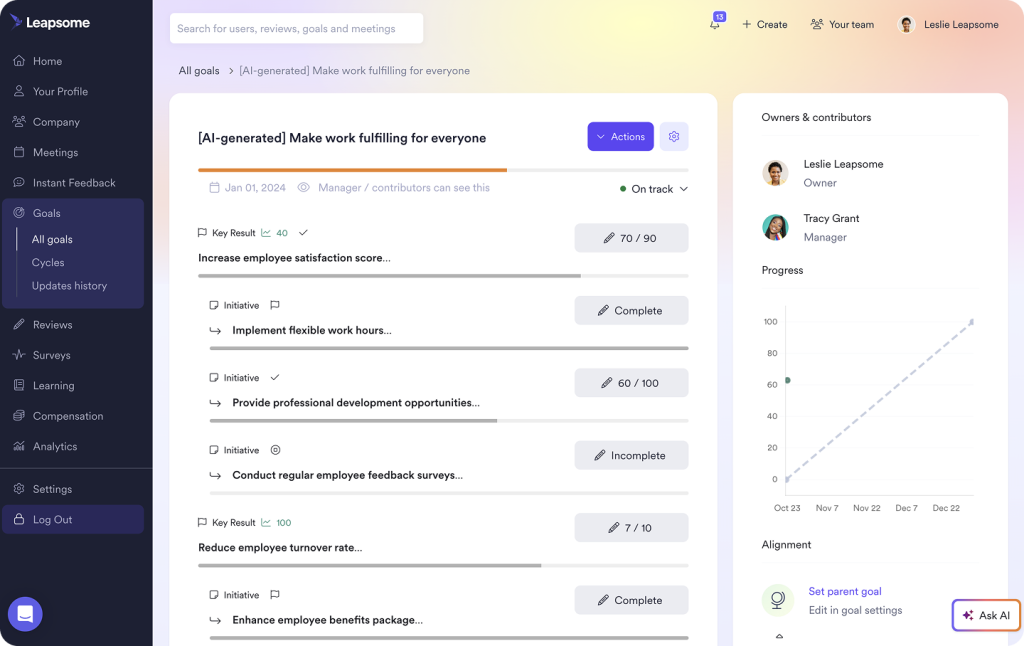
The AI writing help saved me real time. Instead of staring at a blank box during review season, I’d get a starting draft and just edit it to sound like me.
Setup took patience. Getting templates and cycles the way I wanted took longer than I expected, but once it was running, it mostly ran itself.
Pros:
- Reviews, 360 feedback, OKRs, surveys, and learning live in one platform.
- Learning paths link directly to review results, as covered in our guide to employee development software.
- AI drafts review language and summarizes open-text survey answers.
- A modern interface that new admins pick up quickly.
Cons:
- Initial setup takes real configuration time.
- Per-module costs can climb as your team grows.
How Leapsome Compares to Effy AI: Both use AI to save time on reviews, but Leapsome wraps it in a much bigger platform with learning, goals, and engagement included. Effy AI is quicker to set up and easier on the budget for small teams, while Leapsome takes more effort upfront and pays off when you need development tied to performance. Leapsome also has thousands of G2 reviews to read, compared with a few dozen for Effy AI, which made it easier for me to judge fit before buying. If learning isn’t your top priority, our Leapsome alternatives guide breaks down other options.
G2 Rating: 4.8/5
Pricing:
Custom quote.
7. Small Improvements – Best for Lightweight Performance Management & 360s
I tried Small Improvements with a small team that wanted something simple but a little more complete than a review form. We were up and running in an afternoon, which reminded me of my first Effy setup.
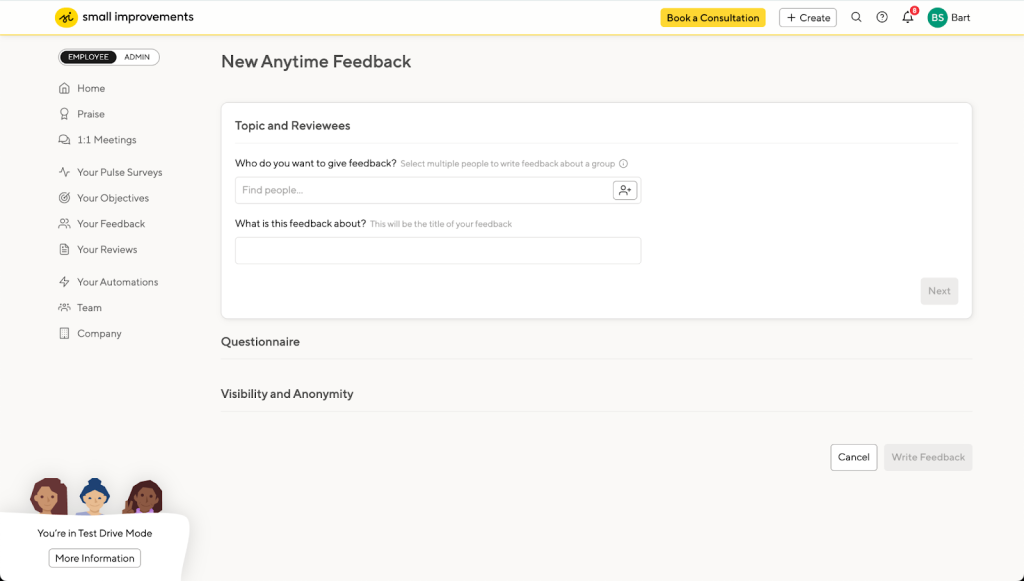
The shared 1:1 agendas were what we used the most. Both the manager and the employee could add topics before a meeting, so conversations started with real things to talk about.
As the team grew, I missed having a deeper goal structure. It keeps goals simple on purpose, which is great early on but something we eventually outgrew.
Pros:
- Flexible review and 360 templates without overengineering.
- Shared 1:1 agendas keep meetings useful, like the formats in our one-on-one meeting templates.
- Everyday feedback and praise sit alongside formal reviews.
- Simple objectives tracking without a full OKR hierarchy.
Cons:
- There’s less depth in OKR hierarchies.
- Reporting and historical data are lighter than in larger platforms.
How Small Improvements Compares to Effy AI: Both are friendly, lightweight options, but they focus on different things. Effy AI speeds up review creation with AI-built forms and summaries, while Small Improvements adds shared 1:1 agendas and everyday feedback that I found missing in Effy. It also offers a longer free trial rather than a free plan, so you can try everything for 30 days. Choose it if you want to stay simple but cover more of the day-to-day conversations.
G2 Rating: 4.3/5
Pricing:
Starts at $3 per user per month, billed annually. 30-day free trial available.
8. Culture Amp – Best for People-Science-Backed Engagement Analytics
I leaned on Culture Amp when I needed to understand why one team’s mood kept dipping. The reports turned a pile of survey answers into a story I could share with leadership, and that alone made it worth the setup.

The comment summaries were my favorite part. After a big survey, I used to spend days reading hundreds of open-text answers. Now I get the main themes in minutes and can spend my time on fixes instead.
What I missed was goal tracking depth. I ended up running a simple goals process on the side, so don’t expect it to replace a full performance tool.
Pros:
- Survey design backed by an in-house team of people scientists.
- AI summaries pull themes out of open-text comments.
- Large benchmark data lets you compare scores by industry and region.
- Ready-made onboarding, exit, and DEI surveys.
Cons:
- Admin customization can feel limited at scale.
- Review and OKR features are lighter than in dedicated performance tools.
How Culture Amp Compares to Effy AI: Effy AI is a review tool first, while Culture Amp is an engagement tool first. If you want to understand how your people feel before you ever run a review, Culture Amp goes much deeper with benchmarks, comment analysis, and survey science. Effy AI is the better pick for quick, affordable reviews, and Culture Amp suits teams that treat engagement as a main priority. Many teams use the two for different jobs.
G2 Rating: 4.5/5
Pricing:
Custom quote.
9. Officevibe – Best for Continuous Engagement Feedback
I used Officevibe (now part of Workleap) to check in on a team’s mood every week, and the short anonymous surveys made people more honest than I expected. A quiet designer once flagged that stand-ups felt rushed, and we fixed it within days.
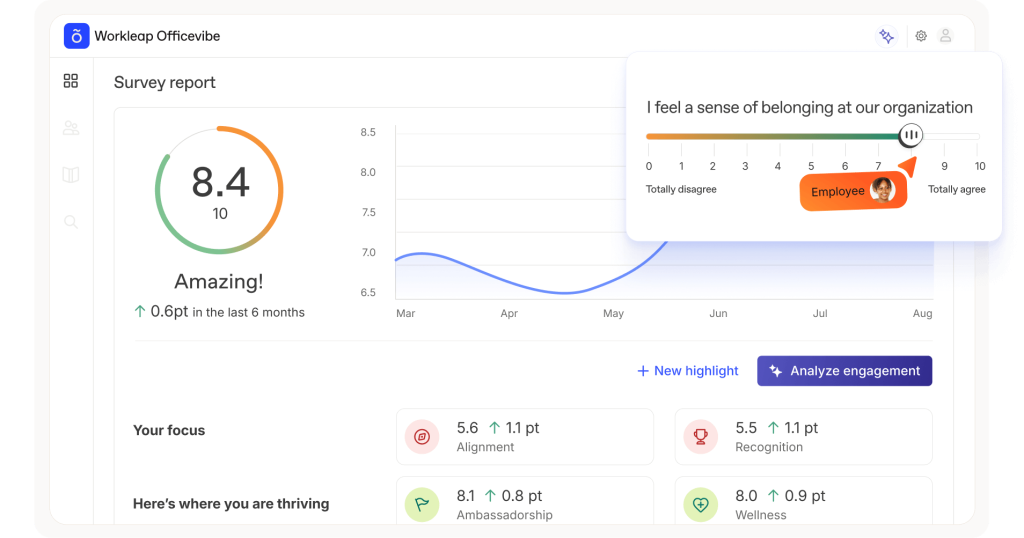
The Good Vibes feature gave colleagues an easy way to say thanks. It felt small, but it added a bit of warmth to everyday work.
It’s not a full review tool, though. I used it alongside a separate review system, and I wouldn’t expect it to replace one.
Pros:
- Short, anonymous pulse surveys encourage honest answers.
- Good Vibes lets colleagues send quick thank-yous, which supports an employee recognition habit.
- Gives managers practical next-step suggestions, not just scores.
- Surveys and feedback work inside Slack and Teams.
Cons:
- Reporting is fairly basic.
- Performance review and goal tools are lighter.
How Officevibe Compares to Effy AI: Effy AI is about reviews, and Officevibe is about the day-to-day mood of your team. Effy AI helps you build and run evaluations quickly, while Officevibe keeps a steady pulse on engagement between those evaluations. I paired Officevibe with a review tool because it doesn’t do both. It also has a minimum of 10 users, so it’s less suited to the smallest teams that Effy AI’s free plan serves. See our Officevibe alternatives guide for more engagement-first options.
G2 Rating: 4.3/5
Pricing:
Starts at $5 per user per month for a minimum of 10 users, billed annually.
10. Peoplebox.ai – Best for Tying OKRs Directly to Everyday Work Tools
I brought in Peoplebox when my team wanted goals that updated from the work they were already doing. Connecting it to our project and chat tools meant goal progress stopped being something people had to remember to update by hand.
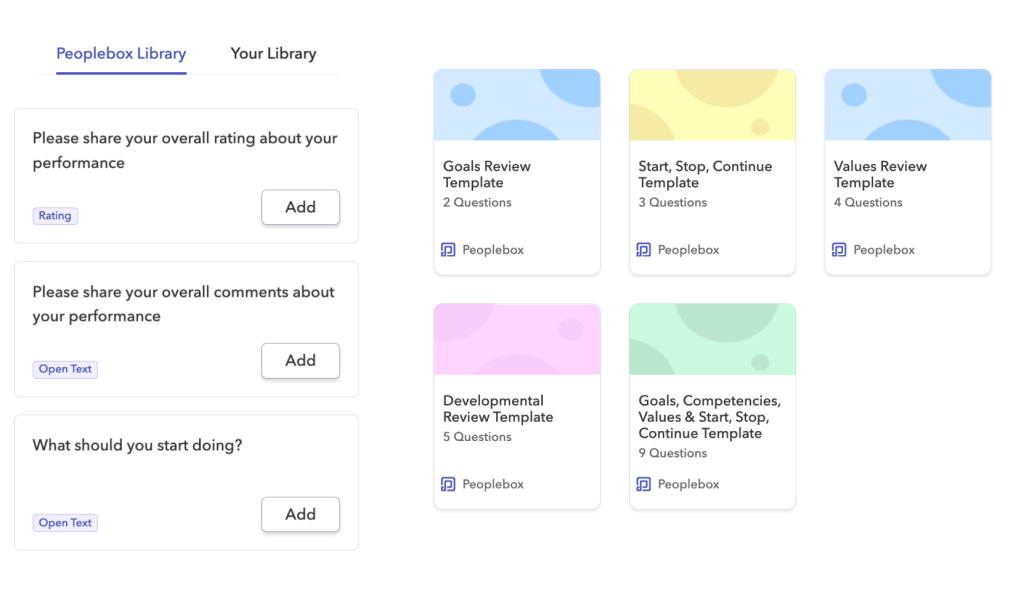
The check-ins inside Slack were a hit. People answered quickly because they didn’t have to log into another place.
The goal-creation screens took me a few tries to get comfortable with, and I found the full price needed a sales conversation to pin down.
Pros:
- Links OKRs to project trackers and chat tools so progress updates itself.
- Combines OKR tracking with lightweight project management.
- Check-ins happen inside Slack or Teams.
- Performance reviews and 360 feedback sit alongside goals.
Cons:
- The entry price is higher than some lighter tools.
- Goal setup can take a few tries to learn.
How Peoplebox.ai Compares to Effy AI: Effy AI has goal and OKR tools, but Peoplebox is built around them, with deeper links to the tools your team already uses. Effy AI is stronger on speed and cost, with AI-built review forms and a free plan, while Peoplebox is stronger when goals are the main event. If goals are your biggest pain point, I’d pick Peoplebox.
G2 Rating: 4.5/5
Pricing:
Starts at $7 per user per month.
11. Betterworks – Best for Enterprise OKR Alignment and Calibration
I worked with Betterworks at a much larger company, and the scale is what I remember. Goals cascaded across many departments and still stayed easy to follow, which would have been a mess in a simpler tool.

The calibration sessions changed how our leaders talked about ratings. Seeing everyone’s scores side by side made it harder for one manager to quietly rate too high or too low.
It’s not a quick setup. I’d say plan for a real project, not an afternoon, and don’t pick it for a very small team.
Pros:
- Cascades goals across many departments and countries.
- Calibration sessions use distribution curves and side-by-side views, as explained in our guide to performance calibration software.
- AI insights flag unusual performance trends and flight risks.
- Integrates with Salesforce, Jira, Slack, and Workday.
Cons:
- It’s too heavy for smaller teams.
- There’s no free trial, and sales are demo-led.
How Betterworks Compares to Effy AI: These two sit at opposite ends. Effy AI is for small teams that want speed and a low price, while Betterworks is for big organizations that need rigor, calibration, and goal alignment across many departments. Effy AI can have you running reviews in an afternoon, but Betterworks is the better choice once ratings fairness and enterprise reporting become board-level topics. Pick Betterworks only once you’re running performance across many teams. For more enterprise-scale picks, check our Betterworks alternatives breakdown.
G2 Rating: 4.4/5
Pricing:
Starts around $8 per user per month per module.
12. Trakstar – Best for Deep, Customizable Review Cycles
I picked Trakstar (now part of Mitratech) for a team that wanted weighted scoring across several skills, not just one overall rating. Building those competency frameworks took a little effort, but the reviews that came out felt much more thoughtful.
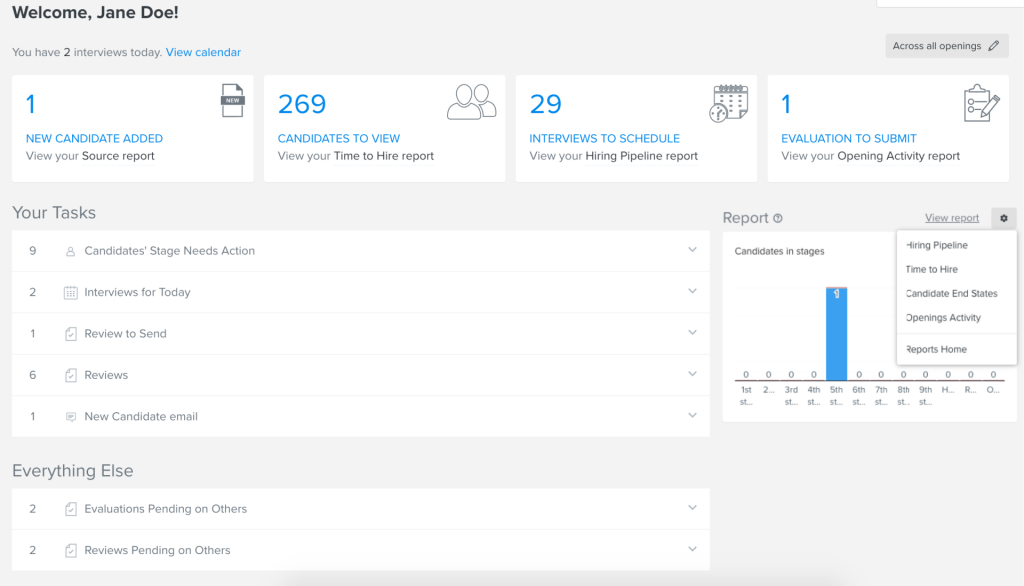
The calibration views helped me spot one department that was rating much harder than the rest. I’d never have caught that from a spreadsheet.
What I missed was everyday check-ins. Trakstar is about the formal review, so I paired it with a lighter tool for weekly 1:1s.
Pros:
- Weighted competency frameworks for detailed review templates.
- Calibration views expose uneven ratings, as covered in our guide to performance review calibration.
- Annual, semi-annual, quarterly, or project-based cycles.
- 360 feedback with anonymity controls.
Cons:
- There are no built-in continuous feedback or 1:1 tools.
- Learning management is a separate product.
How Trakstar Compares to Effy AI: Effy AI builds review forms quickly with AI, while Trakstar lets you design every detail of the review by hand. If you want fine control over scoring and calibration, Trakstar goes further, with weighted competencies and manager calibration that Effy AI doesn’t match. The trade-off is time, because Trakstar takes longer to set up and costs more than Effy AI’s entry plans. Choose Trakstar when review quality and fairness matter more than speed.
G2 Rating: 4.3/5
Pricing:
Custom quote.
How I Evaluated These Tools
When I put a list like this together, I don’t just skim feature pages. I look at how each tool holds up once real people are using it. Here’s the checklist I used:
- User Reviews / Ratings: I start with real user feedback on G2 to see what teams love and where they get stuck.
- Core Features & Functionality: I check what matters most in performance management software: goals, feedback, review cycles, reporting, and integrations.
- Ease of Use: I pay attention to the moments I personally got stuck, like building a first review cycle or finding a report.
- Customer Support: I think about how helpful support was when I actually needed it, not just what the sales team promised.
- Value for Money: I compare the price with what you really get, and whether the number on the page is close to what you’ll end up paying.
- Personal Experience / Expert Insights: Wherever I can, I lean on my own time with these tools and on chats with HR peers who’ve run real review cycles.
My Top 3 Picks for Effy AI Alternatives
After going through all 12, three stood out as the best Effy AI alternatives for most growing teams. Which one is right for you depends on what you want to add next.
1. PeopleGoal
PeopleGoal is my top pick because it kept the quick, friendly setup I liked in Effy and added room to grow. I could shape reviews myself with the no-code builder, then add goals, development plans, and engagement later, all at one flat price I could see upfront.
2. PerformYard
PerformYard earns the second spot for teams that love simple reviews but want more control. I rebuilt our exact process in it, and the integrations with payroll and HR tools saved me from a lot of copy and paste.
3. 15Five
15Five is my third pick if your reviews are fine but the weeks in between feel quiet. The weekly check-ins and coaching prompts got my managers talking regularly, with very little extra work from me.
Find an Effy AI Alternative That Grows With Your Team
Switching performance tools isn’t about leaving something behind. It’s about picking a tool that still feels easy when your team is twice the size and your questions are a lot bigger.
Think about what you’ll need six months from now. If it’s more than reviews, such as goals, 1:1s, or development plans, a platform with more room can save you from changing tools again next year. If you only need simple reviews for a small team, Effy AI may be all you need for now.
Whatever you choose, run one real review cycle before you commit for the year. If you want something that stays easy as you grow, PeopleGoal‘s free trial is a low-effort way to see if it fits.
Frequently Asked Questions
What is the best free alternative to Effy AI?
PeopleGoal offers a 14-day free trial with full access and no credit card required. Teamflect has a free tier too, and Small Improvements offers a 30-day free trial.
Is PeopleGoal cheaper than Effy AI?
Effy AI's paid plans start at about $3 per seat per month, and you pay only for the features you pick. PeopleGoal charges one flat rate of $4 per user per month with reviews, OKRs, and development plans all included, so there's no feature-by-feature pricing to work out.
Does Effy AI have a free plan?
Yes. Effy AI offers a free plan for up to 5 users, with paid plans starting at about $3 per seat per month and custom pricing for Enterprise.
Which Effy AI alternative works best for a small team?
PeopleGoal, Small Improvements, and Teamflect all work well for small teams and have low starting prices. Our guide to performance management software for small businesses goes deeper.
Can I use AI to write performance reviews with other tools?
Yes. Leapsome, PerformYard, and 15Five all offer AI help with drafting reviews or coaching prompts. Our guides on AI performance reviews and using AI to write performance reviews show how to use it well.
Which alternative has the best 1:1 meeting tools?
15Five, Lattice, and Small Improvements all have strong built-in 1:1 agendas. See our guide to 1-on-1 meeting software for more.
Do these platforms support anonymous 360-degree feedback?
Yes. PeopleGoal, Trakstar, and Culture Amp all offer anonymity settings, and PeopleGoal's anonymous forms need no login, even for outside evaluators. See our guide to 360 feedback software for more.
How long does it take to set up an Effy AI alternative?
PeopleGoal's pricing page says implementation takes about 1 to 6 weeks depending on company size and needs. Lighter tools like Small Improvements can be running in a few days.
Ready to 3x Your Teams' Performance?
Use the best performance management software to align goals, track progress, and boost employee engagement.