
Every time someone on my team says “can we just try something new for goals,” I already know they’ve hit the same wall I did with Peoplebox. The base plan looks great in the demo, but the moment you actually need reviews, 360 feedback, and engagement surveys working together, the invoice tells a very different story than the sales call did, and that’s usually what sends people hunting for Peoplebox alternatives.
I’ve rolled this platform out for two different teams now, so I’ve seen both the good parts and the parts that make you open a new tab and start comparing. Peoplebox genuinely does goal tracking well, especially if your team lives in Slack or Asana already. But the module-by-module pricing, a mobile app that feels like an afterthought, and a goal-creation flow that trips people up more than it should, those are real reasons HR teams start looking elsewhere.
This guide isn’t me trying to talk you out of Peoplebox. I tested pricing pages, pulled current user ratings, and thought through what each tool below is actually like to use day to day, not just what its landing page promises. By the time you’re done reading, you’ll know which alternative is worth your trial period.
Best Peoplebox Alternatives?
The best Peoplebox alternatives in 2026 are PeopleGoal, 15Five, Lattice, Betterworks, Leapsome, and Culture Amp. These performance management platforms trade Peoplebox’s add-on pricing and demo-led sales process for flatter costs, clearer setup, or deeper feedback and review tools, depending on what your team actually needs.
Why Switch From Peoplebox?
A study by Glassdoor in 2026 shows that 88% of performance review mentions on its platform are now negative, up from 83% in 2021, so a lot of the frustration with performance software isn’t specific to any one tool. Peoplebox itself holds a strong 4.5 out of 5 on G2 across more than 360 reviews, but here’s what keeps coming up when I talk to people who’ve actually run it for a while:
- The pricing adds up faster than it looks. The entry Professional plan starts around $7 to $8 per user per month, but Peoplebox prices its features in separate modules, Performance Management, 360 Feedback, Compensation, an Individual Development Plan module, and Engagement surveys each carry their own line item, and running all of them together can land closer to $26 per employee per month.
- Public pricing is thin. Beyond the entry tier, most of the real numbers only show up after a sales call, which makes it hard to budget ahead of time or compare quickly against other tools.
- Goal creation isn’t always intuitive. Reviewers on G2 specifically call out that navigating the platform to set up a new goal takes more clicks and more guessing than it should for a tool built around goal tracking.
- The mobile experience lags behind the desktop one. Employees checking in from their phones report a more limited, sometimes laggy experience, which tends to hurt participation in regular check-ins.
- Integrations can feel more manual than advertised. Some reviewers mention that connecting Peoplebox to tools like Slack and Asana takes more manual upkeep than the “AI-native” pitch implies, and syncing OKRs across teams isn’t always smooth.
- There’s no permanent free tier. You get a free trial to test things out, but after that it’s a paid, demo-led conversation, with no lightweight free plan to fall back on for a very small team.
None of this makes Peoplebox a bad tool, it’s genuinely strong for goal tracking and cross-functional alignment. It just means the pricing model and a few usability rough edges push some teams toward something simpler or more transparent.
Quick Peoplebox Comparison: 12 Best Alternatives at a Glance
Here’s a side-by-side snapshot of how each Peoplebox alternative stacks up on use case and pricing before we get into feature-by-feature detail below.
| Tool | Best For | Starting Price | G2 Rating |
| PeopleGoal | Fully customizable performance reviews, OKRs & employee development | Free plan available. Paid plans start at $4/user/month. | 4.5/5 |
| 15Five | Continuous check-ins and manager coaching | $4/user/month | 4.6/5 |
| Lattice | Connecting performance reviews directly to OKRs | Starts at $11/seat/month | 4.7/5 |
| Betterworks | Enterprise OKR alignment and calibration | Starts around $8/user/month | 4.4/5 |
| Leapsome | All-in-one performance, learning & engagement | Custom quote | 4.8/5 |
| Culture Amp | People-science-backed engagement analytics | Custom quote | 4.5/5 |
| Mesh AI | Goal cascading with AI-driven talent insights | $4/user/month | 4.4/5 |
| PerformYard | Straightforward, HR-run review cycles | $5 to $15/person/month | 4.7/5 |
| Trakstar | Deep, customizable review cycles | Custom quote | 4.3/5 |
| Quantum Workplace | Combining engagement surveys with performance data | Custom quote | 4.3/5 |
| BambooHR | Comprehensive HRIS with light performance tools | Custom quote | 4.4/5 |
| Small Improvements | Lightweight performance management & 360s | Starts at $3/user/month | 4.3/5 |
Ratings sourced from G2.com as of 2026. Pricing changes often, confirm current rates directly with each vendor before you buy.
1. PeopleGoal – Fully Customizable Platform for Performance Reviews, OKRs & Employee Development
I moved a team onto PeopleGoal after getting tired of adding up Peoplebox’s module costs every time finance asked what our HR stack actually cost. The difference hit me in the first week: everything (performance reviews, OKRs, engagement, development plans) is already part of the price, so I stopped bracing for a surprise line item every quarter.
What I actually spent my setup time on was the App Store. Instead of accepting whatever workflow Peoplebox shipped, I built our review cycle, our approval chain, and our rating scale exactly how our managers already worked, no developer, no support ticket, just a drag-and-drop builder that did what I needed.
The feature I didn’t expect to love was anonymous feedback. I could send a client or contractor a link to leave 360 feedback with zero login required, which solved a real headache I’d had trying to get external reviewers into a closed system before.
Pros:
- Genuinely no-code customization, not a menu of fixed templates
- One transparent, flat price instead of paying per module
- Anonymous, no-login feedback collection for external evaluators
- Multi-dimensional org charts support real matrixed reporting
Cons:
- No downloadable or on-premise version
- Dark user interface option is not available
How PeopleGoal Compares to Peoplebox: The biggest shift for me was going from “which module do we need this quarter” to just having everything already included. PeopleGoal also fixed the goal-creation friction I kept running into on Peoplebox, since I could rebuild that workflow myself instead of working around it. Peoplebox still makes sense if your team lives inside Slack or Asana and wants goals tightly wired into those tools specifically.
G2 Rating: 4.5/5
Pricing:
Free plan available. Paid plans start at $4/user/month.
2. 15Five – Best for Continuous Check-Ins and Manager Coaching
I tried 15Five at a previous company specifically because our managers weren’t doing 1:1s consistently, and within the first month the weekly check-in habit actually stuck, mostly because the format was short enough that nobody dreaded opening it.
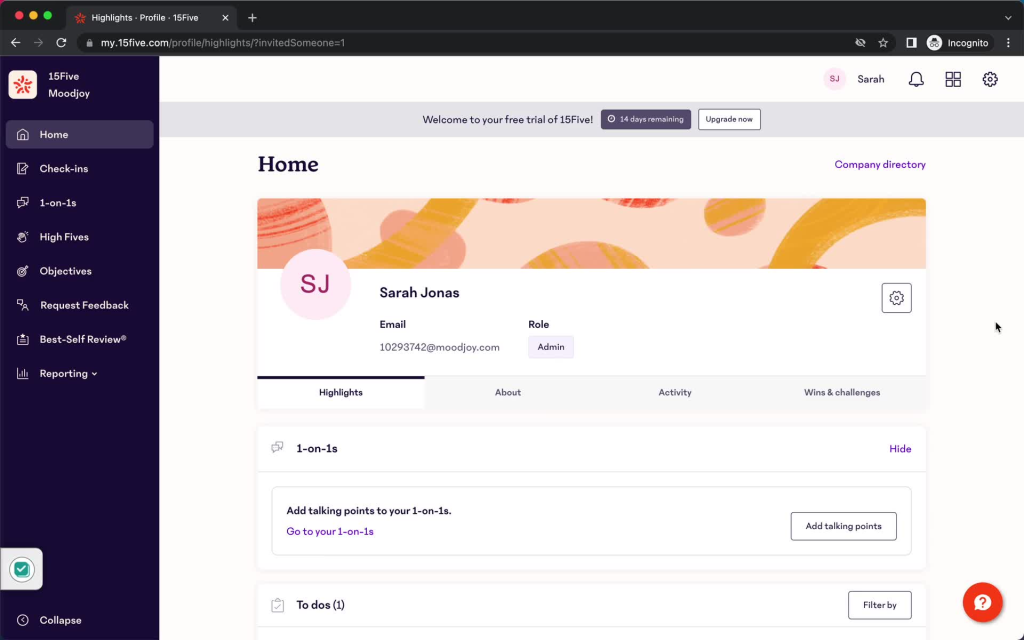
What surprised me was the coaching content built right into the manager experience. I’m not a naturally chatty manager myself, and having suggested talking points pop up during 1:1 prep genuinely made those conversations less awkward.
The Best-Self Review framework took some getting used to. It leans more toward reflection and growth than a hard numbers-driven appraisal, which some of my more metrics-minded colleagues pushed back on at first, but most came around once they saw how it played out over a few cycles.
Pros:
- Weekly check-ins build a continuous feedback habit
- Manager coaching add-ons improve real conversations, not just paperwork
- Pulse surveys and engagement tracking included from the entry tier
- AI Copilot surfaces coaching prompts during 1:1s
Cons:
- Deeper configurability and advanced reporting sit behind higher-priced tiers
- Smaller teams report the pricing feels steep relative to lighter alternatives
How 15Five Compares to Peoplebox: Peoplebox is built around goals and OKRs first, while 15Five puts the weekly conversation front and center, with goals as one part of that rhythm rather than the whole point. If your actual problem is managers going quiet between reviews, I’d pick 15Five over Peoplebox every time. If 15Five’s coaching-first approach still doesn’t check every box for you, our 15Five alternatives roundup covers a few more options.
G2 Rating: 4.6/5
Pricing:
Starts at $4 per user per month, billed annually.
3. Lattice – Best for Connecting Performance Reviews Directly to OKRs
The thing I noticed first when I demoed Lattice was how directly it ties OKRs into the actual review cycle. Calibration conversations I’d previously had to piece together manually from spreadsheets were suddenly grounded in real, visible goal progress.
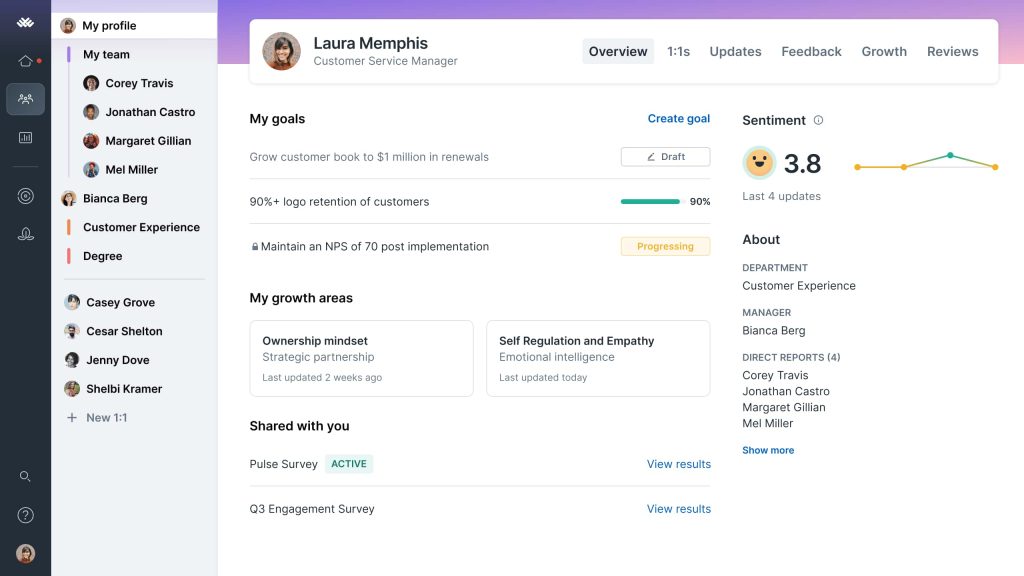
I also liked that I didn’t have to buy everything at once. I started with core performance management and only added engagement surveys once I actually needed them, which felt a lot more deliberate than Peoplebox’s module list, where it’s easy to end up paying for pieces you’re not using yet.
Setup took some patience on my end, mostly because Lattice leans on your existing HRIS to manage employee and manager data, so getting that sync clean upfront saved me headaches later.
Pros:
- OKRs connect directly to performance reviews, so calibration is backed by real goal data
- Modular structure lets you start with core performance management and expand later
- Personalized 1:1 agendas built in alongside Slack, Teams, and HRIS integrations
- Reporting dashboards make it easy to benchmark performance across departments
Cons:
- Sells almost exclusively on annual contracts, with limited monthly billing flexibility
- Full-suite costs can climb quickly once you layer on engagement and compensation add-ons
How Lattice Compares to Peoplebox: Both tools care a lot about goals, but Lattice ties them straight into the review and calibration process in a way I found more polished than Peoplebox’s more goal-first, work-tool-centric approach. Choose Lattice if reviews and calibration matter as much to you as the goals themselves, and stick with Peoplebox if your priority is keeping OKRs tightly synced to your daily work tools.
G2 Rating: 4.7/5
Pricing:
Starts at $11 per seat per month.
4. Betterworks – Best for Enterprise OKR Alignment and Calibration
I brought Betterworks in for a much larger org than the ones I’d used Peoplebox with, and the difference in scale showed up immediately. Cascading goals across dozens of departments actually stayed visible and organized instead of turning into a spreadsheet exercise by week three.

The calibration sessions are what stuck with me most. Instead of managers quietly grading on their own curve, we ran actual distribution sessions with visual comparisons, which took some getting used to but genuinely made ratings feel fairer across teams.
I’ll admit implementation took longer than I expected. This isn’t a tool you spin up in an afternoon, but for an organization the size we were running, that extra setup time paid for itself.
Pros:
- Goal cascading built for large, multi-country organizations
- Calibration module replaces biased manager ratings with structured sessions
- AI surfaces performance anomalies and flight-risk indicators
- Modular structure lets you scope the purchase to what you need
Cons:
- Implementation complexity makes it a poor fit for smaller teams
- No free trial, the entire sales process is demo-led
How Betterworks Compares to Peoplebox: Peoplebox handles goal tracking well for mid-sized, work-tool-connected teams, but once you’re managing goals across a genuinely large, multi-country org, Betterworks’ calibration and benchmarking tools go further than anything I saw in Peoplebox. Choose Betterworks if scale and calibration rigor matter more than daily Slack integration.
G2 Rating: 4.4/5
Pricing:
Starts around $8 per user per month per module.
5. Leapsome – Best for All-in-One Performance, Learning and Engagement
The first time I used Leapsome, what stood out was how naturally a skills gap from a review turned into an actual assigned learning path. I didn’t have to manually connect the dots between “this person needs to grow in X” and “here’s the training for it,” the platform just did it.
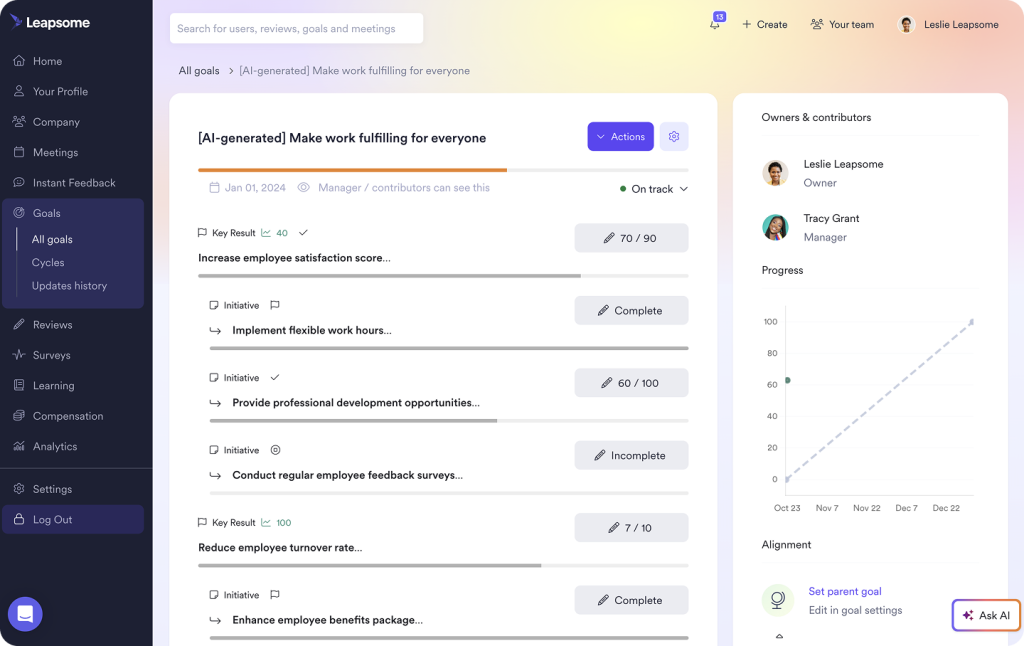
I also leaned on its AI assistant more than I expected to. Drafting review language used to eat up a chunk of my week during cycles, and having a starting point to edit from instead of a blank box saved real time.
Setup wasn’t instant. Getting review templates and cycles configured took real effort upfront, more than I remember spending on Peoplebox’s simpler goal-tracking setup, but once it was running, I didn’t have to touch it much.
Pros:
- Combines performance, 360 feedback, OKRs, surveys, and learning in one platform
- Learning paths connect directly to performance data for real development plans
- Highest reviewer satisfaction score among comparable tools
- AI surfaces themes from engagement survey responses automatically
Cons:
- Initial setup of review templates and cycles requires significant configuration time
- Per-module costs can climb as headcount grows
How Leapsome Compares to Peoplebox: Peoplebox is laser-focused on OKRs tied to work tools, while Leapsome covers a much wider net, performance, learning, and engagement together. If closing skill gaps through actual training matters to you and Peoplebox’s module list already has you covering multiple tools anyway, Leapsome consolidates that into one place.
G2 Rating: 4.8/5
Pricing:
Custom quote.
6. Culture Amp – Best for People-Science-Backed Engagement Analytics
I brought in Culture Amp specifically because our engagement surveys felt disconnected from everything else we tracked, and it fixed that almost immediately. The storyboards turned raw survey numbers into something I could actually walk leadership through, instead of a spreadsheet nobody wanted to open.

The AI-generated summaries of open-text comments saved me hours I used to spend manually reading through hundreds of responses after each survey. I didn’t realize how much time that was costing me until I got it back.
What took adjusting to was how little goal-tracking depth Culture Amp offers compared to Peoplebox. I ended up keeping a lighter goals process running alongside it rather than expecting Culture Amp to replace that entirely.
Pros:
- Survey design and benchmarking backed by an in-house people science team
- AI-generated summaries of open-text feedback save real analysis time
- One of the largest engagement benchmark databases in the category
- Shoutouts recognition feature integrates directly into Slack
Cons:
- No published pricing, and no free trial to test before a sales call
- Rigid workflows and limited admin customization reported by reviewers at scale
How Culture Amp Compares to Peoplebox: Peoplebox treats engagement as one module among several, while Culture Amp treats it as the entire product, with far deeper benchmarking and sentiment analysis than I ever got out of Peoplebox’s engagement add-on. Choose Culture Amp if engagement and culture measurement are your real priority.
G2 Rating: 4.5/5
Pricing:
Custom quote.
7. Mesh AI – Best for Goal Cascading With AI-Driven Talent Insights
Mesh AI and Peoplebox actually get compared against each other a lot, and after using both, I get why. Mesh leans into goal cascading and talent-intelligence framing (think 9-box style talent reviews) in a way that felt a bit more structured than Peoplebox’s work-tool-first approach.
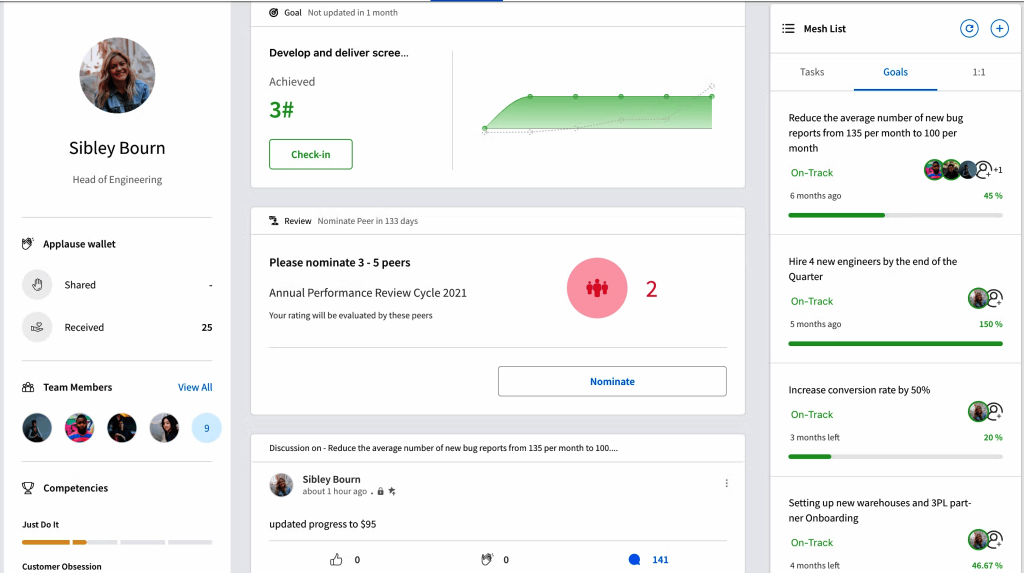
Setup was honestly a bit smoother on Mesh than I expected. I had goals cascading down from company-level objectives within the first couple of days, without needing to configure a bunch of external integrations first.
Where I ran into friction was support response times during a busier stretch, and I noticed Peoplebox’s team was quicker to respond to my questions when I was running both at different points.
Pros:
- Ease of setup that gets goal cascading running quickly
- Talent-intelligence framing helps surface high-potential employees
- Tiered pricing lets smaller teams start cheap and add features later
- Reasonably intuitive interface for day-to-day goal updates
Cons:
- Support response times can lag behind competitors, myself included in that experience
- Deeper features (talent reviews, advanced analytics) sit behind higher tiers
How Mesh AI Compares to Peoplebox: Both tools live in the goals-and-OKRs space, but Mesh AI’s tiered pricing starts lower than Peoplebox’s module-based model, while Peoplebox ties more tightly into daily work tools like Slack and Asana. I’d lean toward Peoplebox if your team already lives in those tools, and toward Mesh AI if you want goal cascading with talent-analytics framing from day one.
G2 Rating: 4.4/5
Pricing:
Starts at $4 per user per month, tiers scale to $12.
8. PerformYard – Best for Straightforward, HR-Run Review Cycles
What I appreciated about PerformYard the first time I set it up was that I didn’t have to adapt my review process to fit the software, I basically rebuilt exactly what we already did on paper, just digitized. That’s rarer than it sounds.
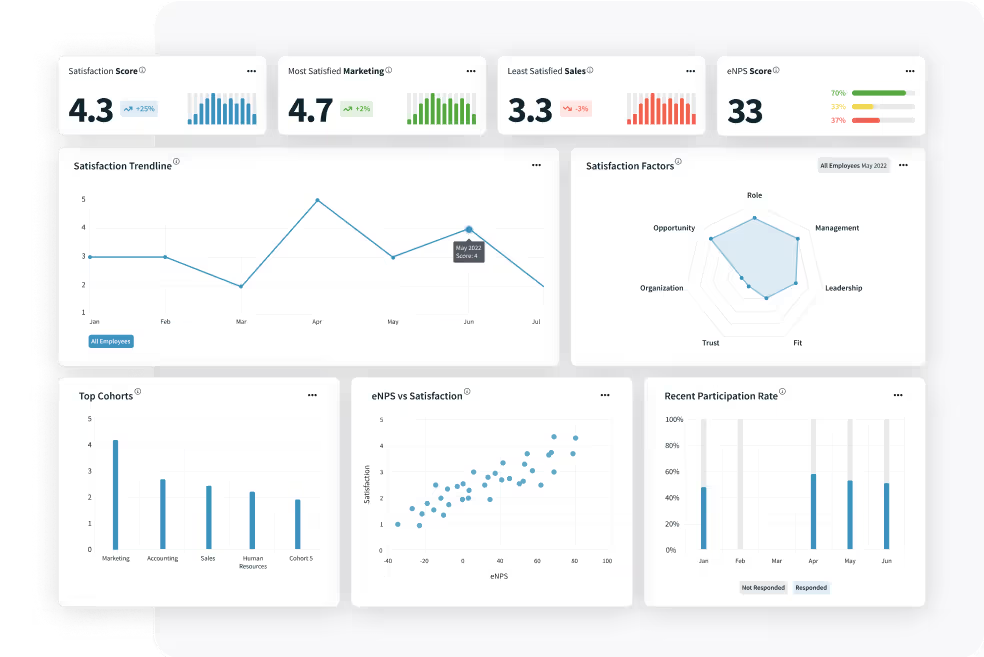
Running continuous feedback, 360 reviews, and project-based reviews side by side in one place meant I wasn’t juggling separate tools for each review type, which had been a minor but constant annoyance with some of my past setups.
The one place I felt PerformYard fall short was engagement tracking. It’s simply not built for that, so if your team wants pulse surveys alongside reviews, you’ll be looking at a second tool regardless.
Pros:
- Recreate your exact existing review process instead of adapting to a template
- Supports continuous feedback, 360, annual, and project-based reviews together
- AI-assisted review drafting and meeting notes speed up cycle completion
- Native integrations with ADP, BambooHR, Workday, Gusto, and Slack
Cons:
- Engagement surveys and goal tracking are lighter than dedicated engagement platforms
- No built-in learning management system for skill development
How PerformYard Compares to Peoplebox: Peoplebox’s strength is goal tracking tied to your work tools, while PerformYard’s strength is rebuilding your exact review process without fighting a template. If reviews are your bigger pain point than goals, I’d pick PerformYard over Peoplebox without much hesitation. See our PerformYard alternatives list for more review-focused picks.
G2 Rating: 4.7/5
Pricing:
Starts at $5 to $15 per person per month.
9. Trakstar – Best for Deep, Customizable Review Cycles
I reached for Trakstar (now part of Mitratech) on a project where weighted competency scoring actually mattered, not just a simple 1-to-5 rating. Being able to build out full competency frameworks gave reviews a level of rigor I hadn’t gotten from a more goals-first tool like Peoplebox.
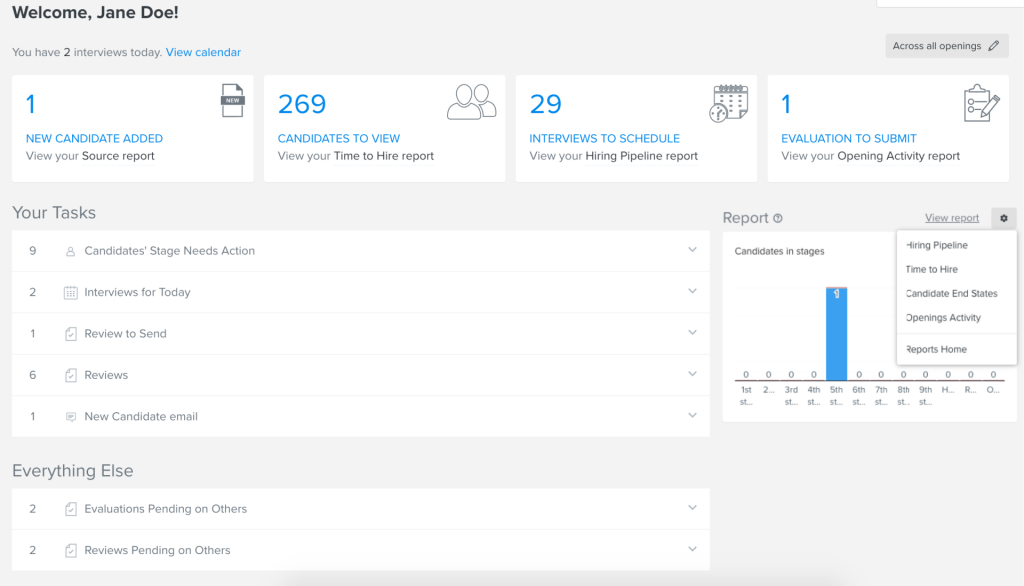
The calibration views genuinely helped me catch a couple of departments rating noticeably harder than others, something I would have missed without that visibility.
What I missed, coming from tools with more continuous check-in features, was any kind of built-in weekly or biweekly 1:1 structure. Trakstar is squarely about the formal review cycle, not the everyday conversation.
Pros:
- Highly customizable review templates with weighted competencies
- Manager calibration views catch rating inconsistencies across departments
- Flexible cycle types: annual, semi-annual, quarterly, or project-based
- 360-degree feedback with configurable anonymity settings
Cons:
- No built-in continuous feedback or 1:1 meeting tools
- Learning management is a separate, sold-separately product
How Trakstar Compares to Peoplebox: Peoplebox keeps goals front and center with reviews as more of an add-on, while Trakstar goes deep specifically on review mechanics and calibration. If your team already has a goals process you like and just needs a stronger review engine, Trakstar fills that gap better than Peoplebox does.
G2 Rating: 4.3/5
Pricing:
Custom quote.
10. Quantum Workplace – Best for Combining Engagement Surveys With Performance Data
I started using Quantum Workplace after getting tired of pulling engagement scores from one system and performance data from another just to answer a simple question: does morale actually track with output on this team? Having both in one view answered that almost immediately.
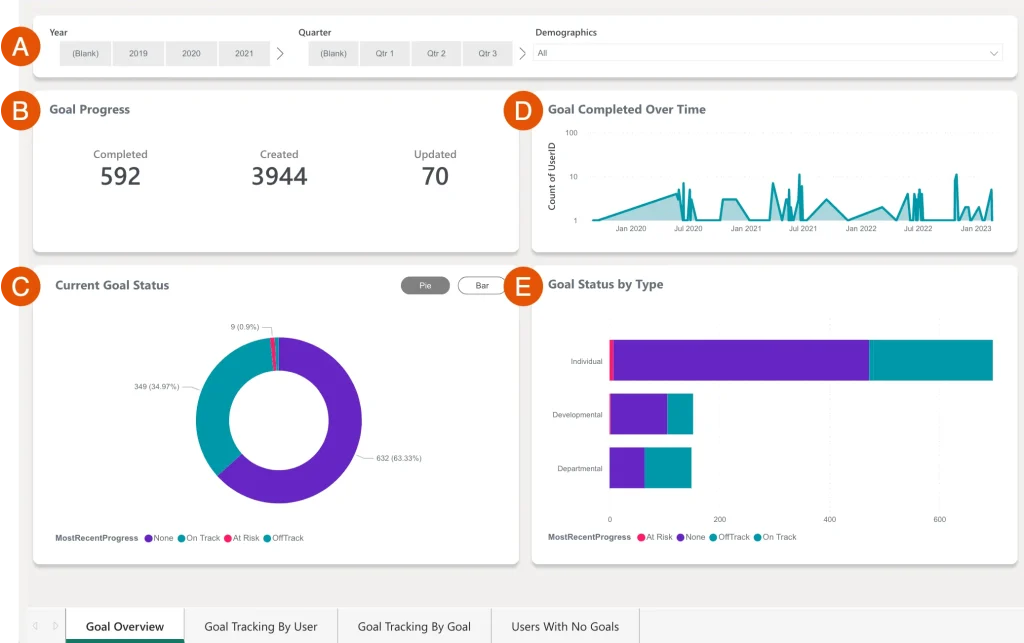
The AI-powered suggestions during review writing were a nice surprise, not a full draft-it-for-me experience, but enough of a nudge to get past a blank text box faster.
Configuration took more planning upfront than I expected, more than what I remember from Peoplebox’s more straightforward goal-setup flow, but the payoff was a report I could actually hand to leadership without stitching two dashboards together myself.
Pros:
- Unites engagement surveys, performance reviews, and recognition in one view
- AI-powered guidance surfaces suggestions during review writing
- Benchmarks performance against one of the largest workplace research databases available
- Strong integrations with BambooHR, Workday, and SAP SuccessFactors
Cons:
- Customization is more limited for complex, multi-step review processes
- No published starting price for the full performance and engagement bundle
How Quantum Workplace Compares to Peoplebox: Peoplebox keeps its engagement features as one module among several, while Quantum Workplace was built specifically to connect engagement and performance in a single report, with a much deeper research base behind it. Choose Quantum Workplace if that connected view matters more to you than tight work-tool integrations.
G2 Rating: 4.3/5
Pricing:
Custom quote.
11. BambooHR – Best for Comprehensive HRIS With Light Performance Tools
I ended up on BambooHR after realizing Peoplebox needed a separate HRIS behind it anyway, and I’d rather consolidate than maintain two systems and keep them in sync manually. Having employee records, onboarding, and basic performance tracking in one place cut down on a genuine amount of admin busywork.
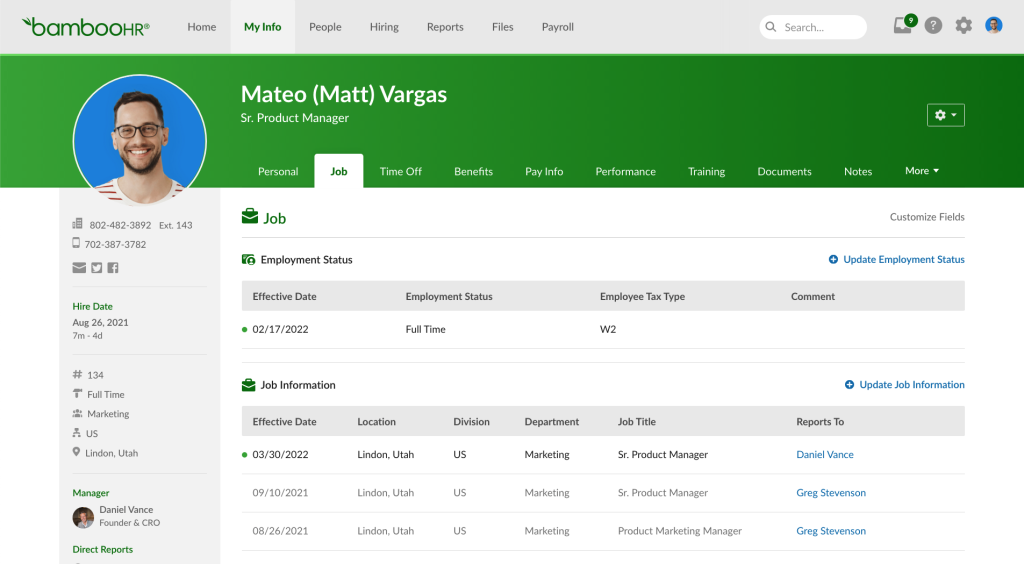
The payroll and applicant tracking pieces were the real draw for me. I wasn’t managing a second tool just to handle hiring and time-off requests anymore, which freed up more of my week than I expected.
Performance management here is noticeably lighter than what I’d built in Peoplebox or a dedicated tool. I wouldn’t expect deep 360 reviews or calibration out of BambooHR without an add-on or a separate tool layered on top.
Pros:
- True all-in-one HRIS with payroll and applicant tracking built in
- Centralized employee records eliminate a second system of record
- Time-off and attendance tracking included natively
- Strong client base with over 150 countries represented
Cons:
- Performance management features are lighter than a dedicated tool like PeopleGoal or Peoplebox
- Users report limited customization for complex approval hierarchies and reporting
How BambooHR Compares to Peoplebox: Peoplebox is a performance and goals layer that still needs an HRIS underneath it, while BambooHR is that HRIS, with lighter performance tools built on top. Choose BambooHR if consolidating your HR stack matters more than deep goal-tracking features, and stick with Peoplebox (plus a separate HRIS) if performance depth is the bigger priority.
G2 Rating: 4.4/5
Pricing:
Custom quote based on modules selected.
12. Small Improvements – Best for Lightweight Performance Management & 360s
I reached for Small Improvements on a much smaller team that genuinely didn’t need Peoplebox’s full module lineup, just simple reviews, feedback, and light goal tracking. It took me an afternoon, not a week, to get a cycle running.
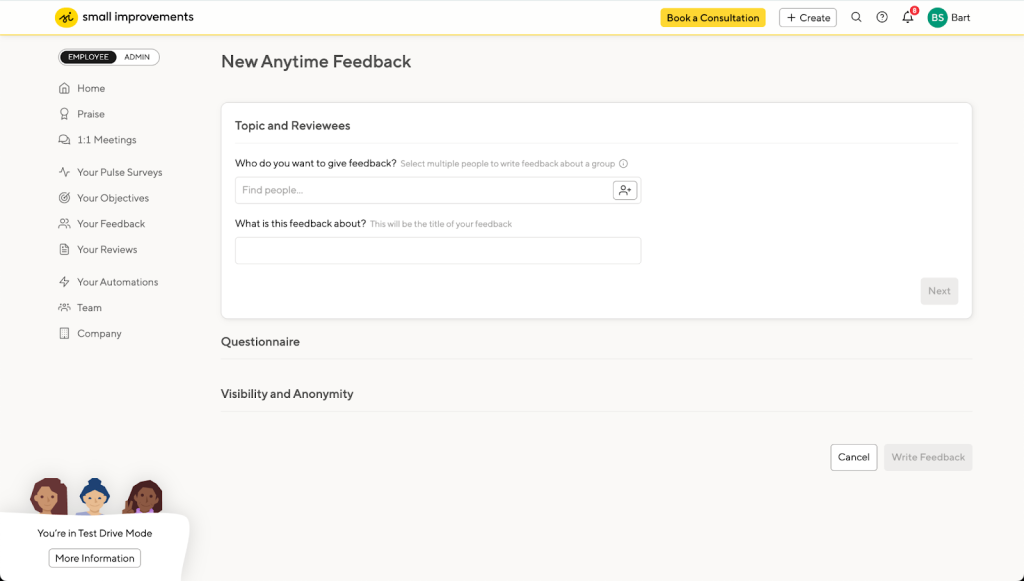
The shared one-on-one agendas were what I ended up using most day to day. Having a running, editable list both manager and employee could see between meetings made those conversations feel less like a formality.
I did miss having a real OKR hierarchy once our team started growing. Small Improvements keeps goal tracking intentionally simple, which is great early on but something I eventually outgrew.
Pros:
- Flexible review and 360-degree feedback templates without overengineering
- Shared one-on-one agendas encourage ongoing dialogue, not isolated moments
- Simple objectives tracking without committing to a full OKR hierarchy
- Intuitive, manager-first interface that eases adoption
Cons:
- Less depth in structured OKR hierarchies compared to Peoplebox or Betterworks
- Reporting and historical data features are lighter than larger platforms
How Small Improvements Compares to Peoplebox: Peoplebox is built for teams that want real OKR structure tied to their work tools, while Small Improvements is for teams that want the basics done well without setting up modules they won’t use yet. Choose Small Improvements if you’re early-stage and want something lightweight.
G2 Rating: 4.3/5
Pricing:
Starts at $3 per user per month, billed annually. 30-day free trial available.
How I Evaluated These Tools
When I put together a list like this, I don’t just skim feature pages and marketing copy. I look at how these tools actually hold up once real teams are using them day to day. Here’s the framework I used to make sure every recommendation here is practical and worth your time:
- User Reviews / Ratings: I start by looking at real user feedback from platforms like G2. This gives me a clear picture of how teams actually experience the tool day to day, what they love, and where it falls short.
- Core Features & Functionality: I focus on what truly matters in performance management software. This includes goal setting, feedback depth, review cycles, reporting, and integrations. If a tool cannot handle these well, it does not make the cut.
- Ease of Use: I pay close attention to how intuitive the platform feels, especially the moments I personally got stuck on, like creating a new goal or setting up a review cycle for the first time.
- Customer Support: From my own experience, implementation is where a lot of tools fall short. I weigh how responsive and helpful support was when I actually needed it, not just what the sales team promised.
- Value for Money: I compare pricing with what the tool actually delivers, especially whether the advertised price is close to what you’ll really end up paying once you add the features you need.
- Personal Experience / Expert Insights: Wherever possible, I lean on my own hands-on time with these tools, plus conversations with HR peers who’ve run real performance cycles on them, to go beyond a surface-level feature comparison.
My Top 3 Picks for the Best Peoplebox Alternatives
After using or evaluating all 12 of these platforms, three consistently stood out as the best Peoplebox alternatives overall. Which one is right for you still depends on what’s been bugging you most about Peoplebox.
1. PeopleGoal
PeopleGoal is my top pick because it directly fixes the two things that frustrated me most about Peoplebox: the module-by-module pricing and the clunky goal-creation flow. Building my own review process and org chart with the no-code App Store meant I stopped working around the platform and started shaping it around how my team actually operates, all at one flat price.
2. 15Five
15Five earns the second spot for teams whose real problem isn’t goals, it’s managers going quiet between formal reviews. The weekly check-in habit and built-in coaching content solved that for me faster than I expected, and it costs about the same as Peoplebox’s entry tier.
3. Leapsome
Leapsome is my third pick if you want to consolidate performance, learning, and engagement into one place instead of running Peoplebox alongside two or three other tools. The setup takes more patience upfront, but I stopped juggling separate systems once it was running.
Find a Peoplebox Alternative That Just Works
Switching performance tools was never really about walking away from Peoplebox for me, it was about wanting something that matched how my team actually worked instead of something we had to work around. A review cycle or a goal check-in shouldn’t feel like extra homework on top of everyone’s real job.
What’s actually bugging you about Peoplebox should point you toward the right fix. If it’s the module pricing creeping up every quarter, look for something with one flat rate. If it’s the mobile app or the goal-creation flow, a few of the tools above solved exactly that for me.
Whatever you pick, run one real cycle in it before committing for a year. If what you want is a tool that bends around your process instead of the other way around, I’d start with PeopleGoal‘s free trial, it’s a low-effort way to see if it actually fits before you decide anything.
Frequently Asked Questions
What is the best free alternative to Peoplebox?
PeopleGoal offers a 14-day free trial with full feature access and no credit card required, which is a solid way to test a flat-priced alternative before committing. Small Improvements also offers a 30-day free trial for teams that want a lighter tool.
Is PeopleGoal cheaper than Peoplebox?
Usually, yes. PeopleGoal charges one flat rate of $4 per user per month with everything included, while Peoplebox's module-based pricing (Performance Management, 360 Feedback, Compensation, IDP, and Engagement each priced separately) can add up to around $26 per employee per month once you're using most of the suite.
Can I migrate historical goal and review data from Peoplebox to a new platform?
Most vendors support CSV or API based data migration, but the depth varies. Confirm before switching whether the new platform imports past goal history and review scores, not just employee profiles.
Which Peoplebox alternative works best for a small team under 20 employees?
Small Improvements and PeopleGoal both report lower minimum spend and faster setup than tools built for enterprise scale, making them better fits for smaller teams looking at performance management software for small businesses.
Does Peoplebox offer a free tier?
No. Peoplebox offers a free trial but no permanent free tier, and its full pricing largely requires a sales conversation to confirm.
Which alternative is best for OKRs specifically?
Betterworks, Mesh AI, and PeopleGoal all offer strong OKR cascading. Betterworks is built for enterprise scale, while PeopleGoal supports SMART goals alongside OKRs with custom scoring rules per team, all at one flat price.
Do these platforms support anonymous 360-degree feedback?
Yes. PeopleGoal, Trakstar, and Culture Amp all support configurable anonymity settings for 360 feedback, and PeopleGoal's anonymous forms require no login at all, even for external evaluators.
How long does it take to implement a Peoplebox alternative?
PeopleGoal's own pricing page states an average implementation window of 1 to 6 weeks depending on company size and requirements, which was in line with what I experienced setting up Peoplebox itself.
Ready to 3x Your Teams' Performance?
Use the best performance management software to align goals, track progress, and boost employee engagement.