
I have sat through more Betterworks demo calls than I can count, and I kept hearing the same thing from HR leaders on the other end of those calls: the platform does what it says on the enterprise tin, but somewhere between a 200-person team and an 800-person one, the calibration process gets harder to run, not easier.
Nobody could tell me what it cost until a sales rep got involved, and nobody could try it before that call happened either. So I went looking for real Betterworks alternatives, the same way I imagine you are right now.
I dug through G2 and Capterra reviews, compared feature sets against real requirements I have seen HR teams bring to the table, and talked to people who made the switch. This guide covers why teams are leaving Betterworks, the top ten alternatives to Betterworks worth evaluating, how I chose them, my top three picks, and where to go from here.
Why Are HR Teams Switching From Betterworks?
If you are reading this, you have probably already lived through most of these. I am laying them out clearly so you know exactly what to check for in whatever replaces it.
- Hidden pricing: Betterworks does not publish rates anywhere on its site, so every single evaluation starts with a sales call just to get a number to compare against.
- No self-serve trial: You cannot sign up and test the product yourself. A demo is required before you see anything, which slows down every Betterworks competitors comparison you try to run.
- Heavy setup: Dedicated onboarding support is typically required to implement it properly, with go-live timelines that stretch well past a single quarter.
- Overkill for smaller teams: Calibration modules, HRIS integrations, and manager coaching tools are built for 500 plus employee programs, so teams under a couple hundred people carry overhead they rarely use.
- Rigid calibration workflows: Teams running a multi-dimensional scoring model, think skills, deliverables, and behaviors as separate weighted categories, often find the framework harder to bend than promised during the sales pitch.
- Manual workarounds still creeping back in: Several HR leads told me they ended up back in Google Sheets for the custom scoring pieces Betterworks could not flex to fit, which defeats the entire point of switching off spreadsheets in the first place.
Top 10 Betterworks Alternatives for HR Teams
I put this list together using verified G2 ratings, product documentation, and pattern research across HR forums, G2 discussion boards, and community feedback. Every tool here solves at least one of the problems listed above in a real, measurable way.
| Tool | Best For | Starting Price | User Rating |
| PeopleGoal | Fully Customizable Performance Reviews, OKRs & Employee Development | 14-day free trial. Paid starts at $4/user/month | 4.5/5 (G2) |
| Lattice | Connecting OKRs Directly to Structured Performance Reviews | Starts at $13/user/month | 4.6/5 (G2) |
| 15Five | Weekly Check-Ins and Continuous Manager Coaching | Starts at $4/user/month | 4.6/5 (G2) |
| Culture Amp | People-Science-Backed Engagement Analytics | Custom Quote | 4.5/5 (G2) |
| Leapsome | All-in-One Performance, Learning & Engagement | Custom Quote | 4.8/5 (G2) |
| Perdoo | Strategy-First OKR Alignment for Small and Scaling Teams | Starts at €6.40/user/month | 4.4/5 (G2) |
| Tability | Lightweight, Habit-Forming Weekly OKR Check-Ins | Starts at $6/user/month | 4.6/5 (G2) |
| Mooncamp | Flexible Goal Execution With Dashboards & Integrations | Starts at €7/user/month | 4.8/5 (G2) |
| Profit.co | Full OKR Lifecycle With Built-In Task Management | Custom Quote | 4.7/5 (G2) |
| PerformYard | Straightforward Review Cycles Without Enterprise Bloat | Starts at $5–10/person/month | 4.7/5 (G2) |
1. PeopleGoal: Best for Fully Customizable Performance Reviews, OKRs & Employee Development
PeopleGoal earned the top spot on my list of Betterworks alternatives because it is the only platform I tested that let me rebuild an entire performance framework from scratch instead of forcing me into someone else’s template.
Using Customizable Workflows (No-Code), I built separate scoring apps for skills based on role and hierarchy, deliverables like goals and OKRs, and behaviors tied to company values, then rolled individual and overall scores into one view without writing a line of code.
OKRs & SMART Goals cascades objectives from company to team to individual, so quarterly calibration conversations are grounded in real progress. The 360 Feedback Software was the deciding factor for me, since it lets multiple managers, peers, and line managers evaluate one employee in a single cycle, something most tools on this list still cannot do cleanly.
Real-Time Analytics & Reports then flags performers and underperformers through custom dashboards, exactly what a scaling calibration process needs.
Pros:
- Customizable Workflows (No-Code) let you build a skills, deliverables, and behaviors scoring model without a developer
- 360 Feedback Software supports multiple managers and external stakeholders evaluating one employee
- OKRs & SMART Goals cascade company objectives down to individual contributors with full visibility
- Real-Time Analytics & Reports replace manual exports with live, custom dashboards for calibration
- Integrations with 500+ platforms, including Workday, ADP, BambooHR, Slack, and Jira
Cons:
- No-Code Workflows are powerful, but building custom scoring apps takes upfront configuration time
- Smaller teams may not need the full Talent Management System right away
How PeopleGoal Compares With Betterworks: Betterworks locks you into its own fixed calibration structure and a sales-led evaluation. As one of the more flexible competitors of Betterworks on the market, PeopleGoal’s no-code workflows let you rebuild your exact review process, scoring model, and org chart around how your company actually operates, backed by a free trial instead of a mandatory demo.
User Rating: 4.5/5 (G2)
Pricing: 14-day free trial. Paid starts at $4/user/month
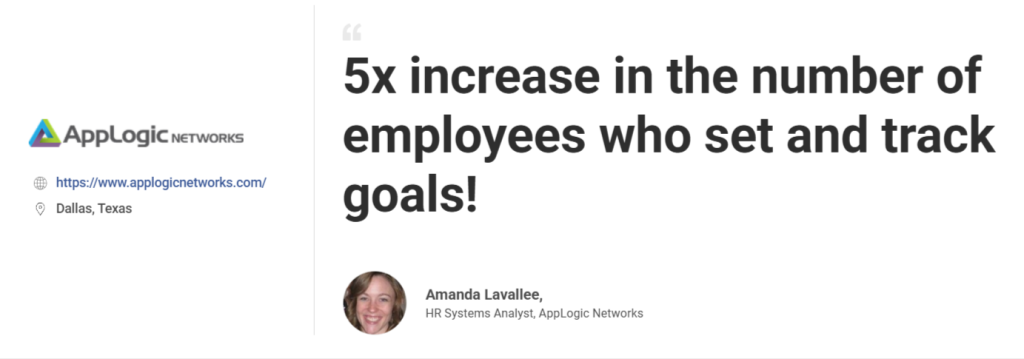
PeopleGoal helped Sandvine make goal setting more flexible and aligned, resulting in a 5x increase in employees actively setting and tracking goals and more than 2,500 individual goals created each year. It also made performance reviews more structured and connected to company objectives.
2. Lattice: Best for Connecting OKRs Directly to Structured Performance Reviews
“Our goals and our reviews never talked to each other.” That is how an HR Director in my network described her old setup right before she moved her team onto Lattice. Every OKR here ties directly into the review cycle, so calibration conversations are grounded in actual goal progress instead of a manager’s memory from six months ago.
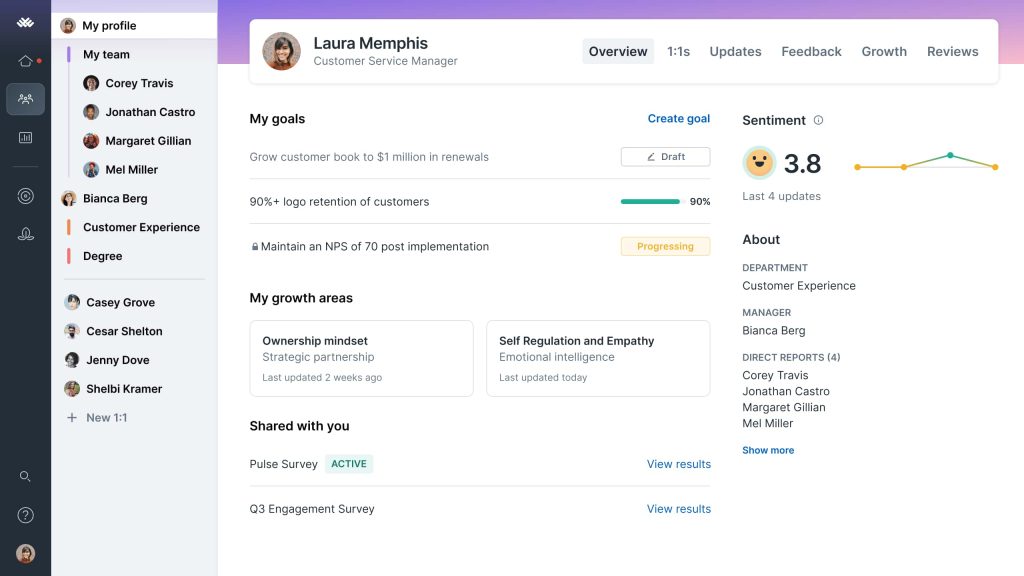
Compared to Betterworks, the biggest relief for her team was the self-serve trial. She could test the platform with her own data before ever getting on a sales call, something Betterworks never offered during her evaluation.
The modular pricing structure also appealed to her, since she started with core performance management and added engagement surveys later once budget allowed. Her one caution: Lattice sells almost exclusively on annual contracts, and the full suite gets expensive fast once you layer on compensation planning and engagement modules for a growing headcount.
Pros:
- OKRs connect directly to performance reviews, so calibration is backed by real goal data
- Manager dashboards surface goal and review history for every direct report in one place
- Compensation planning module ties merit increases directly to review outcomes
- Strong marks for goal-tracking depth and cross-functional alignment visibility
- Personalized 1:1 agendas with Slack, Teams, and HRIS integrations included across tiers
Cons:
- Sells almost exclusively on annual contracts, with limited monthly billing flexibility
- Engagement survey design offers fewer customization options than dedicated engagement platforms
How Lattice Compares With Betterworks: Betterworks treats goals and calibration as a single enterprise-priced bundle you cannot test first. Lattice unifies OKRs and reviews too, but with a self-serve trial and modular pricing that lets you scope the purchase to what you actually need today.
User Rating: 4.6/5 (G2)
Pricing: Starts at $13/user/month
3. 15Five: Best for Weekly Check-Ins and Continuous Manager Coaching
I sat in on a 15Five rollout at a fast growing startup last year, and what struck me was how quickly the weekly check-in habit actually stuck. Where Betterworks is built around structured quarterly cycles and formal calibration sessions, 15Five keeps performance conversations happening every single week without a heavy administrative lift.
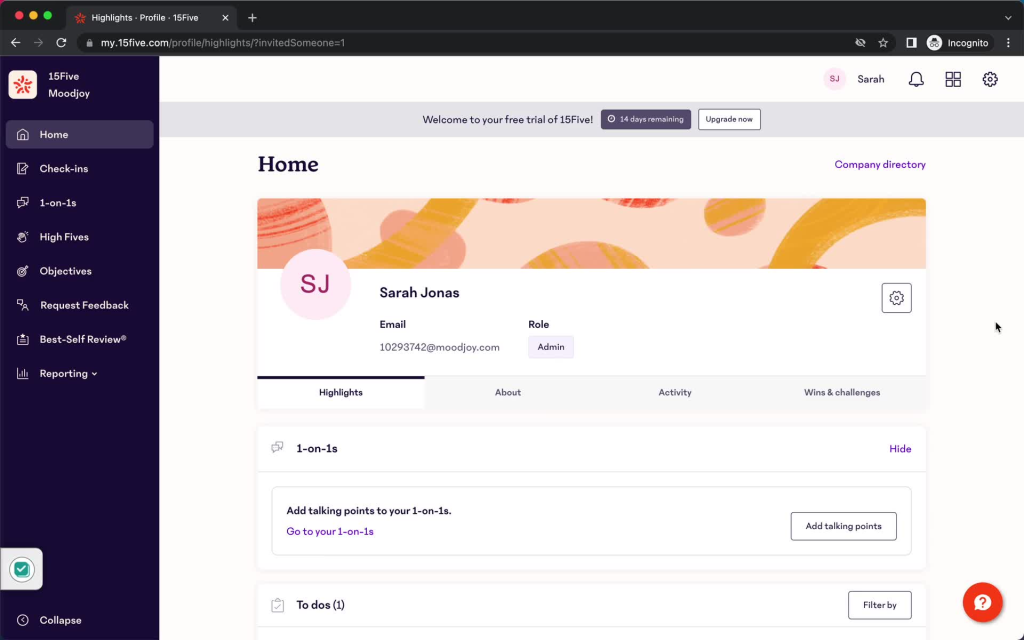
The Best-Self Management methodology ties check-ins, goal tracking, and recognition into one rhythm, and participation on that team climbed noticeably within the first month. Manager effectiveness is where this platform really separates itself. Optional coaching add-ons help first-time managers get better at giving feedback instead of just documenting it.
Setup also took days, not the weeks-long onboarding cycle Betterworks typically requires. The tradeoff is depth. Deeper configurability, advanced reporting, and enterprise-grade calibration all sit behind higher-priced tiers, so bigger organizations with complex calibration needs will eventually outgrow what the entry plan offers and need to budget for the higher tiers.
Pros:
- Weekly check-ins build a continuous feedback habit instead of a once-a-year scramble
- Manager coaching add-ons help new managers improve real conversations, not just paperwork
- Fast, straightforward setup compared to heavier enterprise suites like Betterworks
- Pulse surveys and engagement tracking surface team sentiment between formal cycles
- Strong retention data reported among teams using the platform consistently
Cons:
- Advanced reporting requires more manual setup than teams expect going in
- Enterprise-grade calibration is thinner here than on dedicated calibration platforms
How 15Five Compares With Betterworks: Betterworks leans toward structured, HR-led quarterly cycles with heavy calibration tooling. 15Five is built around weekly cadence instead, which suits teams that want performance conversations happening constantly rather than in scheduled, calibration-heavy bursts.
User Rating: 4.6/5 (G2)
Pricing: Starts at $4/user/month
4. Culture Amp: Best for People-Science-Backed Engagement Analytics
A friend of mine who leads People Science at a mid-size tech company thinks of Culture Amp as more of an engagement lab than a straightforward performance tool, and after watching her team use it, I agree. Built by organizational psychologists, the platform leans heavily on survey design and sentiment analysis, which shows in how confidently her team acts on the results.

AI features summarize open-text survey comments automatically, saving hours during a cycle that used to mean manually coding hundreds of responses by hand. Where Betterworks focuses on goal cascading and calibration, Culture Amp treats engagement analytics as the core product instead, with benchmarking that goes deeper than most alternatives on this list.
My one caution is pricing. Culture Amp does not publish rates anywhere, and her finance team found the annual commitment harder to justify than more transparent competitors of Betterworks on this same list.
Pros:
- Survey design and benchmarking are backed by an in-house team of people scientists
- AI-generated summaries of open-text feedback save significant manual analysis time
- Goal tracking keeps teams aligned with clear ownership and accountability
- Shoutouts feature builds real-time recognition directly into Slack workflows
- Strong global language support for distributed and multinational teams
Cons:
- Less depth on OKR cascading and goal calibration than dedicated performance platforms
- Rigid workflows and limited admin customization reported by reviewers at scale
How Culture Amp Compares With Betterworks: Betterworks’ engagement tools sit inside a broader calibration-heavy suite. Culture Amp treats engagement analytics as the core product, with deeper survey science and sentiment analysis than Betterworks offers as a secondary feature.
User Rating: 4.5/5 (G2)
Pricing: Custom Quote
5. Leapsome: Best for All-in-One Performance, Learning & Engagement
Four separate tools became one for an HR generalist I met at a people ops meetup, and Leapsome was the one she kept after leaving Betterworks behind. It combines performance reviews, 360 feedback, OKRs, engagement surveys, and learning paths inside one connected platform, and reviewers give it the highest satisfaction score of any tool on this entire list.
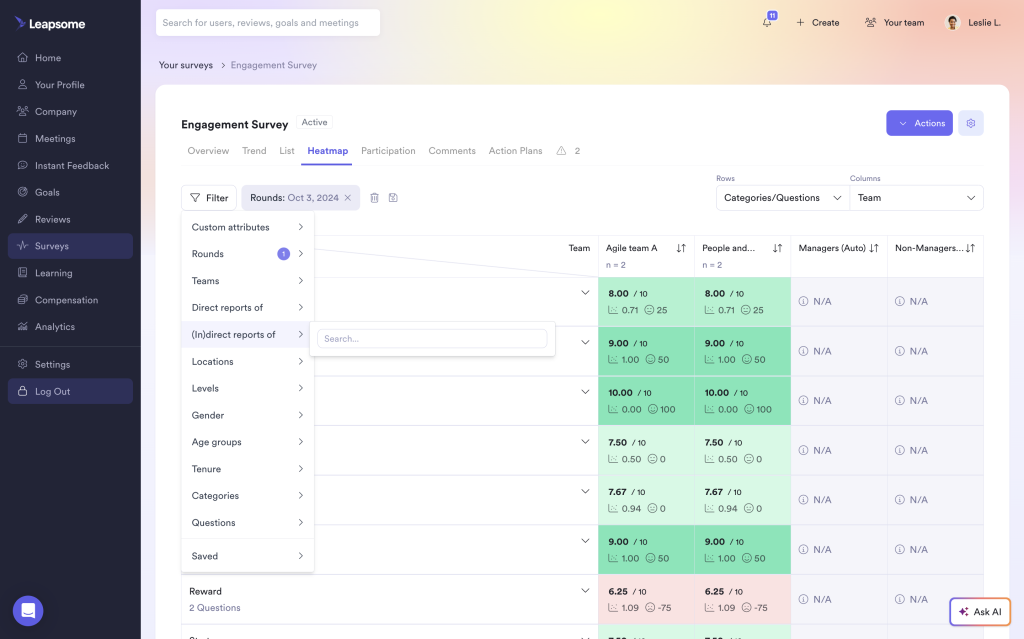
What won her over was the learning paths feature, which let her turn a skills gap identified in a performance cycle into an actual training assignment instead of a vague action item nobody follows up on. AI surfaces themes in survey responses and even drafts review language for managers to edit before sending.
Getting there took real effort on her end, though. Setting up review templates and keeping multiple cycle versions organized ate up upfront time, and the per-module pricing stretched her budget further than expected once headcount grew.
Pros:
- Combines performance, 360 feedback, OKRs, surveys, and learning in a single platform
- Learning paths connect directly to performance data for real development plans
- Highest reviewer satisfaction score among tools on this list
- AI surfaces themes from engagement survey responses automatically
- Clean, modern interface that reduces training time for new admins
Cons:
- Initial setup of review templates and cycles requires significant configuration time
- Learning path content needs to be built and maintained by an admin over time
How Leapsome Compares With Betterworks: Betterworks covers goals, feedback, and calibration but leaves learning management to a separate tool. Leapsome ties development plans directly into the same system, closing a gap Betterworks users often fill by bolting on an LMS.
User Rating: 4.8/5 (G2)
Pricing: Custom Quote
6. Perdoo: Best for Strategy-First OKR Alignment for Small and Scaling Teams
An Operations Lead at a 60-person startup told me she chose Perdoo specifically because she could try it with her whole team before spending a single rupee, which was never an option during her Betterworks demo calls.
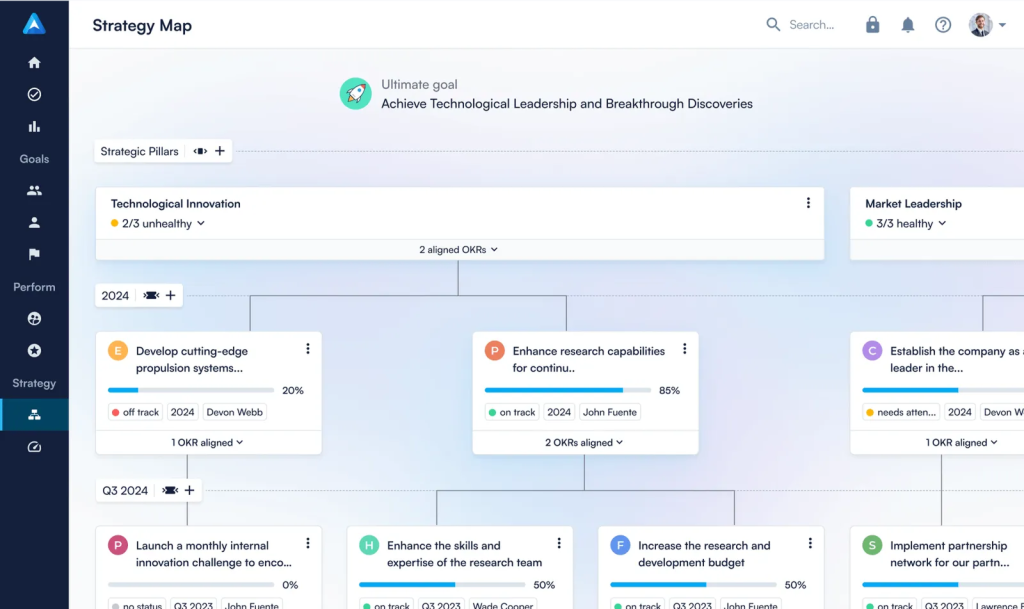
The platform connects a visual strategy map to quarterly OKRs and KPIs, so leadership gets a clear view of how every team’s work ladders up without scheduling a separate alignment meeting. Its Kudos feature keeps engagement alive mid-cycle, right when motivation typically dips between check-ins.
Free for up to five users made it an easy first step for her, and paid tiers stayed predictable as headcount grew past that mark. Where Perdoo shows its limits is depth. Once her org passed a few hundred employees, she found the calibration and multi-rater review tooling thinner than what dedicated performance platforms offer, which eventually pushed her toward a second tool for that piece.
Pros:
- Confidence-based check-ins flag at-risk OKRs before they fall behind schedule
- Visual strategy map connects company objectives to quarterly OKRs and KPIs
- Kudos feature keeps engagement alive between formal check-in cycles
- Simple, self-serve onboarding without a demo-led sales process
- Strong marks for support responsiveness during setup
Cons:
- Calibration and multi-rater review tooling is thinner than dedicated performance platforms
- Better suited to smaller and mid-market teams than large enterprise programs
How Perdoo Compares With Betterworks: Betterworks requires a sales call before you see the product at all. Perdoo lets you test its strategy maps and OKR tracking free with up to five users first, which matters if calibration depth is not your most urgent problem yet.
User Rating: 4.4/5 (G2)
Pricing: Starts at €6.40/user/month
7. Tability: Best for Lightweight, Habit-Forming Weekly OKR Check-Ins
A Product Ops manager I worked with switched to Tability for one reason only: her team kept forgetting to update their OKRs every week, and no amount of nagging on Betterworks fixed it. Tability’s automated weekly check-ins, paired with what she called the best onboarding experience of any tool she tested, made the habit structurally easy to maintain instead of something she had to police.
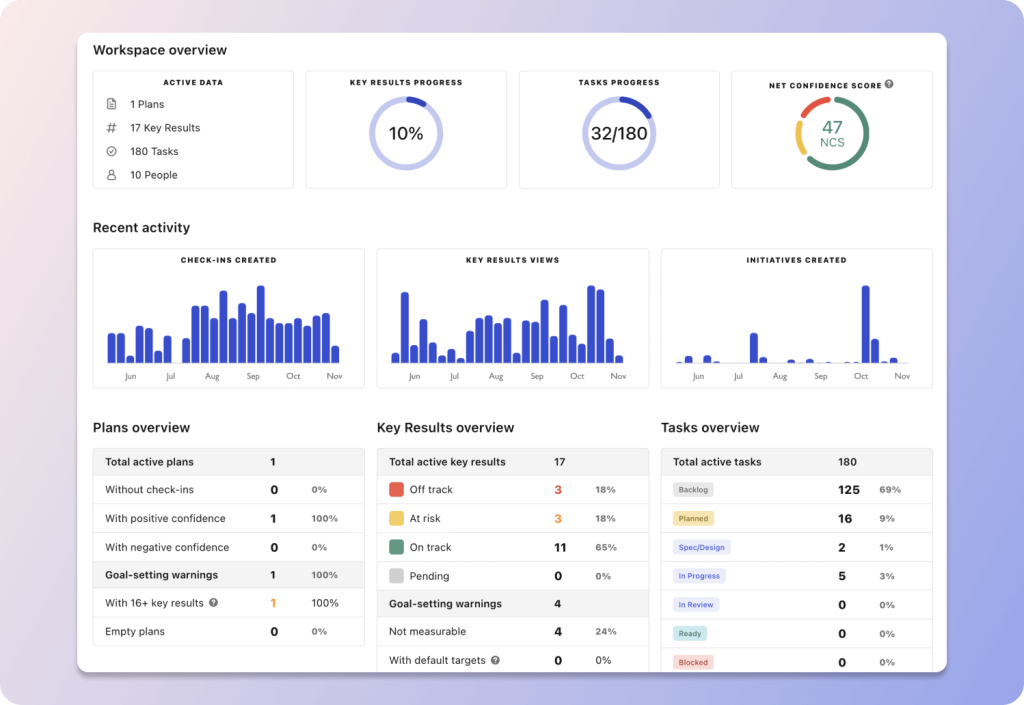
The bulk import feature let her migrate everyone’s existing goals over from spreadsheets in an afternoon rather than a multi-week onboarding project. It skips calibration modules, HRIS integrations, and manager coaching tools entirely, which is fine for a team under two hundred people but becomes a real gap once you need formal review cycles.
She still pairs it with a lightweight review tool for that reason. For teams that just want OKR updates to actually happen every week, it remains her top pick among lighter Betterworks alternatives.
Pros:
- Automated weekly check-ins keep OKR updates from silently going stale
- Bulk import moves existing spreadsheet-based goals over in a single afternoon
- Widely praised onboarding experience gets teams live within days
- Slack and Notion integrations keep OKR updates inside tools teams already use
- Clean, simple interface with a genuinely low learning curve
Cons:
- No calibration modules, so formal review cycles need a second tool
- Not built for HRIS-level integrations or large enterprise deployments
How Tability Compares With Betterworks: Betterworks makes you sit through a sales demo before touching the product. Tability skips that entirely with a self-serve trial, trading calibration depth for a lighter tool built purely to keep weekly OKR check-ins from lapsing.
User Rating: 4.6/5 (G2)
Pricing: Starts at $6/user/month
8. Mooncamp: Best for Flexible Goal Execution With Dashboards & Integrations
Rebuilding an entire goal framework around a rigid HR-driven structure was exactly what wore down a Strategy Lead I spoke with during her time on Betterworks. Mooncamp gave her flexible, customizable goal frameworks instead, letting her design objectives, dashboards, and strategy maps around how her org actually plans work rather than how the software assumed it should.
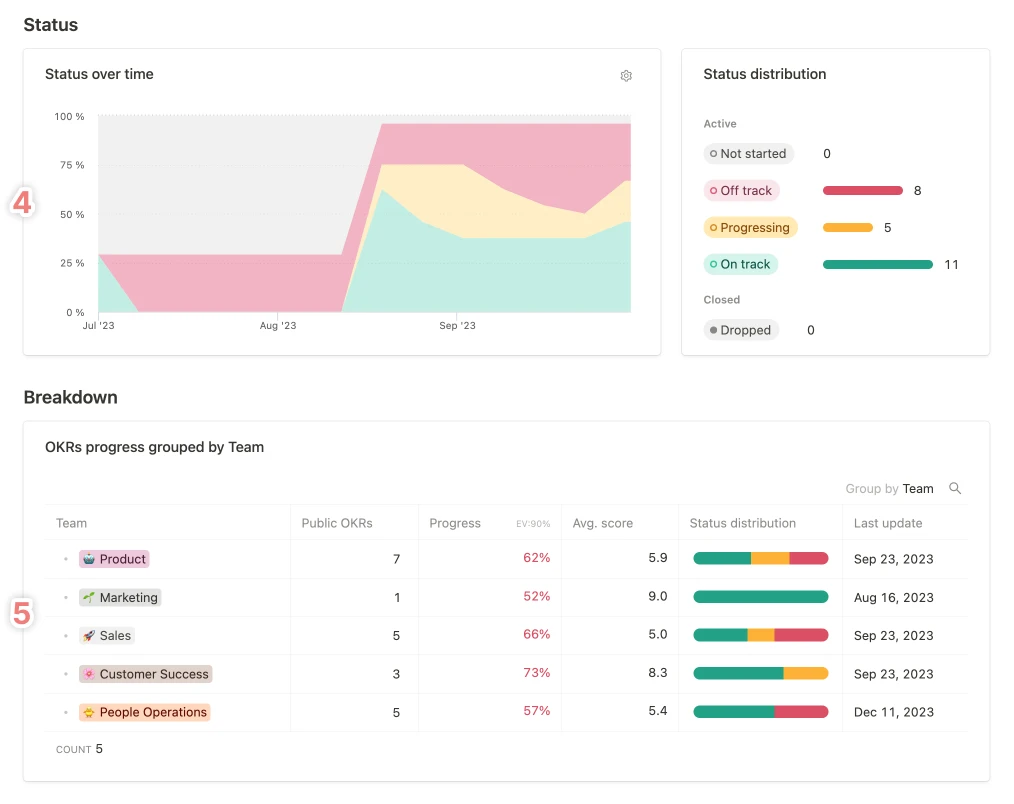
Real-time dashboards flag objectives at risk before they quietly slip, and expert-led onboarding got her whole team live within days. Integrations with Jira, HubSpot, and her existing HR system meant she was not duplicating data entry across three separate tabs every Monday morning.
The tradeoff, in her words, is that Mooncamp leans toward adaptability over the rigid, HR-led workflows larger enterprises sometimes need for formal calibration. For a mid-market team that wants strategy execution without enterprise overhead, she still ranks it among the strongest competitors of Betterworks she evaluated during her search.
Pros:
- Flexible, customizable goal frameworks adapt to how your org actually plans work
- Real-time dashboards flag at-risk objectives before they slip past deadline
- Expert-led onboarding gets teams live in days rather than weeks
- Integrations with Jira, HubSpot, Slack, and HR systems reduce duplicate data entry
- Consistently high marks for ease of use and quality of support
Cons:
- Leans toward adaptability rather than the rigid, HR-led workflows some enterprises need
- Formal calibration tooling is lighter than dedicated enterprise performance suites
How Mooncamp Compares With Betterworks: Betterworks is built for HR-driven programs with rigid, structured workflows. Mooncamp is the opposite by design, built for teams that need adaptability over rigid process, with self-serve pricing instead of Betterworks’ sales-gated evaluation.
User Rating: 4.8/5 (G2)
Pricing: Starts at €7/user/month
9. Profit.co: Best for Full OKR Lifecycle With Built-In Task Management
Getting stuck between separate OKR software and a separate task tracker was the daily headache of an Ops Director I know, and it is exactly why she picked Profit.co when her Betterworks contract came up for renewal.
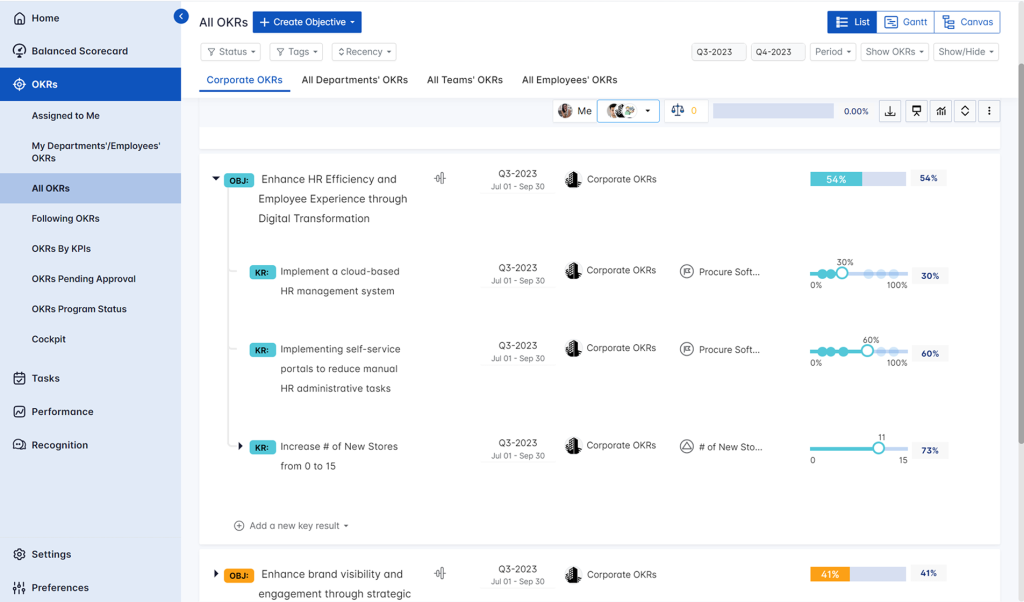
The platform covers the complete OKR lifecycle with built-in task management baked in, so goal updates and daily work sit in one place instead of two disconnected systems her team had to reconcile manually. Eight visualization views let different departments look at the same objectives in whatever format actually makes sense to them, from Kanban boards to Gantt-style timelines.
A genuinely usable free tier let her test the whole workflow with her team before committing budget, something Betterworks never offered during evaluation. Where it asks more of you is depth of customization. Some admins on her team needed a few extra weeks to fully configure workflows exactly the way more mature teams eventually want them.
Pros:
- Complete OKR lifecycle with built-in task management in a single system
- 8 visualization views let departments track objectives their own preferred way
- Alignment maps show how every OKR ladders up across departments in real time
- Strong marks for vendor support and training during implementation
- Continuous product updates, including newer AI-assisted goal authoring features
Cons:
- Initial configuration takes real time to fully customize workflows
- Some workflow automations require an admin comfortable with configuration screens
How Profit.co Compares With Betterworks: Betterworks separates goal tracking from execution work, requiring extra tools to connect the two. Profit.co bakes task management directly into the OKR lifecycle, with a free trial to test it, unlike Betterworks’ demo-only evaluation process.
User Rating: 4.7/5 (G2)
Pricing: Custom Quote
10. PerformYard: Best for Straightforward Review Cycles Without Enterprise Bloat
Simpler than the enterprise-heavy suites she kept getting pitched, that is what an HR manager I met through a local SHRM chapter wanted, and it is why she switched her 120-person company to PerformYard after her Betterworks evaluation stalled.
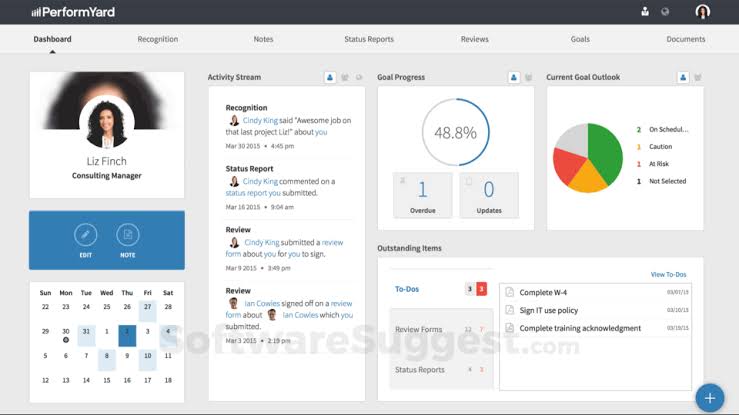
What sold her immediately was how closely PerformYard let her recreate the exact review process she already ran on paper, rather than forcing her team into someone else’s rigid template. Review cycles support continuous feedback, 360 reviews, annual reviews, and project-based reviews side by side, and she said the customization rivaled platforms charging twice as much.
AI-assisted review drafting and meeting notes saved her real time during her last cycle. Integrations with ADP, BambooHR, Workday, and Slack meant she was not exporting spreadsheets after every single review period. The tradeoff is breadth. PerformYard focuses tightly on reviews and goals rather than deep engagement surveys or a built-in learning management system, so teams wanting all three eventually look elsewhere.
Pros:
- Recreate your exact existing review process instead of adapting to a rigid template
- Supports continuous feedback, 360 reviews, annual reviews, and project reviews together
- AI-assisted review drafting and meeting notes speed up cycle completion
- Native integrations with ADP, BambooHR, Workday, and Slack
- Reviewers consistently praise responsive, hands-on customer support during setup
Cons:
- Engagement surveys and goal tracking are lighter than dedicated engagement platforms
- No built-in learning management system for skill development
How PerformYard Compares With Betterworks: Betterworks bundles goals, feedback, and calibration into one enterprise-priced suite. PerformYard strips performance management down to reviews, feedback, and goals done well, which suits HR teams who want depth without Betterworks’ implementation overhead.
User Rating: 4.7/5 (G2)
Pricing: Starts at $5–10/person/month
How I Chose These Betterworks Alternatives
When I evaluate OKR tracking software for this list, I do not just rely on feature lists or marketing claims. I look at how these tools actually perform in real-world scenarios. Here is the framework I used to make sure every recommendation is practical, reliable, and worth considering:
- User Reviews / Ratings: I start by looking at real user feedback from platforms like G2. This gives me a clear picture of how teams actually experience the tool day to day, what they love, and where it falls short.
- Core Features & Functionality: I focus on what truly matters in OKR tracking software. This includes goal setting, key result tracking, alignment views, check-ins, reporting, and integrations. If a tool cannot handle these well, it does not make the cut.
- Ease of Use: I pay close attention to how intuitive the platform feels. A tool might be powerful, but if teams struggle to adopt it, it defeats the purpose. Clean interface, simple navigation, and quick onboarding are non-negotiable for me.
- Customer Support: From my experience, implementation is where many tools fail. I evaluate how responsive and helpful the support team is, especially during setup and ongoing use. Fast, reliable support makes a big difference in adoption.
- Value for Money: I compare pricing with what the tool actually delivers. This is not about picking the cheapest option, but about whether the features, flexibility, and performance justify the cost.
- Personal Experience / Expert Insights: Wherever possible, I rely on my own hands-on experience with these tools. I also consider insights from HR leaders, operations teams, and product managers who use OKR systems in real environments. This helps me go beyond surface-level reviews and highlight what actually works.
Top 3 Betterworks Alternatives
After comparing all ten platforms against each other, three consistently came out on top for different reasons. The right one for you depends on where Betterworks has been letting you down.
1. PeopleGoal
PeopleGoal is my top overall pick because it solves the broadest set of problems Betterworks users face. The no-code Customizable Workflows let you rebuild your calibration model around skills, deliverables, and behaviors exactly as your org needs it, the 360 Feedback Software handles multi-rater evaluations that most tools cannot, and the 500+ native integrations mean you are not routing data through workarounds.
2. Lattice
Lattice earns its place as the top pick if you want the closest enterprise-grade feature match to Betterworks, minus the sales-gated evaluation. Connecting OKRs directly to reviews removes the guesswork that makes annual calibration feel arbitrary, and the self-serve trial lets you confirm fit before signing anything.
3. 15Five
15Five is the right choice if your biggest complaint about Betterworks is that it feels too heavy for how your managers actually work. If you are running weekly check-ins and want manager coaching built into the same platform, 15Five handles that rhythm better than anything else on this list.
Give Your People Team a System That Actually Gets Used
Switching away from Betterworks does not mean settling for less. It means getting a system your managers actually use and a calibration model that matches how your org really scores performance.
Whether you need deeper multi-rater feedback, tighter OKR alignment, or a platform that scales without another migration in two years, there is a stronger fit among these alternatives to Betterworks.
If fully customizable reviews, OKRs, and a scoring model built around skills, deliverables, and behaviors matter most, start with PeopleGoal. Its no-code workflows adapt to how your company works, backed by 500+ integrations and a free trial with no sales call required.
Map your next review cycle into that free trial, then decide.
Frequently Asked Questions
Can I migrate our historical Betterworks review data to a new platform?
Most vendors support CSV or API-based data migration, but the depth varies. Confirm before switching whether the new platform can import past review scores and goal history, not just employee profiles, so managers have context going into the first new cycle.
How difficult is it to run parallel review cycles during a transition period?
The safest approach is running your current Betterworks cycle and a pilot cycle in the new tool simultaneously for one full review period. This confirms data accuracy and manager comfort before you fully retire Betterworks.
Which platform is easiest for a small HR team with no dedicated admin?
15Five, Tability, and PeopleGoal all report faster setup times and lower ongoing admin overhead compared to enterprise-oriented platforms with Betterworks-style implementation timelines.
Do these platforms support anonymous 360 feedback?
Yes. PeopleGoal, Culture Amp, and Leapsome all support configurable anonymity settings for 360 feedback, letting you adjust visibility per review cycle depending on sensitivity.
How do I evaluate AI features without falling for marketing claims?
Ask every vendor for a live demo using your own sample data during the sales process. Request specifically to see sentiment analysis, review drafting, or calibration coaching in action rather than a pre-built screenshot.
Ready to 3x Your Teams' Performance?
Use the best performance management software to align goals, track progress, and boost employee engagement.