
A founder messaged me last month, halfway through her second quarter on Mesh AI, asking why her team’s goals still felt scattered even after the rollout. That question is usually what sends people searching for Mesh AI alternatives, not a single bad experience, but a slow realization that the tool and the team just aren’t moving in step.
Over the years, I’ve sat in on enough of these evaluations to notice a pattern. Mesh AI genuinely earns its spot for teams that want goal cascading and continuous feedback in one dashboard. But no performance tool is built for every team, and the right one usually comes down to how your org is structured, how predictable you want your costs to be, and how much you’d rather build yourself versus buy off the shelf.
That’s the lens I used for this guide. I compared current pricing, pulled verified user ratings, and lined each tool up against what actually matters to HR teams day to day, things like ease of setup, real support, and room to customize without a developer. Read through, and you’ll walk away knowing which alternative actually fits your team, and why.
What Are the Best Mesh AI Alternatives?
The best Mesh AI alternatives in 2026 are PeopleGoal, 15Five, Leapsome, Betterworks, Peoplebox.ai, and PerformYard. These performance management platforms replace Mesh AI’s tiered, add-on-heavy pricing with flatter pricing, deeper customization, or stronger support, depending on what your team needs most.
Why Switch From Mesh AI?
A study by Glassdoor in 2026 shows that 88% of performance review mentions on its platform are now negative, up from 83% in 2021, so employee frustration with performance management is bigger than any one vendor. Mesh AI itself holds a respectable 4.4 out of 5 on G2 across more than 350 reviews, but a few patterns keep showing up when it’s compared head-to-head against other tools in the category:
- Pricing scales quickly across three tiers. Mesh AI’s Foundations plan starts at $4 per user per month, but Growth jumps to $8, and Excellence runs $12 per user per month. Features like deeper analytics, talent reviews, and advanced calibration tend to sit behind the higher tiers, so the price you see on the homepage often isn’t the price you end up paying.
- Overall product satisfaction trails category leaders. When reviewers compare Mesh AI directly against tools like PerformYard and Leapsome on G2, its overall satisfaction score comes in noticeably lower, even though its star rating looks solid on its own.
- Support gets mixed reviews. Several head-to-head G2 comparisons show Mesh AI scoring lower on quality of support than competitors like PerformYard and Leapsome, which matters most during rollout and your first few review cycles.
- Continuous feedback and goal clarity score behind some rivals. In direct comparisons, reviewers rate Mesh AI’s continuous feedback and goal-setting tools a bit behind category specialists like Betterworks, which focuses heavily on OKR cascading and calibration.
- It’s a performance layer, not a full HRIS. Mesh AI leans on integrations to pull in employee and manager data, so teams without a clean, connected HRIS sometimes find setup takes longer than expected.
None of this makes Mesh AI a bad product. It makes it a specific kind of product: tiered, integration-dependent, and built for teams that already have their HR data house in order. If your team wants simpler pricing, stronger support, or more built-in flexibility, one of the alternatives below is worth a look.
Quick Comparison: Best Mesh AI Alternatives at a Glance
Here’s a side-by-side snapshot of how each Mesh AI alternative stacks up on use case and pricing before we get into feature-by-feature detail below.
| Tool | Best For | Starting Price | G2 Rating |
| PeopleGoal | Fully customizable performance reviews, OKRs & employee development | Free plan available. Paid plans start at $4/user/month. | 4.5/5 |
| 15Five | Continuous check-ins and manager coaching | $4/user/month | 4.6/5 |
| Leapsome | All-in-one performance, learning & engagement | Custom quote | 4.8/5 |
| Betterworks | Enterprise OKR alignment and calibration | Starts around $8/user/month | 4.4/5 |
| Peoplebox.ai | Tying OKRs directly to everyday work tools | $7/user/month | 4.5/5 |
| PerformYard | Straightforward, HR-run review cycles | $5 to $15/person/month | 4.7/5 |
| Culture Amp | People-science-backed engagement analytics | Custom quote | 4.5/5 |
| Bridge | Combining learning and performance in one platform | Custom quote | 4.2/5 |
| Trakstar | Deep, customizable review cycles | Custom quote | 4.2/5 |
| BambooHR | Comprehensive HRIS with light performance tools | Custom quote | 4.4/5 |
| Small Improvements | Lightweight performance management & 360s | Starts at $3/user/month | 4.3/5 |
| Quantum Workplace | Combining engagement surveys with performance data | Custom quote | 4.3/5 |
Ratings sourced from G2.com as of 2026. Pricing changes often, confirm current rates directly with each vendor before you buy.
12 Best Mesh AI Alternatives
1. PeopleGoal – Fully Customizable Platform for Performance Reviews, OKRs & Employee Development
PeopleGoal is a fully customizable platform for performance reviews, OKRs, and employee development, built around a no-code app engine instead of a fixed set of tiers. Where Mesh AI locks deeper analytics and calibration behind its Growth and Excellence plans, PeopleGoal’s App Store gives HR 30 plus ready-made templates across performance, engagement, development, and core HR, all included at one price.
The platform’s biggest differentiator is that customization happens at the HR level, not the IT level. Review forms, approval chains, rating scales, and permission rules are all built through a drag-and-drop workflow builder, which means a process change that would take weeks with a rigid, tiered tool can happen the same day.
PeopleGoal also stands out for how it handles feedback collection. Anonymous 360-degree feedback can be gathered from external clients, contractors, or partners through a shared link with no login required, and multi-dimensional org charts let more than one manager evaluate the same employee, which solves a real structural gap in tools built around a single HRIS-linked manager field.
Pros:
- Genuinely no-code customization, not a menu of fixed templates
- One transparent, flat price instead of tiered feature gating
- Anonymous, no-login feedback collection for external evaluators
- Customizable Workflows (No-Code) extend beyond reviews into onboarding and attendance apps, not just performance cycles
Cons:
- No downloadable or on-premise version
- Dark user interface option is not available
How PeopleGoal Compares to Mesh AI: PeopleGoal wins for HR teams that want to shape the platform around how their org actually works, rather than paying more each time they need a feature that Mesh AI has gated behind a higher tier. It replaces Mesh AI’s three-tier pricing with one flat rate that already includes performance reviews, engagement surveys, and development plans, and it adds anonymous feedback and matrixed org charts that Mesh AI doesn’t offer natively. Mesh AI still makes sense if your team specifically wants its talent-intelligence framing and already has a clean HRIS feeding it data.
G2 Rating: 4.5/5
Pricing:
Free plan available. Paid plans start at $4/user/month.
2. 15Five – Best for Continuous Check-Ins and Manager Coaching
15Five is built around weekly check-ins instead of scheduled review cycles, treating performance management as an ongoing conversation rather than a once or twice a year event. The platform pairs that cadence with built-in manager coaching content, aimed at helping first-time managers get better at giving feedback.
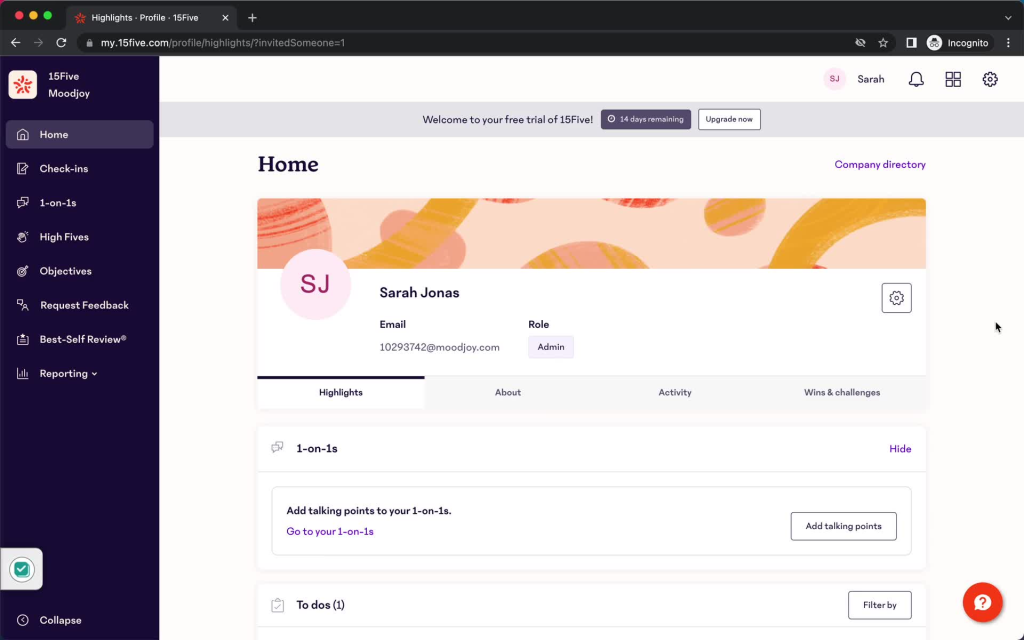
Its AI-powered Copilot suggests talking points and insights during 1:1s in real time, and the Manager Effectiveness Index tracks how well managers actually support their teams over time, something Mesh AI doesn’t measure directly.
The Best-Self Review framework leans toward reflection and personal growth rather than a purely metrics-driven appraisal, which tends to resonate with teams that want reviews to feel less clinical.
Pros:
- Weekly check-ins build a continuous feedback habit
- Manager coaching add-ons improve real conversations, not just paperwork
- Pulse surveys and engagement tracking included from the entry tier
- AI Copilot surfaces coaching prompts during 1:1s
Cons:
- Deeper configurability and advanced reporting sit behind higher-priced tiers
- Smaller teams report the pricing feels steep relative to lighter alternatives
How 15Five Compares to Mesh AI: Both tools price their entry plan at roughly the same point, but 15Five puts more weight on manager coaching and weekly rhythm, where Mesh AI leans harder into goal cascading and talent analytics. Reviewers also tend to rate 15Five’s support and overall satisfaction higher in direct comparisons. Pick 15Five if coaching and continuous check-ins matter more than deep OKR tooling, and pick Mesh AI if goal cascading is your primary need.
G2 Rating: 4.6/5
Pricing:
Starts at $4 per user per month, billed annually.
3. Leapsome – Best for All-in-One Performance, Learning and Engagement
Leapsome combines performance reviews, 360 feedback, OKRs, engagement surveys, and learning paths inside one connected platform, aiming to close the gap between identifying a skill issue and actually doing something about it.
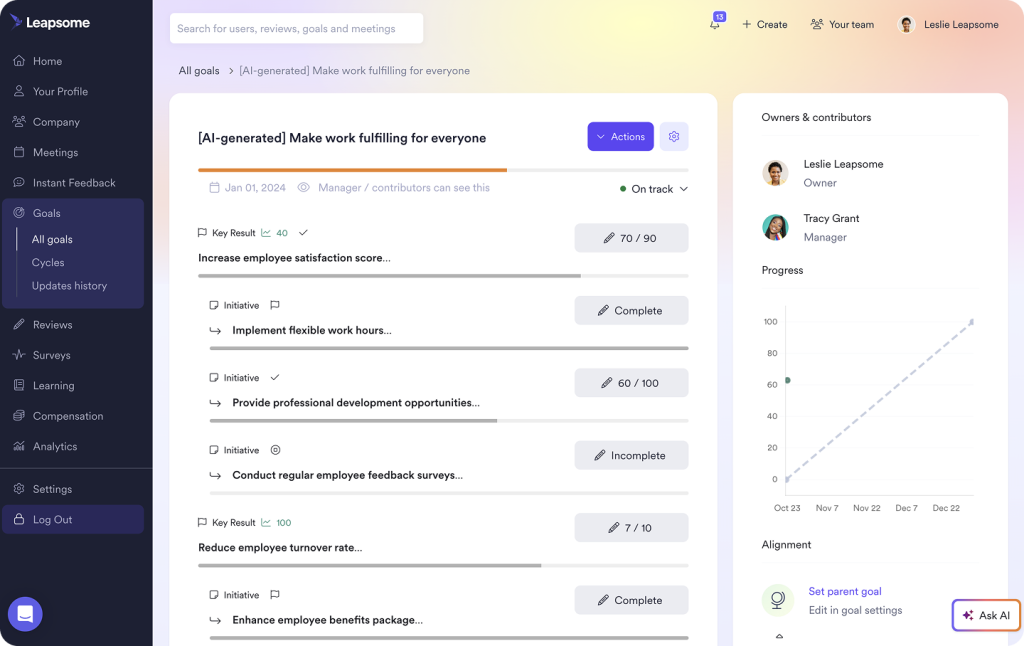
Its learning path feature ties development plans directly to review data, so a skills gap surfaced during a performance cycle can turn into an assigned training path instead of a vague action item that never gets revisited.
Leapsome’s AI assistant also helps draft review language and surfaces themes across open-text survey responses, which reviewers consistently cite as one of the platform’s strongest features, reflected in a satisfaction score that outpaces most tools in this category, Mesh AI included.
Pros:
- Combines performance, 360 feedback, OKRs, surveys, and learning in one platform
- Learning paths connect directly to performance data for real development plans
- Consistently rated higher for ease of use and support than Mesh AI in direct comparisons
- AI surfaces themes from engagement survey responses automatically
Cons:
- Initial setup of review templates and cycles requires significant configuration time
- Per-module costs can climb as headcount grows
How Leapsome Compares to Mesh AI: Mesh AI covers goal cascading and performance reviews well, but reviewers consistently rate Leapsome higher on ease of use, implementation speed, and support quality when the two are compared side by side on G2. Leapsome also builds learning paths directly into the review cycle, something Mesh AI doesn’t offer natively. Choose Leapsome if learning and development sit at the center of your performance strategy. If learning isn’t your top priority, our Leapsome alternatives guide breaks down other options.
G2 Rating: 4.8/5
Pricing:
Custom quote.
4. Betterworks – Best for Enterprise OKR Alignment and Calibration
Betterworks is built for large, distributed organizations that need goal cascading and calibration at real scale, the kind of environment where a spreadsheet-based OKR process breaks down fast.

Its calibration module replaces manager-biased ratings with data-driven distribution sessions, where managers propose ratings and HR facilitates the conversation using visual distribution curves and side-by-side comparisons.
In direct comparisons with Mesh AI, reviewers rate Betterworks noticeably higher on continuous feedback, goal-setting clarity, and customizable review forms, which makes it a natural first stop for teams whose main complaint about Mesh AI is that goal tracking feels a bit loose.
Pros:
- Goal cascading built for large, multi-country organizations
- Rated higher than Mesh AI on continuous feedback and goal-setting clarity by G2 reviewers
- AI surfaces performance anomalies and flight-risk indicators
- Modular structure lets you scope the purchase to what you need
Cons:
- Implementation complexity makes it a poor fit for smaller teams
- No free trial, the entire sales process is demo-led
How Betterworks Compares to Mesh AI: Both platforms build their pitch around OKRs and goal cascading, but Betterworks is designed for enterprise scale, with calibration and benchmarking tools that go further than what Mesh AI offers at a similar stage of growth. Choose Betterworks if your organization spans thousands of employees across multiple countries, and choose Mesh AI or PeopleGoal instead if you’re mid-market and don’t need enterprise-grade calibration infrastructure. For more enterprise-scale picks, check our Betterworks alternatives breakdown.
G2 Rating: 4.4/5
Pricing:
Starts around $8 per user per month per module.
5. Peoplebox.ai – Best for Tying OKRs Directly to Everyday Work Tools
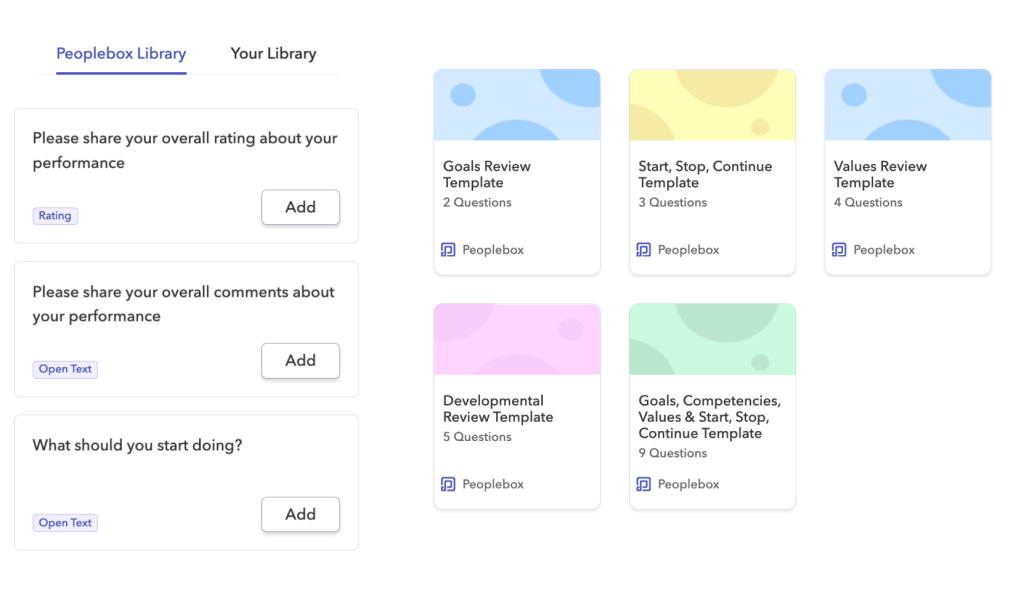
Peoplebox.ai pitches itself as an OKR and performance platform built to sit directly on top of the tools your team already works in, syncing goals with project trackers, Slack, and Teams instead of living as a separate destination employees have to remember to open.
In head-to-head G2 comparisons, reviewers consistently rate Peoplebox.ai as easier to administer and do business with than Mesh AI, and they also rate its ongoing support and product direction more favorably.
The platform layers in project and task management alongside its OKR tooling, so goal progress can update automatically as work gets done in connected tools, rather than requiring a separate manual check-in.
Pros:
- Deep integrations with project and work-tracking tools keep OKRs current automatically
- Reviewers rate ease of administration and support higher than Mesh AI in direct comparisons
- Combines OKR tracking with lightweight project and task management
- Strong fit for fast-moving teams that live in Slack or Teams day to day
Cons:
- Entry pricing is a bit higher than Mesh AI’s base tier
- Deeper HR-specific workflows (reviews, development plans) are lighter than a dedicated performance suite
How Peoplebox.ai Compares to Mesh AI: Both tools center their pitch on OKRs, but Peoplebox.ai ties goal progress directly to the tools your team already uses for daily work, while Mesh AI keeps goal tracking inside its own dashboard. Reviewers also tend to rate Peoplebox.ai higher on meeting their needs and on support quality. Choose Peoplebox.ai if your team wants OKRs that update themselves from real work, and choose Mesh AI if you’d rather keep goal tracking and talent reviews in one dedicated system.
G2 Rating: 4.5/5
Pricing:
Starts at $7 per user per month.
6. PerformYard – Best for Straightforward, HR-Run Review Cycles
PerformYard’s core pitch is letting HR recreate an existing review process exactly as it already works on paper, rather than forcing the team into someone else’s fixed template.
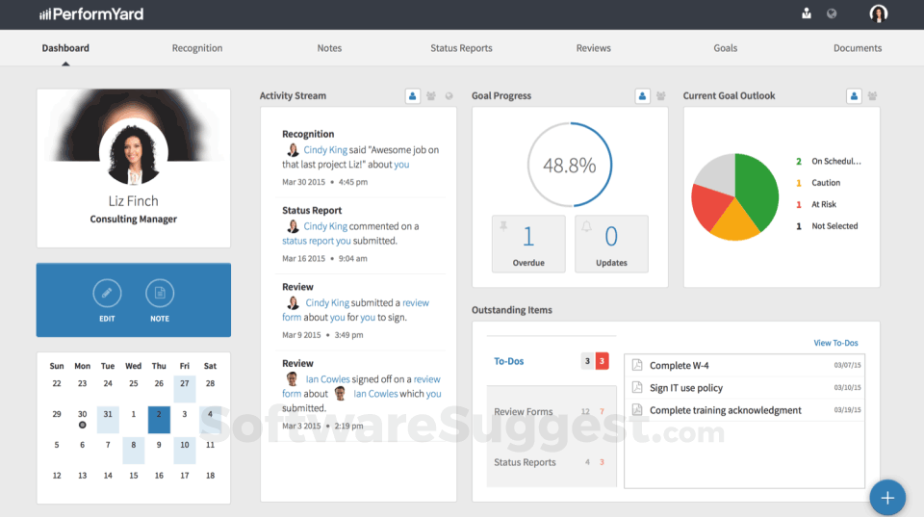
Review cycles support continuous feedback, 360 reviews, annual reviews, and project-based reviews side by side, and reviewers consistently describe the customization as rivaling platforms that charge significantly more, including Mesh AI’s higher tiers.
AI-assisted review drafting and meeting notes are newer additions to the platform, and native integrations with ADP, BambooHR, Workday, and Slack mean less manual spreadsheet exporting between systems.
Pros:
- Recreate your exact existing review process instead of adapting to a template
- Supports continuous feedback, 360, annual, and project-based reviews together
- Reviewers rate its overall satisfaction and support meaningfully higher than Mesh AI on G2
- Native integrations with ADP, BambooHR, Workday, Gusto, and Slack
Cons:
- Engagement surveys and goal tracking are lighter than dedicated engagement platforms
- No built-in learning management system for skill development
- Pricing scales per person, which can add up for larger teams
How PerformYard Compares to Mesh AI: PerformYard strips performance management down to reviews, feedback, and goals done well, and in direct G2 comparisons its overall satisfaction score comes in well ahead of Mesh AI’s. That gap shows up most in support quality and how well the product meets buyers’ stated requirements. Choose PerformYard if you want depth in reviews specifically without paying for talent-analytics features you won’t use.
G2 Rating: 4.7/5
Pricing:
Starts at $5 to $15 per person per month.
7. Culture Amp – Best for People-Science-Backed Engagement Analytics
Culture Amp treats engagement analytics as its core product rather than a bolt-on module, built by a team of organizational psychologists and backed by one of the largest engagement benchmark databases in HR.
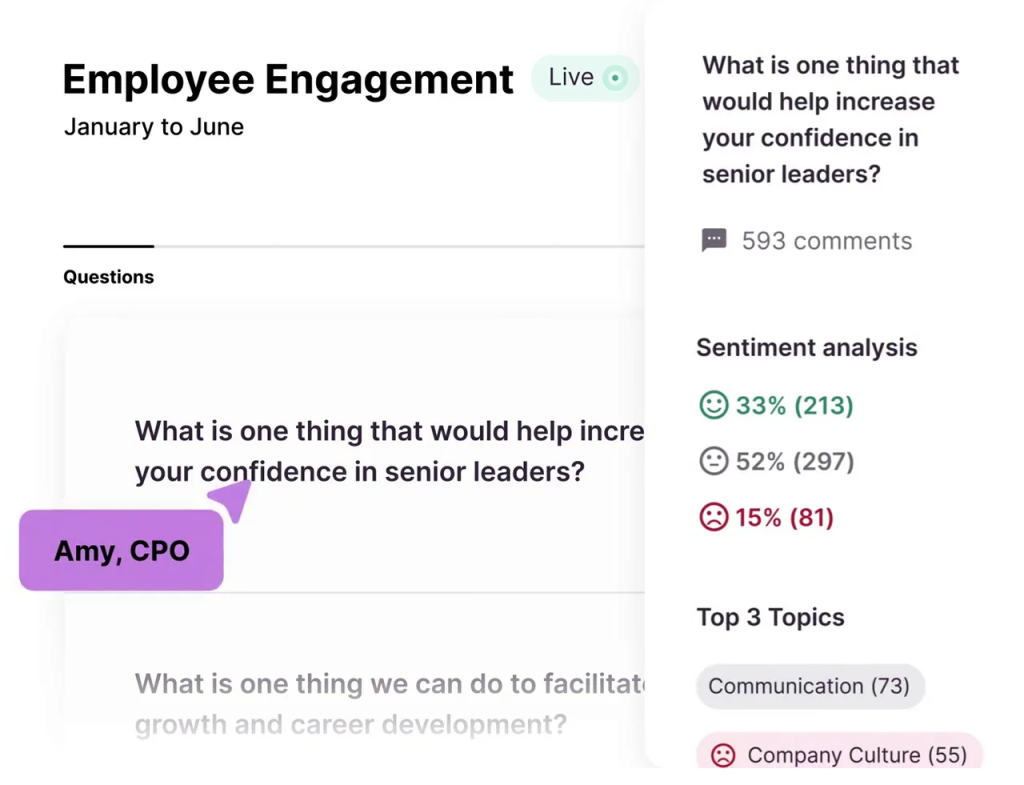
Its AI features automatically summarize open-text survey comments, which saves significant manual analysis time during a full engagement survey cycle, and its DEI survey templates come with science-backed question design rather than being built from scratch.
Goal tracking and alignment tools sit alongside a Slack-integrated recognition feature called Shoutouts, and the platform’s storyboards turn raw survey data into a visual narrative that links engagement to outcomes like turnover or productivity, something Mesh AI’s more performance-first dashboard doesn’t attempt.
Pros:
- Survey design and benchmarking backed by an in-house people science team
- AI-generated summaries of open-text feedback save real analysis time
- One of the largest engagement benchmark databases in the category
- Strong global language support for distributed teams
Cons:
- No published pricing, and no free trial to test before a sales call
- Rigid workflows and limited admin customization reported by reviewers at scale
How Culture Amp Compares to Mesh AI: Mesh AI’s engagement tools sit alongside its core goal and review features, while Culture Amp treats engagement analytics as the whole point, with deeper benchmarking and sentiment analysis. Choose Culture Amp if engagement and culture measurement are your primary need, and choose Mesh AI if performance reviews and goal cascading are the main job.
G2 Rating: 4.5/5
Pricing:
Custom quote.
8. Bridge – Best for Combining Learning and Performance in One Platform
Bridge, built by Instructure, pairs a learning management system with performance management tools, so training assignments and performance reviews live in the same place instead of two disconnected systems.
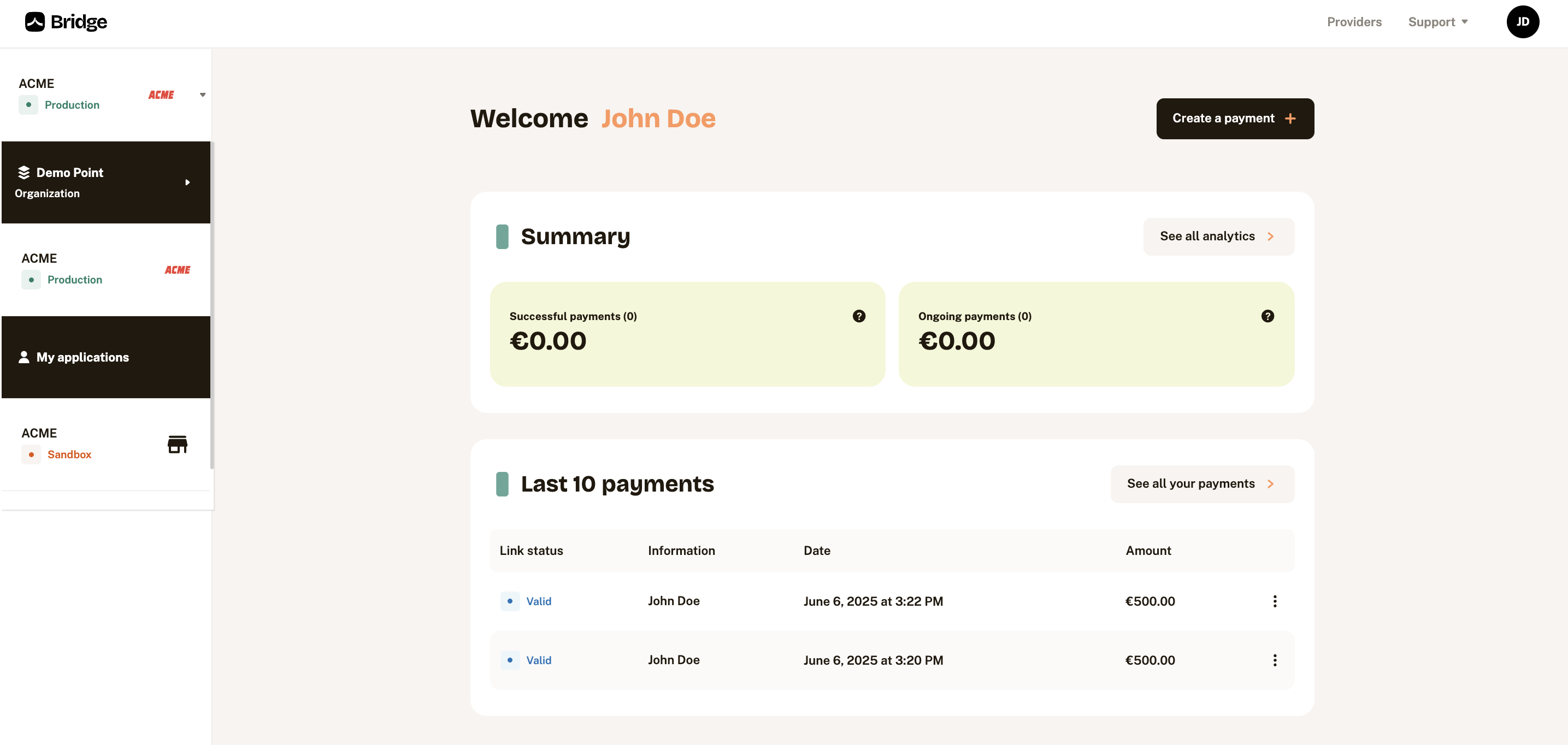
Reviewers on G2 rate Bridge’s employee development features notably strong, and its performance module supports goal setting, 1:1s, and review cycles alongside its course and skills-tracking tools.
Where Mesh AI focuses primarily on goals and talent reviews, Bridge leans into closing skill gaps directly through assigned learning content tied to performance outcomes.
Pros:
- Learning and performance management built into one platform
- Course assignments can be tied directly to performance review outcomes
- Supports goal setting and 1:1s alongside training content
- Established enterprise LMS heritage through Instructure
Cons:
- Pricing requires a custom quote with no public self-serve rate
- Reviewers rate ease of use slightly behind more performance-first tools
How Bridge Compares to Mesh AI: Mesh AI is a performance and talent-analytics platform first, with no built-in course or skills library, while Bridge is built around the idea that development and performance should live in the same system. Choose Bridge if closing skill gaps through assigned learning matters as much to you as running reviews, and choose Mesh AI if you’d rather keep your LMS separate from your performance tool.
G2 Rating: 4.2/5
Pricing:
Custom quote.
9. Trakstar – Best for Deep, Customizable Review Cycles
Trakstar (now part of Mitratech) offers competency frameworks, weighted scoring, and multi-reviewer support, making it one of the more configurable review engines available in the mid-market segment.
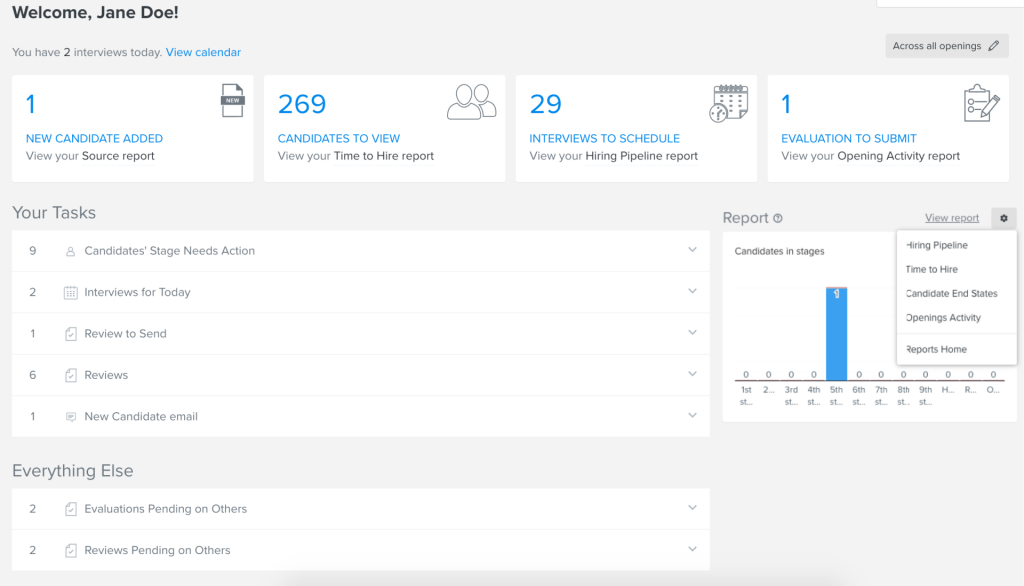
Its manager calibration views flag rating inconsistencies across departments before they become a fairness problem across the organization, a level of calibration visibility that stands out at this price point.
Review cycles can run annual, semi-annual, quarterly, or project-based, and the 360-degree feedback module layers in peer, direct-report, and self-assessments with configurable anonymity settings built in.
Pros:
- Highly customizable review templates with weighted competencies
- Manager calibration views catch rating inconsistencies across departments
- Flexible cycle types: annual, semi-annual, quarterly, or project-based
- 360-degree feedback with configurable anonymity settings
Cons:
- No built-in continuous feedback or 1:1 meeting tools
- Learning management is a separate, sold-separately product
How Trakstar Compares to Mesh AI: Trakstar reviewers frequently cite deeper competency scoring and calibration tooling than a more generalist performance suite offers. Mesh AI leans more on goal cascading and talent-intelligence framing, while Trakstar focuses on getting the review and calibration mechanics exactly right.
G2 Rating: 4.2/5
Pricing:
Custom quote.
10. BambooHR – Best for Comprehensive HRIS With Light Performance Tools
BambooHR functions as a full HRIS, covering employee records, onboarding, time tracking, and benefits administration, with performance management built in as one part of a broader system rather than the main event.
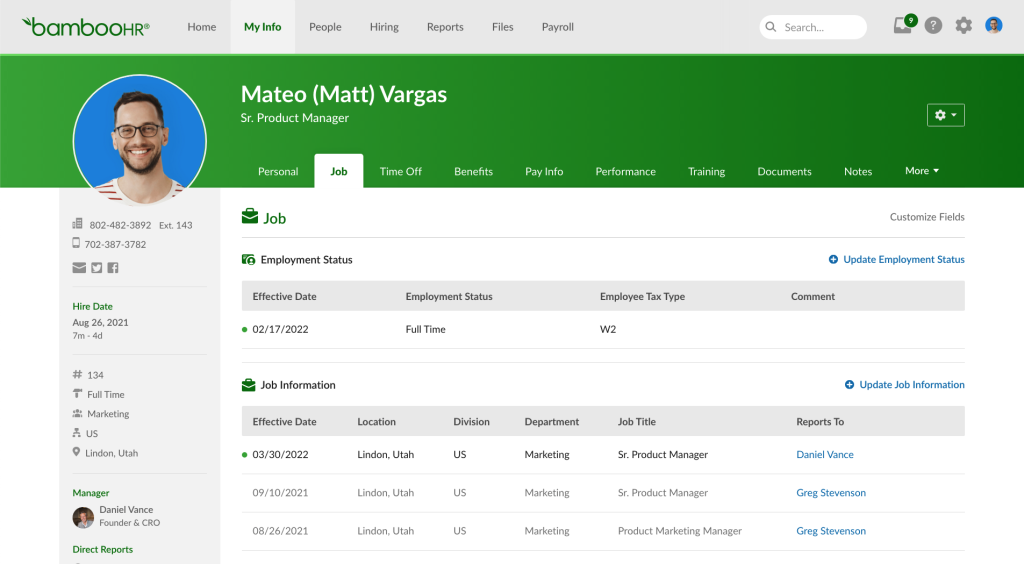
Since Mesh AI depends on a connected HRIS to sync employee and manager data in the first place, some teams choose to consolidate onto BambooHR instead of running two separate systems and managing the sync between them.
BambooHR’s applicant tracking system and payroll integration extend the platform across the full employee lifecycle, from hiring through offboarding, which a performance-first tool like Mesh AI does not attempt to cover.
Pros:
- True all-in-one HRIS with payroll and applicant tracking built in
- Centralized employee records eliminate a second system of record
- Time-off and attendance tracking included natively
- Strong client base with over 150 countries represented
Cons:
- Performance management features are lighter than a dedicated tool like PeopleGoal or Mesh AI
- Users report limited customization for complex approval hierarchies and reporting
How BambooHR Compares to Mesh AI: Mesh AI needs an external HRIS to function well in the first place, while BambooHR is that system by design, with performance tracking layered on top. Choose BambooHR if you need one platform for HRIS, payroll, and basic performance tracking, and choose Mesh AI or PeopleGoal if performance and goal management depth is the priority and you’re fine connecting to an HRIS separately.
G2 Rating: 4.4/5
Pricing:
Custom quote based on modules selected.
11. Small Improvements – Best for Lightweight Performance Management & 360s
Small Improvements is built for teams that want a lightweight performance management solution without the complexity of an enterprise suite, especially where reviews, feedback, and 1:1s have been scattered across separate tools.
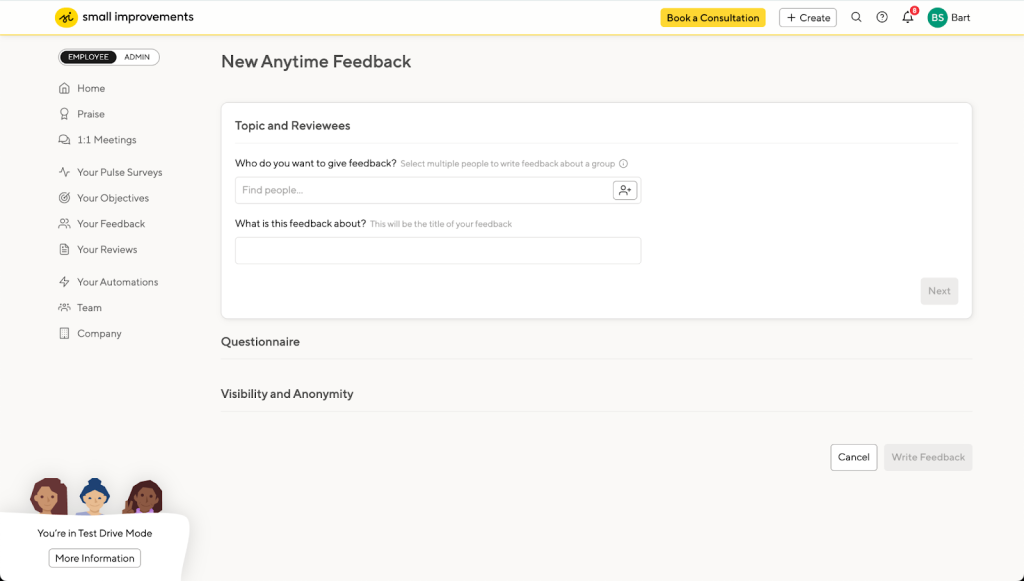
Reviews and 360-degree feedback are easy to set up, one-on-ones come with shared agendas and practical templates, and goal tracking stays simple rather than committing teams to a full OKR hierarchy.
The platform’s manager-first interface keeps the learning curve short, which makes it a common choice for startups and scaling teams that find a tiered, feature-gated tool more structure than they currently need.
Pros:
- Flexible review and 360-degree feedback templates without overengineering
- Shared one-on-one agendas encourage ongoing dialogue, not isolated moments
- Simple objectives tracking without committing to a full OKR hierarchy
- Intuitive, manager-first interface that eases adoption
Cons:
- Less depth in structured OKR hierarchies compared to Mesh AI or Betterworks
- Reporting and historical data features are lighter than larger platforms
How Small Improvements Compares to Mesh AI: Small Improvements feels less tiered and gated than Mesh AI for teams that just want reviews, feedback, and simple goals without paying more for talent analytics they may never use. It trades some of Mesh AI’s depth in goal cascading for a simpler, faster setup. Choose Small Improvements if you want lightweight, low-friction reviews.
G2 Rating: 4.3/5
Pricing:
Starts at $3 per user per month, billed annually. 30-day free trial available.
12. Quantum Workplace – Best for Combining Engagement Surveys With Performance Data
Quantum Workplace unites engagement surveys, goal tracking, 1:1s, and recognition into one connected view, aimed at teams whose engagement data and performance data have historically lived in separate systems with no way to connect them.
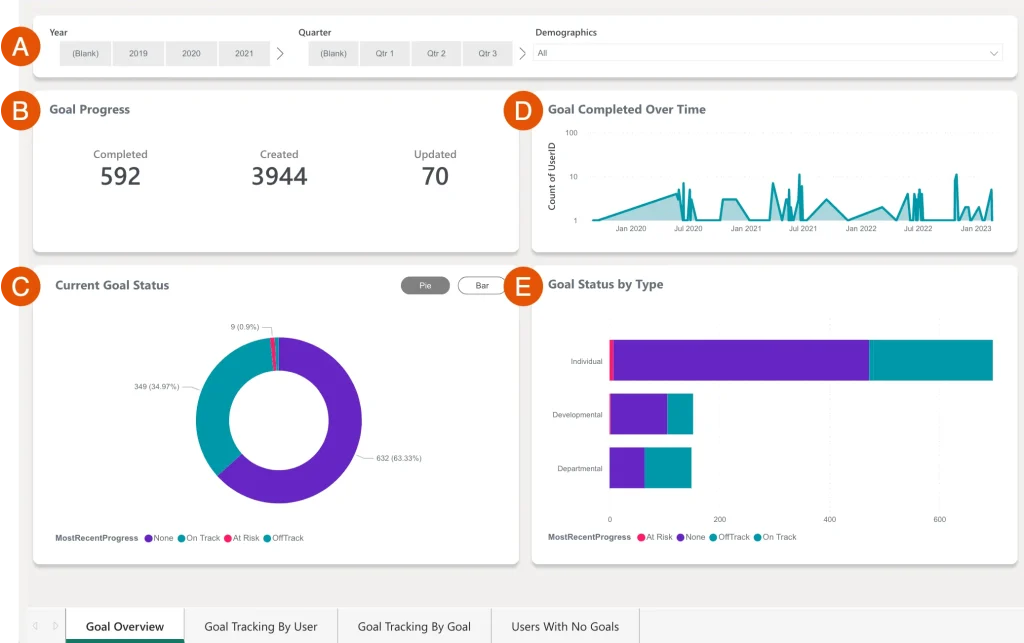
AI-powered guidance surfaces suggestions during review writing and goal setting, and reporting dashboards let HR benchmark performance trends against a workplace research database spanning two decades.
Integrations with BambooHR, Workday, SAP SuccessFactors, and Microsoft Teams mean engagement and performance data stop bouncing between disconnected tools, an area where Mesh AI leans on its own set of native integrations instead.
Pros:
- Unites engagement surveys, performance reviews, and recognition in one view
- AI-powered guidance surfaces suggestions during review writing
- Benchmarks performance against one of the largest workplace research databases available
- Strong integrations with BambooHR, Workday, and SAP SuccessFactors
Cons:
- Customization is more limited for complex, multi-step review processes
- No published starting price for the full performance and engagement bundle
How Quantum Workplace Compares to Mesh AI: Mesh AI keeps its engagement tools inside its own tiered structure, while Quantum Workplace was built specifically to connect performance and engagement data in one report, backed by a much larger research base. Choose Quantum Workplace if that connected view and benchmarking depth is a priority. See our Quantum Workplace alternatives guide for more connected-data options.
G2 Rating: 4.3/5
Pricing:
Custom quote.
How I Chose These Tools
When I evaluate Mesh AI competitors for a list like this, I don’t just rely on feature lists or marketing claims. I look at how these tools actually perform in real-world scenarios. Here is the framework I used to make sure every recommendation is practical, reliable, and worth considering:
- User Reviews / Ratings: I start by looking at real user feedback from platforms like G2. This gives me a clear picture of how teams actually experience the tool day to day, what they love, and where it falls short.
- Core Features & Functionality: I focus on what truly matters in performance management software. This includes goal setting, feedback depth, review cycles, reporting, and integrations. If a tool cannot handle these well, it does not make the cut.
- Ease of Use: I pay close attention to how intuitive the platform feels. A tool might be powerful, but if teams struggle to adopt it, it defeats the purpose. Clean interface, simple navigation, and quick onboarding are non-negotiable for me.
- Customer Support: From my experience, implementation is where many tools fail. I evaluate how responsive and helpful the support team is, especially during setup and ongoing use. Fast, reliable support makes a big difference in adoption.
- Value for Money: I compare pricing with what the tool actually delivers. This is not about picking the cheapest option, but about whether the features, flexibility, and performance justify the cost.
- Personal Experience / Expert Insights: Wherever possible, I rely on my own hands-on experience with these tools. I also consider insights from HR leaders and people ops teams running real performance cycles. This helps me go beyond surface-level reviews and highlight what actually works.
My Top 3 Picks for Mesh AI Alternatives
After comparing all 12 platforms against each other, three consistently stood out as the best Mesh AI alternatives overall. The right one for you still depends on where Mesh AI has been letting you down.
1. PeopleGoal
PeopleGoal is the top overall pick because it solves the broadest set of problems Mesh AI users run into. The no-code App Store and workflow builder let you rebuild your review process, org chart, and onboarding flow around your actual process instead of a tiered feature list. Anonymous 360 feedback, multi-dimensional org charts, and one flat price with everything included mean you’re not paying more every time you need a feature Mesh AI has gated behind a higher plan.
2. 15Five
15Five earns its place as the second pick for teams whose biggest complaint about Mesh AI is a lack of manager coaching and weaker support during rollout. If you’re running weekly check-ins and want coaching built into the same platform, 15Five handles that rhythm better, and reviewers consistently rate its support higher.
3. Leapsome
Leapsome is the right choice if you want a platform that consistently beats Mesh AI on ease of use and implementation speed, while also tying learning and development directly to performance reviews. It’s a strong fit for teams that found Mesh AI’s setup or support slower than they’d like.
Pick a Mesh AI Alternative for Simpler Reviews
Switching performance management tools isn’t really about leaving one logo for another. It’s about giving your HR team and your managers something that makes reviews, goals, and feedback feel like a normal part of work instead of a twice-a-year scramble.
The right alternative depends on what’s actually been frustrating about Mesh AI for your team. If it’s the way pricing climbs across tiers, look for something simpler and flatter. If it’s slower support or a goal-tracking feature that feels loose, a couple of the options above will serve you better than others.
Whatever you land on, try running one real review cycle in it before you commit fully. If what you want is a tool that bends around how your team already works instead of the other way around, PeopleGoal‘s free trial is a pretty low-effort way to find out if it’s the right fit before you decide anything.
Frequently Asked Questions
What is the best free alternative to Mesh AI?
PeopleGoal offers a 14-day free trial with full feature access and no credit card required, which is a solid way to test a flat-priced alternative before committing. Small Improvements also offers a 30-day free trial for teams that want a lighter tool.
Is PeopleGoal cheaper than Mesh AI?
It depends on the tier. PeopleGoal charges one flat rate of $4 per user per month with everything included, the same as Mesh AI's entry Foundations tier, but Mesh AI's Growth and Excellence tiers run $8 and $12 per user per month for features PeopleGoal already includes at its base price.
Can I migrate historical performance data from Mesh AI to a new platform?
Most vendors support CSV or API based data migration, but the depth varies. Confirm before switching whether the new platform imports past review scores and goal history, not just employee profiles.
Which Mesh AI alternative works best for a small team under 20 employees?
Small Improvements and PeopleGoal both report lower minimum spend and faster setup than tools built for enterprise scale, making them better fits for smaller teams looking at performance management software for small businesses.
Does Mesh AI offer a free tier?
No. Mesh AI offers a free trial but no permanent free tier, with paid plans starting at $4 per user per month.
Which alternative is best for OKRs specifically?
Betterworks, Peoplebox.ai, and PeopleGoal all offer strong OKR cascading. Peoplebox.ai stands out for tying goal progress directly to work tools like Jira and Slack, while PeopleGoal supports SMART goals alongside OKRs with custom scoring rules per team.
Do these platforms support anonymous 360-degree feedback?
Yes. PeopleGoal, Trakstar, and Culture Amp all support configurable anonymity settings for 360 feedback, and PeopleGoal's anonymous forms require no login at all, even for external evaluators.
How long does it take to implement a Mesh AI alternative?
PeopleGoal's own pricing page states an average implementation window of 1 to 6 weeks depending on company size and requirements, similar to typical implementation timelines reported for Mesh AI itself.
Ready to 3x Your Teams' Performance?
Use the best performance management software to align goals, track progress, and boost employee engagement.