Are you running your business, or is your business running you?
If you’re spending more time wrestling with reports than making smart decisions, something needs to change, and that something is usually your EPM software.
Enterprise Performance Management (EPM) software is a category of financial and operational planning tools that helps organizations unify budgeting, forecasting, financial consolidation, and strategic planning into a single system. Think of it as the financial GPS that keeps your entire organization aligned, from the CFO’s desk to department-level planning.
Having worked with performance management teams for over a decade, I’ve seen enterprises struggle firsthand with scattered data, slow forecasts, and reactive decision-making. EPM software solves this by turning financial chaos into structured clarity.
In this guide, I’ll explain what EPM software is, how it helps businesses regain control, and walk you through the top tools worth considering, including how they compare on financial planning depth, consolidation features, and integration capabilities.
What Is Enterprise Performance Management (EPM) Software?
Enterprise Performance Management (EPM) software is a suite of tools that integrates financial planning, budgeting, forecasting, financial consolidation, and strategic performance tracking into a single platform. It connects data from across an organization, finance, HR, operations, and sales, so leaders can make decisions based on real-time information rather than guesswork.

EPM software is distinct from ERP (Enterprise Resource Planning) systems. Where ERP manages day-to-day transactions (purchase orders, invoices, payroll), EPM focuses on planning and analysis, what should happen, what is happening, and why there’s a gap. Leading EPM platforms include Oracle NetSuite, Workday Adaptive Planning, SAP BPC (Business Planning and Consolidation), Anaplan, and Prophix.
Think of a retail chain tracking sales across 50 locations. EPM software analyzes trends, predicts inventory needs, flags budget overruns before they happen, and lets the CFO model three different revenue scenarios for next quarter, all without opening a single spreadsheet.
6 Best Enterprise Performance Management Software
Here’s a sneak peek into some of the best enterprise performance management software in the market:
| Software | Best Use Case | Starting Price | G2 Rating |
|---|---|---|---|
| PeopleGoal | Fully Customizable Performance Reviews, OKRs & Employee Development | FREE 7-day trial. Paid starts at $4/user/month | 4.7/5 |
| Lattice | HRIS in Large Enterprises | Starts at $11/seat/month. | 4.7/5 |
| 15Five | Enterprise Performance Reviews System | Starts at $4/user/month. | 4.6/5 |
| Workday | Unified Finance Solutions | Custom pricing. | 4.1/5 |
| BambooHR | Comprehensive HRIS With Payroll Solutions | Custom pricing. | 4.4/5 |
| SAP SuccessFactors | SAP Suite Users | Starts at $31.92/user/year. | 4.0/5 |
Now, let’s get a detailed view of the best EPM software solutions I have used. You can compare their salient features, pros, cons, and pricing information to get a better idea and choose the most suitable tool for your business
1. PeopleGoal
Best for Fully Customizable Performance Reviews, OKRs & Employee Development
I’ve seen firsthand how PeopleGoal turns performance management into a structured, high-impact process. It’s more than just goal tracking. Its AI-powered performance management features help summarize feedback and surface performance trends while aligning individual objectives with company-wide strategies, ensuring employees know exactly how their work contributes to the bigger picture.
It also has customizable workflows that let teams create performance reviews, feedback loops, and recognition programs that actually resonate with employees.
And as far as employee engagement is concerned, it skyrockets when employees feel heard and see their progress in real time. Whether you’re running OKRs, 360-degree feedback, or continuous check-ins, PeopleGoal makes it effortless to create a culture of high performance and engagement.
Pros:
- PeopleGoal is highly customizable and extremely user-friendly.
- The platform provides 360-degree feedback, enabling comprehensive evaluations from various sources within the organization.
- With OKR and SMART goal-setting frameworks, PeopleGoal helps align individual objectives with overarching company goals.
- Supports employee development with career plans and skill development.
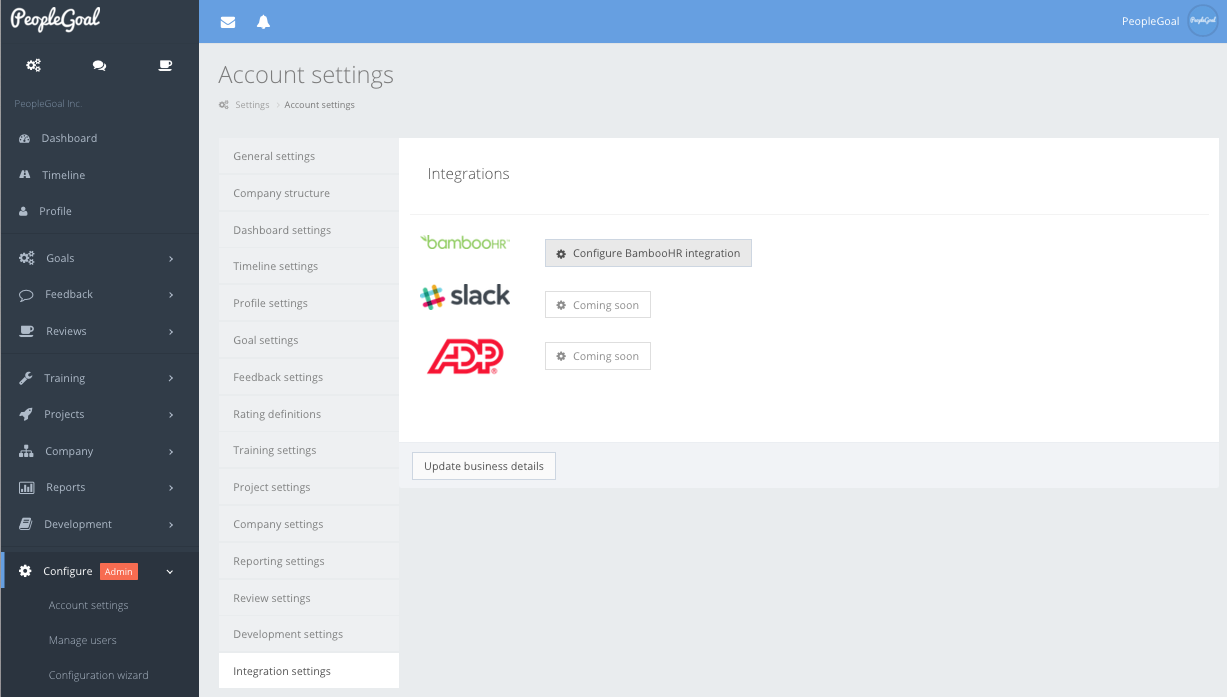
- Seamless integration with tools like Slack and Microsoft Teams enhances collaboration and communication.
- Automated reporting features allow for effortless monitoring of performance trends through insightful reports.
- Built-in employee recognition features boost morale by acknowledging individual and team achievements.
- The dynamic App Engine enables the creation of custom applications to support unique HR processes within the organization.
Cons:
- No downloadable or on-premise version
- The dark user interface option is not available
Pricing
FREE 14-day trial. Paid starts at $4/user/month.
2. Lattice
Best for HRIS in Large Enterprises
Lattice is the HRIS system I’d recommend for large enterprises that take performance and people strategy seriously. It’s not just a performance management tool; it integrates engagement surveys, goal-setting, career growth paths, and compensation insights into one unified system.
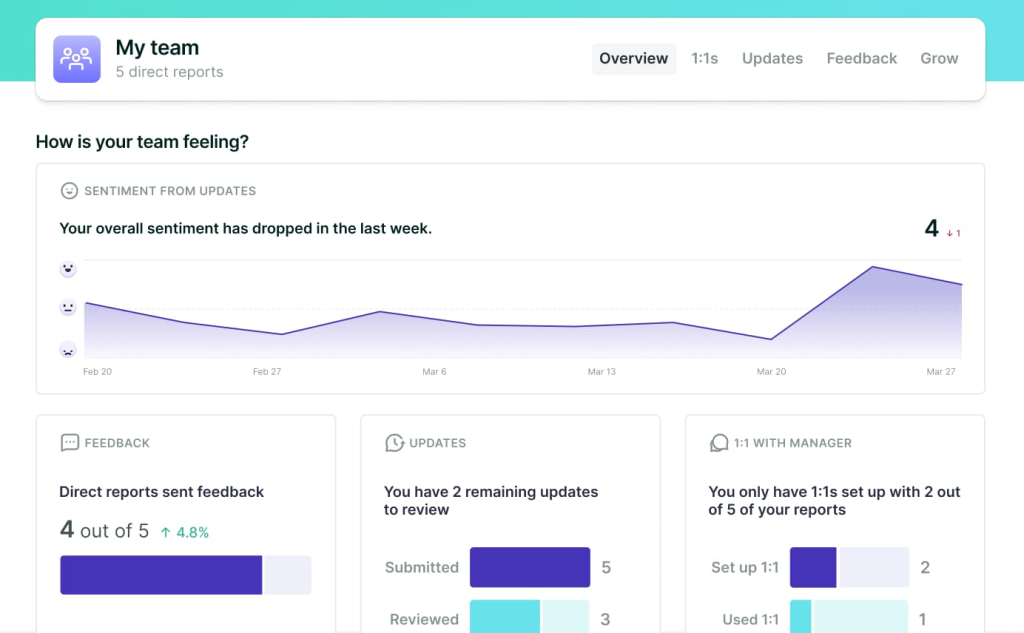
I’ve seen HR teams cut down so much administrative work because everything flows together, from setting strategic objectives to running efficient reviews and aligning them with rewards.
Plus, the analytics are gold. You get clear, actionable insights into employee sentiment and performance trends across teams and departments.
Pros:
- Lattice automates performance reviews with scheduling and reminders, streamlining the evaluation process.
- The platform facilitates goal management by allowing users to set, track, and update objectives across all organizational levels.
- Employee engagement surveys are available to collect and analyze feedback, providing insights into workplace sentiment.
- Structured templates for 1:1 meeting agendas promote regular and productive check-ins between employees and managers.
- Real-time feedback mechanisms encourage continuous improvement by enabling instant communication.
Cons:
- Customization options are limited, restricting the ability to tailor certain features to specific organizational needs.
- The platform offers only basic onboarding functionalities, which may not meet all organizational requirements.
Pricing: Starts at $11/seat/month.
3. 15Five
Best for Enterprise Performance Reviews System
If you’ve ever struggled with performance reviews that feel outdated and ineffective, 15Five is the refresh you need. It transforms reviews from a dreaded HR task into an ongoing, valuable conversation between managers and employees.
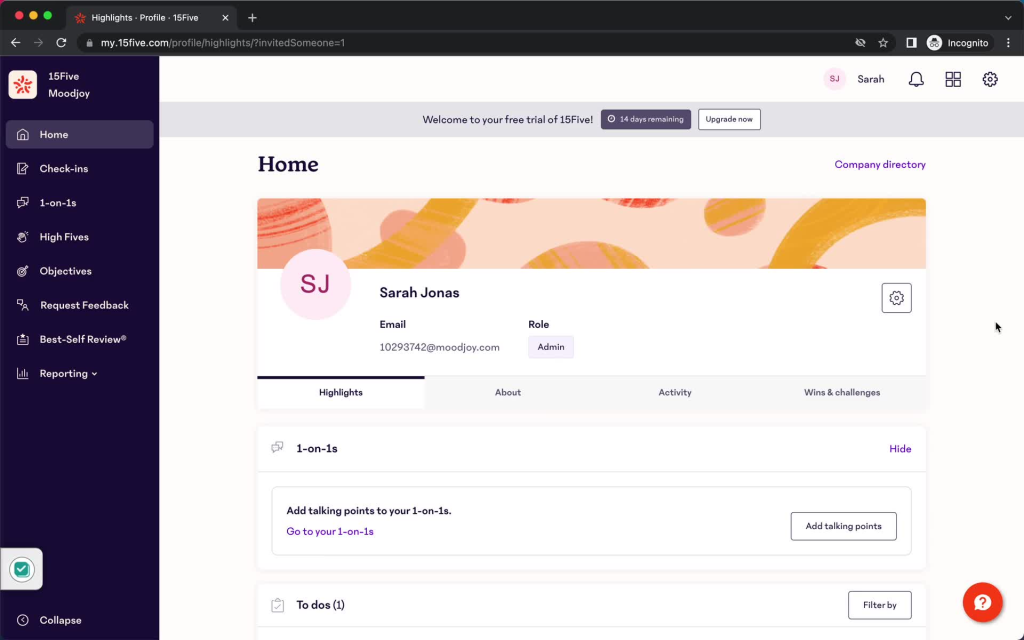
The tool focuses on continuous feedback, 1-on-1s, pulse surveys, and goal tracking, ensuring no one’s performance is evaluated based on just a single review cycle. Enterprises love it because it doesn’t just track performance; it actively helps improve it with coaching tools and development-focused insights.
I’ve seen teams move from rigid annual appraisals to dynamic, ongoing performance check-ins, and the results are night and day.
Pros:
- The tool contains a “High Fives” feature that fosters a culture of appreciation with peer-to-peer acknowledgments.
- Pulse surveys are utilized to assess employee morale and engagement levels regularly.
- The platform effectively aligns individual goals with company objectives through its objective tracking capabilities.
- Structured performance reviews support employee development by providing clear evaluation processes.
- A variety of developmental tools are available to assist in personal and professional growth.
Cons:
- The platform may lack in-depth data analysis capabilities, limiting advanced analytics.
- The mobile version may not offer the full range of features available in the desktop application.
Pricing: Starts at $4/user/month.
4. Workday
Best for Unified Finance Solutions
Workday is a powerhouse when it comes to unifying finance, HR, and enterprise performance management. I’ve seen large organizations thrive with its real-time analytics, automated financial planning, and workforce management features, all seamlessly connected.
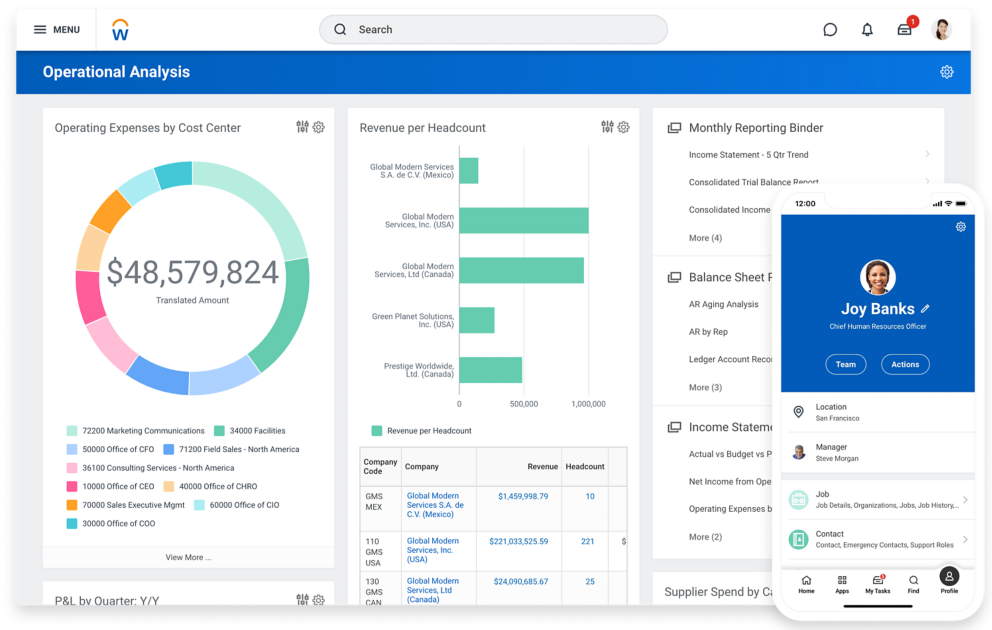
Unlike clunky legacy systems, Workday gives CFOs and HR leaders actual visibility into how financial and people strategies align. Whether it’s tracking workforce costs, managing budgets, or forecasting future financial scenarios, everything flows smoothly.
Besides, enterprises dealing with complex financial structures will appreciate how Workday eliminates silos, keeping everything agile and data-driven. If your finance and HR teams are working in disconnected systems, trust me, this is the platform that brings everything together under one roof.
Pros:
- Workday offers a comprehensive Human Capital Management (HCM) suite, providing a wide range of solutions for managing human resources.
- The platform ensures global compliance by adhering to international labor laws and regulations.
- Talent management features effectively handle recruitment, development, and retention processes.
- An intuitive user interface enhances the user experience by simplifying system interactions.
- A robust mobile application enables HR tasks to be managed on the go, increasing flexibility.
Cons:
- The initial setup can be expensive, posing a challenge for smaller organizations.
- There is limited flexibility in altering certain system features, which may hinder customization.
Pricing: Custom pricing.
5. BambooHR
Best for Comprehensive HRIS With Payroll Solutions
BambooHR has always felt like the friendly HR software that still packs a serious punch, especially when payroll is involved. It’s an all-in-one HRIS, handling hiring, onboarding, performance management, and payroll processing effortlessly.
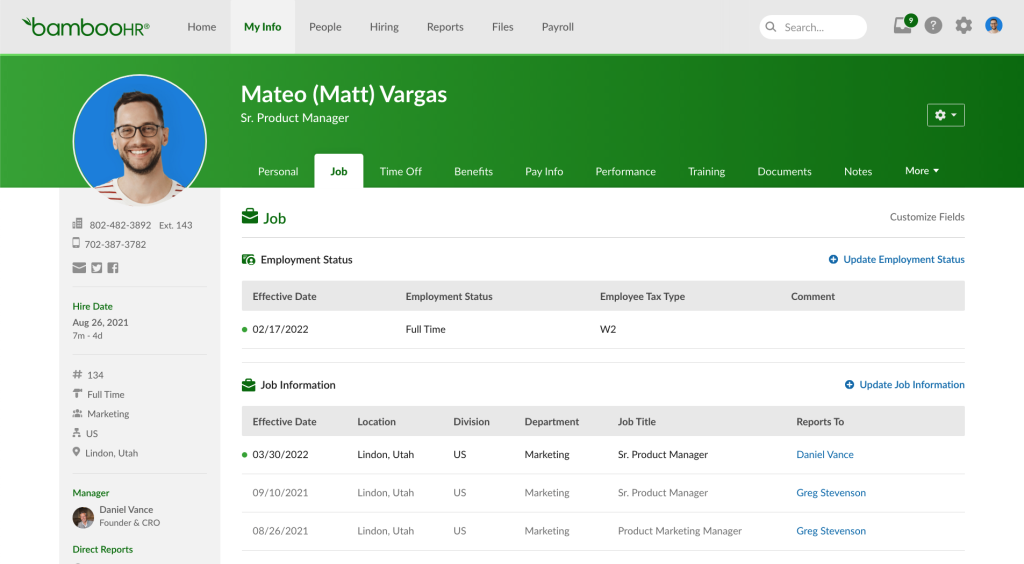
I’ve seen HR teams breathe a sigh of relief when they ditch spreadsheets and start using BambooHR’s automated workflows. And payroll errors? Practically nonexistent with its built-in tax calculations and compliance tracking.
For enterprises that want a seamless performance management system baked into their HRIS, BambooHR’s employee evaluations and feedback features ensure no one’s growth gets lost in the shuffle.
Pros:
- Employee self-service capabilities empower staff to manage their own information and tasks efficiently.
- The platform includes time-tracking features to monitor employee hours and attendance accurately.
- An applicant tracking system streamlines the hiring process by managing candidate data.
- Performance management tools enable organizations to set goals, conduct reviews, and track employee progress.
- Customizable reports allow businesses to generate insights tailored to specific organizational needs.
Cons:
- Advanced performance tracking features are limited compared to specialized tools.
- Customization options may not be as extensive as other enterprise-level platforms.
Pricing: Custom pricing.
6. SAP SuccessFactors
Best for SAP Suite Users
If your enterprise already runs on SAP, SuccessFactors is a no-brainer for performance management. It integrates seamlessly with the SAP ecosystem, making HR and talent management a natural extension of your existing workflows.
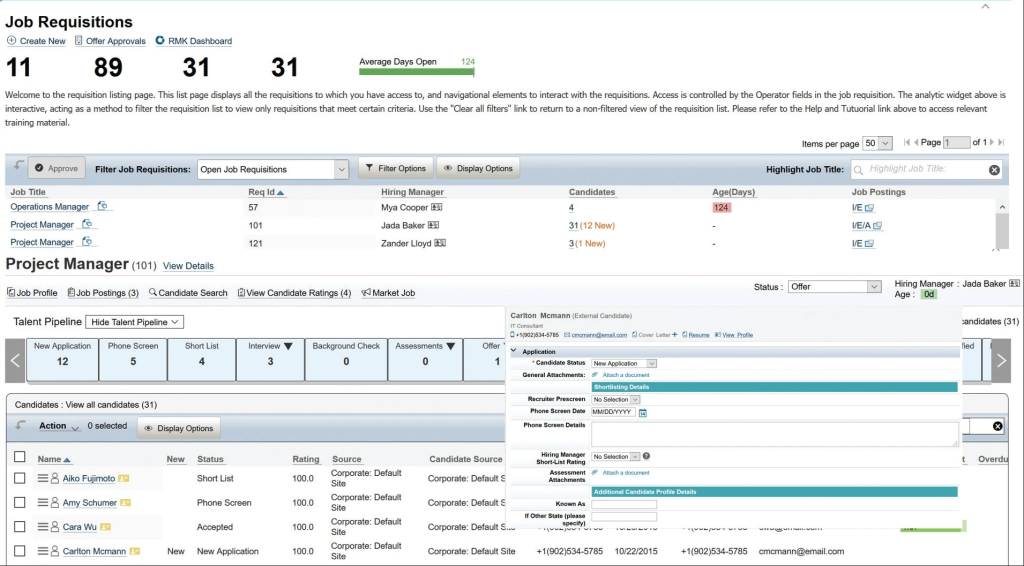
I’ve seen a lot of large organizations using this tool to streamline recruiting, learning management, performance tracking, and succession planning all in one place.
The real magic, though, is in its advanced analytics, leaders get deep insights into workforce trends, productivity, and engagement levels. And because it’s SAP, it’s built to handle the complexities of global enterprises, from compliance tracking to multi-country workforce planning.
Pros:
- SAP SuccessFactors provides a complete talent management suite covering recruitment, onboarding, and performance management.
- AI-driven insights help organizations make data-backed HR decisions.
- Learning and development modules support continuous employee training.
- Employee experience features improve engagement and satisfaction.
- Integration with SAP’s ERP solutions enables seamless enterprise-wide data management.
Cons:
- Customization options may require additional SAP modules, increasing costs.
- The implementation process can be lengthy and resource-intensive.
Pricing: Starts at $31.92/user/year.
How I Chose the Best EPM Software/My Evaluation Criteria
Choosing the right EPM software isn’t just about feature lists, it’s about finding a tool that actually works for your team, your budget, and your planning complexity. Here’s the framework I used to evaluate EPM software examples in this guide:
User Reviews and Ratings
I cross-referenced ratings and written reviews from G2, Capterra, and Gartner Peer Insights to understand how real finance and HR teams experience these tools day-to-day, not just during a sales demo. High ratings alone weren’t enough; I looked for consistency across review volume, recency, and specific feedback on planning workflows.
Essential Features and Functionality
Each tool was evaluated on the core capabilities that matter for enterprise performance management: financial planning and budgeting, forecasting, KPI tracking, financial consolidation, performance reviews, and reporting. Tools that covered more of these natively, without requiring expensive add-ons, scored higher.
Ease of Use
A powerful EPM platform is only valuable if your team actually uses it. I assessed each tool’s interface, onboarding experience, and navigation complexity, with particular attention to whether non-technical users (department heads, HR managers) could work independently without relying on IT or a dedicated admin.
Customer Support
I evaluated the quality, responsiveness, and accessibility of each vendor’s support, covering live chat, documentation depth, onboarding assistance, and how well the tool supports users during implementation and beyond. For enterprise tools, especially, post-go-live support quality often determines whether adoption succeeds or stalls.
Value for Money
Price alone doesn’t tell the story. I weighed each tool’s pricing against what it delivers at that tier, comparing features, user limits, integration depth, and scalability. The goal was to identify enterprise performance management vendors where the cost is justified by real-world utility, not just a long feature checklist.
Personal Experience and Expert Opinion
My assessments draw on direct experience working with performance management and finance teams across different company sizes. Where relevant, I’ve incorporated observations from EPM practitioners and HR technology experts to round out perspectives beyond any single use case.
What Are the Benefits of Enterprise Performance Management Software?
EPM software combines key financial processes like budgeting, reporting, and forecasting into one platform, reducing errors and improving efficiency.
Organizations using dedicated EPM software report up to 50% faster close cycles, 30% improvement in forecast accuracy, and significant reductions in manual spreadsheet work across finance teams (Markets and Markets, 2022).
Let’s explore its benefits in detail with examples for better understanding.
1. Better Financial Planning & Budgeting
Budgeting without accurate data often leads to misallocated resources and financial surprises. EPM software helps organizations centralize financial planning, ensuring more precise forecasts and better control over spending.
Example: Suppose a company has multiple teams handling budgets separately, leading to overspending in some areas and shortages in others.
Implementing EPM tools allows all budget requests to be managed in one system, providing leadership with a clear financial overview. This ensures funds are allocated strategically rather than based on outdated or incomplete information.
2. Improved Decision-Making with Real-Time Data
Timely and accurate data is crucial for making informed business decisions. EPM software provides real-time insights, helping leaders adjust strategies before small issues turn into major problems.
Example: Imagine a company launching a new product. Sales figures come in slower than expected, but by the time the monthly report arrives, it’s too late to course-correct.
With enterprise performance management solutions, sales data is updated daily, allowing the marketing team to tweak campaigns in real-time to drive better results.
3. Enhanced Performance Tracking & KPIs
Tracking key performance indicators (KPIs) helps businesses monitor progress and adjust operations as needed. EPM software makes it easy to set goals, measure results, and ensure accountability across teams.
Example: Suppose a manufacturing plant wants to improve production efficiency but relies on outdated manual reports. After they learned about EPM software, they tracked performance in real-time, quickly identifying production slowdowns and making necessary adjustments to maintain efficiency.
4. Regulatory Compliance & Risk Management
Staying compliant with financial regulations can be complex, especially for businesses operating in multiple regions. EPM software ensures accurate record-keeping and automated reporting, reducing the risk of penalties or compliance issues.
Example: Imagine a financial firm that must submit regular compliance reports. Previously, they compiled data manually, increasing the risk of errors. With EPM tools, reports are automatically generated and validated, ensuring accuracy and saving countless hours of work.
5. Increased Collaboration Across Departments
When different teams work in isolation, miscommunication and inefficiencies can slow business operations. EPM software provides a shared platform where finance, HR, sales, and operations teams can work together seamlessly.
Example: Suppose a company’s finance and marketing teams are misaligned. Marketing launches campaigns without consulting finance, leading to budget overruns. After using EPM software, both teams access the same financial data, enabling better planning and avoiding last-minute cost adjustments.
6. Scenario Planning & Forecasting
Predicting future business conditions allows companies to prepare for economic shifts, supply chain disruptions, or changes in customer demand. EPM software enables scenario modeling to test different financial strategies.
Example: Imagine a retail business that wants to expand into new markets but isn’t sure how an economic downturn would affect revenue. With EPM software, they model different sales and cost scenarios, allowing them to make informed expansion decisions without unnecessary financial risk.
7. Automated Financial Consolidation & Reporting
For companies with multiple branches or subsidiaries, manually consolidating financial reports can be tedious and error-prone. EPM software automates this process, reducing delays and improving accuracy.
Example: Suppose a global business has finance teams in multiple regions, each using different reporting formats. Compiling financial statements takes weeks.
After adopting EPM software, financial data from all locations is automatically consolidated into standardized reports, saving time and ensuring accuracy.
8. Better Resource Allocation
Optimizing how resources are distributed can lead to higher efficiency and profitability. EPM software helps businesses identify areas where funds, employees, or equipment are underutilized or overspent.
Example: Imagine a company that allocates the same budget to all its departments every year, regardless of actual needs.
With EPM software, they analyze usage patterns and adjust allocations, ensuring that high-priority projects receive sufficient resources while minimizing waste.
9. Scalability for Growth
As businesses grow, financial complexity increases. EPM software is designed to handle expansion, whether it’s managing additional business units, international operations, or larger data volumes.
Example: Suppose a subscription-based company starts with a small customer base but rapidly expands. Managing revenue tracking and expenses manually becomes overwhelming.
By using EPM software, they automate financial processes, ensuring smooth scaling without losing control over financial data.
10. Cost Savings & Operational Efficiency
Reducing manual work, improving accuracy, and streamlining financial processes all contribute to lower operational costs. EPM software helps businesses cut down inefficiencies and focus resources on high-value tasks.
Example: Imagine a company where every financial report goes through multiple approval layers, causing delays and extra administrative work. With the use of EPM software, reports are automatically validated and approved based on pre-set rules, cutting processing times and administrative costs.
How Does EPM Software Solve the Most Common Enterprise Challenges?
We have already seen that enterprises today navigate complex financial landscapes, operational inefficiencies, and rapidly changing market demands. Without the right tools, decision-making becomes reactive rather than strategic.
EPM software offers a robust solution, transforming data into actionable insights that drive efficiency, agility, and growth.
Here are some of the most pressing enterprise challenges and how EPM software provides tailored solutions.
1. Financial Planning & Budgeting Complexity
Enterprises often rely on spreadsheets and outdated legacy systems for financial planning, leading to manual errors, time-consuming reconciliations, and inaccurate forecasts.
As organizations scale, coordinating budgets across multiple departments and business units becomes increasingly challenging, affecting financial agility and strategic decision-making.
How EPM Software Helps in Financial Planning & Budgeting
- Automates budget creation, reducing manual work and human error.
- Provides rolling forecasts based on real-time financial and market data.
- Uses AI-powered predictive analytics to enhance forecasting accuracy.
- Supports scenario modeling to prepare for potential financial risks.
- Ensures transparency with centralized data that is accessible to all stakeholders.
2. Lack of Data Visibility & Integration
Siloed data across multiple systems and departments makes it difficult for enterprises to gain a comprehensive view of financial and operational employee performance. Decision-makers often rely on outdated reports, leading to misalignment between strategy and execution.
How EPM Software Helps in Data Visibility & Integration
- Unifies financial, operational, and strategic data into a single source of truth.
- Provides interactive dashboards with real-time performance metrics.
- Automates data consolidation from disparate sources, eliminating inefficiencies.
- Enables cross-functional collaboration by sharing insights across departments.
- Enhances decision-making by ensuring timely and accurate reporting.
3. Compliance & Regulatory Challenges
Enterprises must comply with evolving financial regulations, tax laws, and reporting standards. Manually tracking compliance requirements increases the risk of penalties, errors, and audit failures.
How EPM Software Helps in Compliance & Regulatory Management
- Automates regulatory reporting to meet compliance standards (e.g., IFRS, GAAP).
- Provides built-in audit trails and control mechanisms for data accuracy.
- Helps mitigate risks by identifying non-compliance issues in advance.
- Ensures timely and accurate tax reporting with real-time updates.
- Enhances transparency with a structured governance framework.
4. Inefficient Performance Monitoring
Without clear visibility into performance metrics, enterprises struggle to assess business efficiency and align objectives with long-term goals. Poor performance tracking results in missed opportunities and operational inefficiencies.
How EPM Software Helps in Performance Monitoring
- Tracks key performance indicators (KPIs) in real-time with dynamic dashboards.
- Provides scorecards to evaluate employee, department, and financial performance.
- Automates variance analysis to detect financial and operational inefficiencies.
- Enables benchmarking against industry standards for competitive insights.
- Delivers data-driven recommendations for continuous performance improvement.
5. Strategic Decision-Making Bottlenecks
Enterprises often base decisions on outdated reports and gut instincts instead of real-time insights. Slow decision-making can hinder market responsiveness and affect long-term growth.
How EPM Software Helps in Strategic Decision-Making
- Uses AI-driven analytics to provide real-time business insights.
- Enhances “what-if” scenario planning for proactive strategy adjustments.
- Aligns financial and operational goals with predictive modeling.
- Reduces reliance on manual data gathering, speeding up decision-making.
- Improves executive decision-making with consolidated, actionable reports.
6. Cash Flow & Working Capital Management
Poor cash flow visibility and inefficient capital allocation can lead to liquidity issues, delayed investments, and operational slowdowns. Managing working capital effectively is crucial for business sustainability.
How EPM Software Helps in Cash Flow & Working Capital Management
- Provides real-time cash flow forecasts to optimize liquidity.
- Identifies trends in revenue and expenditure to manage financial risks.
- Offers automated alerts for cash shortages and surpluses.
- Optimizes working capital allocation to maximize financial efficiency.
- Helps align financial strategies with short- and long-term business goals.
7. Workforce & Resource Allocation Issues
Enterprises often struggle with inefficient workforce planning, leading to talent shortages, excess labor costs, or misaligned human resource distribution. Balancing operational demand with workforce capacity is critical for maintaining efficiency.
How Software EPM Helps in Workforce & Resource Allocation
- Forecasts workforce needs based on historical and predictive data.
- Identifies underutilized and overburdened resources for better distribution.
- Helps HR teams align staffing with business demand fluctuations.
- Supports workforce cost optimization without compromising productivity.
- Provides talent analytics to improve retention and succession planning.
8. Lack of Agility in Business Operations
Enterprises need to quickly adapt to changing market conditions, but rigid processes and slow decision-making can hinder flexibility. Without agile planning, organizations may miss opportunities or struggle during disruptions.
How Software EPM Helps in Business Agility
- Enables scenario modeling to assess the impact of potential market shifts.
- Provides real-time insights to facilitate rapid decision-making.
- Automates workflow processes for increased efficiency and adaptability.
- Supports cloud-based collaboration, ensuring seamless remote operations.
- Enhances risk management by identifying vulnerabilities and alternative strategies.
Is EPM Software Right for Mid-Sized Companies or Only Large Enterprises?
A common misconception is that EPM software is only for Fortune 500 companies. In reality, the right tool depends less on company size and more on the complexity of your planning process.
Here’s how to think about it by company profile:
Mid-Sized Companies (50–500 employees, $10M–$250M revenue)
At this stage, your finance team is probably 2–10 people and you’re outgrowing spreadsheets but not ready for a $200,000 EPM implementation. What you need is a tool that handles:
- Departmental budgeting without requiring a full-time administrator to maintain
- Headcount planning tightly connected to financial forecasts
- Performance management that ties employee goals to business outcomes
Best-fit tools at this tier: PeopleGoal, 15Five, BambooHR.
Planning platforms to consider: Mosaic, Jirav, Planful (mid-market tier)
Enterprise Companies (500+ employees, $250M+ revenue)
At enterprise scale, EPM requirements shift significantly. You’re now dealing with:
- Multi-entity financial consolidation: combining P&Ls, balance sheets, and cash flows from 10, 20, or 100+ business units
- Multi-currency reporting with intercompany eliminations
- Complex scenario modeling: what happens to EBITDA if raw material costs rise 15% and two business units miss plan?
- Regulatory compliance across multiple jurisdictions (IFRS, GAAP, local GAAP)
Best-fit tools at this tier: Workday Adaptive Planning, SAP SuccessFactors + SAP BPC, PeopleGoal, Oracle NetSuite EPM, Anaplan
The Key Differentiator: Financial Consolidation
The single biggest gap between mid-market and enterprise EPM tools is financial consolidation. Mid-market tools handle budgeting and reporting well. Enterprise tools, like Oracle NetSuite, Workday Adaptive Planning, and SAP BPC, add automated consolidation, intercompany eliminations, and statutory reporting on top of that.
If your finance team spends more than two days per month on manual consolidation work, that’s the clearest signal you need an enterprise-grade EPM platform.
What Does EPM Software Actually Cost? (Total Cost of Ownership)
The list price is rarely the full story with EPM software. Here’s what finance leaders need to factor into any EPM buying decision:
1. Licensing Costs
Most EPM platforms charge per user per month or per year:
| Tier | Typical Range | What’s Usually Included |
| SMB / Mid-market | $4–$15/user/month | Core planning, reporting, limited integrations |
| Enterprise (per-module) | $25–$60/user/month | Full consolidation, advanced analytics, API access |
| Enterprise (custom) | $50,000–$500,000+/year | Unlimited users, implementation, dedicated support |
2. Implementation Services
For mid-market tools, implementation is usually self-serve or guided onboarding (1–4 weeks). For enterprise platforms like SAP SuccessFactors or Workday, implementation typically runs 3–12 months and can cost 1–3x the first-year license fee in professional services.
3. Integration Costs
Most EPM platforms charge extra, or require third-party middleware, to connect with ERP systems (SAP, Oracle, Microsoft Dynamics), HRIS platforms, or CRM tools. Budget $5,000–$50,000+ for complex integration projects.
4. Training and Adoption
Finance teams need dedicated training. Vendor training programs range from free self-serve courses to $10,000+ instructor-led programs. Factor in internal time cost as well, typically 2–4 weeks of reduced team productivity during rollout.
5. Ongoing Maintenance
Cloud EPM platforms typically include updates in the subscription. On-premise solutions (increasingly rare) require dedicated IT resources and periodic upgrade projects.
Rule of thumb: For enterprise EPM platforms, plan for Year 1 total cost of ownership to be 2–4x the annual license cost once implementation, integration, and training are included.
Which EPM Software Should You Choose?
Enterprise performance management software isn’t just about tracking numbers. It’s about making informed, strategic decisions that drive real business impact.
The right tool helps you plan, analyze, and optimize performance across departments, ensuring accurate insights back every decision. However, not all EPM solutions are created equal.
I personally like PeopleGoal for its flexibility, automation, and deep analytics. It simplifies goal tracking, streamlines performance reviews, and offers customizable workflows, all crucial for businesses that want data-driven success. If you’re looking for an EPM solution that balances structure with adaptability, you can surely try this tool.
Frequently Asked Questions

How does PeopleGoal ensure employee adoption of EPM tools?
PeopleGoal is built for usability; its interface is clean, workflows are customizable, and employees can track goals and receive feedback without manager intervention. Automated reminders, personalized dashboards, and integrations with Slack and Microsoft Teams reduce friction at every step. The result is a tool teams actually use consistently, rather than one abandoned after the first review cycle.
How secure is EPM software for sensitive performance and financial data?
Reputable EPM platforms use enterprise-grade encryption, role-based access controls, and comply with major data protection regulations, including GDPR and SOC 2. PeopleGoal undergoes regular security audits and enforces strict data access policies. When evaluating any EPM vendor, ask directly about data residency options, breach notification procedures, and whether they've completed a recent third-party security audit.
How does EPM software support strategic planning beyond budgeting?
EPM software extends well beyond annual budgets. It enables continuous strategic planning through rolling forecasts, real-time KPI monitoring, and scenario modeling that lets leadership test decisions before committing to them. This shifts finance teams from reactive reporting, explaining what already happened, to proactive planning that shapes what happens next.
What integrations should I look for in EPM software?
The most critical integrations depend on your existing stack. At minimum, your EPM platform should connect natively with your ERP (SAP, Oracle, Microsoft Dynamics), HRIS (Workday, BambooHR), and CRM (Salesforce). Without these connections, your planning data will always lag behind actuals, defeating the core purpose of having a real-time performance management system.
Can small businesses benefit from EPM software, or is it only for large enterprises?
Small businesses with fewer than 50 employees rarely need full EPM platforms. However, companies in the 20–100 employee range often benefit from lightweight EPM tools focused on goal alignment and performance tracking, like PeopleGoal at $4/user/month, before graduating to more complex financial planning platforms as headcount and revenue complexity grows.
How does EPM software handle multi-currency and international reporting?
Enterprise EPM platforms like Workday Adaptive Planning, SAP SuccessFactors, and Oracle NetSuite support multi-currency consolidation, applying exchange rate adjustments automatically across entities. This is critical for companies operating across multiple countries where reporting in a single functional currency requires constant translation and intercompany eliminations, a process that is error-prone when done manually.
What is the difference between EPM and CPM software?
CPM (Corporate Performance Management) and EPM (Enterprise Performance Management) are often used interchangeably, and most vendors treat them as the same category. If there's a distinction, CPM tends to emphasize financial consolidation and external reporting for corporate entities, while EPM has a broader scope that includes operational planning and people performance alongside financial management.
How often should EPM software reports and forecasts be updated?
Best practice for most organizations is monthly rolling forecasts updated with actuals, with real-time KPI dashboards refreshed continuously. Annual static budgets alone are no longer sufficient in volatile markets. Leading finance teams use EPM software to run a 12-month rolling forecast that shifts forward each month, giving leadership a consistently current view of expected performance without waiting for a quarterly review cycle.
What should I ask an EPM vendor before buying?
Ask these five questions before signing any EPM contract: How long does implementation typically take for a company our size? What integrations are native versus requiring third-party middleware? What does the total first-year cost look like including implementation and training? Can you show us a live demo using our actual data structure? And what does the post-go-live support model look like after the implementation team hands off?
Ready to 3x Your Teams' Performance?
Use the best performance management software to align goals, track progress, and boost employee engagement.