
I’ve sat in enough performance review meetings to know where things usually go wrong. The blindside review, where concerns suddenly appear at year-end. The vague praise like “great leadership” sounds nice but means nothing.
The endless Excel sheets and scattered PDFs make the whole process feel chaotic. And then comes calibration drama, forced ranking, and the quiet fear around upward feedback that no one wants to say out loud.
If you’ve experienced any of that, you’re not alone.
That’s exactly why I wrote this. This isn’t just another list of generic phrases you copy and forget. These are structured, real-world manager performance evaluation examples you can actually use, grounded in outcomes, behaviors, and growth. Let’s go!
What Makes a Strong Manager Evaluation?
Here’s the thing. When I sit down to evaluate a manager, I usually try to capture what’s actually true in a way that feels fair, useful, and helps that person grow into a stronger leader.
And in my experience, the best example of manager performance evaluation always comes down to three core pieces working together:
- Outcomes: Did they achieve their goals, KPIs, or OKRs? What real progress happened because of their leadership?
- Behaviors: How did they lead day to day? How did they communicate, support the team, and show up in line with company values?
- Development direction: What’s next? Are they ready for bigger responsibilities, or is there a coaching gap we need to address early?
One quick reminder I always keep in mind: results matter, but the way those results happen matters just as much.
That’s why frameworks like SMART goals and OKRs keep evaluations grounded, the GROW coaching model keeps them forward-looking, and 360-degree feedback adds the fuller picture beyond just one manager’s perspective.
Performance Evaluation Examples for Managers by Category (+Templates)
When I evaluate a manager, I don’t start with a rating. I start with context. What are they actually responsible for, and how are they showing up every day? Because strong leadership isn’t one-dimensional. It shows up in strategy, execution, communication, coaching, and even how someone handles pressure.
That’s why I prefer breaking evaluations into clear categories. It forces us to look at the full picture, not just the most recent win or mistake. And it makes the feedback feel more structured than emotional.
Below, you’ll find practical performance evaluation examples for managers organized by leadership areas. You can adapt them directly, depending on what you’re seeing in your own managers.
Communication & Team Alignment Phrases
In my experience, communication is where great managers quietly separate themselves from average ones. It’s not about talking more; it’s about making things clearer. Teams thrive when expectations are obvious, updates are consistent, and people feel heard. When communication breaks down, alignment breaks down right after it. That’s why this category always matters.
Positive Feedback Comments
1. Clear Team Direction: You have a strong way of turning complex plans into simple, actionable direction for the team. For example, during the last product rollout, you broke the strategy down into weekly priorities and clarified who owned what. That prevented overlap and confusion. Because of that clarity, the team moved faster and with fewer revisions.
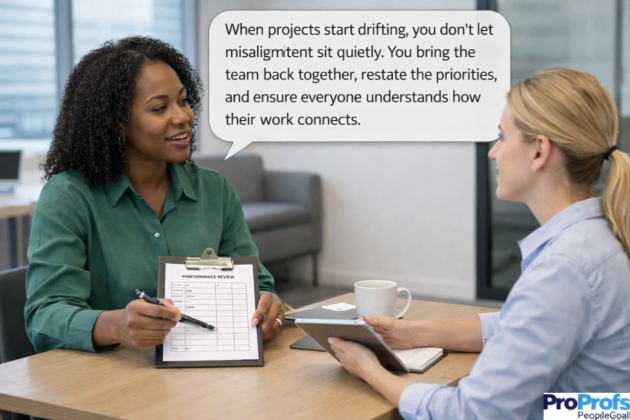
2. Keeping Everyone Aligned: When projects start drifting, you don’t let misalignment sit quietly. You bring the team back together, restate the priorities, and ensure everyone understands how their work connects. I’ve noticed you do this especially well during busy periods. That ability to reset alignment keeps performance steady even under pressure.
3. Open Communication Style: You’ve created an environment where people feel safe speaking up. Team members share concerns early instead of waiting for issues to escalate. In meetings, you invite input and genuinely consider it. That kind of openness builds trust and prevents small misunderstandings from becoming larger problems.
Constructive Feedback Comments
4. More Consistent Updates Needed: There have been moments when project changes were shared later than they should have been. As a result, some team members had to adjust their work at the last minute. More proactive communication, even a quick update message, would help the team stay aligned and reduce unnecessary stress.
5. Listening Opportunity: In discussions, you often move quickly to solutions, which shows decisiveness. However, a few team members have felt their perspectives weren’t fully explored before conclusions were drawn. Slowing down slightly and asking follow-up questions could strengthen collaboration and make people feel more involved.
6. Clarity in Messaging: At times, instructions have been interpreted differently across the team. For example, deadlines or ownership weren’t fully clear, which led to duplicated effort. Being more specific about timelines, expected outcomes, and accountability would make execution smoother and reduce confusion.
Goal Execution & Accountability Phrases
A manager can have great ideas, but execution is where leadership becomes real. I always look at whether goals are being met, but also how consistently progress is tracked. Strong managers build accountability without micromanaging. They make goals visible, measurable, and tied to real outcomes. That’s what keeps performance reviews grounded in reality, not opinions.
Positive Feedback Comments
7. Strong Follow-Through: You don’t just launch initiatives, you stay with them until they’re complete. During the last quarter, you consistently reviewed progress, removed blockers, and ensured commitments were honored. That steady follow-through sets a strong example for the team. It shows that goals here aren’t just announcements, they’re expectations.
8. Goal Ownership: When targets shift or challenges arise, you don’t deflect responsibility. Instead, you step up, reassess the plan, and guide the team toward the adjusted objective. That ownership creates stability and confidence. The team knows you won’t disappear when things get tough.
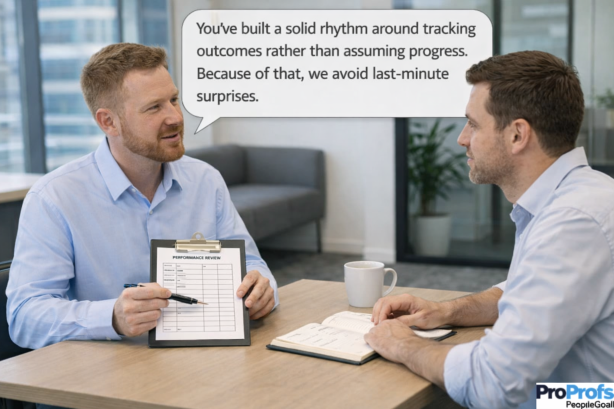
9. Progress Tracking: You’ve built a rhythm around tracking outcomes rather than assuming progress. Regular check-ins and milestone reviews help catch gaps early. Because of that structure, we avoid last-minute surprises. That kind of disciplined execution directly improves performance.
Constructive Feedback Comments
10. More Ownership Needed: Some initiatives start strong but lose energy over time. As priorities compete, certain goals don’t receive the same attention they did initially. Reinforcing accountability checkpoints throughout the full cycle would help ensure consistency. Sustained focus is key to reliable results.
11. Clearer Metrics: In a few projects, the team wasn’t entirely sure what defined success until late in the process. Establishing measurable benchmarks earlier would improve prioritization and decision-making. Clear metrics remove ambiguity and strengthen accountability.
12. Addressing Missed Targets: When deadlines slip, corrective difficult conversations sometimes happen later than ideal. Earlier intervention would allow adjustments before momentum is lost. Proactive accountability conversations will help protect performance and maintain credibility.
Delegation & Empowerment Phrases
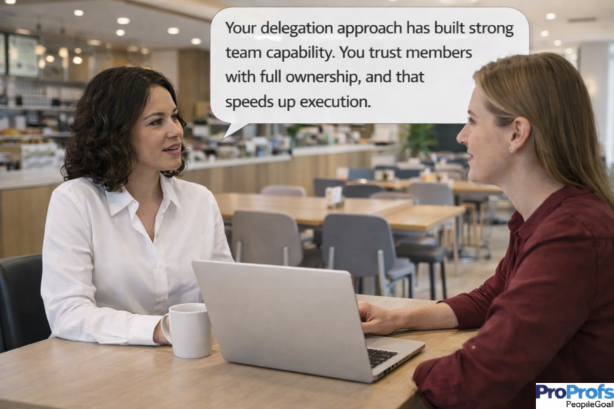
One of the biggest signs of a strong manager is this: they don’t try to carry everything themselves. Delegation isn’t about offloading work; it’s about building capability in others. The best managers trust their teams with ownership, give the right support, and create space for people to grow. Without delegation, managers burn out, and teams stay dependent.
Positive Feedback Comments
13. Empowering Ownership: You delegate responsibilities in a way that gives team members true ownership, not just small tasks. For example, you’ve entrusted project leads with decision-making authority rather than requiring constant approval. That level of trust builds confidence and speeds up execution.
14. Balanced Support: You strike a strong balance between stepping back and staying available. You allow team members to take the lead while still offering guidance when needed. This approach encourages independence without leaving people unsupported.
15. Developing Future Leaders: You intentionally assign stretch responsibilities to help team members grow. Instead of keeping high-visibility work for yourself, you share opportunities. That builds skill depth across the team and prepares future leaders.
Constructive Feedback Comments
16. Holding Too Much Yourself: At times, you absorb work that could be handled by capable team members. While this shows dedication, it can create bottlenecks and limit team growth. Delegating earlier would improve scalability and reduce unnecessary pressure on you.
17. More Clarity When Delegating: Occasionally, assignments are handed off without fully clarifying expectations or decision authority. This can cause hesitation or rework. Providing clearer guardrails upfront would help others execute more confidently.
18. Trust Building Opportunity: There have been moments where delegated work was revisited or reworked without discussion. While quality matters, fully trusting team members to own outcomes will strengthen empowerment and accountability.
Coaching & Development of Team Phrases
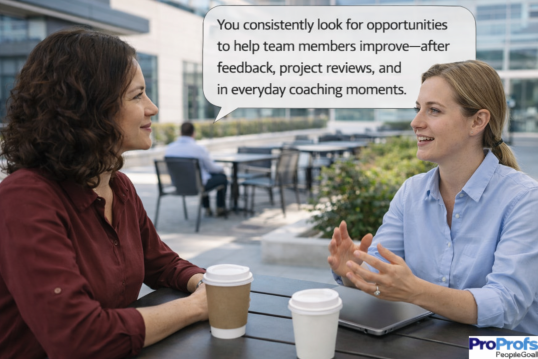
To me, a manager’s real legacy isn’t just what they achieve, it’s who they build along the way. Coaching shows up in everyday moments: feedback, encouragement, guidance, and helping people level up. Strong managers don’t just evaluate performance; they actively develop it. And teams feel the difference when growth is intentional.
Positive Feedback Comments
19. Growth-Focused Leadership: You consistently look for opportunities to help team members improve, not just complete tasks. For example, after project reviews, you discuss lessons learned and identify areas for skill development. That focus on growth strengthens both performance and retention.
20. Supportive Coaching Style: Even when providing critical feedback, you maintain a constructive tone. Team members leave conversations with clarity on how to improve rather than feeling discouraged. That balance builds both accountability and morale.
21. Creating Development Paths: You take time to understand individual career goals and align assignments accordingly. Instead of waiting for annual reviews, you integrate development into regular conversations. That intentional approach keeps people engaged and progressing.
Constructive Feedback Comments
22. More Coaching Consistency Needed: Development conversations sometimes happen informally but lack a structured rhythm. Establishing regular growth-focused check-ins would create clearer momentum for improvement.
23. Feedback Depth Opportunity: At times, feedback focuses on outcomes without addressing underlying behaviors. Offering more specific examples and action steps would make coaching more actionable and effective.
24. Career Support: Some team members would benefit from clearer long-term guidance. Helping them map current skills to future opportunities would increase motivation and strengthen retention. Coaching works best when it’s proactive, not reactive.
Decision-Making & Problem-Solving Phrases
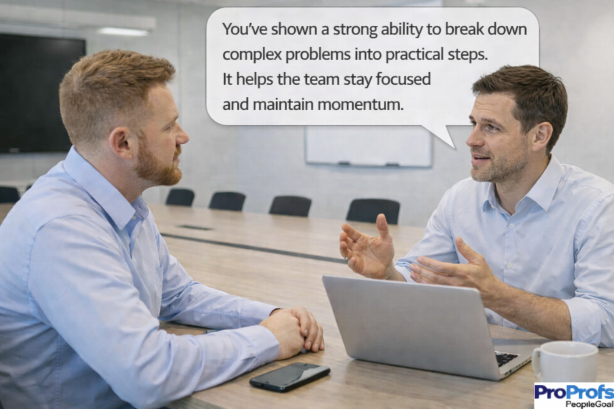
Strong managers are constantly making calls, some small, some high-stakes. What I pay attention to is how decisions are made, not just what the decision is. The best managers don’t panic under pressure; they slow things down, gather the right context, and choose a path the team can stand behind. Problem-solving is where leadership becomes very visible.
Positive Feedback Comments
25. Sound Judgment Under Pressure: You consistently make thoughtful decisions even when timelines are tight. For example, when the team faced an unexpected client issue, you quickly gathered input from the right people before choosing a solution. That prevented rushed fixes and helped us handle the situation with confidence and professionalism.
26. Practical Problem Solving: You have a strong ability to break down complex problems into manageable steps. Instead of letting issues feel overwhelming, you focus the team on what can be solved first, then build from there. This approach keeps momentum going and prevents problems from stalling progress.
27. Balanced Decision-Making: You don’t make decisions in isolation. You involve the team when needed, weigh different perspectives, and explain the reasoning clearly. That transparency helps people trust the direction and take ownership of execution, rather than just following instructions blindly.
Constructive Feedback Comments
28. Faster Decision Closure Needed: There have been times when decisions stayed open for too long while waiting for complete certainty. While caution is important, delayed decisions can slow the team down and create frustration. Moving forward, setting clearer decision-making timelines would help maintain momentum.
29. More Root-Cause Focus: In some cases, solutions have addressed the immediate symptom but not the deeper cause of the issue. Spending more time upfront understanding why a problem occurred would reduce the likelihood of repeat challenges. Strong problem-solving is not just fixing; it’s preventing.
30. Clearer Communication After Decisions: Occasionally, decisions are made, but the full context isn’t shared with the broader team. This can leave people unsure about the reasoning or next steps. Taking a few extra minutes to explain the “why” will improve alignment and execution.
Managing Remote or Hybrid Teams Phrases
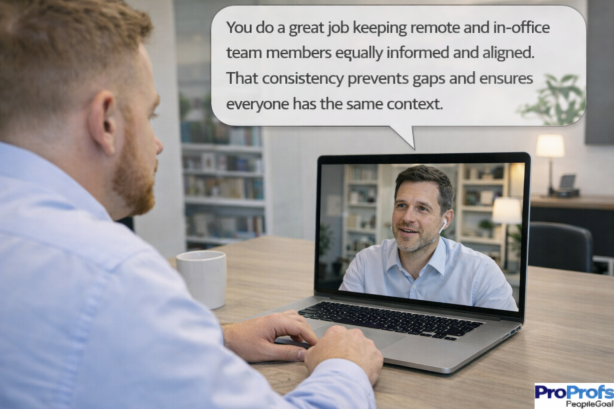
Leading a remote or hybrid team is a skill entirely different from leading an in-person team. You don’t get hallway conversations or quick visual cues, so clarity and connection have to be intentional. I look at how managers keep people aligned across locations, ensure remote employees feel equally included, and maintain accountability without micromanaging. Strong hybrid leadership is built on structure and trust.
Positive Feedback Comments
31. Consistent Remote Alignment: You do an excellent job keeping remote and in-office team members equally informed. For example, you make sure updates are documented and shared, not just discussed casually in the office. That consistency prevents gaps and ensures everyone has the same context.
32. Building Connection Across Distance: You actively create space for team connection, even when people aren’t physically together. Regular check-ins, thoughtful communication, and inclusive meetings help remote employees feel engaged rather than isolated. That effort has strengthened team cohesion.
33. Clear Expectations in Flexible Work: You set clear standards around communication, deadlines, and availability, which helps hybrid work run smoothly. Team members know what’s expected without confusion, and that clarity supports accountability without constant follow-up.
Constructive Feedback Comments
34. More Predictable Communication Needed: Some remote team members have mentioned uncertainty around priorities when check-ins are inconsistent. Establishing a more regular rhythm of updates would improve clarity and reduce the feeling of working in silos.
35. Inclusive Engagement Opportunity: At times, discussions lean toward those who are physically present, while remote voices come in later. Being more deliberate about inviting input from everyone will ensure remote employees feel equally valued and heard.
36. Balancing Oversight and Autonomy: There have been moments where follow-ups have felt either too frequent or too minimal. Finding a steadier balance of trust and accountability will help remote work feel supportive rather than disconnected.
Change Management & Organizational Adaptability Phrases
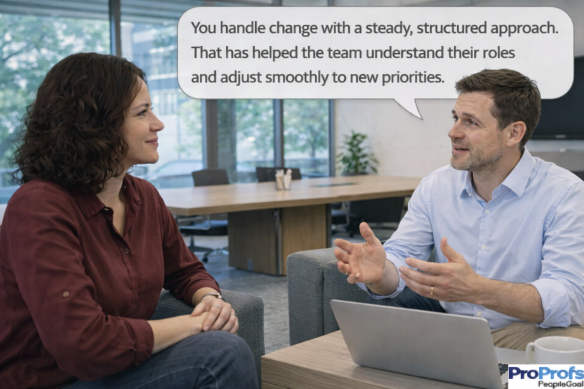
Change is constant, whether it’s new systems, shifting priorities, or organizational restructuring. What matters is how a manager guides the team through it. Strong leaders don’t ignore uncertainty; they address it directly and help people stay grounded. I always look for managers who can adapt quickly while keeping the team steady.
Positive Feedback Comments
37. Steady Leadership Through Change: You handle change with a calm, structured approach that helps the team stay focused. During recent workflow shifts, you clearly communicated what was changing, what wasn’t, and how the team should adjust. That steadiness reduced anxiety and maintained execution.
38. Helping the Team Adapt: You don’t just adapt personally; you help others adapt, too. You take time to answer questions, provide context, and make transitions feel manageable. Because of that, the team moves forward instead of resisting or feeling stuck.
39. Open to New Approaches: You show a healthy flexibility when processes evolve. Rather than clinging to “how we’ve always done it,” you stay open to improvement and encourage experimentation. That mindset supports long-term growth.
Constructive Feedback Comments
40. Earlier Communication During Change: There have been instances where updates about changes came later than ideal, leaving the team to adjust quickly. Sharing information sooner, even if all details aren’t final, would build trust and reduce uncertainty.
41. More Structured Transition Planning: Some changes have felt abrupt because the team didn’t have enough preparation or guidance. Creating clearer transition steps and expectations would help people adapt more smoothly.
42. Supporting Team Confidence: At times, change has been communicated more as a directive than a shared adjustment. Taking extra time to acknowledge concerns and explain the purpose behind shifts would improve buy-in and morale.
Here’s something extra to make this even easier. Below are ready-to-use performance review templates you can copy, paste, and start using right away.
And remember, the phrases matter, but how you deliver them matters just as much. If you want a simple way to lead the conversation smoothly (without it feeling stiff or uncomfortable), this short video will walk you through it.
What are the Common Manager Evaluation Mistakes to Avoid
Let me say this plainly. Most performance reviews don’t fail because managers are careless. They fail because the system quietly rewards the wrong behaviors.
I’ve made some of these mistakes myself over the years. And I’ve learned the hard way that a poorly handled evaluation can undo months of trust in a single conversation.
So if you’re evaluating managers, here are the traps I’d urge you to avoid.
1. The Blindside Review
Nothing damages credibility faster than surprise criticism at year-end. If a manager learns of “performance concerns” for the first time during an annual review, that’s not their failure. That’s ours. Performance feedback should never feel like a courtroom verdict. It should feel like an ongoing dialogue. If something is serious enough to document in a review, it was serious enough to address months earlier.
2. Over-Reliance on Raw Metrics
Numbers matter. But numbers without context can mislead. I’ve seen situations where a manager’s team metrics dipped because of factors outside their control, vendor delays, hiring freezes, and shifting company strategy. If we treat dashboards as the absolute truth without asking questions, we reduce leadership to spreadsheets. Data should start a conversation, not end one.
3. Forced Bell Curve Distortions
Ranking managers against each other just to fit a distribution curve creates unnecessary tension. In smaller teams, it can feel artificial and unfair. One strong year shouldn’t require someone else to be labeled “average.” When evaluations are shaped more by budget constraints than performance reality, managers lose faith in the system. Calibration should protect fairness, not distort it.
4. Ignoring Upward Feedback
360-degree reviews sound progressive. But they only work if upward feedback is genuinely considered. If managers know employee input won’t impact anything, the exercise becomes performative. Worse, employees stop being honest. They protect themselves instead of improving the system. When we invite feedback, we have to act on it. Otherwise, we shouldn’t ask.
5. Resetting Expectations to Limit Bonuses
This one is subtle but damaging. A manager exceeds expectations one year, and instead of celebrating it, the bar is quietly raised just to control bonus exposure. Over time, people notice. They start pacing their effort instead of striving. Performance reviews should reward growth, not penalize success.
6. Using Ratings as a Weapon
Ratings are tools. They’re not leveraging. When scores are used to pressure, threaten, or “make a point,” the review stops being developmental and becomes political. Managers should leave evaluations clear and directive, not defensive. If the process creates fear instead of improvement, it’s broken.
Make Manager Evaluations Clearer, Fairer, and More Impactful
Here’s what I’ve learned after evaluating managers for years: the strongest performance reviews aren’t about fancy wording or harsh ratings. They’re about clarity. When you focus on outcomes, day-to-day leadership behaviors, and what comes next, evaluations become genuinely useful instead of uncomfortable paperwork.
The manager performance evaluation examples in this guide are meant to make your reviews easier, more structured, and far more consistent, whether you’re recognizing a high performer or addressing a coaching gap early.
And if you’re tired of managing all of this through scattered notes, spreadsheets, or one-off documents, that’s exactly where PeopleGoal can help. It gives you a simple way to run structured manager evaluations, collect 360-degree feedback, and track development over time without the mess.
Ready to make manager reviews feel effortless and meaningful? Try PeopleGoal and bring real structure to your evaluation process.
Frequently Asked Questions

How can you evaluate a manager fairly in a small team without forced ranking?
In small teams, ranking people against each other often feels artificial. A better approach is to evaluate managers against clear standards, goals, and competencies. Focus on absolute performance, not comparisons.
Should manager evaluations be different for remote or hybrid teams?
Yes, remote leadership requires extra intentionality. You’ll want to assess factors such as communication consistency, inclusion, and how well the manager keeps people aligned across locations. The core skills are similar, but the context changes.
How do you handle disagreements during a manager's performance review?
Disagreements are normal, especially when feedback feels subjective. The best approach is to ground the conversation in specific examples, ask questions, and treat it as a dialogue, not a verdict. The goal is clarity, not winning.
What role should HR play in evaluating managers?
HR should help ensure the process is fair, structured, and consistent across teams. They can support calibration, reduce bias, and encourage healthy feedback practices. HR isn’t there to control the review, but to strengthen it.
How do you reduce bias in manager performance evaluations?
Bias drops when reviews are based on documented examples rather than impressions. Use clear criteria, gather multi-rater feedback when possible, and review performance over time, not just recent events. Structure is your best bias-reducer.
How do you evaluate a newly promoted or first-time manager?
With new managers, focus more on growth and learning than perfection. Look at how they’re adapting, seeking feedback, and building trust with the team. Early reviews should be developmental, not purely judgment-based.
What documentation should managers maintain throughout the year for accurate reviews?
Managers should keep notes on key wins, challenges, feedback conversations, progress toward goals, and coaching moments. This makes reviews fairer and prevents “recency bias.” The best evaluations are built over months, not one week.
How do you align manager performance reviews with succession planning?
Manager reviews are a great place to assess leadership readiness. Look at how well someone develops others, takes ownership, and handles broader responsibilities. Strong evaluations help identify who’s ready for the next level.
What are the signs that a manager's evaluation process is failing?
If reviews feel like surprises, people don’t trust ratings, or feedback doesn’t lead to growth, the process is breaking down. Another red flag is when evaluations become political instead of developmental. A good system builds clarity, not fear.
Ready to 3x Your Teams' Performance?
Use the best performance management software to align goals, track progress, and boost employee engagement.