
HR is no longer just paperwork. It is a powerful lever for growth, culture, and long-term competitive advantage. That is why employee lifecycle management is no longer a “nice to have.” It is a structural part of how modern organizations operate.
Yet many companies still manage the employee lifecycle through spreadsheets, email threads, and disconnected tools. That is not a system. It is a set of moving parts held together manually.
The real risk is quiet friction. A new hire who never fully ramps up. A high performer who slowly disengages. Managers running reviews differently across teams. On the surface, everything seems fine, but transitions lack clarity, and accountability fades.
In this guide, I unpack the seven stages and a practical framework to manage the employee lifecycle with clarity and consistency.
Here’s a quick glance at what’s going to come:
- Employee lifecycle management (ELM) connects the full employee journey from attraction to offboarding into one structured system
- The strongest lifecycle approach links onboarding, engagement, development, retention, and exit instead of treating them as separate HR tasks
- Most companies struggle because lifecycle stages break during transitions and become fragmented across spreadsheets and disconnected processes
- Emily Carter’s journey shows how clarity, feedback, and growth plans determine whether employees stay engaged or quietly disengage
- Highly engaged workforces deliver up to 18% higher productivity and 21% greater profitability, making ELM a business growth system
- Modern HR leaders want structure: repeatable onboarding, continuous feedback, 360 reviews, measurable development, and scalable workflows
What is Employee Lifecycle Management?
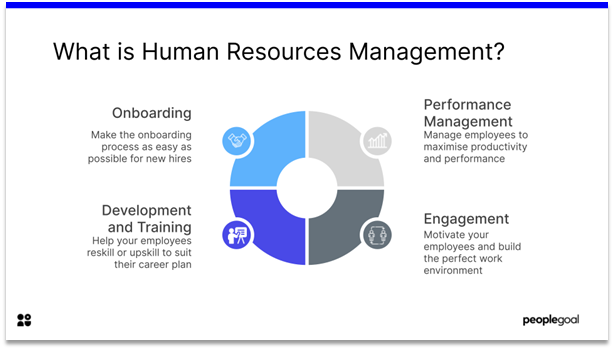
Employee lifecycle management (ELM) is a structured approach to managing the full employee journey, from attraction and hiring to onboarding, performance development, retention, and offboarding. Instead of treating HR activities as separate tasks, ELM connects every stage into one continuous system that improves employee experience and organizational outcomes.
What Are the 7 Common Stages of Employee Lifecycle Management?
Now that you are aware of the employee lifecycle management definition, it’s time to dive into its stages. When I look at employee lifecycle management, I don’t see seven boxes on a slide deck. I see seven moments where your system either supports your people… or quietly fails them. Every stage connects to the next. When one breaks, the ripple travels forward.
Before we walk through the seven stages, let’s zoom out for a second. Employee lifecycle management is not one single process. It is a connected system that typically includes:
| Number | Stage | What It Focuses On | Key Goal |
|---|---|---|---|
| 1.0 | Attraction | How the company presents its culture, values, and growth opportunities to potential candidates | Attract the right talent whose expectations align with the organization |
| 2.0 | Recruitment | Evaluating candidates and selecting the best fit through structured hiring processes | Ensure the candidate’s skills, experience, and mindset match the role |
| 3.0 | Onboarding | Helping new hires transition smoothly into their roles and understand expectations | Accelerate productivity and build early confidence |
| 4.0 | Engagement | Maintaining strong communication, recognition, and trust between employees and managers | Strengthen motivation, commitment, and workplace satisfaction |
| 5.0 | Development | Providing employees with opportunities to learn new skills and advance their careers | Support long-term growth and internal mobility |
| 6.0 | Retention | Creating an environment where employees see progress, fairness, and purpose | Keep high performers and reduce voluntary turnover |
| 7.0 | Offboarding & Advocacy | Managing exits professionally while capturing insights and maintaining relationships | Preserve knowledge, gather feedback, and strengthen employer reputation |
Remember, employee lifecycle management works best when you connect onboarding, feedback, development, and retention with ELM software. Now, let’s break down how those pieces come to life across the seven stages, starting with attraction.
Stage 1: Attraction
Attraction is where expectations are formed. It is not about posting a job. It is about how your company shows up before anyone ever applies. Your leadership voice, your culture signals, and your growth narrative shape which kinds of talent are drawn to you and what they believe working with you will look like.
If attraction is exaggerated or unclear, misalignment begins long before the hiring process.
Example:
Emily first discovers your company through a founder’s LinkedIn post discussing internal promotions and employee ownership. She clicks through to the careers page and sees real employee journeys, defined role expectations, and transparent career tracks. It feels deliberate and structured.
Now imagine if she had seen buzzwords, vague promises, and no clarity on progression. She would not feel inspired. She would feel uncertain.
Questions I ask at this stage:
- Does our external messaging reflect our internal reality?
- Are we attracting the right candidates or just more candidates?
- Is our growth narrative specific or generic?
Metrics to watch:
- Career page traffic measures how effectively your employer brand attracts attention.
- Candidate quality ratio tracks the number of applicants who actually meet core role criteria.
- Application-to-offer conversion rate indicates whether expectations are aligned early.
Attraction sets the tone for everything that follows.
Stage 2: Employee Recruitment
Employee recruitment is the alignment phase. This is where you test whether the candidate’s strengths truly match the role’s real demands. A structured hiring process reduces bias, improves fairness, and increases long-term performance consistency.

In some organizations, especially fast-growing SaaS teams, employee recruitment is increasingly tracked like a funnel. The difference is that the goal here is not conversion alone. It is long-term role fit and retention
Without structure, you hire based on optimism rather than evidence.
Example:
Emily interviews with three stakeholders. Each interviewer uses a predefined scorecard focused on strategic thinking, campaign ownership, and cross-functional collaboration. She is also given a realistic case assignment that mirrors the challenges she will actually face.
By the time she receives the offer, she knows exactly what success looks like.
Without that structure, she could have been hired based on personality fit alone, only to discover later that expectations were unclear.
Questions I ask at this stage:
- Have we clearly defined what success in this role looks like?
- Are we evaluating competencies or personalities?
- Would two different interviewers reach the same conclusion?
Metrics to watch:
- Time-to-hire measures recruitment efficiency without sacrificing evaluation depth.
- Offer acceptance rate indicates whether your value proposition aligns with candidate expectations.
- Early attrition rate within six months reveals whether hiring decisions were accurate.
Employee recruitment protects the integrity of your lifecycle.
Stage 3: Employee Onboarding
Employee onboarding is not a welcome email and an IT checklist. It is a structured transition system that defines performance expectations, reporting clarity, and early wins within the first 90 days.
When employee onboarding lacks structure, productivity slows and confidence drops.
Example:
On Day 1, Emily receives a documented 30-, 60-, and 90-day plan. She knows which campaigns she will lead by Month 2 and which KPIs define success. Her manager schedules biweekly check-ins from the beginning.
By Day 45, she is already confidently leading a product launch initiative.
Now imagine if she had simply been told, “Shadow someone and figure it out.” The uncertainty would quietly build, and momentum would stall.
Questions I ask at this stage:
- Does every new hire know what success looks like in 90 days?
- Are managers actively guiding new employees?
- Do we track onboarding consistency across departments?
Metrics to watch:
- Time-to-productivity measures how quickly new hires begin contributing meaningfully.
- New hire satisfaction score tracks early employee experience quality.
- The first-year turnover rate indicates whether onboarding has created long-term stability.
Quick HR Resource: Employee Onboarding Kit (Copy-Paste Template)
If you want a simple structure HR teams can reuse, here is a basic onboarding kit template you can adapt:
Pre-Day 1
- Send welcome email and onboarding schedule
- Set up system access and equipment
- Share team introductions and reporting structure
Day 1
- Company overview and culture briefing
- Role expectations and key responsibilities
- Introduce 30-60-90 day success plan
Week 1
- Product or service deep-dive sessions
- Shadow key team members
- Schedule regular manager check-ins
First 30 Days
- Assign first measurable project
- Clarify KPIs and performance expectations
- Gather early feedback from the new hire
60–90 Days
- Review progress against goals
- Identify skill development opportunities
- Confirm long-term role alignment
Employee onboarding builds momentum or drains it. Here’s a quick video on how you can onboard employees quickly:
Stage 4: Employee Engagement
Employee engagement is the ongoing emotional and professional connection employees feel toward their work. It grows through consistent communication, recognition, and psychological safety.

It weakens when feedback becomes inconsistent or superficial. Employee engagement is built through rhythm, not annual events.
Example:
Six months in, Emily has delivered strong marketing results. Her manager recognizes her contributions publicly and maintains consistent one-on-one meetings. During one conversation, she shares her desire to strengthen her analytics skills. That input is documented and revisited later.
She feels heard.
If her manager had repeatedly canceled meetings or dismissed her ideas, disengagement would have begun quietly.
Questions I ask at this stage:
- Do managers maintain a consistent feedback rhythm?
- Do employees feel safe raising blockers?
- Is recognition visible and timely?
Metrics to watch:
- eNPS measures employee advocacy and likelihood to recommend the workplace.
- Pulse survey participation rate indicates trust and willingness to share feedback.
- One-on-one completion rate tracks managerial consistency.
Employee engagement is built in repeated, intentional moments. Small actions such as consistent one-on-one conversations, timely recognition, and open feedback loops gradually strengthen trust and commitment.
If you want to explore this topic more deeply, you can read our detailed guide on employee engagement and how organizations can measure and improve it effectively.
Stage 5: Employee Development
Employee development ensures employees grow instead of plateauing. It connects performance feedback to real opportunities, skill-building, and advancement pathways.
Without employee development, even strong performers begin looking elsewhere.
Example:
After one year, Emily received a strong performance rating. Instead of stopping there, her manager outlines a pathway toward Senior Marketing Lead. She is enrolled in a leadership workshop and given cross-functional ownership of a strategic initiative.
Her performance translates into growth. Without that connection between evaluation and opportunity, she would likely update her resume quietly.
Questions I ask at this stage:
- Are performance reviews tied directly to development plans?
- Do we have clear career pathways defined?
- Are we tracking internal mobility seriously?
Metrics to watch:
- The promotion rate measures the effectiveness of internal career mobility.
- Training completion rate indicates participation in structured skill development.
- Skill progression tracking evaluates growth against defined competencies.
Employee development keeps ambition inside your organization. When employees see clear pathways to build new skills and move forward in their careers, motivation tends to stay within the company rather than drifting outside it.
If you want a deeper look at how organizations structure growth opportunities, explore our detailed guide on employee development and building effective development programs.
Stage 6: Employee Retention
Employee retention reflects how well the earlier stages worked together. It is driven by trajectory, fairness, clarity, and meaningful growth. Perks alone do not retain people.
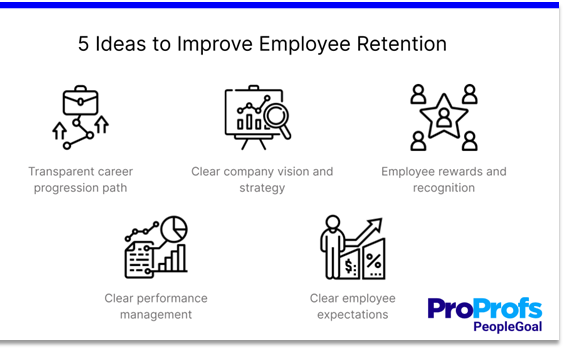
If they see progress and feel supported, employee retention follows naturally.
Example:
Two years in, Emily has been promoted and is leading a small team. She feels ownership, visibility, and trust. Her career path feels active.
Now imagine if she had delivered results for two years without recognition or advancement. That frustration would quietly build until a recruiter’s message feels attractive.
Employee retention rarely collapses overnight. It erodes gradually.
Questions I ask at this stage:
- Are high performers leaving faster than average employees?
- Do we analyze attrition patterns by team?
- Are engagement trends declining in specific departments?
Metrics to watch:
- Voluntary turnover rate measures employee-initiated departures.
- Engagement drop-off trends highlight morale decline over time.
- Department-level attrition identifies leadership or structural issues.
Employee retention is the scorecard of your lifecycle health. If you want to understand why employees leave and how to address it strategically, explore our detailed guide on employee turnover.
Stage 7: Employee Offboarding + Advocacy
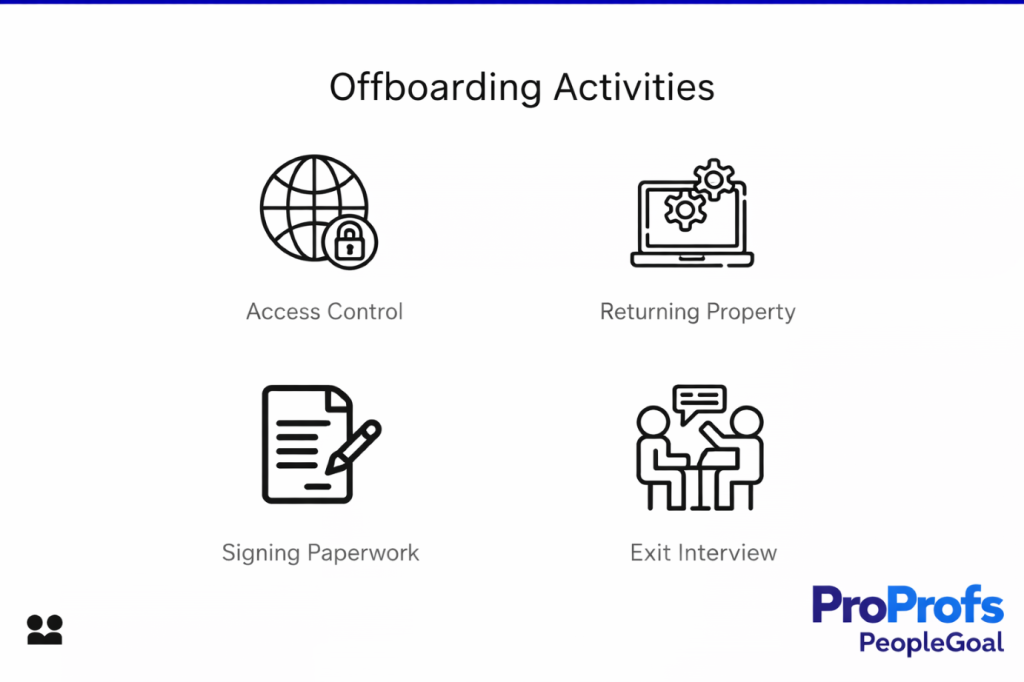
Employee offboarding captures insight and preserves reputation. It ensures structured knowledge transfer and extracts learning from departures. Done properly, it strengthens the next hiring cycle.
Example:
Three years later, Emily accepts a VP-level opportunity elsewhere. During her structured exit interview, she shares that leadership’s bandwidth was limited, further limiting expansion. That feedback leads the company to redesign its succession framework.
She leaves respectfully and refers two strong candidates within six months.
Her departure becomes actionable data.
Questions I ask at this stage:
- Are exit interviews analyzed for recurring themes?
- Do we maintain alumni relationships?
- Is knowledge transfer documented properly?
Metrics to watch:
- Exit feedback themes reveal systemic weaknesses or leadership gaps.
- Alumni rehire rate measures long-term employer reputation.
- Knowledge transfer completion ensures operational continuity.
The employee lifecycle does not end at exit. It informs the next beginning.
Why Is Employee Lifecycle Management Important for Businesses?
Companies with highly engaged workforces deliver up to 18% higher productivity and 21% greater profitability. That is real business impact. Employee lifecycle management is not just an HR concept. It is a growth system.
When hiring, onboarding, development, and retention are connected, companies gain momentum. When they are fragmented, productivity drops and turnover rises.
1. Structured Employee Journeys Improve Productivity
When the employee journey is structured, people spend less time guessing and more time executing. Clear onboarding, consistent goals, and regular feedback help employees contribute faster. Productivity improves simply because expectations are visible and support is built into the system. And as the data shows, engagement alone can drive double-digit productivity gains.
2. Employee Lifecycle Management Reduces Turnover by Supporting Growth
Employee turnover rarely happens overnight. It builds when growth feels unclear, feedback is inconsistent, or development stalls. Lifecycle management reduces those blind spots by creating continuity across onboarding, performance, and progression, so employees feel supported instead of stuck.
3. Build a Stronger Leadership Pipeline
One of the biggest advantages of a lifecycle structure is that future leaders stop being a surprise. When performance and development are intentionally tracked, you can see who is ready for greater responsibilities. Promotions become planned, not reactive.
4. Reduce HR Chaos With Connected Processes
Without lifecycle management, HR work becomes coordination work. Reviews live in spreadsheets, onboarding lives in emails, and development lives in someone’s notebook. A connected lifecycle system reduces admin overload and gives HR teams space to focus on strategy instead of chasing processes.
5. Maintain Culture Consistency as You Scale
Culture becomes fragile when companies scale. One manager runs great check-ins, another does not. One team develops people, another loses them. Lifecycle management standardizes the employee experience, so culture is not dependent on individual managers.
6. Turn Employee Engagement Into a Business Advantage
Employee engagement is not a soft idea. It drives measurable productivity and profitability outcomes. And when lifecycle stages are connected through the right systems and habits, engagement becomes something you can intentionally build rather than hope for.
So when someone asks me why employee lifecycle management process matters, I do not answer, “Because HR needs structure.”
I answer with this: Because businesses that manage the full employee journey intentionally scale faster, retain stronger talent, and grow with far less internal friction.
How to Build an Employee Lifecycle Process From Scratch
Knowing the stages is one thing. Managing them consistently as your company grows is another.
If you want the employee lifecycle management process to scale instead of collapse under complexity, you need operational discipline. No more meetings. Not more policies. Clear structure.
Many teams now use employee lifecycle management (ELM) software like PeopleGoal, which becomes valuable in managing these processes. It helps you run structured onboarding workflows, automate reviews and feedback cycles, connect goals to development, measure engagement, and manage the full employee journey in one continuous system.
Here’s the framework I use when building or fixing lifecycle systems inside growing companies.
1. Define Clear Goals Early So Performance Stays Aligned
Before anything else, employees need clarity on what they are working toward. Set structured goals from the beginning using frameworks like OKRs or SMART goals, and connect individual goals to team and company priorities.
Start by defining success in measurable terms, then revisit goals regularly rather than letting them sit untouched.

Goal template you can copy:
SMART Goal Example
- Objective: Improve customer response efficiency
- Target: Reduce average response time to under 2 hours
- Timeline: Within 3 months
- Measurement: Weekly support response time report
OKR Example
Objective: Improve marketing lead quality
Key Results:
- Increase qualified leads by 20% this quarter
- Improve landing page conversion from 3% to 5%
- Launch two targeted acquisition campaigns
Clear, measurable goals help employees understand exactly what success looks like.
2. Turn Onboarding Into a Structured 30-60-90 Day System
Employee onboarding should feel like a guided system, not improvisation. Build repeatable onboarding workflows so every new hire receives the same clarity and early support.
Automate pre-onboarding steps, assign tasks by role, and ensure managers schedule early check-ins.
Simple onboarding template HR teams can reuse
Day 1
- Company introduction and culture overview
- Role expectations and key responsibilities
- Introduce the reporting structure
First 30 Days
- Complete product or service training
- Shadow key team members
- Deliver the first small project
60–90 Days
- Own a measurable initiative
- Review performance progress
- Define development goals
First impressions compound quickly, so structure matters here more than anywhere.
3. Run Structured Performance Reviews Instead of Manual Processes
If performance reviews rely on spreadsheets or memory, inconsistency is inevitable. Move to review cycles with clear evaluation criteria.
Employees should know exactly what they are being evaluated on.
Simple performance review structure
Evaluation categories:
- Goal achievement
- Collaboration and teamwork
- Initiative and ownership
- Skill development
Score each category on a 1–5 scale and require managers to add short written feedback.
Predictable reviews build trust in the system.
4. Build Continuous Feedback and 360-degree Input Into Everyday Work
Engagement drops when feedback becomes occasional rather than consistent. Create lightweight check-ins and peer feedback loops throughout the year.

Bringing in perspectives from peers and collaborators also reduces bias.
Simple 360 feedback questions you can use
- What does this employee do exceptionally well?
- What is one area where they could improve?
- How effectively do they collaborate with others?
- What strengths should they continue to build on?
Growth becomes more accurate when multiple voices contribute.
5. Turn Performance Reviews Into Development and Career Plans
A review without a next step is wasted effort. Every performance cycle should translate into a development plan.
Employees should leave a review knowing what they will improve and what opportunities lie ahead.
Development plan template
- Skill to develop: Strategic decision-making
- Action step: Lead one cross-functional project
- Support: Monthly coaching with the manager
- Timeline: Next 6 months
When development is visible, ambition stays inside the organization instead of drifting elsewhere.
6. Measure Engagement Regularly and Automate the Process
Do not wait for disengagement to become turnover. Use pulse surveys and regular check-ins to understand what employees are experiencing in real time.
Automation can handle reminders, survey cycles, and workflow steps so HR teams spend less time chasing processes.
Example employee engagement survey questions:
- Do you feel your work contributes to company goals?
- Do you receive useful feedback from your manager?
- Do you see growth opportunities here?
- Would you recommend this company as a workplace?
When engagement is measurable, it becomes manageable.
Improve Employee Lifecycle Management Starting Today
The stages of employee lifecycle management are not just a checklist of HR activities. It is a connected system that determines how people experience your company from their first interaction to their final day.
When attraction, hiring, onboarding, engagement, development, and retention are intentionally linked, productivity improves, turnover drops, and leadership pipelines become predictable. When they are fragmented, friction builds quietly.
The real takeaway is simple: structure creates clarity, and clarity creates momentum.
If you want that structure to scale, an employee lifecycle management (ELM) software like PeopleGoal can centralize employee data, standardize reviews, and connect performance to development in one continuous flow.
Take a moment to evaluate your current lifecycle. Where are the gaps? That must be your first step in managing the employee lifecycle.
Frequently Asked Questions
How do you map the employee lifecycle in a growing organization?
Start by documenting every stage from attraction to exit. Then identify transition points where things usually break, like onboarding or promotions. Assign clear ownership at each stage and define measurable outcomes. As you grow, revisit the map quarterly, so it reflects how your organization actually operates.
What is the role of managers in employee lifecycle management?
Managers are the daily operators of the lifecycle. HR builds structure, but managers drive engagement, feedback, goal clarity, and development conversations. If managers skip check-ins or avoid performance discussions, the system weakens. Lifecycle management succeeds when managers consistently execute their part.
How does employee lifecycle management improve employee experience?
It creates predictability and clarity. Employees know what success looks like, how they are evaluated, and how they can grow. That removes uncertainty. When onboarding is structured and feedback is consistent, employees feel supported instead of guessing what comes next.
What is the difference between employee lifecycle management and talent management?
Employee lifecycle management covers the entire journey, from hiring to exit. Talent management focuses more specifically on performance, succession, and leadership development. Lifecycle management is broader. Talent management is one critical part within that larger system.
How do you align employee lifecycle stages with business goals?
Start by connecting individual goals to company objectives. Use structured goal frameworks and make performance reviews reflect strategic priorities. When onboarding, development, and feedback tie directly to measurable business outcomes, alignment becomes natural instead of forced.
What are the common mistakes companies make during employee lifecycle transitions?
The most common mistake is underestimating transitions. Promotions, onboarding, and exits are often handled informally. That leads to unclear expectations and missed knowledge transfer. Another mistake is failing to treat internal role changes like fresh onboarding cycles.
How do onboarding and performance management connect in the employee lifecycle?
Onboarding sets early expectations and defines success metrics. Performance management reinforces and measures those expectations over time. When onboarding clearly establishes goals, performance reviews become a continuation of that clarity rather than a surprise.
Can employee lifecycle management reduce employee turnover? If yes, how?
Yes. Turnover often stems from unclear growth paths or inconsistent feedback. Lifecycle management reduces those gaps by connecting onboarding, performance, development, and engagement. When employees see progression and feel heard, they are less likely to leave.
What is the best way to standardize employee lifecycle processes across departments?
Create a core structure that applies company-wide, such as review cycles and onboarding templates, then allow department-level customization within that structure. Standardization ensures fairness. Flexibility ensures relevance. The balance prevents both rigidity and chaos.
Ready to 3x Your Teams' Performance?
Use the best performance management software to align goals, track progress, and boost employee engagement.