
Picture this: it is review season, your calendar is packed, and your brain suddenly forgets every useful sentence you have ever spoken.
You remember the year in flashes: a big project win, a few messy handoffs, that one deadline sprint, and a lot of steady work in between. Now you need to transform all that into clear, fair, specific, and genuinely helpful feedback.
That is where the right phrases save you.
In this guide, you will find annual performance review example phrases and comments for common performance categories, including positive feedback and constructive feedback. They are detailed enough to sound real, simple enough to copy fast, and flexible enough to fit different roles.
Additionally, these annual performance review phrases guide on what to write in an annual performance review, offering direct, fair, and easy-to-understand feedback.
Annual Performance Review Phrases: Examples & Templates
Check these annual performance review phrases to move from blank-page stress to clear, consistent feedback. It gives you practical examples you can copy, adapt, and personalize so your reviews sound fair, specific, and grounded in real performance.
Communication Skills Phrases:
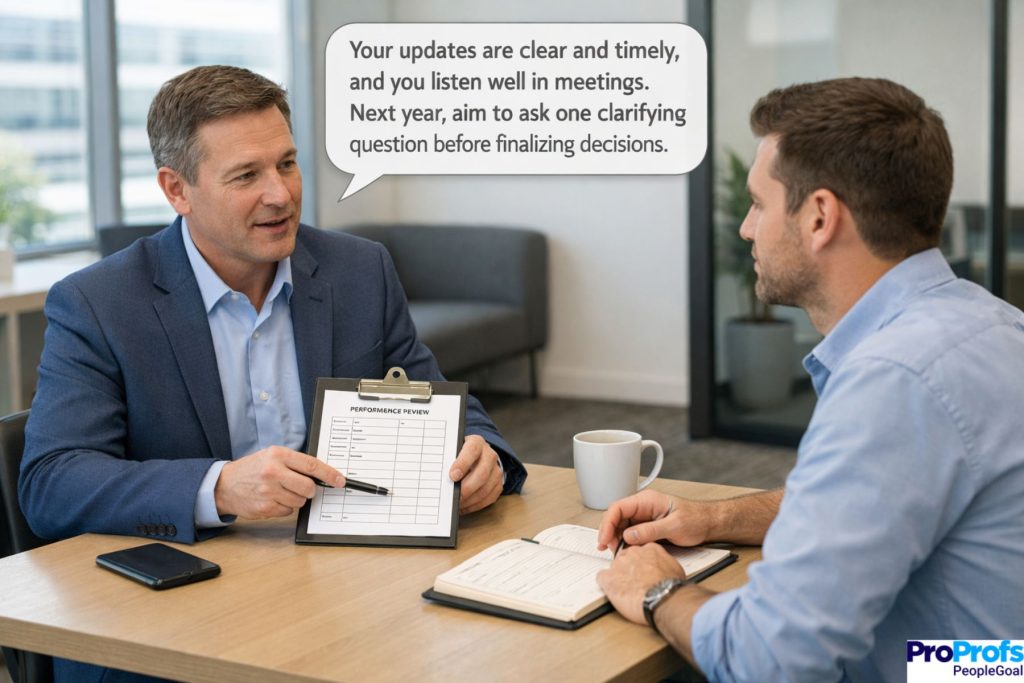
Effective communication is the cornerstone of collaborative work. It enables clarity and cohesion, ensuring team members understand goals and instructions. Employees with strong communication skills articulate ideas clearly and listen actively, bridging gaps across teams.
They adapt their messaging to different audiences and keep colleagues informed. Conversely, communication challenges like a lack of clarity or poor listening can hinder teamwork. In reviews, it’s important to encourage openness, clarity, and better listening habits to improve overall communication.
Use these employee performance review phrases to describe communication strengths and gaps in a way that is clear, fair, and easy to act on.
Positive Feedback Comments:
- Clarity and Guidance: You consistently provide clear directions, set expectations, and offer timely feedback to your team, ensuring everyone understands their responsibilities and goals. This clarity keeps projects on track without confusion.
- Active Listening: You excel at active listening. In meetings, you give colleagues your full attention and acknowledge their input, making others feel heard and fostering an environment of mutual respect.
- Transparent Updates: You keep all stakeholders informed by proactively sharing updates and information. Your habit of looping in team members on progress and changes builds trust and prevents misunderstandings before they occur.
- Adapting to Audience: You tailor your communication effectively to different audiences. Whether explaining technical details to non-experts or simplifying complex ideas, you adjust your language and tone so everyone can grasp the message.
- Encouraging Dialogue: You invite questions and encourage open dialogue. For example, you often pause to ask “Does anyone have concerns or suggestions?” – a practice that creates a safe space for team input and innovation.
- Written Communication: Your written communication is clear and concise. Emails, reports, and documentation from you are well-structured and free of ambiguity, which helps others quickly understand requirements and next steps.
- Diplomacy in Tough Situations: Even when discussions become difficult, you remain respectful and diplomatic. You handle disagreements or complex issues with a calm tone and constructive approach, helping to defuse tension and find solutions.
Now, here are some constructive performance review comments that address communication gaps directly, while still maintaining a professional and respectful tone.
Constructive Feedback Comments:
- Needs Active Listening: At times, you appear to be formulating a response instead of actively listening to others. To improve, practice waiting until colleagues finish speaking before you respond or ask questions.
- Jargon and Clarity: Your explanations can be very technical or lengthy, which sometimes confuses non-technical team members. Consider adjusting your communication style to use less jargon when talking to cross-functional colleagues so your ideas are accessible to everyone.
- Timely Communication: There have been instances where you did not communicate delays or obstacles early enough. Going forward, keep the team updated on any issues as they arise – early communication can help us adjust plans effectively.
- Speaking Up More: We’ve noticed you sometimes hold back your opinions in meetings. You are knowledgeable in your field, so we want to hear your thoughts. Try to voice your ideas more confidently so the team can benefit from your insight.
- Avoid Interrupting: You occasionally talk over colleagues during discussions, which can discourage them from sharing. Be mindful of giving others space to finish – practicing this courtesy will improve team collaboration and show that you value their input.
- Improving Clarity: Some of your messages (emails or verbal instructions) have been unclear, causing confusion about tasks. It would help to be more specific – for example, listing action items or confirming others’ understanding – to ensure your communication is understood as intended.
- Handling Urgent Situations: When projects become urgent or problems arise, you tend to withdraw, and communication drops. In high-pressure situations, remember to keep colleagues in the loop and ask for help if needed. Regular check-ins during crises will prevent misunderstandings and enable the team to support you.
- Consistent Tone: At times, your tone in emails comes across as abrupt or overly critical. While this may not be intentional, try reading messages from the recipient’s perspective and adding a courteous phrase or clarification where appropriate. This will help maintain positive working relationships.
Teamwork and Collaboration Phrases:
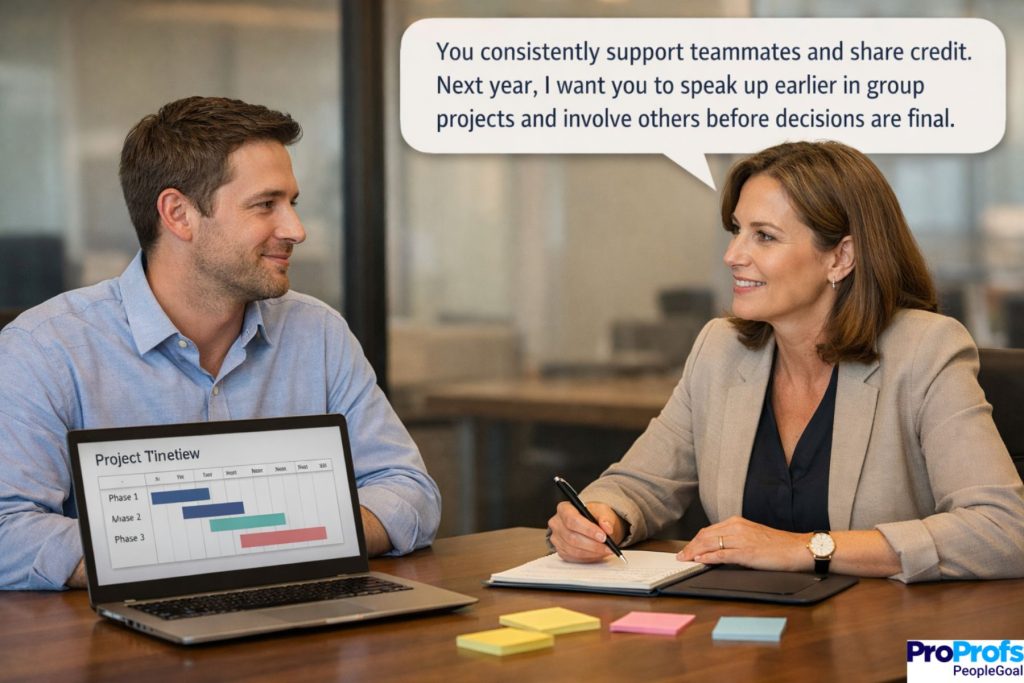
These annual performance review comments focus on how someone supports the team, collaborates under pressure, and builds trust through everyday working relationships.
Strong teamwork and interpersonal skills are essential for a thriving workplace. Effective collaboration improves internal communication and builds a healthy company culture where colleagues feel comfortable reaching out to each other for help.
Employees who excel in teamwork actively share credit, support their peers, and adapt to different working styles. They contribute to an inclusive environment by valuing diverse ideas.
On the other hand, challenges in teamwork, such as poor cooperation or reluctance to engage, can hurt group performance. In this category, feedback focuses on how individuals contribute to team goals, cooperate with others, and build positive working relationships.
These annual review comments for employees work well when you want to highlight real team impact, not just personal effort.
Positive Feedback Comments:
- Collaborative Spirit: You show a great willingness to help your teammates and are quick to cooperate with others to get the job done, which has benefited the team’s goals. Your “all for one” attitude boosts group morale.
- Mentoring Others: You often act as a go-to person for new or less experienced colleagues. By offering guidance, sharing techniques, and patiently answering questions, you help others improve and foster a supportive team culture.
- Respectful Communication: You communicate with your coworkers in a respectful, friendly manner and adapt easily to different personalities. This respect for others’ viewpoints has helped avoid conflicts and enabled smooth collaboration even under pressure.
- Reliability in Teams: Your team can always count on you. In group projects, you take ownership of your tasks and also step up to assist others when needed, ensuring the team meets its deadlines and objectives consistently.
- Encourages Input: You make it a point to invite input from all team members. In meetings, you often say things like, “I’d love to hear everyone’s ideas,” which encourages quieter colleagues to contribute and makes the team feel valued.
- Bridging Departments: You excel at cross-team collaboration. For instance, you worked effectively with another department to solve a client issue, coordinating efforts and sharing knowledge seamlessly. This ability to collaborate beyond your immediate team is a strong asset.
- Positive Team Environment: You contribute to a positive team environment by celebrating others’ successes and showing appreciation for their work. Your genuine kudos – whether in team meetings or via a quick thank-you message – help build camaraderie and motivate everyone.
Constructive Feedback Comments:
- Increase Team Focus: You sometimes tackle projects in isolation and could involve your teammates more. Remember that asking for help or delegating when you’re overloaded can lead to better results and a more balanced team workload, rather than trying to shoulder everything alone.
- Avoiding Collaboration: There have been instances where you were hesitant to collaborate and deferred joining group discussions. Our workplace thrives on teamwork, so I encourage you to share your expertise and engage in brainstorming with the team. Being more proactive in collaborative efforts will drive more innovative solutions.
- Listening in Meetings: You have shown a pattern of interrupting others when they are speaking in meetings. While it may be unintentional, it’s important to show respect for your colleagues by waiting until they have finished before adding your thoughts. This will create a more inclusive environment for everyone’s ideas.
- Equal Contribution: At times, you tend to let others carry the bulk of the work in team projects. Your skills are valuable to the group – try to participate more actively by volunteering for tasks or offering support to teammates. Increasing your involvement will not only lighten their load but also showcase your capabilities.
- Openness to Others’ Ideas: You occasionally dismiss teammates’ ideas and insist on your own approach, which can come across as a “my way or the highway” attitude. To improve collaboration, work on staying open-minded – even if you disagree initially, take time to consider colleagues’ perspectives. A willingness to compromise or incorporate others’ suggestions will lead to stronger team outcomes.
- Team Communication: Some team members have mentioned difficulty getting updates from you on joint tasks. Make an effort to communicate status updates and any changes in a timely manner. Keeping everyone in the loop will prevent confusion and help the team adjust as needed.
- Building Trust: It appears you’re uncomfortable giving or receiving feedback within the team – for example, avoiding difficult conversations when a teammate is underperforming. Constructive feedback among peers is essential for growth. Consider scheduling brief check-ins with colleagues to exchange feedback or discuss concerns. Taking the initiative in honest, respectful communication will strengthen trust and team cohesion.
- Team Engagement: You often skip team-building activities or informal get-togethers. While these may seem nonessential, participating occasionally can strengthen your relationships with coworkers. Building rapport outside of day-to-day tasks can improve how well you all work together when it counts.
Time Management and Productivity Phrases:
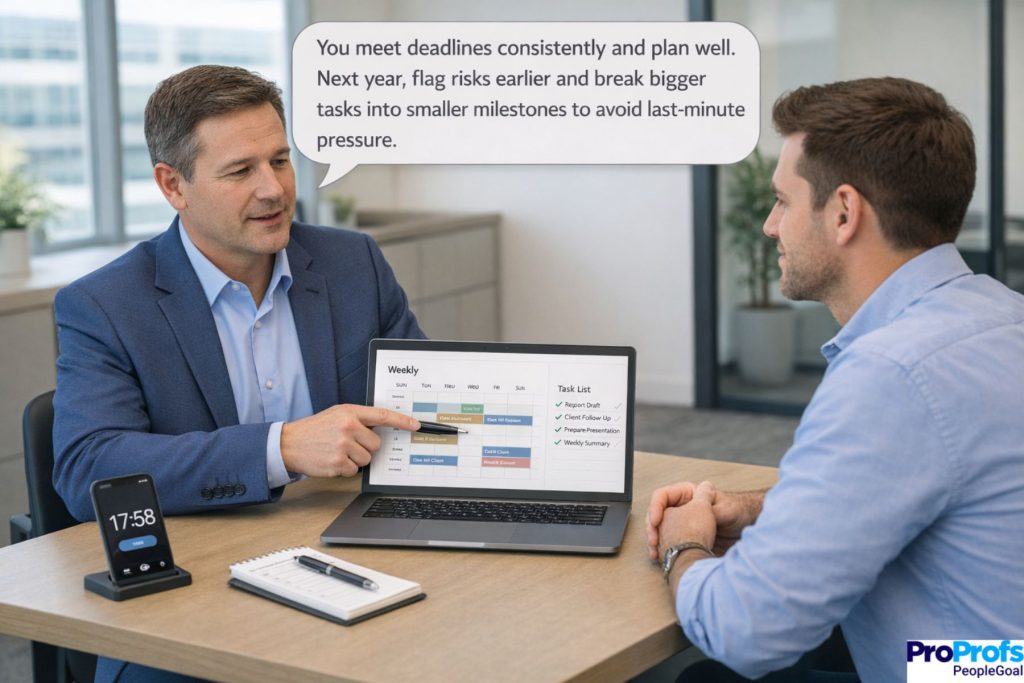
When a yearly performance review needs to be written quickly, time management is one of the easiest categories to assess because it shows up in deadlines, meeting habits, and daily reliability.
Time management and productivity are critical for maintaining efficiency in any role. Even with flexible schedules and remote work, effectively managing time and meeting deadlines remain important values to encourage in employees.
Strong time management means prioritizing tasks, avoiding procrastination, and using one’s work hours wisely to maximize output. Employees who excel here consistently deliver work on schedule (or early) without sacrificing quality.
On the flip side, poor time management – missed deadlines, disorganization, or procrastination – can disrupt projects and strain colleagues. This category’s feedback addresses punctuality, task prioritization, and efficient work habits.
These phrases also make a year-end performance review easier because they help you talk about output and consistency with real examples, not vague impressions
Positive Feedback Comments:
- Always Punctual: You consistently meet or beat deadlines for your deliverables. In fact, you often finish work ahead of schedule and never miss key due dates, demonstrating reliability and excellent scheduling skills.
- Task Prioritization: One of your greatest strengths is your ability to juggle multiple responsibilities while staying organized. You prioritize tasks effectively – focusing on high-impact tasks first – which allows you to handle a heavy workload without letting anything slip through the cracks.
- Productive Workflow: You have created efficient personal workflows that maximize productivity. For example, you break your day into focused work blocks and use tools to track progress. This level of organization has noticeably increased your output and ensured all assignments are completed on time.
- Attention to Deadlines: You demonstrate a strong sense of urgency when needed. In the past quarter, you managed urgent requests (like the last-minute client proposal) by quickly reordering your priorities and still delivered a high-quality output before the deadline.
- Efficient Meetings: You respect everyone’s time by keeping meetings on track. For instance, you often come prepared with an agenda and steer discussions toward conclusions. This skill not only helps conclude meetings promptly but also ensures we cover all important points efficiently.
- No Detail Overlooked: Even though you work quickly, you do not sacrifice quality. You always double-check your work for accuracy, which means your rapid pace doesn’t result in mistakes. Completing tasks fast and well is a rare strength that you consistently display.
- Independent and Focused: You require minimal supervision to stay productive. Once goals are set, you independently manage your schedule, avoid distractions, and maintain focus. This self-driven approach has contributed to steady progress on long-term projects.
- Respects Others’ Time: You consistently arrive on time (or early) to meetings and adhere to agreed-upon schedules. Colleagues appreciate that you also end meetings when scheduled and don’t let discussions run over, which shows consideration for everyone’s time.
Constructive Feedback Comments:
- Deadline Awareness: You have occasionally missed deadlines or delivered work at the last minute due to underestimating how long tasks would take. Going forward, try to buffer more time for each task and set interim milestones. Improving your time estimation and planning will help ensure you meet deadlines without a last-minute rush.
- Prioritizing Tasks: At times, you invest a lot of effort in low-priority tasks while more urgent work is left for later. To boost productivity, practice prioritizing your to-do list each day – identify which tasks are most critical to the team’s goals and tackle those first. This way, high-priority items won’t be at risk of delay.
- Procrastination Triggers: It’s been observed that you tend to procrastinate on tasks that you find challenging, which then causes a time crunch. Work on breaking daunting projects into smaller, manageable steps with set deadlines for each. Completing small pieces steadily can reduce the pressure and help avoid last-minute scrambles.
- Meeting Preparedness: In some meetings you lead, the lack of a clear agenda has resulted in extended discussions that veer off-topic. To make the most of scheduled meetings, proactively prepare an agenda or outline of key points. This will help stay on track, make decisions faster, and respect everyone’s time.
- Multitasking Caution: You sometimes try to handle too many tasks at once, which can actually reduce overall efficiency (e.g., responding to emails during important project work). Consider focusing on one task at a time or using time blocks for specific activities. Concentrated effort can improve the quality of your work and help you complete tasks quicker than juggling everything simultaneously.
- Use of Tools: We’ve noticed you rely on memory to track deliverables, and a few tasks have fallen through the cracks. It might help to use productivity tools or even a simple checklist to organize your tasks and deadlines. Adopting a system to capture all your to-dos will ensure nothing important is overlooked.
- Punctuality and Attendance: There have been frequent instances of arriving late to work or returning late from lunch breaks, which disrupts team schedules. Improving your punctuality is crucial – consistently being on time shows respect for others’ schedules and allows the team to plan effectively. If there are obstacles to your on-time attendance, let’s discuss solutions or adjustments.
- Work-Life Balance: You often work excessive hours to catch up on tasks, which suggests a need for better time management during the day. Overworking can lead to burnout. Try prioritizing tasks and setting realistic daily goals so that you can complete your work within normal hours. This adjustment will help maintain your productivity and well-being in the long run.
Adaptability and Flexibility Phrases:
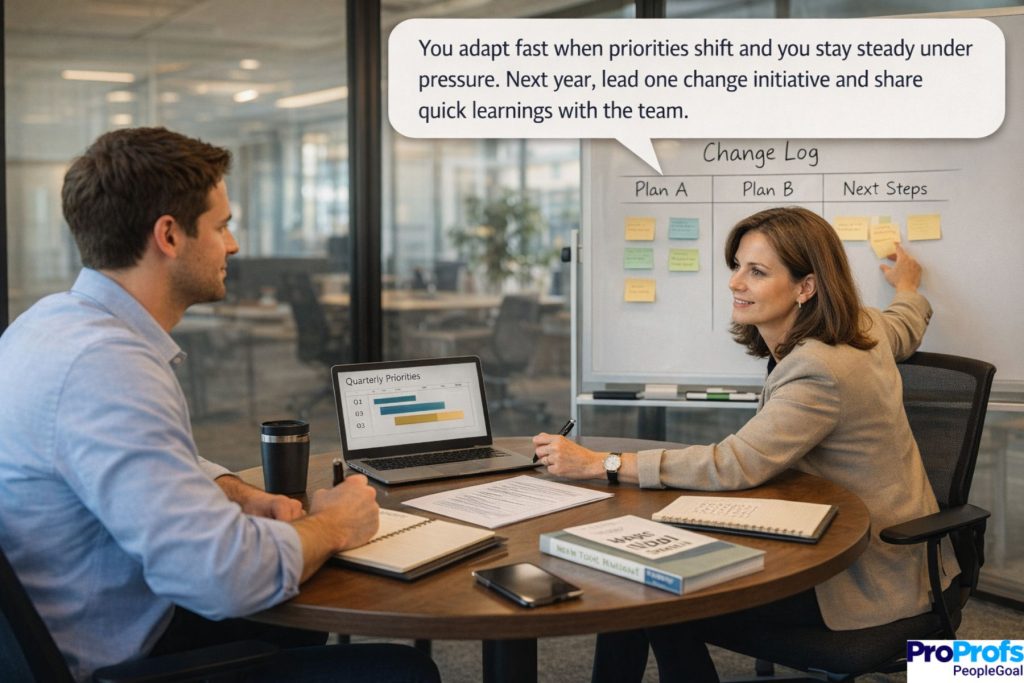
If your workplace changed priorities often this year, you need to evaluate how well someone adjusted without losing performance
Adaptability signifies more than just willingness to learn new things or work across different departments – it also means an employee knows how to pivot priorities when needed. Flexible employees adjust quickly to new conditions, whether it’s changes in project scope, company policy, or market circumstances.
They stay calm under pressure and embrace new ideas or processes that could benefit the organization.
Employees who struggle with adaptability might resist change, become flustered by shifting priorities, or have trouble working outside their comfort zone. Feedback in this category addresses how well a person handles change, learns new skills, and remains open to feedback or new ways of doing things.
Positive Feedback Comments:
- Calm Under Pressure: You remain calm and effective even when priorities shift or emergencies arise. For example, during the sudden change in project requirements last month, you quickly pivoted your approach without getting flustered, keeping the team on track.
- Embracing Change: You are very willing to adapt to new assignments and procedures. When management introduced new software and workflows, you embraced the changes positively and even helped colleagues get up to speed, demonstrating openness to innovation.
- Fast Learner: You eagerly learn new skills or information to meet changing job demands. Whether it’s mastering a new client onboarding process or adopting an updated protocol, you pick it up quickly and implement it effectively, which is invaluable to the team.
- Cross-Functional Collaboration: You are open to collaborating with other departments and adjusting to different work styles. Your flexibility in working with diverse teams – such as jumping in to assist the marketing team on a campaign – shows you can step outside your usual role to achieve broader company goals.
- Guiding Others Through Change: Not only do you cope with change yourself, but you also help teammates remain calm and focused amid shifts in priorities. Your reassuring presence and “can-do” attitude during times of uncertainty (like the reorganization of project duties last quarter) helped others stay positive and productive.
- Receptive to Feedback: You handle feedback very well by listening and making appropriate adjustments. When your supervisor suggested a new approach to handling client calls, you implemented the feedback immediately and improved your performance. This receptiveness shows personal flexibility and commitment to growth.
- Innovative Problem-Solving: You’re willing to try new methods to improve efficiency. For instance, you accepted a process change in our inventory system that was outside your normal routine because it could increase productivity. By being open to experimenting with novel solutions, you often find better ways of working.
Constructive Feedback Comments:
- Handling Priority Shifts: You often struggle to remain calm and productive when priorities change suddenly. For example, when an urgent task reorders your project list, you’ve appeared overwhelmed or frustrated. Developing strategies to cope with sudden changes, such as taking a moment to re-plan your tasks or asking for support, will help you adapt more smoothly without losing momentum.
- Openness to New Processes: You’ve shown some reluctance toward new processes or tools. When we rolled out the updated workflow last month, you continued with the old method for a while. Embracing beneficial process changes more readily is important. I encourage you to give new approaches a fair try; you might find they save you time or effort once you get used to them.
- Overcoming Resistance to Change: At times, you voice skepticism about new ideas before fully considering their merits. This immediate pushback can discourage colleagues from suggesting innovations. Try to approach changes with curiosity – ask questions about how a new idea might work, and consider small-scale tests instead of rejecting it outright. A more open mindset will help you and the team evolve with changing needs.
- Collaboration Hesitancy: You sometimes avoid collaborating outside of your familiar group, even when other teams could offer valuable input. For instance, during the cross-department project, you were slow to reach out for information from the other team, which delayed our progress. In the future, proactively seek collaboration when a project would benefit from it – being more inclusive of other departments’ perspectives can lead to more effective solutions.
- Adapting to Work Style Differences: You’ve experienced friction when working with colleagues who have different styles (e.g., a more spontaneous approach versus your structured approach). Rather than viewing those differences as negatives, try to find a middle ground. Flexibility in how you work with others – adjusting your approach or communication style when necessary – will improve teamwork and project outcomes.
- Learning New Skills: In a few instances, you have been slow to acquire the new skills required for evolving job tasks, relying on others to cover those areas. It’s understandable that learning takes time, but actively engaging with training resources or asking for coaching could speed up your adaptation. Showing initiative in skill development will prepare you better for changes in your role.
- Feedback Acceptance: You tend to become defensive when receiving constructive criticism, which can impede growth. Instead of dismissing feedback (for example, when your peer pointed out a more efficient technique), try to view it as an opportunity to improve. Embracing feedback, even if it’s uncomfortable, is a key part of being adaptable and growing in your career.
- Comfort Zone Reliance: You excel in familiar situations, but when something falls outside your comfort zone, you often try to steer back to what you know. This has meant passing up chances to take on new responsibilities or projects. To grow, challenge yourself to say “yes” to new opportunities even if they feel daunting. With time, you’ll expand your comfort zone and become more versatile.
Reliability and Work Quality Phrases:
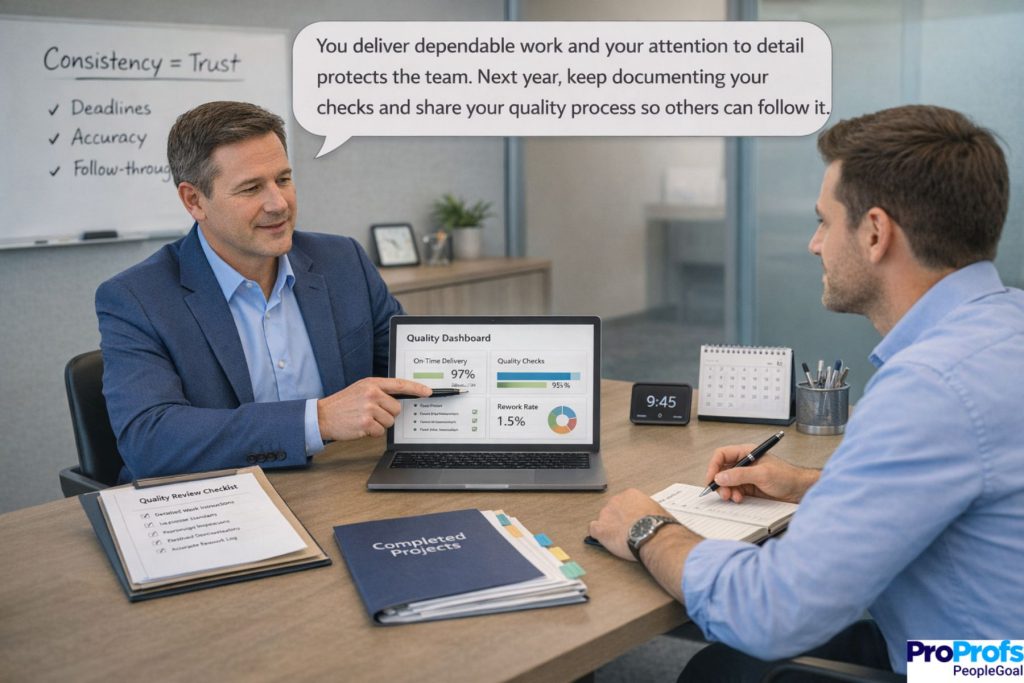
If you are writing an end-of-year performance review, you need to assess follow-through, accuracy, and trust in a way that feels concrete and fair.
This category covers an employee’s dependability along with the quality of their work output. Reliability entails consistently showing up on time, meeting deadlines, and following through on commitments made to colleagues and supervisors. Work quality refers to the accuracy, thoroughness, and professionalism of the results delivered.
The best employees strive to provide high-quality work consistently, demonstrating strong job knowledge and attention to detail. When an employee is reliable and produces quality work, it builds trust within the team and ensures smooth operations.
In contrast, issues like frequent absences, missed deadlines, or subpar work quality can disrupt projects and require others to pick up the slack. Feedback here addresses punctuality, consistency, diligence, and adherence to high standards.
Positive Feedback Comments:
- Exceptionally Dependable: Your attendance and punctuality have been impeccable – you have had no unapproved absences this year and are always on time. We know we can rely on you, as you consistently fulfill your commitments and often go the extra mile to ensure nothing falls through the cracks.
- High-Quality Outputs: You take pride in your work, and it shows. The projects you deliver are consistently of high quality, with great attention to detail. In the recent report you prepared, for example, there were zero errors, and the analysis was thorough. Maintaining such high standards sets a great example for the team.
- Follows Through: When you say you will do something, you always follow through. Whether it’s completing a task by the deadline or updating a client as promised, you keep your word. This reliability builds trust – everyone knows they can count on you to do what you agreed to do.
- Consistent Performance: You never fail to impress; you’re dependable and consistently deliver valuable work for the team. From day-to-day tasks to major projects, your work rate and quality are remarkably steady. This consistency is a key strength, as it helps the team plan and operate without surprises.
- Attention to Detail: Your careful approach ensures that your work is accurate and polished. You routinely catch and correct small errors that others might miss, resulting in deliverables that rarely require revisions. This meticulousness is crucial for maintaining the quality of our products and services.
- Proactive Quality Improvement: You don’t just meet the basic requirements; you seek ways to improve quality. For example, you implemented a new checklist system for our team after noticing a few issues in deliverables, which helped reduce mistakes. Your proactive stance on quality control has elevated our overall performance.
- Reliable Under Pressure: Even during high-pressure periods, like the end-of-quarter rush, you maintain reliability and quality. You manage stress well – instead of cutting corners when workload increases, you prioritize effectively and still produce work to the same high standard. The ability to uphold quality under tight deadlines is highly commendable.
Constructive Feedback Comments:
- Improve Punctuality: Your reliability has been impacted by tardiness. There were numerous days when you arrived 15+ minutes late or returned late from breaks, and this pattern has caused disruptions. We need you to improve your punctuality. Being consistently on time will help maintain team momentum and show respect for everyone else’s schedules.
- Meeting Deadlines: You missed the deadline on several occasions or needed extensions to complete your tasks. This puts strain on others who depend on your output. It’s important to manage your timeline more closely – perhaps by breaking projects into smaller parts with mini-deadlines, or flagging early if a deadline is in jeopardy so we can adjust. Strengthening your deadline management will increase the team’s confidence in your reliability.
- Work Quality Consistency: We’re concerned that your work often fails to meet the expected quality standards. For instance, the last two client deliverables contained significant errors that had to be corrected by someone else. Paying more attention to detail and thoroughly reviewing your work before submission is necessary. You might benefit from creating a personal quality checklist or taking a short break before final proofreading to catch mistakes. Improving the consistency of your work quality is a top priority.
- Follow-Through on Tasks: Occasionally, you haven’t followed through on tasks as expected – such as not providing a promised update or leaving a minor assignment incomplete. This lack of follow-through can inconvenience colleagues who are waiting on you. Going forward, make sure to complete all parts of an assigned task or clearly communicate if something cannot be done. It might help to track your tasks with reminders to ensure nothing is overlooked.
- Handling Commitments: There have been instances where you committed to too many things at once and ended up not fulfilling some obligations. It’s better to be realistic upfront about your capacity. If you find you can’t meet a commitment, let the relevant people know early and adjust expectations. Learning to say “no” or negotiating deadlines when you’re at capacity will prevent over-commitment and ensure the commitments you do make are honored.
- Quality vs. Speed: Sometimes your focus on speed leads to oversight. For example, the data entry was finished quickly but contained several inaccuracies that had to be corrected later. It’s essential to balance efficiency with accuracy.
- Confidentiality and Trust: On a couple of occasions, you shared internal information with external parties without clearance (or left sensitive documents unsecured). Maintaining confidentiality is a core aspect of reliability and professionalism. Breaches of trust, even if unintentional, can have serious consequences. Please review our confidentiality policies and ensure full compliance moving forward.
- Initiative in Quality Improvement: While your work meets basic expectations, there’s an opportunity to take more initiative in improving its quality. For example, some reports you submit strictly follow the template but could be more insightful with additional analysis. Challenge yourself to go beyond the minimum – ask if there’s one more thing you could check or add to make your output excellent.
Problem-Solving and Creativity Phrases:
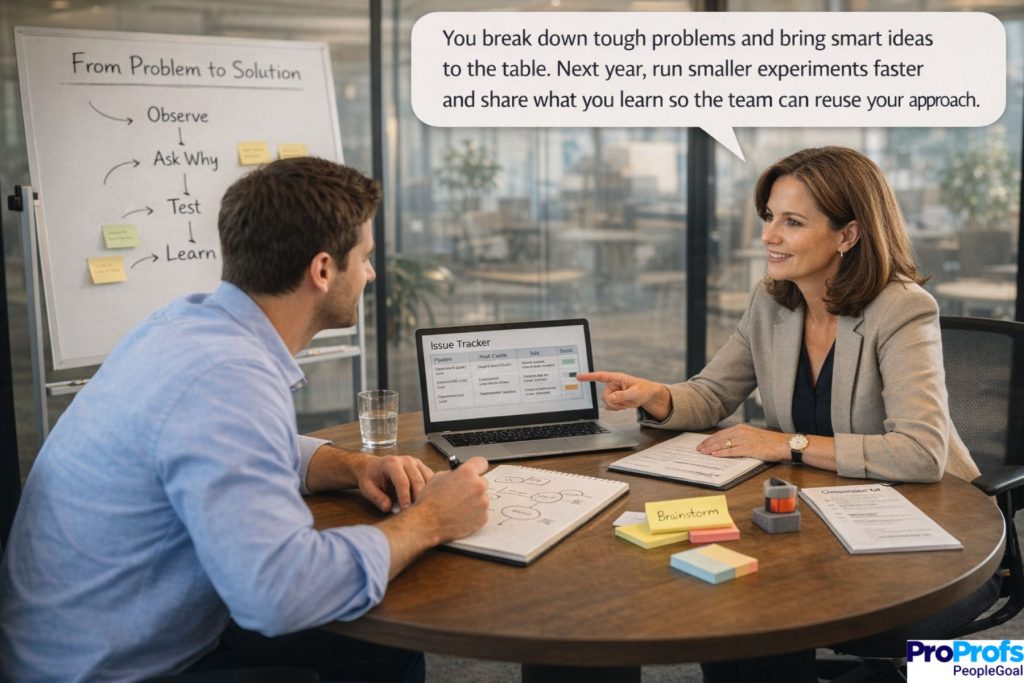
Problem-solving and creativity are highly valued in the workplace as they drive innovation and efficiency. Companies need creative ideas and innovative solutions from employees at all levels to meet the challenges of a constantly changing environment.
Having team members who can identify root causes of issues and think outside the box to resolve them can be the difference between a thriving workplace and a stagnant one. Strong problem-solvers approach challenges analytically, generate fresh ideas, and collaborate on solutions. They are also proactive in anticipating problems before they escalate.
Employees who struggle in this area might be hesitant to try new approaches, rely too heavily on others for answers, or jump to solutions without proper analysis. Feedback in this category centers on an individual’s ability to analyze problems, generate creative ideas, and implement effective solutions.
Positive Feedback Comments:
- Analytical Problem-Solving: You have a knack for dissecting complex problems and finding effective solutions. For example, when our system went down, you quickly identified the root cause (a configuration error) and devised a fix within hours. Your logical, step-by-step approach to troubleshooting benefits the entire team.
- Innovative Ideas: You consistently contribute fresh and creative ideas during brainstorming sessions. Your suggestion to streamline our customer feedback process by adding an automated survey was not only original but also helped us achieve a higher response rate. This kind of innovative thinking gives us a competitive edge.
- Thinks Outside the Box: You are known as our team’s “idea generator.” Whenever we encounter a roadblock, you propose out-of-the-box solutions rather than getting stuck. A great example was when you introduced a new marketing strategy for social media engagement that none of us had tried before – it ended up significantly boosting our online presence.
- Breaks Down Challenges: You excel at breaking large challenges into manageable tasks. During the project planning, you took the complex goal of launching the new product and divided it into clear, achievable milestones. This not only made the project less daunting for everyone but also ensured we addressed each component thoroughly.
- Collaborative Solver: You often involve the right people to solve a problem, recognizing that collaboration can yield the best result. Your ability to bring in cross-functional team members – like coordinating between sales and product teams to resolve a customer issue – shows leadership in problem-solving and ensures solutions are well-rounded.
- Stays Informed: You keep up with industry trends and best practices, then apply that knowledge to your work. For instance, you recently used a new project management technique you read about to help resolve scheduling conflicts on our team. By staying informed and curious, you bring in creative approaches that improve our processes.
- Proactive Prevention: You don’t just solve problems that are handed to you; you anticipate them. A notable instance was identifying a potential bottleneck in our code deployment process before it caused any delay. By flagging it early and suggesting a fix, you prevented a serious issue. This proactive mindset is incredibly valuable.
- Resilience in Problem-Solving: When facing tough problems, you remain persistent and optimistic. Even if the first solution doesn’t work, you methodically try alternatives until something clicks. This resilience – not giving up at the first hurdle – inspires others and often leads us to breakthroughs that might have been missed with a more timid approach.
Constructive Feedback Comments:
- Independent Thinking: You need to think more independently and build your ability to handle unexpected problems. Often, when an issue arises, your first reaction is to seek help rather than analyze it yourself. While collaboration is good, try to spend some time brainstorming solutions on your own first. Developing confidence in your problem-solving process will make you more self-reliant and effective in tackling challenges.
- Embrace Innovation: You tend to stick to tried-and-true methods and can be hesitant to experiment. This rule-bound approach sometimes limits innovation. Don’t be afraid of making calculated mistakes in pursuit of a better solution – not every new idea will work, but some will lead to significant improvements. Consider dedicating a small portion of your time to exploring alternative approaches, even if they feel unfamiliar.
- Thorough Analysis: There have been instances where you jumped to a conclusion without fully examining the facts, which led to incomplete solutions. For example, the quick fix you applied to the software bug addressed the symptom but not the underlying issue, so the problem reoccurred. Going forward, dig deeper into problems – gather all relevant information and consider multiple potential causes before deciding on an action. A more thorough initial analysis will save rework later.
- Sharing Ideas: In team meetings, you rarely share your ideas or suggestions. It seems like you may doubt their value, but we truly want your input. Challenge yourself to voice at least one idea in each brainstorming session. Even if it’s not fully fleshed out, your perspective could spark a great discussion or lead to the winning solution. Over time, contributing your ideas will also boost your confidence in your creativity.
- Handling Complex Problems: You sometimes avoid tackling complex problems, hoping they will resolve themselves or someone else will handle them. For instance, when the new process implementation had issues, you waited for instructions instead of proactively trying to identify the glitch. It’s important to step out of your comfort zone – next time a complex issue arises, attempt an initial diagnosis or propose a hypothesis.
- Adapting Strategies: When one solution doesn’t work, you can be slow to pivot to a new approach. It’s okay to fail on the first try – think of it as learning one way that didn’t work. The key is to quickly apply that learning and try a different strategy. Consider discussing failed attempts in our debriefs to brainstorm what to try next. Demonstrating agility in changing course will help solve problems faster and more effectively.
- Resource Utilization: You have access to many resources (tools, data, people with expertise) that sometimes go underused when you’re solving a problem. For example, you spent a day troubleshooting an issue that our IT specialist could have resolved in an hour, but you didn’t consult them. In the future, remember to leverage your resources – it’s not a sign of weakness, but rather smart problem-solving, to involve tools or people that can expedite a solution.
- Creativity Confidence: You often seek approval for every step when working on a new idea, which suggests a lack of confidence in your creative decisions. While it’s good to get feedback, try to run with your idea a bit further before checking in each time. Present a more fully formed concept; even if it’s not perfect, it shows creative initiative. Over-reliance on validation can slow down the creative process and discourage you from thinking boldly.
Before we jump into leadership feedback, here’s a quick video that covers the performance management challenges most teams run into, and what to do when they show up:
Leadership and Management Skills Phrases:
Leadership skills are crucial for those in managerial positions and valuable for individual contributors who take initiative. Effective leaders guide their teams toward success, communicate a clear vision, and foster growth in others.
A good manager also nurtures leadership qualities in their team members by encouraging initiative, empowering others to make decisions, and providing mentorship. It’s important to recognize that leaders themselves need feedback and development – even the best managers benefit from guidance and encouragement to improve.
In this category, positive comments focus on how a person motivates and directs others, makes fair decisions, and leads by example. Constructive comments might address areas like communication as a leader, delegation, fairness, vision, and the ability to inspire and manage the team effectively.
Positive Feedback Comments:
- Leads by Example: You lead by example in embracing change and maintaining a positive attitude. When the team had to pivot to a new strategy, you were the first to adapt, and your enthusiasm encouraged others to follow suit. Your willingness to get in the trenches with the team makes you a respected leader.
- Clear Vision and Guidance: Your team consistently meets or exceeds their goals, often thanks to your clear guidance and support. You set clear objectives, provide the necessary resources, and remain available for coaching. This guidance gives your direct reports confidence and direction, which has led to impressive performance (as seen in the last quarterly results).
- Fair and Equitable: You treat everyone on your team with fairness and respect. For instance, you distribute opportunities and workloads evenly and make decisions based on merit. Team members have noted that they feel heard and valued under your leadership, which creates a sense of trust and loyalty.
- Develops Others: You actively invest time in developing your team members. Whether through regular one-on-one meetings, suggesting training courses, or giving stretch assignments, you show genuine commitment to their professional growth. A great example is how you mentored a junior colleague through a complex project, resulting in her acquiring new skills and confidence.
- Decisive and Accountable: In challenging situations, you are decisive yet thoughtful. You gather input, make a decision, and take responsibility for the outcome. Your team knows where you stand on issues and appreciates that you hold yourself accountable as much as you hold them accountable. This builds credibility as a leader.
- Inspires and Motivates: You have a talent for motivating the team. During crunch time, your rallying talks and positive reinforcement kept everyone focused and energized. You celebrate team successes enthusiastically – for example, acknowledging each member’s contributions in the last project celebration, which boosts morale and inspires people to give their best effort.
- Strategic Thinking: You not only manage day-to-day operations well but also think strategically about the team’s direction. You set a compelling vision in our annual planning meeting, outlining how our team’s work feeds into larger company goals.
- Approachable Leadership: Despite being in a senior role, you remain very approachable. Team members feel comfortable bringing you bad news or admitting mistakes because of your supportive reaction. This approachability means issues are addressed quickly and honestly, and it creates a culture where people aren’t afraid to speak up – a hallmark of a healthy team under strong leadership.
Constructive Feedback Comments:
- Recognition of Team: You don’t give enough recognition to your team members for their hard work. Several of your direct reports feel that their efforts often go unacknowledged. Increasing the amount of positive feedback and praise you give, even for routine successes, will show the team you appreciate them and can significantly boost morale.
- Goal Communication: Some employees feel that you aren’t explaining the goals and objectives of tasks clearly enough, which sometimes leaves the team unsure how their work fits into the bigger picture. To improve, make sure to articulate the “why” behind assignments and how success will be measured. For instance, when kicking off a project, take a few extra minutes to describe how that project’s outcome will impact the company or customers. Clarity in goals will align the team’s efforts and motivation.
- Delegation Balance: You tend to take on too much yourself and could delegate more. While your hands-on approach shows dedication, it can inadvertently disempower your team and overburden you. Identify tasks that a team member could handle, and trust them with the responsibility. This not only frees up your time for high-level work but also helps your team thrive.
- Avoiding Favoritism: There’s a perception among some team members that you have favorites, which is affecting team cohesion. For example, one or two people seem to get the most interesting projects or more of your time. It’s important to ensure you’re giving all team members equal opportunities and attention.
- Conflict Management: On a few occasions, you have delayed or avoided addressing conflicts within the team, hoping they would resolve on their own. Unresolved tensions (like the disagreement between two team members last month) actually grew worse until addressed. As a leader, it’s important to intervene sooner – facilitate a dialogue or mediate a solution when you spot conflict. Early, proactive conflict resolution will prevent small issues from damaging team morale and productivity.
- Communication Style: I encourage you to speak with more confidence and assertiveness in higher-level meetings. You have strong insights, but in cross-department or executive discussions, your hesitance sometimes means our team’s perspective isn’t fully heard.
- Providing Feedback: You occasionally shy away from giving constructive feedback to underperforming team members, which can lead to persistent issues. It might feel uncomfortable, but part of effective leadership is holding people accountable and helping them improve. Consider scheduling periodic performance check-ins, which can provide a natural platform for feedback.
- Vision and Direction: It would be beneficial for you to articulate a clearer vision for the team’s long-term development. Team members have expressed that they’re sometimes unsure about our direction beyond immediate projects. By sharing a roadmap or goals for where you want to take the team in the next 6–12 months, you can inspire and align everyone toward a common vision.
Now, here’s a bonus. Check out these easy performance review templates that you can use instantly by just copying and pasting them.
The words are important, but delivery matters too. If you want a simple method to run the review meeting without awkwardness, this quick video will help:
Turn Your Annual Performance Review Into Clear Growth and Better Results
A strong performance review closes the year with clarity and opens the next one with direction. Use these phrases to recognize real impact, address gaps without drama, and agree on practical next steps. When feedback is specific, employees know what to repeat, what to change, and how success will be measured.
That reduces confusion, improves morale, and keeps performance conversations consistent across teams and managers. Aim to document examples, set timelines, and revisit goals regularly so the review does not feel like a once-a-year surprise.
To make that consistency easier to maintain at scale, a solid performance review system can do the heavy lifting behind the scenes. You can use tools like PeopleGoal that help by centralizing reviews, goals, and competencies, enabling 360-degree feedback, structured templates, and evidence tracking. They also standardize scoring, support manager notes, and turn outcomes into development plans and measurable objectives.
Frequently Asked Questions

2) What are the biggest mistakes people make in annual performance review comments?
The most common mistake is being vague, like saying “great attitude” without proof. Another is turning feedback into a personality judgment instead of focusing on behavior. Many reviews also skip balance, either being overly positive or overly critical. Finally, people forget to include outcomes, which makes the review feel unfair and hard to act on.
3) How do I balance positive and constructive feedback in the same review?
Start with strengths that should continue, then move to one or two improvement areas that matter most. Keep constructive feedback specific and tied to examples. Avoid stacking too many negatives at once. A good rule is: recognize impact, describe the gap, explain the consequence, and end with a clear action step. This keeps the message fair and useful.
4) How do I write constructive feedback without discouraging the employee?
Keep the focus on behaviors and outcomes, not character. Use calm, factual language and explain what “better” looks like. Mention what the employee is already doing well, then frame the improvement as growth, not failure. Pair every constructive point with a practical way to improve, such as training, coaching, or a clearer process.
5) Can I use performance review phrases based on rating levels like “Exceeds Expectations”?
Yes, and it makes your review more consistent. For “Exceeds,” highlight measurable impact and leadership behaviors. For “Meets,” focus on steady results and reliability. For “Needs Improvement,” focus on gaps that affect results and clearly state expectations. The key is to match the phrase to evidence, so the rating feels justified and defensible.
6) What should I include in an annual performance review to make it actually useful?
A useful review includes specific examples, measurable outcomes, and clear next steps. Capture wins, challenges, and patterns you saw across the year. Include growth areas that tie to role expectations, not personal preferences. End with goals for the next cycle and what support the employee will get. This makes the review a plan, not a summary.
Ready to 3x Your Teams' Performance?
Use the best performance management software to align goals, track progress, and boost employee engagement.