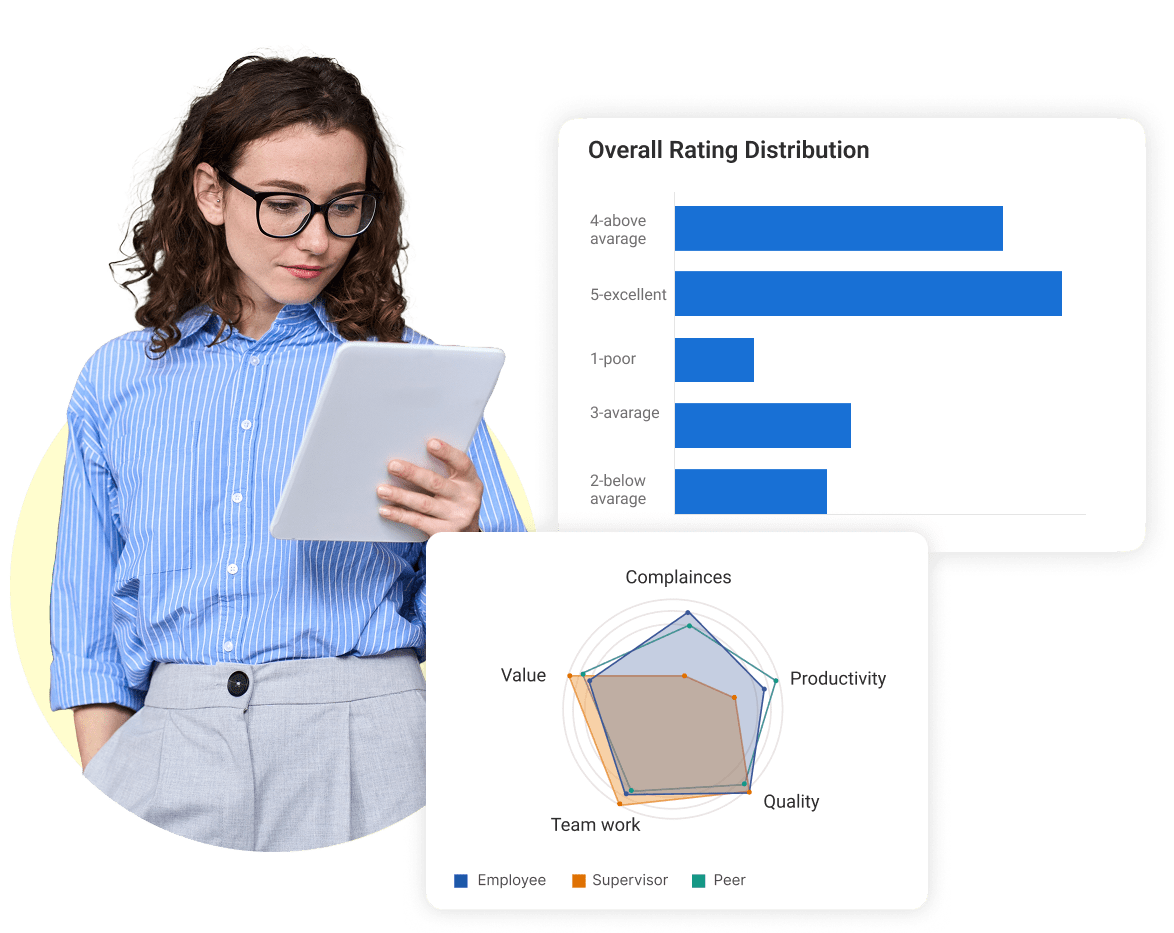

Performance review competencies are the observable behaviors that help managers evaluate how employees work, not just what they achieve. They create a shared framework for giving fair, consistent, and actionable feedback.
From conversations with HR managers and People Ops leaders, I’ve found that many teams face the same challenges every review cycle. Managers reuse generic comments, ratings vary across departments, and employees leave reviews without a clear understanding of what success looks like.
According to Gallup’s State of the Global Workplace 2025 report, only 44% of managers worldwide have received formal management training, making consistency even harder to achieve.
The answer isn’t a more complex review process. It’s a clear competency framework. In this guide, you’ll find 18 performance review competency examples, each with a definition, observable behaviors, sample review comments, and a practical 1 to 5 rating scale. Grab the companion Excel version of this template as you read.
What Are Performance Review Competencies?
A usable competency entry includes four elements: a clear definition of the behavior, what it looks like when someone is strong in it, what it looks like when someone is developing, and a rating scale that explains exactly what each score means.
Here is why building your competency comments for performance reviews around competencies changes the quality of every evaluation you run:
- Managers stop relying on gut feel and start anchoring ratings to specific, observable actions
- Employees understand what “good performance” actually means in concrete behavioral terms, not vague adjectives
- Review conversations become two-way: employees can challenge ratings with their own examples, and managers have a framework to respond
- You can compare performance fairly across different teams, departments, and managers
- Competency data feeds directly into promotion decisions, development plans, PIPs, and succession conversations. Platforms like PeopleGoal bring all of this together in one place, so ratings actually drive action instead of sitting in a completed form, going nowhere.
This distinction matters because feedback often becomes personal instead of specific. Labels like “too aggressive” or “not a team player” are applied inconsistently, especially across different employee groups. A clear competency framework won’t eliminate bias, but it grounds every rating in observable behaviors rather than subjective opinions, making reviews fairer, more consistent, and easier to justify.
15+ Performance Review Competencies Examples
Over the years, I’ve learned that the best competency comments for performance review don’t rely on generic ratings. They focus on clearly defined competencies that employees can understand, develop, and demonstrate in their day-to-day work.
To make things easier, I’ve organized these competency examples into the categories managers use most often during performance evaluations.
- Core Employee Competencies
- Leadership Competencies
- Customer-Facing Competencies
- Technical and Functional Competencies
Grab the companion Excel version of this template as you read!
Core Employee Competencies
These apply to every employee regardless of role, level, or department. I recommend including all of these as the foundation of any competency-based performance review. You can use these entries as they are or customize them to reflect your organization’s language and values.
1. Communication
What it means: Clearly conveys information in writing and in person, listens actively, adapts style to different audiences, and keeps the right people informed at the right time.
What to write:
Strong performer: “[Name] consistently delivers project updates that give stakeholders exactly what they need without requiring any follow-up. Their written summaries have become the model the team now uses for cross-functional reporting.”
Needs improvement: “[Name] tends to share information reactively rather than proactively. On two occasions this quarter, the team was caught off-guard by delays that could have been flagged earlier. Building a habit of structured weekly updates would make a real difference here.”
What it looks like:
| Performance Level | Observable Behaviors |
| Strong | Proactively shares updates before being asked; written communication is clear and structured; adjusts tone and detail level for different audiences; facilitates productive team discussions |
| Developing | Communicates accurately but reactively; occasionally needs prompting to share relevant updates; participates in meetings but rarely drives discussion |
| Below Expectations | Misses communication touchpoints; messages are unclear or incomplete; avoids difficult conversations; team is regularly caught off-guard |
How to rate it (1-5):
| Rating | What It Means |
| 5 | Communicates with exceptional clarity and impact across every format; others look to them as a model; handles sensitive or complex messages with confidence |
| 4 | Consistently clear and timely across formats and audiences; rarely requires follow-up; adapts well to context |
| 3 | Meets communication expectations in standard situations; some inconsistency in complex or high-pressure scenarios |
| 2 | Communication is reactive or unclear; requires prompting to share key information; causes occasional confusion |
| 1 | Communication breakdowns regularly impact team performance, client relationships, or project delivery |
2. Teamwork and Collaboration
What it means: Contributes reliably to shared goals, supports colleagues without needing to be asked, shares knowledge openly, and prioritizes team outcomes alongside individual deliverables.
What to write:
Strong performer: “[Name] stepped in to support the onboarding project when the team was short-staffed, despite carrying a full workload. That kind of initiative directly contributed to the successful Q2 training rollout.”
Needs improvement: “There have been several instances where [Name]’s deliverables were delayed in ways that blocked teammates from completing their own work. A more consistent check-in cadence with the team would help prevent these bottlenecks.”
What it looks like:
| Performance Level | Observable Behaviors |
| Strong | Volunteers to help without prompting; shares knowledge that benefits the whole team; brings in cross-functional support proactively; is trusted and relied upon by teammates |
| Developing | Meets individual commitments to the team; participates in group work; needs encouragement to share knowledge or support others beyond their own workload |
| Below Expectations | Misses shared deadlines; withholds information; creates friction in collaborative settings; works in isolation in situations that require coordination |
How to rate it (1-5):
| Rating | What It Means |
| 5 | Actively strengthens team performance beyond their own role; creates resources, shares knowledge, and supports others consistently |
| 4 | Reliable, trusted team contributor; regularly goes slightly beyond what is asked; valued by peers |
| 3 | Delivers on team commitments; participates constructively; does not actively undermine collaboration |
| 2 | Fulfills individual tasks but disengages from team dynamics; creates occasional friction or bottlenecks |
| 1 | Consistently unreliable in team settings; behavior actively disrupts collaboration or damages team trust |
3. Problem-Solving
What it means: Identifies issues clearly, analyzes root causes, generates practical solutions, and acts on them effectively under time and resource constraints.
What to write:
Strong performer: “When the integration failed two days before the client demo, [Name] isolated the root cause immediately, proposed three fixes with clear trade-offs, and had a working solution in place the following morning. That kind of structured problem-solving under pressure is exactly what this team needs.”
Needs improvement: “When issues arise, [Name]’s first response is often to escalate rather than analyze. Developing a habit of documenting the issue, identifying possible causes, and proposing at least one solution before escalating would build their confidence and reduce load on senior team members.”
What it looks like:
| Performance Level | Observable Behaviors |
| Strong | Anticipates problems before they escalate; brings two or three proposed solutions when raising an issue; tests assumptions before recommending a course of action; learns from outcomes |
| Developing | Identifies problems when prompted; can analyze issues with guidance; proposes solutions in familiar situations but struggles with ambiguity |
| Below Expectations | Escalates problems without any prior analysis; repeats the same mistakes; relies on others to define the solution and the path forward |
How to rate it (1-5):
| Rating | What It Means |
| 5 | Solves complex, ambiguous problems independently; consistently improves processes as a result; teaches others their approach |
| 4 | Reliably analyzes issues and identifies strong solutions; minimal guidance needed even in unfamiliar territory |
| 3 | Solves standard problems effectively; escalates appropriately when outside their scope; follows through |
| 2 | Identifies problems but struggles to move beyond them independently; solutions are sometimes incomplete or reactive |
| 1 | Does not engage in problem-solving; consistently escalates without analysis; the same issues recur |
4. Accountability
What it means: Accountability competency performance review takes ownership of work outcomes and commitments, communicates transparently when things go off track, and does not shift responsibility to others when results fall short.
What to write:
Strong performer: “When the campaign came in below target, [Name] owned the shortfall immediately, documented the contributing factors, and presented a revised strategy to leadership without being asked. That kind of accountability builds trust across the whole team.”
Needs improvement: “Over the past two quarters, missed deadlines have generally been attributed to external factors. Building stronger personal tracking habits and flagging risks early when a deadline is at risk would demonstrate a meaningfully higher level of ownership.”
What it looks like:
| Performance Level | Observable Behaviors |
| Strong | Owns errors without being prompted; communicates proactively when falling behind; follows through on every commitment; reflects on misses and implements changes |
| Developing | Meets deadlines with reminders; acknowledges mistakes when called out; corrects course when given feedback; ownership is reactive rather than proactive |
| Below Expectations | Shifts blame to others; requires constant follow-up; minimizes responsibility for missed targets; repeats the same patterns without correction |
How to rate it (1-5):
| Rating | What It Means |
| 5 | Full ownership in every direction, including outcomes they did not control directly; sets the standard for the team |
| 4 | Consistently accountable; owns misses quickly and transparently; rarely needs external prompting |
| 3 | Meets commitments reliably; takes responsibility when called upon; accountability is consistent but not proactive |
| 2 | Requires reminders; accountability is selective; tends to externalize blame in difficult situations |
| 1 | Chronic deflection; commitments are regularly broken; no visible self-correction even after repeated feedback |
5. Adaptability
What it means: Responds constructively to change, maintains performance when priorities shift or uncertainty increases, and adjusts approach based on new information without losing effectiveness.
What to write:
Strong performer: “When we shifted to a new project management tool mid-quarter, [Name] not only adapted immediately but created a set of onboarding notes for the rest of the team. Their ability to absorb change and still deliver at a high level is a genuine asset.”
Needs improvement: “The shift to hybrid working created visible friction for [Name] over an extended period. Let’s work together in the next quarter to identify specific routines and support structures that help them maintain consistency when circumstances change.”
What it looks like:
| Performance Level | Observable Behaviors |
| Strong | Embraces ambiguity without needing extra reassurance; helps teammates navigate change; pivots quickly without quality dropping; models flexibility for others |
| Developing | Adjusts to change with moderate support; maintains most performance during disruption; open to new approaches but needs time to apply them consistently |
| Below Expectations | Resists change; needs an extended adjustment period before regaining effectiveness; performance drops significantly during transitions |
How to rate it (1-5):
| Rating | What It Means |
| 5 | Thrives under ambiguity; shifts course without friction; actively reduces disruption for the team during transitions |
| 4 | Adapts readily with minimal support; picks up new ways of working quickly; maintains output through change |
| 3 | Adjusts to most changes with standard support; some friction in high-ambiguity situations |
| 2 | Adapts eventually but needs more time and reassurance than the role demands; performance dips are visible |
| 1 | Significant and recurring performance drops during change; requires substantial management attention during any transition |
6. Time Management and Prioritization
What it means: Organizes work effectively, meets deadlines consistently, and makes sound decisions about how to allocate time when multiple demands compete.
What to write:
Strong performer: “[Name] manages an unusually high volume of concurrent work and still delivers on time across all of it. When a deadline shifts, they communicate immediately and propose an adjusted plan. That kind of reliability creates real confidence across the team.”
Needs improvement: “Three deadline misses this quarter required other team members to cover or delay their own work. Getting ahead of this would mean building a weekly planning habit and flagging conflicts within 24 hours of identifying them, rather than after the fact.”
What it looks like:
| Performance Level | Observable Behaviors |
| Strong | Delivers consistently ahead of or on deadline; manages competing priorities independently; communicates early when timelines are at risk; blocks time strategically for deep work |
| Developing | Meets most deadlines; sometimes underestimates complexity; communicates timeline risks inconsistently |
| Below Expectations | Frequently misses deadlines; underestimates task scope regularly; does not communicate risks until after the miss has occurred |
How to rate it (1-5):
| Rating | What It Means |
| 5 | Exceptional time management; consistently delivers on time or early; handles high task volume without quality loss; never requires follow-up |
| 4 | Reliable and well-organized; proactively flags risks; minimal manager intervention needed on timelines |
| 3 | Meets most deadlines; occasionally needs check-ins; prioritization is sound in standard conditions |
| 2 | Deadline misses occur with some regularity; prioritization under pressure is inconsistent |
| 1 | Chronically late on deliverables; no visible self-management system; creates downstream delays for teammates |
7. Initiative and Self-Direction
What it means: Identifies opportunities or gaps without being told, takes action on them independently, and drives work forward without waiting for direction on every step.
What to write:
Strong performer: “[Name] noticed that our client onboarding documentation had not been updated in two years, rebuilt the entire set of materials unprompted, and trained two new team members on the revised process. Nobody asked them to do any of that.”
Needs improvement: “There are recurring situations where [Name] is aware of a gap or blocker but waits for a manager to address it. Building the habit of treating visible problems as an implicit assignment, and taking one step forward on them before raising them, would change how they are perceived across the team.”
What it looks like:
| Performance Level | Observable Behaviors |
| Strong | Identifies process gaps and fixes them without being asked; takes on work outside their formal scope when it benefits the team; surfaces improvement ideas with proposed solutions attached |
| Developing | Acts when asked; occasionally spots opportunities but waits for permission before acting; contributes ideas in discussions but does not always follow through |
| Below Expectations | Waits to be told what to do; does not self-start; gaps in their area go unaddressed until someone else flags them |
How to rate it (1-5):
| Rating | What It Means |
| 5 | Consistently acts ahead of direction; creates value in areas no one assigned them; others rely on them to push work forward |
| 4 | Regularly identifies and acts on opportunities independently; trusted to drive work without supervision |
| 3 | Self-directed within their defined scope; needs direction for ambiguous or new territory |
| 2 | Requires regular prompting; initiative is present in structured situations but not in ambiguous ones |
| 1 | Does not self-start; relies on explicit instruction for every step; gaps in their work go unaddressed |
Leadership Competencies
These apply to managers, team leads, senior ICs in informal leadership roles, and anyone being evaluated for a step up in scope or responsibility.
If you run 360-degree reviews, PeopleGoal’s multi-rater feedback feature lets you gather leadership competency input from direct reports, peers, and senior stakeholders in one cycle, rather than manually consolidating responses across forms and emails.
8. People Development
What it means: Invests consistently in the growth of direct reports through regular coaching conversations, honest feedback, stretch assignments, and active advocacy for their visibility and promotion readiness.
What to write:
Strong performer: “Three of [Name]’s direct reports have been promoted or expanded their scope in the past year. All three cited their regular development conversations and [Name]’s advocacy with senior leadership as a key factor. That kind of investment in people is what builds a team with a real future.”
Needs improvement: “Engagement data this cycle shows that several team members feel uncertain about their career direction. Dedicating a portion of each weekly one-on-one to a development conversation, and helping each person identify one specific growth target for the next quarter, would make a visible difference in both morale and retention.”
What it looks like:
| Performance Level | Observable Behaviors |
| Strong | Holds structured one-on-ones with a development focus; creates individual growth plans for each direct report; actively opens doors for team members with senior stakeholders; tracks progress against development goals |
| Developing | Provides feedback when asked; supports learning requests; one-on-ones exist but focus mostly on tasks rather than growth |
| Below Expectations | One-on-ones focus only on work status; no development conversations; team members feel unsupported and uncertain about their trajectory |
How to rate it (1-5):
| Rating | What It Means |
| 5 | Multiple direct reports are visibly growing; team has a reputation for being a talent pipeline; manager is sought out for development conversations by people outside their team |
| 4 | Regular structured development conversations; clear individual growth plans; team members can articulate their trajectory |
| 3 | Supports team development when asked; one-on-ones cover growth occasionally; some direct reports feel invested in |
| 2 | Development conversations are rare; team has little visibility into their own trajectory; learning is self-driven |
| 1 | No development investment visible; high attrition or disengagement directly attributable to lack of growth conversations |
9. Decision-Making
What it means: Makes sound, timely decisions with the information available, balances risk and urgency appropriately, and takes responsibility for outcomes rather than seeking cover through unnecessary escalation.
What to write:
Strong performer: “[Name] made three significant scope-level decisions this quarter without unnecessary escalation, presented the trade-offs clearly to the team, and owned the outcomes in both directions. That kind of decisive leadership gives the team the clarity and momentum they need.”
Needs improvement: “[Name] has strong analytical instincts but tends to seek approval for decisions that are clearly within their authority. In the next quarter, the target is to own decisions within scope and bring them to leadership only when the decision genuinely exceeds their mandate.”
What it looks like:
| Performance Level | Observable Behaviors |
| Strong | Makes confident decisions within scope even under uncertainty; frames options and trade-offs clearly when bringing decisions to others; rarely escalates what they are authorized to decide |
| Developing | Decisions are sound on familiar issues; escalates appropriately in genuinely complex situations; sometimes seeks external validation for decisions well within their scope |
| Below Expectations | Delays decisions without reason; escalates routine issues to avoid ownership; revisits settled decisions without new information |
How to rate it (1-5):
| Rating | What It Means |
| 5 | Decisive even in high-ambiguity, high-stakes situations; brings structured thinking to complex decisions; others trust their judgment consistently |
| 4 | Makes good decisions reliably; escalates only when genuinely appropriate; decision quality holds under pressure |
| 3 | Sound decision-maker in standard situations; some hesitancy in unfamiliar or ambiguous scenarios |
| 2 | Delays decisions or escalates unnecessarily; decision quality is inconsistent; others compensate for their hesitancy |
| 1 | Avoids decisions; creates bottlenecks and frustration; team loses confidence in their judgment |
10. Strategic Thinking
What it means: Connects day-to-day work to longer-term organizational goals, identifies patterns others miss, anticipates challenges before they arrive, and contributes to directional conversations rather than only executing what is set.
What to write:
Strong performer: “[Name] consistently frames their team’s quarterly planning in the context of company OKRs without being asked. They brought a risk to the leadership team’s attention six weeks before it would have become a problem. That level of foresight is exactly what this organization needs as it scales.”
Needs improvement: “[Name] executes effectively but tends to react to priorities rather than shape them. A useful starting point would be spending time each month reviewing the company’s strategic objectives and identifying one way their team’s work connects directly to those goals.”
What it looks like:
| Performance Level | Observable Behaviors |
| Strong | Frames team priorities in the context of company OKRs; raises strategic questions before committing to tactical plans; anticipates downstream impact; contributes to planning at a level above their role |
| Developing | Executes strategy well; understands the company direction when explained; does not yet independently connect their work to broader priorities |
| Below Expectations | Operates entirely reactively; does not engage with organizational priorities; decisions are tactical with no longer-term lens |
How to rate it (1-5):
| Rating | What It Means |
| 5 | Operates one level above their title in terms of strategic contribution; consistently shapes direction, not just executes it |
| 4 | Regularly connects work to organizational goals; contributes meaningfully to planning conversations; anticipates challenges proactively |
| 3 | Understands strategy well enough to execute effectively; occasionally contributes to strategic discussions |
| 2 | Execution is solid but operates without a strategic lens; contributes little to directional conversations |
| 1 | No visible strategic engagement; decisions and work are entirely disconnected from organizational priorities |
11. Driving Results Through Others
What it means: Motivates, aligns, and mobilizes a team to deliver shared outcomes, especially in environments with competing priorities, limited resources, or significant pressure.
What to write:
Strong performer: “[Name]’s team delivered above target in both quarters this review period, through a reorganization and a significant product pivot. Their ability to keep the team focused and motivated under genuine uncertainty is something this organization relies on more than it acknowledges.”
Needs improvement: “There is a pattern of high-priority work stalling without clear ownership. Getting clearer on which team member owns what, setting explicit deadlines, and running a short weekly sync to surface blockers early would address most of this.”
What it looks like:
| Performance Level | Observable Behaviors |
| Strong | Team consistently meets or exceeds targets; creates clarity on priorities so the team is never working at cross-purposes; maintains morale and momentum during high-pressure periods |
| Developing | Team delivers on most commitments; manager provides direction and removes blockers when asked; some inconsistency in team focus or energy |
| Below Expectations | Team regularly misses targets; manager struggles to align the team or maintain motivation; blockers go unaddressed |
How to rate it (1-5):
| Rating | What It Means |
| 5 | Team performance is consistently exceptional; the manager is the reason; the team would follow them into ambiguity willingly |
| 4 | Strong team results with clear management contribution; team is motivated, focused, and effective |
| 3 | Team delivers reliably; manager is functional in the role; some gaps in motivation or alignment |
| 2 | Team performance is inconsistent; management’s contribution to results is unclear or negative |
| 1 | Team is consistently underperforming; the management approach is a primary contributor to the gap |
12. Feedback Culture and Psychological Safety
What it means: Creates an environment where team members feel safe to raise concerns, share honest input, disagree with direction, and give critical feedback without fearing negative consequences.
What to write:
Strong performer: “Four of [Name]’s direct reports spontaneously named their openness to critical feedback as a key reason they feel effective in their roles. The fact that team members raise disagreements openly in group settings is a direct result of the environment [Name] has built.”
Needs improvement: “Engagement data this quarter shows a gap between how team members feel in one-on-ones versus group settings. Creating structured opportunities for anonymous input, and following up publicly when feedback is acted on, would start to close that gap.”
What it looks like:
| Performance Level | Observable Behaviors |
| Strong | Actively invites critical feedback; responds to difficult input without defensiveness; follows up visibly when team feedback drives a change; team members speak up freely in group settings |
| Developing | Accepts feedback when given; team members share concerns in one-on-ones but not group settings; feedback culture is partially developed |
| Below Expectations | Team members feel unsafe raising concerns; critical feedback is dismissed or subtly penalized; visible self-censorship in team discussions |
How to rate it (1-5):
| Rating | What It Means |
| 5 | Team has the highest psychological safety scores in the organization; disagreement is a regular and productive part of how the team works |
| 4 | Team members speak up freely; feedback flows in both directions; visible evidence that input leads to action |
| 3 | Team is functional and broadly safe; some self-censorship in high-stakes or group settings |
| 2 | Feedback flows one direction; team members are cautious; concerns are shared privately but not publicly |
| 1 | Team is visibly disengaged or fearful; feedback culture is absent or actively suppressed |
Customer-Facing Competencies
These apply to any role with direct client or customer interaction: sales, account management, support, customer success, and similar functions.
13. Customer Focus
What it means: Consistently prioritizes the customer experience, anticipates their needs before they are voiced, and delivers interactions that build loyalty, trust, and long-term retention.
What to write:
Strong performer: “Three enterprise clients named [Name] specifically in their NPS responses this quarter. Their approach of anticipating issues rather than waiting for complaints to arrive sets a standard the broader team should adopt.”
Needs improvement: “Two escalations this quarter traced back to missed follow-ups after initial resolution conversations. Building a simple tracking habit for open customer commitments would prevent these from recurring and protect the relationships we have worked hard to build.”
What it looks like:
| Performance Level | Observable Behaviors |
| Strong | Proactively identifies and resolves customer issues before they escalate; receives unsolicited positive feedback from customers; brings the customer’s voice into internal conversations |
| Developing | Resolves customer issues professionally; meets response standards; follows up on commitments; rarely generates proactive value |
| Below Expectations | Reactive to complaints; misses follow-ups; does not adapt to different customer needs; customer satisfaction scores are below target |
How to rate it (1-5):
| Rating | What It Means |
| 5 | Customers name them by name in positive feedback; sets the standard for what customer-first looks like; trusted internally as the voice of the customer |
| 4 | Consistently strong customer interactions; NPS scores reflect their impact; goes beyond resolution to add value |
| 3 | Meets customer service expectations; handles standard interactions well; no major complaints |
| 2 | Inconsistent; some strong interactions but recurring gaps in follow-through or responsiveness |
| 1 | Customer satisfaction metrics are directly and negatively affected by this person’s interactions |
14. Relationship Building
What it means: Establishes and maintains trusted, long-term professional relationships with clients, stakeholders, and partners through consistent, genuine engagement over time.
What to write:
Strong performer: “Two renewals this quarter that were at risk closed in part because of the trust [Name] had built with the client over the prior 18 months. That kind of relationship capital does not show up in a single quarter’s metrics, but it is genuinely one of the organization’s most valuable assets.”
Needs improvement: “Client engagement between project milestones is minimal. A structured but lightweight outreach cadence, even one short call or a relevant resource sent per quarter, would significantly strengthen retention in accounts that currently feel under-nurtured.”
What it looks like:
| Performance Level | Observable Behaviors |
| Strong | Maintains warm, substantive client relationships between projects; clients reach out to them directly when a new need arises; internal stakeholders trust them to represent the company well |
| Developing | Manages relationships professionally during active engagements; less consistent between project milestones; relies on structured touchpoints rather than organic relationship-building |
| Below Expectations | Relationships are transactional; clients feel like numbers; no meaningful continuity between interactions |
How to rate it (1-5):
| Rating | What It Means |
| 5 | Long-term, high-trust client relationships that generate referrals and expansions; clients stay in part because of this person |
| 4 | Strong relationships with key accounts; clients feel known and valued; relationship health metrics are consistently positive |
| 3 | Professional and reliable; relationships are functional but not particularly deep |
| 2 | Transactional; clients are served but not built; limited evidence of relationship investment beyond active work |
| 1 | Relationship health is visibly deteriorating; clients are disengaging or escalating |
15. Conflict Resolution
What it means: Navigates disagreements, competing interests, and interpersonal tensions in a way that moves toward a productive outcome without damaging the relationship or escalating unnecessarily.
What to write:
Strong performer: “When a billing dispute threatened to derail a key renewal, [Name] stayed composed, brought both teams together, and facilitated an outcome that satisfied the client and protected the contract. Their ability to hold space for both sides without losing objectivity was exceptional.”
Needs improvement: “A client escalation this quarter reached director level because an earlier complaint was not addressed directly when it first surfaced. Building comfort with raising and resolving smaller tensions early, before they compound, would prevent this pattern from repeating.”
What it looks like:
| Performance Level | Observable Behaviors |
| Strong | Addresses conflict early before it becomes entrenched; holds space for both sides without losing neutrality; finds solutions that work for all parties; the relationship is stronger after the resolution |
| Developing | Handles conflict when it reaches an unavoidable point; needs support in high-stakes disputes; resolution is functional but not always relationship-preserving |
| Below Expectations | Avoids conflict until it escalates; takes sides; resolutions create resentment; escalates situations that could have been resolved at their level |
How to rate it (1-5):
| Rating | What It Means |
| 5 | Others bring their conflicts to this person for help; disputes they handle are resolved durably; relationships are consistently preserved or improved |
| 4 | Handles most conflicts well and independently; resolution outcomes are positive for all parties |
| 3 | Manages standard conflicts appropriately; needs support in high-stakes or emotionally charged situations |
| 2 | Avoids conflict or handles it poorly; resolutions are temporary or leave residual friction |
| 1 | Conflict involving this person regularly escalates; relationships are damaged as a result |
Technical and Functional Competencies
These vary by role and function. Use the same format below and adapt the behavioral indicators to match the specific technical demands of each position.
16. Technical Skill and Domain Knowledge
What it means: Possesses and applies the role-specific knowledge, tools, and methodologies required to perform at the expected level of the job, and keeps that knowledge current as the field evolves.
What to write:
Strong performer: “[Name] is the person the team goes to when a technical situation falls outside the standard playbook. They resolved three edge-case issues this quarter that no existing documentation covered and documented the solutions for the team. That kind of applied expertise raises everyone’s floor.”
Needs improvement: “Several deliverables this quarter required rework due to technical gaps. A targeted development plan covering the two to three specific areas where the gaps are most consistent would give [Name] a clear path forward and reduce the downstream impact on the team.”
What it looks like:
| Performance Level | Observable Behaviors |
| Strong | Goes beyond current role requirements; serves as a resource for others on technical questions; actively updates their knowledge as industry practices change; applies expertise in non-standard situations |
| Developing | Applies technical skills independently in standard situations; keeps reasonably current; needs guidance on edge cases or new tools |
| Below Expectations | Requires guidance on standard tasks; technical errors create rework for others; knowledge gaps cause delays and quality issues |
How to rate it (1-5):
| Rating | What It Means |
| 5 | Domain expert within the organization; others defer to their judgment; their technical contributions create measurable impact |
| 4 | Strong technical performance across standard and complex situations; trusted to handle unfamiliar problems independently |
| 3 | Competent in standard work; handles most situations without support; knowledge is current and accurate |
| 2 | Gaps in technical knowledge affect quality or speed; requires more support than the role allows for |
| 1 | Technical performance is consistently below role requirements; significant training investment is needed |
17. Data and Analytical Thinking
What it means: Gathers, interprets, and applies data to inform decisions, track progress, and identify improvement opportunities rather than relying on assumptions or intuition alone.
What to write:
Strong performer: “Before recommending a platform change that would have affected the entire operations team, [Name] ran a three-month analysis across four data sources and built a business case that directly addressed the CFO’s cost concerns. That rigor turned a high-risk decision into a confident one.”
Needs improvement: “[Name] has strong instincts, but decisions this quarter were not consistently backed by data. Building the habit of stating the data source behind each recommendation, even informally, would increase their credibility and catch assumptions before they become problems.”
What it looks like:
| Performance Level | Observable Behaviors |
| Strong | Uses data to build business cases, track trends, and challenge assumptions; selects the right analysis for the question at hand; communicates findings clearly to non-technical stakeholders |
| Developing | Can run standard analyses with guidance; interprets results accurately in familiar contexts; less confident presenting findings or identifying what to measure |
| Below Expectations | Avoids data; makes decisions based on gut feel; cannot articulate the data behind their recommendations when asked |
How to rate it (1-5):
| Rating | What It Means |
| 5 | Sets the analytical standard for the team; uses data to generate insights others would not find; decisions are consistently evidence-based |
| 4 | Reliable data-driven decision-maker; analysis is accurate, relevant, and clearly communicated |
| 3 | Uses data appropriately in standard situations; analysis is sound but not particularly deep |
| 2 | Data use is inconsistent; some decisions lack evidential support; analytical confidence is low |
| 1 | Does not engage with data; recommendations cannot be substantiated; creates risk through uninformed decisions |
18. Process and Quality Management
What it means: Applies systems, standards, and best practices consistently to maintain output quality, minimize rework, and improve how work flows through the team.
What to write:
Strong performer: “[Name] documented the entire client onboarding workflow this quarter, identified three steps that were creating delays, redesigned them, and reduced onboarding completion time by a measurable margin. That work benefited the whole team, not just their own output.”
Needs improvement: “Three deliverables this quarter required significant rework due to missed quality checks. Setting up a personal review step before submission, even a 10-minute check against the standard criteria, would catch most of these before they reach the team.”
What it looks like:
| Performance Level | Observable Behaviors |
| Strong | Identifies and closes process gaps proactively; documents standards others can follow; output quality is consistently high with minimal errors; continuously looks for efficiency improvements |
| Developing | Follows defined processes reliably; quality meets expectations in standard conditions; less consistent in unfamiliar or complex situations |
| Below Expectations | Skips process steps; quality errors require rework; does not engage with quality standards beyond what is explicitly enforced |
How to rate it (1-5):
| Rating | What It Means |
| 5 | Sets the quality benchmark for the team; improves processes as a matter of habit; others use their work as the standard |
| 4 | Consistently high-quality output; proactively identifies process improvements; minimal errors or rework required |
| 3 | Meets quality expectations; follows process reliably; occasional errors but corrects quickly |
| 2 | Output quality is inconsistent; process adherence requires enforcement; rework is a regular occurrence |
| 1 | Quality issues are persistent and impact downstream work; process compliance is minimal |
Performance Review Template Using Competencies (Copy-Paste Ready)
Use this template as your end-to-end review form. It covers all four competency categories from this guide. Pick the sections that apply to the employee being reviewed, fill in the behavioral evidence, and you have a complete, defensible review on record.
One rule before you start: never leave the evidence column blank. A rating without a specific behavioral example tells the employee nothing and gives HR nothing to work with if the rating is ever challenged.
EMPLOYEE PERFORMANCE REVIEW FORM
Competency-Based Evaluation
Review Details
Employee Name:
Job Title:
Department:
Review Period:
Review Type: (Annual / Mid-Year / Quarterly / 360-Degree)
Reviewer Name:
Reviewer Title:
Date Completed:
Section 1: Performance Against Goals
List the employee’s key goals or OKRs for this review period.
| Goal / OKR | Target | Actual Outcome | Rating (1-5) | Comments |
| 1. | ||||
| 2. | ||||
| 3. |
Overall Goals Rating: ___ / 5
Section 2: Core Employee Competencies
Complete this section for every employee, regardless of role or level.
Rating Reference: 5 = Exceptional | 4 = Exceeds Expectations | 3 = Meets Expectations | 2 = Developing | 1 = Below Expectations
| Competency | Rating (1-5) | Specific Behavioral Evidence |
| Communication | ||
| Teamwork and Collaboration | ||
| Problem-Solving | ||
| Accountability | ||
| Adaptability | ||
| Time Management and Prioritization | ||
| Initiative and Self-Direction |
Section 2 Average: ___ / 5
Section 3: Leadership Competencies
Complete this section for managers, team leads, senior ICs with informal leadership responsibilities, and anyone being evaluated for a step up in scope.
If this section does not apply to this employee’s current role, skip it and note: “Not applicable at current level.”
| Competency | Rating (1-5) | Specific Behavioral Evidence |
| People Development | ||
| Decision-Making | ||
| Strategic Thinking | ||
| Driving Results Through Others | ||
| Feedback Culture and Psychological Safety |
Section 3 Average: ___ / 5
Section 4: Customer-Facing Competencies
Complete this section for any employee in a role with direct client or customer interaction: sales, account management, customer success, support, and similar functions.
If this section does not apply to this employee’s current role, skip it and note: “Not applicable at current level.”
| Competency | Rating (1-5) | Specific Behavioral Evidence |
| Customer Focus | ||
| Relationship Building | ||
| Conflict Resolution |
Section 4 Average: ___ / 5
Section 5: Technical and Functional Competencies
Complete this section for roles where technical skill, analytical capability, or process ownership is a core part of the job. Add or remove rows based on what the role actually requires.
If this section does not apply to this employee’s current role, skip it and note: “Not applicable at current level.”
| Competency | Rating (1-5) | Specific Behavioral Evidence |
| Technical Skill and Domain Knowledge | ||
| Data and Analytical Thinking | ||
| Process and Quality Management | ||
| (Add role-specific competency here) | ||
| (Add role-specific competency here) |
Section 5 Average: ___ / 5
Section 6: Overall Performance Summary
Do not repeat ratings here. Use this section to give the employee a complete, honest picture in plain language.
What this employee does well and should continue:
(2-3 sentences. Name the specific behavior and the impact it has had on the team or the work.)
What this employee needs to develop and why it matters:
(2-3 sentences. Name the specific behavior that needs to change, its current impact, and what improvement looks like in concrete terms.)
Overall Performance Rating: ___ / 5
(Calculate by averaging the section averages above, weighting each section based on the proportion of the employee’s role it represents.)
Section 7: Development Plan
Complete one row for every competency rated 1 or 2. Do not leave this section blank if any low ratings exist.
| Competency | Gap (what is missing) | Specific Behavior to Build | Support or Resource | Target Date | How Progress Will Be Measured |
Section 8: Goals for Next Review Period
Set these goals jointly with the employee during the review conversation, not in advance on their behalf.
| Goal | Key Result / How Success Is Measured | Due Date | Competencies This Goal Requires |
| 1. | |||
| 2. | |||
| 3. |
The last column matters. It forces the conversation: does this employee currently have the competency level the goal requires? If not, that gap belongs in Section 7.
Section 9: Signatures
Signing confirms the review was discussed. It does not mean the employee agrees with every rating.
Manager Signature: _____________________ Date: _______
Employee Signature: _____________________ Date: _______
Employee Response (optional):
(Space for the employee to record any context, disagreement, or additional information they want on record.)
Manager Instructions:
Before the review meeting: Complete Sections 1 through 6 using specific behavioral examples only. Share the completed form with the employee at least 48 hours in advance so they can prepare their own examples.
During the meeting: Walk through each section together. Give the employee time to respond to each rating before moving on. If they raise evidence you had not considered, update the rating. Accuracy matters more than consistency with your first draft.
After the meeting: Complete Sections 7 and 8 together with the employee. File the signed form within five business days. Schedule a 30-day check-in on the development plan.
Build Better Reviews With Competencies That Drive Action
Competencies are most valuable when they do more than support performance reviews. They help employees understand expectations, identify growth opportunities, and connect their work to career progression.
When used consistently across goals, development plans, promotions, and 360-degree feedback, competencies create a more objective and transparent performance management process. Many organizations struggle to maintain these connections across disconnected tools and spreadsheets.
That’s why platforms like PeopleGoal help bring competencies, feedback, goals, and employee development together in one place, making performance management easier and more effective.
Frequently Asked Questions
How do I stop managers from inflating ratings in competency reviews?
The best way to reduce rating inflation is through calibration sessions. Before reviews begin, managers should discuss real employee examples and agree on what different rating levels look like. This creates a shared standard, improves consistency across teams, and reduces the tendency to give overly generous ratings.
What is the difference between competencies, skills, and values in a performance review?
Skills are specific abilities such as coding, financial analysis, or public speaking. Competencies describe how employees apply those skills through behaviors like communication or problem-solving. Values reflect the principles that guide decisions and actions. Together, they provide a more complete picture of employee performance.
Can I use the same competency framework for every department?
Not entirely. Most organizations benefit from a shared set of core competencies such as communication, accountability, and teamwork. However, departments should also have role-specific competencies. For example, sales teams may need customer focus, while engineering teams may require technical expertise and analytical thinking.
How do competencies work in a 360-degree feedback review?
A 360-degree review uses the same competency framework across managers, peers, direct reports, and sometimes customers. Each person evaluates observable behaviors they have witnessed. Because everyone uses the same definitions and standards, organizations gain a more balanced and accurate view of employee performance.
How do I use competencies to identify high-potential employees?
High-potential employees consistently perform well in their current role while demonstrating competencies required for the next level. Creating a competency matrix for each role helps identify employees who are already exhibiting future leadership, strategic thinking, or decision-making capabilities before formal promotion discussions begin.
How do I write a competency-based comment for someone who is strong technically but poor at collaboration?
Evaluate each competency independently. Recognize strong technical performance while clearly addressing collaboration challenges. Describe the specific behaviors causing friction, explain their impact on team performance, and outline what improved collaboration would look like. This provides balanced, actionable feedback without mixing separate performance dimensions.
What should I do if an employee disputes their competency rating?
Start by reviewing the specific behaviors and examples that informed the rating. Encourage the employee to share additional evidence or context you may have missed. If the rating remains unchanged, explain the gap between their performance and the expected standard. Competency discussions should always be evidence-based and transparent.
Ready to 3x Your Teams' Performance?
Use the best performance management software to align goals, track progress, and boost employee engagement.