
Over the last few years, I’ve spoken with so many HR leaders and managers who say something like this: “We’re trying to support performance, but everything still feels messy.” Goals live in spreadsheets, feedback happens too late, and reviews turn into stressful guesswork.
That’s exactly why employee performance tracking has become such an important conversation right now.
The challenge isn’t that people don’t want accountability. It’s that most organizations lack a system that creates clarity without slipping into micromanagement.
In this guide, I’m breaking down what actually matters when choosing a tool, along with a side-by-side comparison table and the 10 best employee performance tracking platforms to help you find the right fit.
Top 10 Employee Performance Tracking Tools
Below, I’ve compiled a carefully selected list of the top employee performance tracking tools. Each one approaches performance differently.
Before that, here’s a quick side-by-side snapshot of the best employee performance tracking tools, showing what each platform is best suited for and how their pricing typically works.
| Tool | Best For | Pricing Overview |
|---|---|---|
| PeopleGoal | Best for Boosting Employee Performance & Improving Engagement | FREE 14-day trial. Paid plans start at $4/user/month |
| Lattice | Manager-led performance conversations | Starts at $11/seat/month |
| 15Five | Continuous visibility and early performance signals | Starts at $4/seat/month (billed annually) |
| BambooHR | Small businesses, formalizing performance tracking | Custom pricing |
| Leapsome | Linking performance reviews to employee development | Custom pricing |
| PerformYard | Customizable performance review structures | Custom pricing |
| Engagedly | Blending performance tracking with engagement and recognition | Custom pricing |
| ClearCompany | Performance tracking within full talent lifecycle | Custom pricing |
| Workleap (Officevibe) | Lightweight team performance pulse | Starts at $5/user/month. |
| Culture Amp | Data-driven performance and engagement insights | Custom pricing |
1. PeopleGoal
Best for Boosting Employee Performance & Improving Engagement
I’ve seen PeopleGoal work best in organizations where performance reviews existed, but clarity did not. Managers had opinions, employees had assumptions, and growth decisions often felt subjective. What changed with PeopleGoal was visibility. Smart goals, feedback, check-ins, and progress updates accumulated throughout the year, so performance discussions were grounded in evidence rather than memory.
What makes it stand out is structured alignment. Individual objectives connect directly to team and company priorities, making contributions measurable. Reviews feel less like verdicts and more like reflections on documented progress. Instead of forcing rigid rating systems, it gives managers context to make better decisions. Over time, that consistency improves fairness, accountability, and confidence in the process.
Pros:
- Helps organizations track employee performance through OKRs (Objectives and Key Results), SMART goals, and custom frameworks, ensuring evaluations stay focused on outcomes.
- Supports continuous feedback, 360-degree reviews, and structured check-ins, keeping performance conversations timely and well-rounded.
- Keeps individual, team, and company goals aligned through connected goal hierarchies, improving visibility into progress and contribution.
- Centralizes goals, feedback, review cycles, development plans, and performance history in one place, reducing manual admin work for HR.
- Encourages growth-oriented performance tracking by combining insights with career development, skill planning, and engagement indicators.
Cons:
- No offline or on-premise deployment
- Interface customization options are still limited
Pricing: Free trial available. Paid plans start at $4/user/month.
Who Should Consider It: Teams that want structured, evidence-based performance tracking without rigid scoring systems.
2. Lattice
Best for Manager-Led Performance Conversations
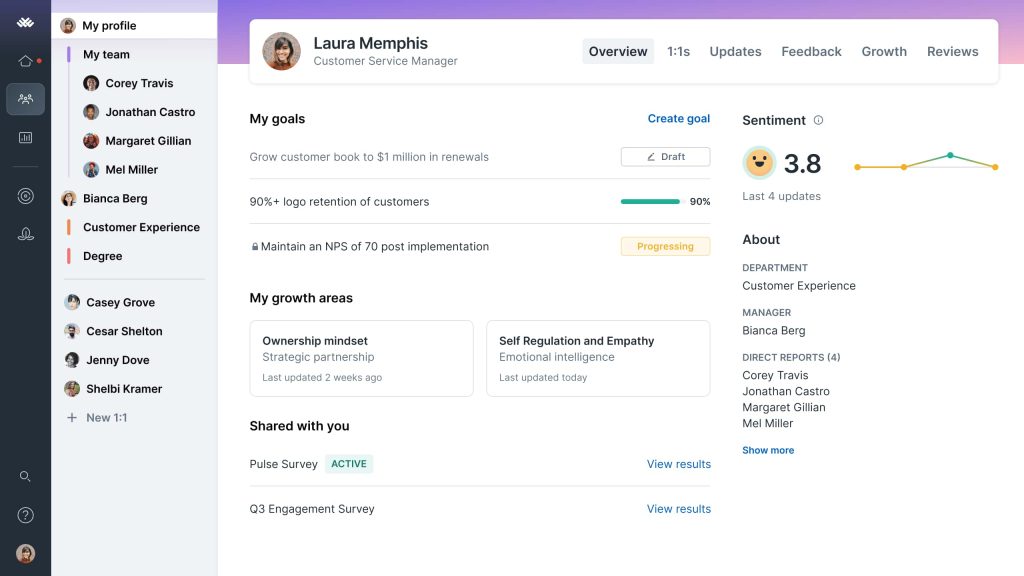
Lattice works well in environments where performance gaps stem from inconsistent manager communication rather than lack of talent. In many organizations, feedback happens reactively. Lattice shifts that dynamic by embedding check-ins, goal visibility, and documentation into regular workflows.
The platform helps managers track progress over time instead of reconstructing it during annual reviews. Goals remain visible, peer feedback can be requested easily, and one-on-one notes stay centralized. That ongoing context reduces recency bias and makes performance conversations less emotional and more constructive.
It is particularly effective for growing companies building structured management habits. When managers consistently use the system, employees gain clarity on expectations and development paths.
Pros:
- Encourages structured, ongoing manager check-ins
- Strong goal alignment and transparency
- Centralized feedback reduces memory-based reviews
- Works well for scaling organizations
Cons:
- Dependent on manager consistency
- Higher pricing for smaller teams
Pricing: Starts at $11/seat/month.
Who Should Consider It: Organizations focused on strengthening manager accountability and structured feedback.
3. 15Five
Best for Continuous Visibility and Early Performance Signals
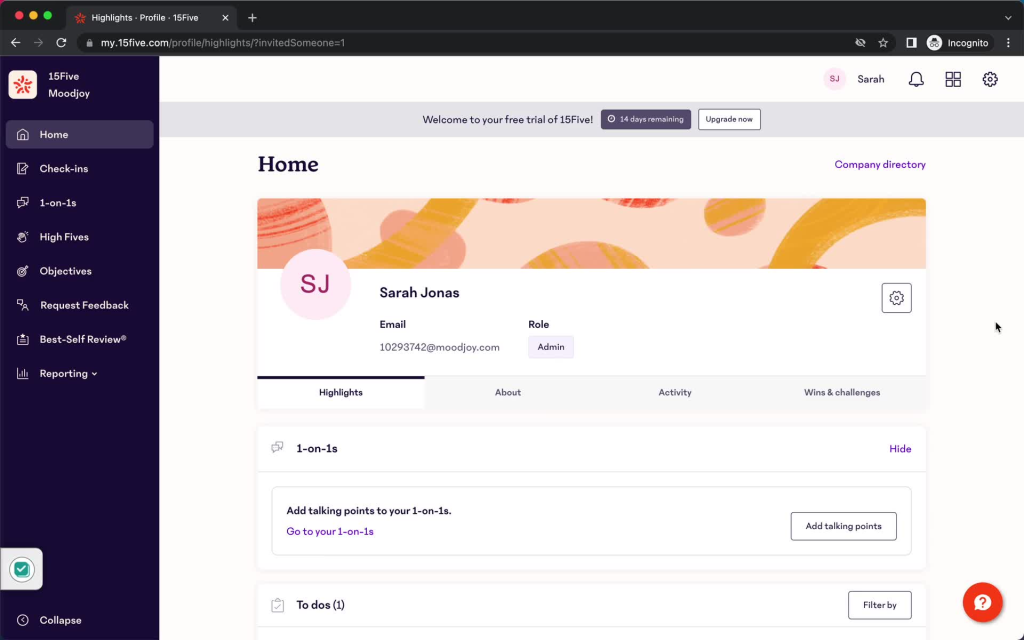
15Five is ideal for teams that want performance tracking to feel steady and conversational rather than formal and periodic. Weekly check-ins create small but meaningful documentation that builds over time. Instead of waiting for quarterly reviews, managers see patterns as they emerge.
What stands out is how it combines performance updates with engagement insights. If someone is hitting targets but signaling burnout, that nuance surfaces early. Over time, this prevents surprises and reduces last-minute review stress.
It works best for companies that value transparency and consistent communication. The structure is light enough for adoption but strong enough to improve clarity.
Pros:
- Weekly cadence builds ongoing performance context
- Blends productivity tracking with engagement signals
- Simplifies quarterly and annual reviews
- Easy to adopt for growing teams
Cons:
- Limited depth for complex enterprise calibration
- Requires steady manager participation
Pricing: Starts at $4/seat/month (billed annually).
Who Should Consider It: Teams prioritizing continuous dialogue and early performance visibility.
4. BambooHR
Best for Small Businesses, Formalizing Performance Tracking
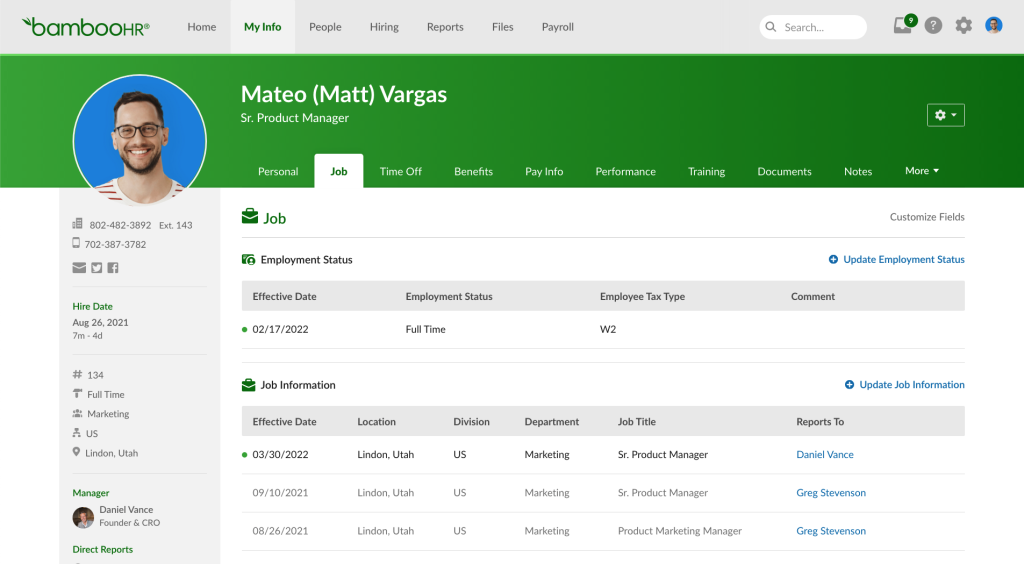
BambooHR is often chosen by smaller organizations moving away from informal evaluations. When reviews live in email threads and spreadsheets, consistency becomes the biggest problem. BambooHR introduces structure without overwhelming HR teams.
Managers can run standardized review cycles, document goals, and centralize performance history within a familiar HR system. For organizations already using BambooHR for employee records, this creates operational simplicity.
It may not offer advanced predictive analytics, but it delivers reliability. The biggest benefit is uniformity. Every department follows the same review rhythm, reducing confusion and administrative overhead.
Pros:
- Simple and structured review workflows
- Integrates seamlessly with core HR records
- Reduces spreadsheet dependence
- Easy onboarding for managers
Cons:
- Limited customization compared to specialist tools
- Basic analytics compared to enterprise platforms
Pricing: Custom pricing.
Who Should Consider It: SMBs looking for structured performance tracking within an existing HR system.
5. Leapsome
Best for Linking Performance Reviews to Employee Development
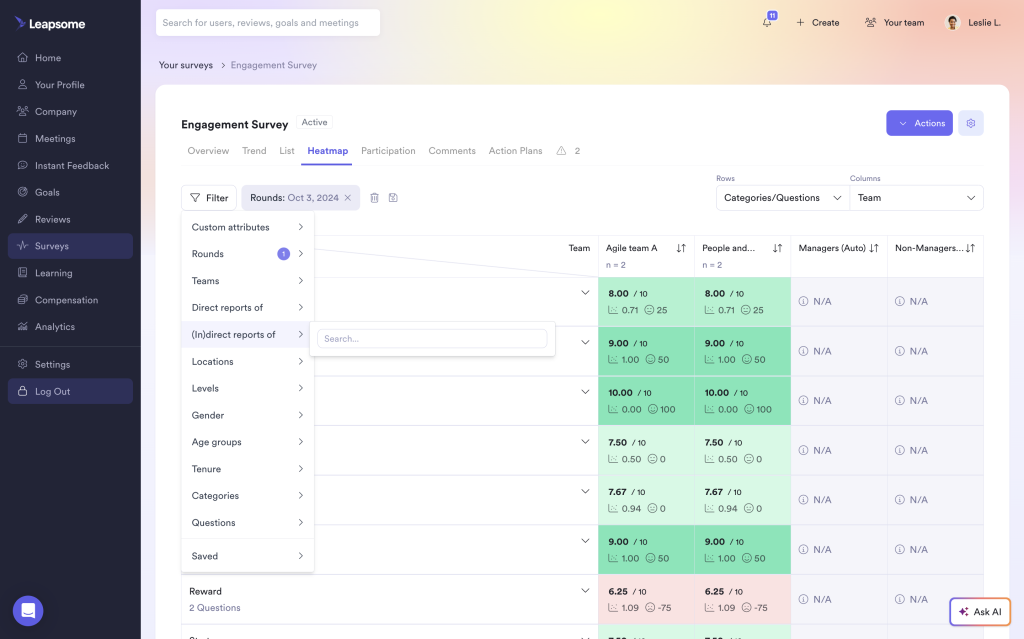
Leapsome stands out for organizations that want performance tracking tied directly to growth. Many systems collect feedback but fail to translate it into action. Leapsome bridges that gap by connecting evaluations with development plans and learning paths.
After a review, managers can immediately define skill-building steps, update goals, and outline measurable progress. This makes performance feel forward-looking rather than backward-focused. Engagement surveys and continuous feedback tools add additional context.
It works especially well for mid-sized teams building mature talent strategies without jumping into enterprise-level complexity.
Pros:
- Connects reviews to actionable development plans
- Combines goals, engagement, and feedback in one platform
- Encourages growth-focused conversations
- Scales effectively for mid-market teams
Cons:
- Feature depth may feel heavy for basic needs
- Setup requires thoughtful configuration
Pricing: Custom pricing
Who Should Consider It: Organizations prioritizing development-driven performance systems.
6. PerformYard
Best for Customizable Performance Review Structures
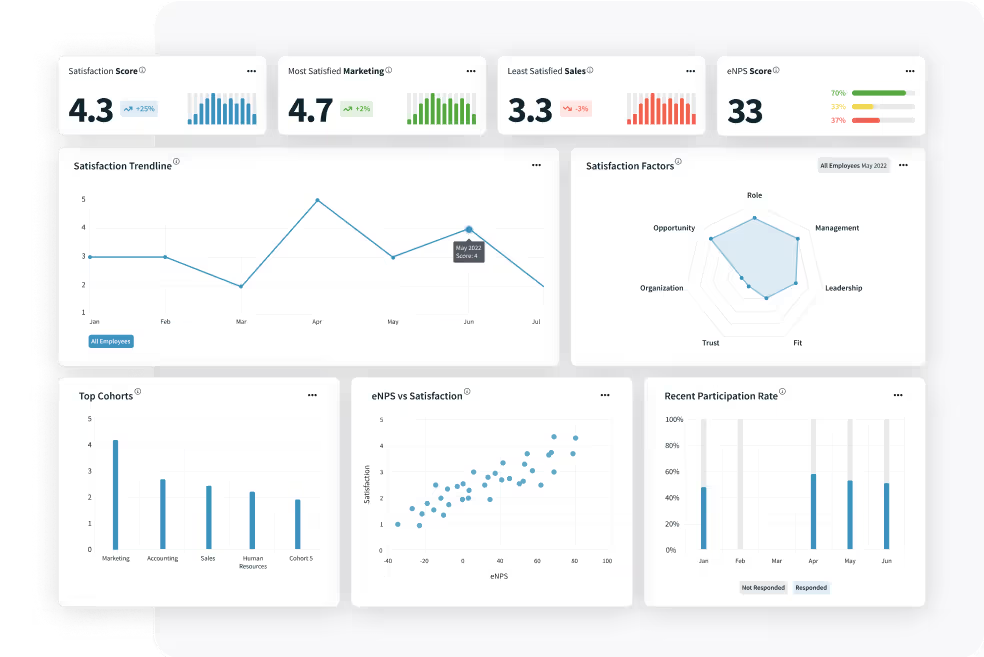
PerformYard is well-suited for organizations that need flexibility in how performance is evaluated. Not every department operates on the same cycle, and forcing uniformity can reduce effectiveness.
This platform allows HR to design annual reviews, quarterly check-ins, and project-based assessments within a single system. That adaptability supports fairness while maintaining consistency in documentation.
It focuses on practicality. Instead of adding excessive features, it emphasizes structured evaluation and accessible reporting. For HR teams standardizing performance processes across departments, that balance is valuable.
Pros:
- Highly flexible review cycle configuration
- Supports varied departmental workflows
- Strong documentation and reporting clarity
- Balanced feature depth without overcomplication
Cons:
- Interface design feels traditional
- Engagement analytics are less advanced than survey-first platforms
Pricing: Custom pricing.
Who Should Consider It: HR leaders needing adaptable review frameworks across teams.
7. Engagedly
Best for Blending Performance and Employee Engagement
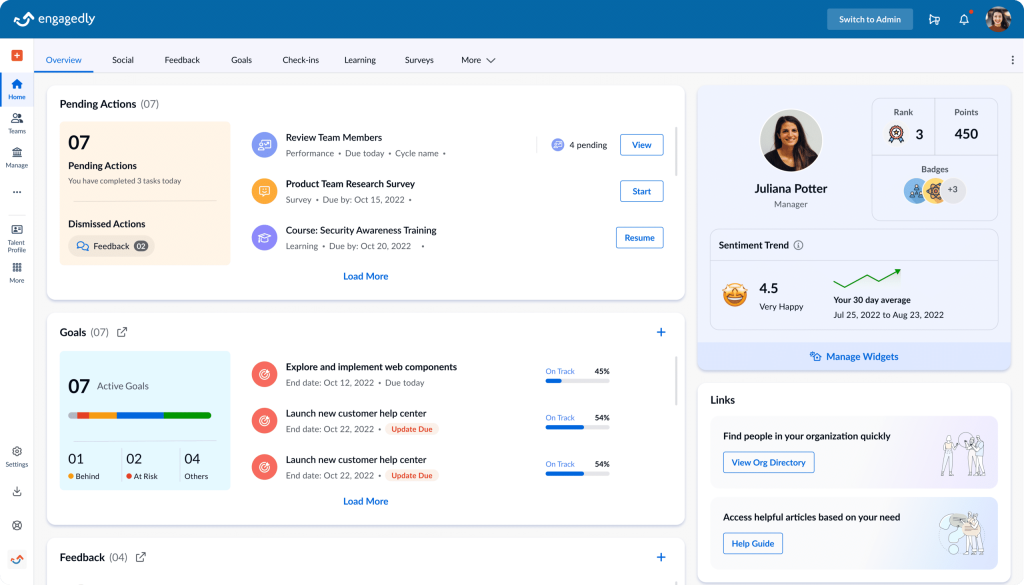
Engagedly work best when performance tracking is closely connected to motivation and recognition. Output matters, but so does engagement. This platform brings both into one experience.
Structured reviews sit alongside recognition tools, feedback loops, and goal tracking. That integration helps managers evaluate not just results but behaviors and contributions to team culture.
It supports continuous development without relying only on annual cycles. Organizations focused on retention and morale often find this combination useful.
Pros:
- Integrates performance tracking with engagement and recognition
- Encourages continuous improvement conversations
- Supports structured review cycles
- Good balance between performance and culture insights
Cons:
- Broader feature set may exceed simple tracking needs
- Requires active participation to maintain value
Pricing: Custom pricing.
Who Should Consider It: Organizations wanting performance tracking connected to engagement strategy.
8. ClearCompany
Best for Performance Tracking Within Full Talent Lifecycle
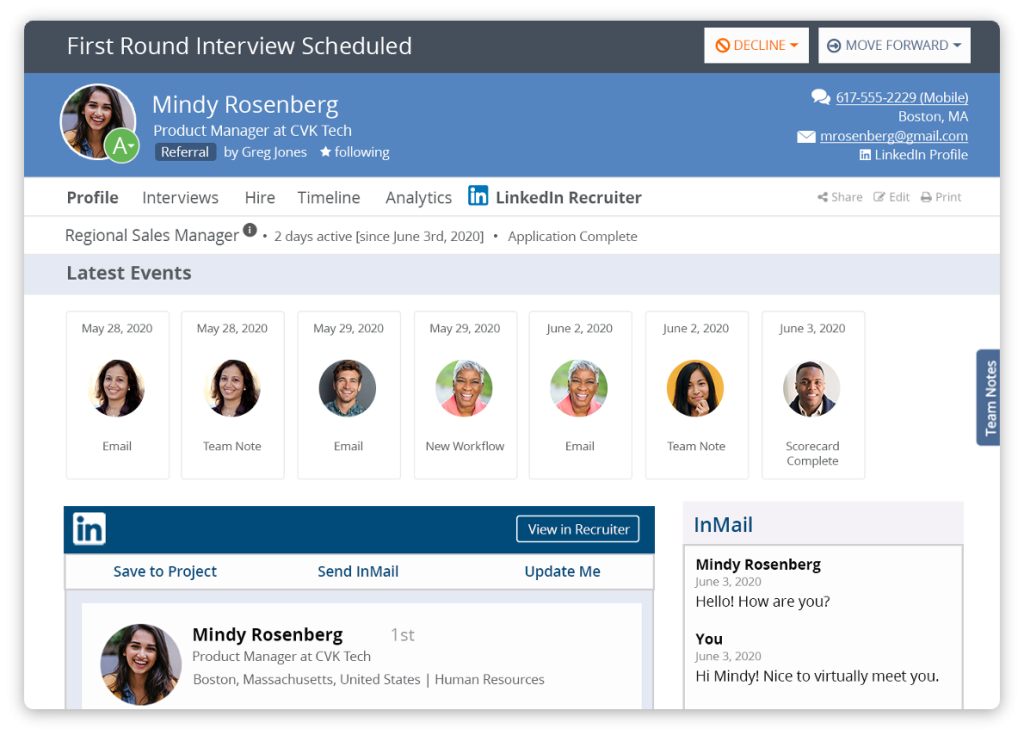
ClearCompany is ideal for organizations wanting performance tracking embedded in a broader talent management strategy. Reviews connect naturally with hiring, onboarding, and succession planning.
Performance data does not remain isolated. Leaders can evaluate growth potential, competency alignment, and promotion readiness using documented history. This strengthens long-term workforce planning.
For HR teams scaling processes beyond basic evaluations, this integration creates continuity across the employee lifecycle.
Pros:
- Connects performance to hiring and succession planning
- Centralized competency-based evaluation
- Strong documentation for promotion decisions
- Suitable for scaling HR maturity
Cons:
- More platform-heavy for smaller teams
- Requires clear competency frameworks
Pricing: Custom pricing.
Who Should Consider It: Companies embedding performance tracking within full talent management.
9. Workleap (Officevibe)
Best for Lightweight Team Performance Pulse
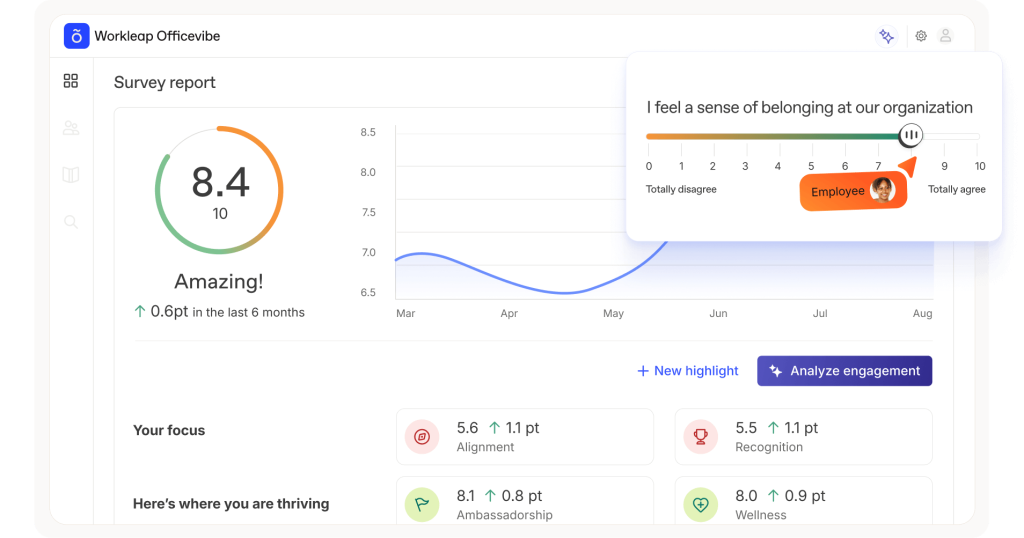
Workleap’s Officevibe focuses on continuous team sentiment rather than heavy review cycles. It helps managers detect early engagement changes that often influence performance outcomes.
Short pulse surveys and feedback tools provide insight into morale, workload balance, and clarity. While it does not replace structured evaluation systems, it complements them well.
It is especially helpful for smaller teams that want actionable insights without formal bureaucracy.
Pros:
- Strong engagement visibility
- Easy to implement with minimal process
- Helps identify performance risks early
- Manager-friendly dashboards
Cons:
- Limited depth for formal performance scoring
- Goal tracking is lighter than OKR-focused platforms
Pricing: Starts at $5/user/month.
Who Should Consider It: Teams seeking early engagement indicators tied to performance health.
10. Culture Amp
Best for Data-Driven Performance and Engagement Insights
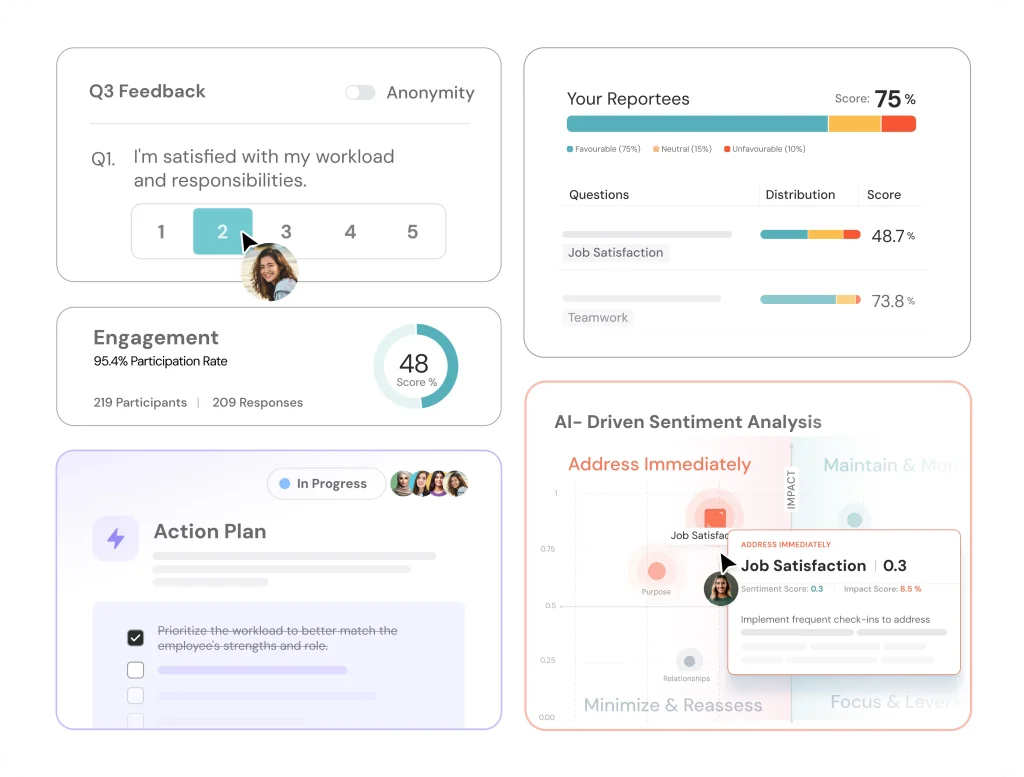
Culture Amp is widely used by larger organizations that want performance tracking backed by deep analytics. It connects engagement data, feedback themes, and workforce trends into actionable insight.
Rather than focusing solely on individual scores, it reveals patterns across departments and leadership layers. That system-level visibility helps identify structural performance issues, not just individual gaps.
It is best suited for organizations comfortable using analytics to guide talent decisions.
Pros:
- Deep analytics across engagement and performance data
- Anonymous feedback encourages honesty
- Strong departmental benchmarking
- Connects performance insights with broader workforce strategy
Cons:
- Advanced features may overwhelm smaller teams
- Relies on consistent survey participation
Pricing: Custom pricing.
Who Should Consider It: Enterprises seeking analytics-driven performance management.
Evaluation Criteria: How to Choose the Right Employee Performance Tracking Tool
Before jumping into tool comparisons, I always pause and ask one simple question:
Will this system reduce performance confusion, or just digitize it?
Community discussions, HR leaders, and my own experience all point to the same truth. Most tools fail not because they lack features, but because they add complexity without solving everyday performance pain.
If you’re evaluating performance tracking software, here’s what actually matters.
1. 360-Degree Feedback That’s Actually Usable
If feedback still lives in email threads, spreadsheets, or informal chats, reviews will always feel incomplete. A strong system should make multi-rater feedback effortless, structured, and repeatable.
Look for anonymity options, recurring cycles, and clean summaries. If HR has to manually interpret dozens of comments every quarter, you’ve just replaced one admin burden with another.
The goal is clarity, not more paperwork.
2. Goal Alignment That Connects Work to Strategy
Performance tracking breaks down when goals float independently across teams. The best platforms allow cascading goals so individual objectives connect directly to company priorities.
You should be able to see progress clearly, assign weightage where needed, and track OKRs without building side spreadsheets.
When goals are aligned → performance conversations shift from opinion to progress.
3. Automation That Reduces Admin Fatigue
Let’s be honest. Performance cycles are exhausting when everything requires reminders, follow-ups, and manual scoring.
A good system should automate review launches, evaluator selection, probation reviews, reminders, and score calculations. That’s what frees HR from chasing forms and lets managers focus on actual coaching.
Automation isn’t a luxury. It’s what keeps the process alive.
4. Reporting That Drives Decisions
Data alone is useless. Insight matters.
You should be able to answer questions like:
- Who are our high performers?
- Where are we seeing performance decline?
- Which departments show engagement risk?
Look for dashboards that are simple, exportable, and actionable. AI summaries can help, but only if they clarify trends rather than create noise.
If reporting requires exporting everything into Excel, you haven’t solved the problem.
5. Integration and Migration Reality
This is where many buying decisions go wrong.
On paper, everything “integrates.” In reality, migration becomes a project.
Make sure the tool connects smoothly with your HRIS, payroll, Slack, and SSO. Just as important, check how easy it is to export your data. Vendor exit planning is part of responsible decision-making.
A system that traps your data is not a long-term partner.
6. Scalability Without Rebuilding Everything Later
What works for 30 employees often breaks at 300.
Ask yourself:
- Will this system handle calibration meetings?
- Will reporting hold up under growth?
- Can we expand from annual reviews to quarterly cycles later?
Switching systems mid-growth is painful. Choose something that grows with you.
7. Manager Experience and Adoption
Here’s something I’ve learned the hard way:
The most advanced performance platform is useless if managers avoid logging in.
Ease of use matters more than feature density. The interface should feel intuitive. Check-in workflows should feel natural. Managers should not need training manuals to complete a review.
Adoption → consistency → ROI.
8. Real User Reviews Tell the Truth
Before shortlisting any vendor, read real user feedback carefully.
Not just star ratings. Read implementation complaints. Look for patterns around support delays, integration issues, or workflow rigidity.
Community feedback often reveals operational friction that demos never show.
Peer insight can save months of regret.
9. Customization Without Chaos
Every company defines performance differently. Your sales team, engineering team, and customer support team probably shouldn’t use identical review templates.
The right tool should allow flexible forms, competency frameworks, and scoring adjustments — without turning setup into a consulting project.
Flexibility should feel empowering, not overwhelming.
10. Transparent Pricing That Scales Predictably
Finally, look at the long-term cost.
- Does pricing increase sharply with added modules?
- Are advanced features locked behind unexpected upgrades?
- Does scaling from 50 to 200 employees create a budget shock?
Clarity up front prevents friction later.
When I look at performance tracking purely from a business impact lens, three tools stand out. Not because they’re popular, but because they consistently solve real operational friction — unclear goals, inconsistent reviews, and poor visibility into performance trends.
My Top 3 Choices for Employee Performance Tracking Tools
1. PeopleGoal
PeopleGoal stands out because it connects daily work with long-term goals in a structured, visible way. Performance conversations feel grounded in documented progress rather than opinion. Continuous feedback, aligned objectives, and clear reporting reduce bias and improve accountability. If you want performance tracking that feels consistent, fair, and scalable, this is a strong first option.
2. Lattice
Lattice shines when the core issue is inconsistent manager feedback and scattered performance documentation. It builds structure around one-on-ones, goal tracking, and ongoing conversations. Over time, this creates a rhythm where reviews feel expected, not stressful. It’s a solid choice for organizations strengthening manager-led performance practices.
3. 15Five
15Five focuses on steady, weekly visibility instead of heavy review cycles. Its check-ins capture progress and engagement signals early, helping managers act before small issues become performance problems. The system stays lightweight while still building useful documentation over time. It works especially well for teams prioritizing continuous dialogue over formal scoring.
Track Performance Better With the Right System
Employee performance tracking works when it creates clarity, not complexity. The right employee tracking system should align goals with strategy, reduce bias through documented feedback, automate repetitive admin work, and give leaders visibility into real performance trends.
As you’ve seen, some tools prioritize structured conversations, others emphasize engagement insights, and a few focus heavily on analytics. The key is choosing one that solves your current bottleneck without overwhelming your managers.
If you want a balanced approach that combines goal alignment, continuous feedback, and practical reporting in one structured environment, PeopleGoal is worth serious consideration.
Take a moment to assess where your process feels broken today. Then shortlist two or three employee performance tracker tools, run a pilot cycle, and see which one your managers actually use. That’s your real answer.
Frequently Asked Questions
How do you measure performance fairly across different roles or departments?
Avoid one-size-fits-all KPIs. Define role-specific goals and weight them appropriately. Compare employees against expectations for their role, not against each other. Context matters, so consider workload, project complexity, and experience level before drawing conclusions.
How do you prevent employees from gaming performance metrics?
Balance metrics. Don’t rely on a single number like tickets closed or hours logged. Combine quality, outcomes, feedback, and collaboration indicators. When incentives align with real business goals, gaming becomes harder and less attractive.
How do you normalize performance data for task complexity and experience level?
Factor in role difficulty, tenure, and project complexity when evaluating output. A senior employee handling complex work should not be measured the same way as a new hire managing routine tasks. Contextual data keeps evaluations realistic and fair.
Should performance tracking be linked directly to compensation and promotions?
It can be, but carefully. Separate baseline expectations from growth achievements. Promotions and raises should reflect consistent performance, skill development, and business impact, not just short-term metrics. Clear criteria reduce misunderstandings.
How do you transition from spreadsheets to performance tracking software?
Start small. Choose one department or review cycle as a pilot. Migrate existing goals and feedback gradually. Train managers first, then roll it out company-wide once the workflow feels smooth and adoption looks strong.
What mistakes should companies avoid when setting employee KPIs?
Avoid vague goals, too many metrics, or purely activity-based targets. Don’t copy KPIs from other companies without adjusting them to your strategy. Keep KPIs measurable, relevant, and aligned with actual business outcomes.
How do you ensure transparency and trust in a performance tracking system?
Make expectations visible. Let employees see goals, feedback, and evaluation criteria. Communicate how data is used and who can access it. Transparency reduces anxiety and builds confidence in the system.
What data privacy considerations apply to employee performance tracking?
Collect only necessary data and explain why it’s being tracked. Limit access to sensitive information and comply with local labor and data protection laws. Avoid intrusive monitoring unless legally required and clearly disclosed.
How do you measure performance for remote or hybrid teams effectively?
Focus on results, not screen time. Track goal completion, quality of work, collaboration, and responsiveness. Regular check-ins help maintain clarity and connection without micromanaging remote employees.
Ready to 3x Your Teams' Performance?
Use the best performance management software to align goals, track progress, and boost employee engagement.