
Most HR teams I talk to are still running employee engagement surveys in Google Forms, a recycled PDF, or a shared doc that gets filled out once a year and never opened again.
The survey goes out, a few people respond, leadership gets a summary slide, and nothing changes. The next year, participation drops because employees have figured out the pattern.
According to Gallup’s 2025 State of the Global Workplace report, only 20% of employees worldwide are engaged at work, costing the global economy an estimated $10 trillion in lost productivity.
For HR teams, that number is not just a statistic. It is a signal that most survey processes are not actually driving any change.
If you are responsible for measuring engagement at your organization, you do not need another article telling you why surveys matter.
You need ready-to-use employee engagement survey templates, a scoring framework, and a system that turns responses into actions your team can actually take. That is what this guide gives you.
What is an Employee Engagement Survey Template and How Does It Improve Performance and Retention?
Here is how employee engagement survey templates improve employee performance and retention:
- Helps you identify disengagement early so you can fix issues before they impact performance or lead to employee exits
- Gives you clear visibility into what is affecting productivity, such as unclear goals, poor communication, or a lack of recognition
- Creates a repeatable system that lets you measure improvement over time instead of relying on one-off surveys
- Replaces guesswork with real data so you can take focused actions that improve both performance and retention
- Fills feedback gaps in remote and hybrid teams where informal signals are often missing
- Builds trust by showing employees their feedback leads to real change, which increases engagement and loyalty
- Turns surveys into an ongoing improvement loop that strengthens culture and keeps employees invested in their work
5 Best Employee Engagement Survey Templates
There is no single perfect template because different organizations measure different things at different stages. I have broken down the most effective formats by use case so you can pick what fits your situation right now and use it immediately.
Template 1: Annual Employee Engagement Survey (Comprehensive)
This is the deep-dive format. Run it once or twice a year to get a full organizational snapshot. It is the right starting point if you are building a baseline for the first time, or if you want to measure engagement across every major driver in one go.
Format: 5-point Likert scale (1 = Strongly Disagree, 5 = Strongly Agree) unless otherwise noted. Aim for a completion time of 15 to 20 minutes maximum.
Employee Name (optional): ____________________ Department: ____________________ Tenure: ☐ Less than 1 year ☐ 1 to 3 years ☐ 3 to 5 years ☐ 5 years or more Location / Team (optional): ____________________ Survey Period: ____________________
Section A: Role Clarity and Expectations
| # | Question | 1 | 2 | 3 | 4 | 5 |
| 1 | I have a clear understanding of what is expected of me in my role. | ☐ | ☐ | ☐ | ☐ | ☐ |
| 2 | My goals and priorities are clearly communicated to me. | ☐ | ☐ | ☐ | ☐ | ☐ |
| 3 | I know how my work contributes to the company’s overall goals. | ☐ | ☐ | ☐ | ☐ | ☐ |
Section B: Manager Effectiveness
| # | Question | 1 | 2 | 3 | 4 | 5 |
| 4 | My manager gives me feedback that helps me grow and improve. | ☐ | ☐ | ☐ | ☐ | ☐ |
| 5 | My manager treats all team members fairly and consistently. | ☐ | ☐ | ☐ | ☐ | ☐ |
| 6 | I feel comfortable approaching my manager with problems or ideas. | ☐ | ☐ | ☐ | ☐ | ☐ |
| 7 | My manager recognizes good work when it happens. | ☐ | ☐ | ☐ | ☐ | ☐ |
Section C: Growth and Development
| # | Question | 1 | 2 | 3 | 4 | 5 |
| 8 | I have access to opportunities to develop my skills at this company. | ☐ | ☐ | ☐ | ☐ | ☐ |
| 9 | I see a clear path for career growth here. | ☐ | ☐ | ☐ | ☐ | ☐ |
| 10 | My manager actively supports my professional development. | ☐ | ☐ | ☐ | ☐ | ☐ |
Section D: Team and Collaboration
| # | Question | 1 | 2 | 3 | 4 | 5 |
| 11 | My team works together effectively to achieve shared goals. | ☐ | ☐ | ☐ | ☐ | ☐ |
| 12 | I feel like a valued member of my team. | ☐ | ☐ | ☐ | ☐ | ☐ |
| 13 | Cross-team collaboration at this company is effective. | ☐ | ☐ | ☐ | ☐ | ☐ |
Section E: Workplace Culture and Psychological Safety
| # | Question | 1 | 2 | 3 | 4 | 5 |
| 14 | I feel comfortable sharing ideas or concerns without fear of negative consequences. | ☐ | ☐ | ☐ | ☐ | ☐ |
| 15 | This company treats employees with respect regardless of their level or background. | ☐ | ☐ | ☐ | ☐ | ☐ |
| 16 | I feel the company lives by its stated values in practice, not just on paper. | ☐ | ☐ | ☐ | ☐ | ☐ |
Section F: Workload and Wellbeing
| # | Question | 1 | 2 | 3 | 4 | 5 |
| 17 | My workload is manageable and allows me to produce quality work. | ☐ | ☐ | ☐ | ☐ | ☐ |
| 18 | I am able to maintain a healthy balance between work and personal life. | ☐ | ☐ | ☐ | ☐ | ☐ |
| 19 | I have the tools and resources I need to do my job effectively. | ☐ | ☐ | ☐ | ☐ | ☐ |
Section G: Overall Engagement and eNPS
| # | Question | Rating |
| 20 | Overall, how satisfied are you with your current role? | 1 (Very Dissatisfied) to 5 (Very Satisfied) |
| 21 | On a scale of 0 to 10, how likely are you to recommend this company as a great place to work? | 0 to 10 |
Section H: Open-Ended Questions
22. What is one thing this company does really well that you want to see continue?
23. What is one thing you wish would change about your experience working here?
24. Is there anything else you want leadership to know?
Scoring guide for Section A to G averages:
- 4.5 to 5.0: Exceptional engagement. Reinforce what is working.
- 4.0 to 4.4: Strong. Monitor for early drift signals.
- 3.5 to 3.9: Moderate. Investigate specific drivers with a follow-up pulse.
- 3.0 to 3.4: Below average. Conduct focus groups or skip-level meetings.
- Below 3.0: Critical. Escalate to HR leadership and direct managers immediately.
eNPS guide (Question 21):
- 9 to 10 = Promoters | 7 to 8 = Passives | 0 to 6 = Detractors
- eNPS = % Promoters minus % Detractors
- Above +20: Healthy | 0 to +20: Watch closely | Below 0: Urgent
Template 2: Pulse Survey Template (Short and Frequent)
Pulse surveys are the most effective tool I have seen for catching problems before they become crises. Keep them to 5 to 8 questions, run them every four to eight weeks, and track the same core questions across cycles so you build a meaningful trendline.
Format: Mix of 1 to 5 scale, yes/no, and one open-ended question. Target completion time: under 3 minutes.
Employee Name (optional): ____________________ Department: ____________________ Survey Week / Month: ____________________
| # | Question | Scale / Options |
| 1 | How motivated do you feel about your work this week? | 1 (Not at all) to 5 (Very motivated) |
| 2 | I have what I need to do my job well right now. | 1 (Strongly Disagree) to 5 (Strongly Agree) |
| 3 | My manager has supported me effectively this week. | 1 (Strongly Disagree) to 5 (Strongly Agree) |
| 4 | I feel recognized for the contributions I am making. | 1 (Strongly Disagree) to 5 (Strongly Agree) |
| 5 | Is there anything blocking your productivity right now? | Open-ended |
| 6 | How connected do you feel to your team at the moment? | 1 (Not at all connected) to 5 (Very connected) |
| 7 | On a scale of 0 to 10, how likely are you to recommend this company as a great place to work right now? | 0 to 10 (running eNPS) |
When to use it: After an organizational change, leadership transition, policy rollout, or any period of high business pressure. The running eNPS in Question 7 is your most valuable metric here. Track it every cycle and you will see engagement trends months before they show up in turnover numbers.
Pulse threshold to act on: Any question averaging below 3.0 in two consecutive cycles warrants an immediate manager check-in or focus group with the relevant team.
Template 3: Manager Effectiveness Survey Template
One of the most avoided conversations in HR is whether managers are actually good at managing. This template gives employees a safe, structured, and anonymous way to share that feedback upward. I recommend running this once or twice a year, separate from the general engagement survey, so it gets the attention it deserves.
Format: 5-point Likert scale (1 = Strongly Disagree, 5 = Strongly Agree) plus one open-ended. Must be deployed with full anonymity guaranteed.
Manager Being Reviewed: ____________________ Reviewer’s Department / Team: ____________________ Review Period: ____________________ Your relationship to this manager: ☐ Direct report ☐ Peer ☐ Cross-functional collaborator
| # | Question | 1 | 2 | 3 | 4 | 5 |
| 1 | My manager clearly communicates expectations and priorities. | ☐ | ☐ | ☐ | ☐ | ☐ |
| 2 | My manager gives me feedback that actually helps me improve. | ☐ | ☐ | ☐ | ☐ | ☐ |
| 3 | My manager treats all team members fairly and without favoritism. | ☐ | ☐ | ☐ | ☐ | ☐ |
| 4 | I feel comfortable raising concerns or ideas with my manager. | ☐ | ☐ | ☐ | ☐ | ☐ |
| 5 | My manager removes obstacles so I can do my job effectively. | ☐ | ☐ | ☐ | ☐ | ☐ |
| 6 | My manager recognizes good work in a timely and meaningful way. | ☐ | ☐ | ☐ | ☐ | ☐ |
| 7 | My manager supports my growth and development, not just my output. | ☐ | ☐ | ☐ | ☐ | ☐ |
| 8 | My manager creates an environment where people feel safe speaking up. | ☐ | ☐ | ☐ | ☐ | ☐ |
Open-ended:
9. What is one thing this manager does really well that you want to see continue?
10. What is one thing this manager could do differently to better support the team?
Important note on scoring: Low manager effectiveness scores need to be handled through structured coaching, skip-level conversations, or targeted development plans. Do not use these results for disciplinary action or disclose team-level scores where individuals could be identified. The goal is development, not punishment.
Template 4: Onboarding Engagement Survey (30, 60, 90 Days)
New hires form their most lasting impressions in the first 90 days. A structured onboarding or new hire survey captures those impressions before disengagement has a chance to set in. This template is what makes that measurable.
Format: 5-point Likert scale plus open-ended questions at each stage.
Employee Name: ____________________ Role: ____________________ Start Date: ____________________ Manager: ____________________ Survey Stage: ☐ 30 Days ☐ 60 Days ☐ 90 Days
30-Day Survey
| # | Question | 1 | 2 | 3 | 4 | 5 |
| 1 | I have a clear understanding of my role and responsibilities. | ☐ | ☐ | ☐ | ☐ | ☐ |
| 2 | My onboarding experience gave me the information I needed to get started. | ☐ | ☐ | ☐ | ☐ | ☐ |
| 3 | I feel welcomed and included by my team and manager. | ☐ | ☐ | ☐ | ☐ | ☐ |
| 4 | I have access to the tools and systems I need to do my job. | ☐ | ☐ | ☐ | ☐ | ☐ |
Open-ended: What would have made your first 30 days even better?
60-Day Survey
| # | Question | 1 | 2 | 3 | 4 | 5 |
| 5 | I feel confident performing my core job responsibilities. | ☐ | ☐ | ☐ | ☐ | ☐ |
| 6 | I have received adequate feedback on my performance so far. | ☐ | ☐ | ☐ | ☐ | ☐ |
| 7 | My workload is appropriate for where I am in my onboarding. | ☐ | ☐ | ☐ | ☐ | ☐ |
| 8 | I feel supported by my manager in building relationships across the team. | ☐ | ☐ | ☐ | ☐ | ☐ |
Open-ended: What support do you need in the next 30 days that you are not currently getting?
90-Day Survey
| # | Question | 1 | 2 | 3 | 4 | 5 |
| 9 | I see a clear path for growth and development at this company. | ☐ | ☐ | ☐ | ☐ | ☐ |
| 10 | I feel connected to the company’s mission and values. | ☐ | ☐ | ☐ | ☐ | ☐ |
| 11 | I feel like a contributing member of my team. | ☐ | ☐ | ☐ | ☐ | ☐ |
| 12 | I would recommend this company to others as a great place to work. | ☐ | ☐ | ☐ | ☐ | ☐ |
Open-ended: What is one thing we could improve about how we bring new people into this organization?
Manager’s 90-Day Ramp Decision:
☐ Fully settled — performing to expectations
☐ Developing well — minor gaps being addressed
☐ Needs structured support — extend onboarding plan with specific milestones
Template 5: Remote and Hybrid Team Survey Template
The traditional engagement survey was designed for office environments. Remote and hybrid teams have distinct pain points: isolation, communication gaps, blurred work-life boundaries, and unequal visibility into opportunities. Run this template alongside your standard pulse or annual survey to get a complete picture of your distributed workforce.
Format: 5-point Likert scale plus open-ended. Can be run quarterly or after any significant change to working arrangements.
Employee Name (optional): ____________________ Work Arrangement: ☐ Fully Remote ☐ Hybrid ☐ Primarily In-Office Department: ____________________ Survey Period: ____________________
| # | Question | 1 | 2 | 3 | 4 | 5 |
| 1 | I feel connected to my team despite working remotely or in a hybrid arrangement. | ☐ | ☐ | ☐ | ☐ | ☐ |
| 2 | My manager checks in with me regularly and in a way that feels meaningful. | ☐ | ☐ | ☐ | ☐ | ☐ |
| 3 | I have the technology and tools I need to collaborate effectively from my location. | ☐ | ☐ | ☐ | ☐ | ☐ |
| 4 | I feel equally included in meetings and decisions regardless of where I am working from. | ☐ | ☐ | ☐ | ☐ | ☐ |
| 5 | I am able to maintain a healthy boundary between work and personal time in my current setup. | ☐ | ☐ | ☐ | ☐ | ☐ |
| 6 | I have opportunities to build relationships with colleagues despite working remotely. | ☐ | ☐ | ☐ | ☐ | ☐ |
| 7 | I feel visible to leadership and have equal access to growth opportunities. | ☐ | ☐ | ☐ | ☐ | ☐ |
Open-ended: What would make your remote or hybrid work experience significantly better?
How to Set Up an Employee Engagement Survey: A Step-by-Step Guide
Setting up a survey that employees actually complete and respond to honestly is not complicated, but there is a right order to do it in. I use PeopleGoal for this, and the whole setup takes less time than most people expect. Here is exactly how I do it.
Step 1: Define what you are measuring
Before touching any template, I get clear on the specific problem I am trying to understand. Overall engagement? Manager effectiveness? Culture after a reorg? The answer determines which questions I use and which metrics I track. Trying to measure everything at once is how you end up with a 40-question survey nobody finishes.
Step 2: Install and customize your survey template
I start by pulling a ready-built template from PeopleGoal’s app store rather than building from scratch. The default question set is already structured around the core engagement drivers, so I can launch it immediately or customize it to match my specific focus areas.
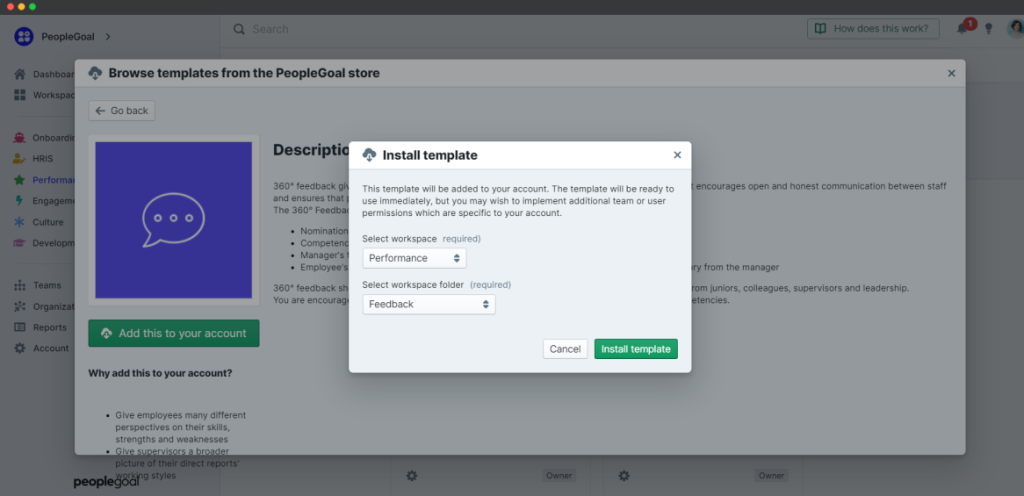
Customizing is straightforward:
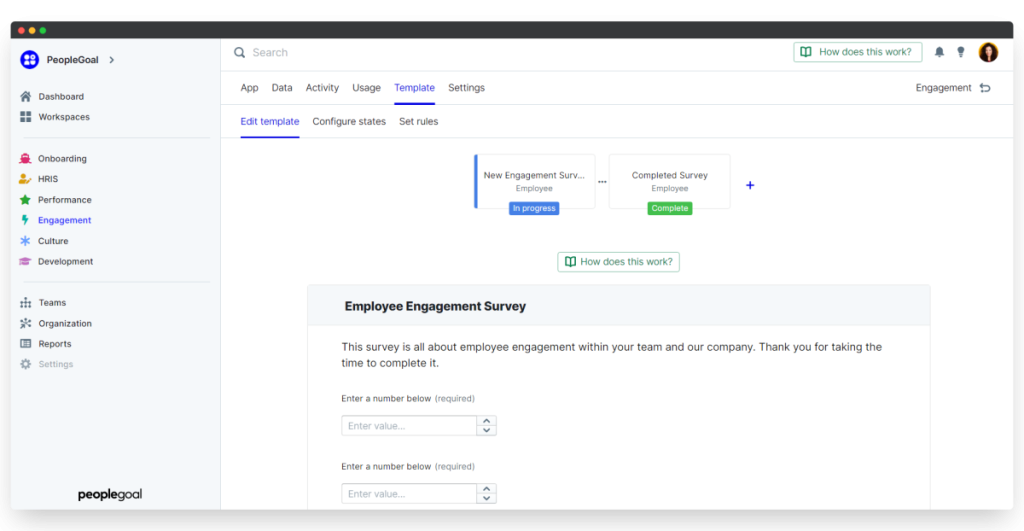
- Edit existing questions by updating the field text and adjusting whether responses are required or optional
- Duplicate any element once you have it set up rather than rebuilding similar questions one by one
- Add new sections for areas specific to your team, like eNPS with a 1 to 10 slider and a comments field
- Reorder questions or sections by dragging them into place
Step 3: Turn anonymity on at the structural level
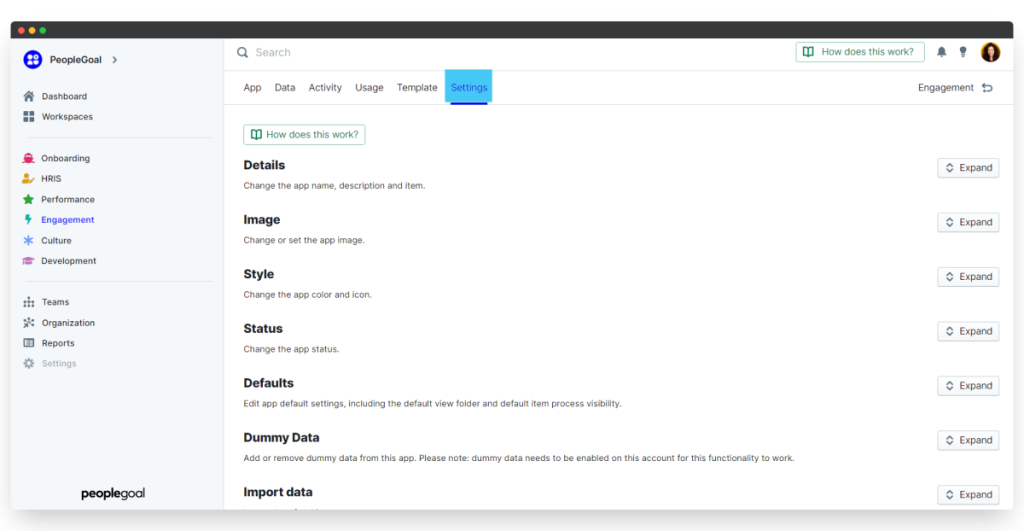
This is not optional. I go into Settings, enable Webforms, and switch on Anonymous responses only. This generates a shareable link that employees can use to respond without logging into any account. No user ID, no trace back to an individual. That structural guarantee is what makes employees respond honestly rather than safely.
Step 4: Set the right permissions
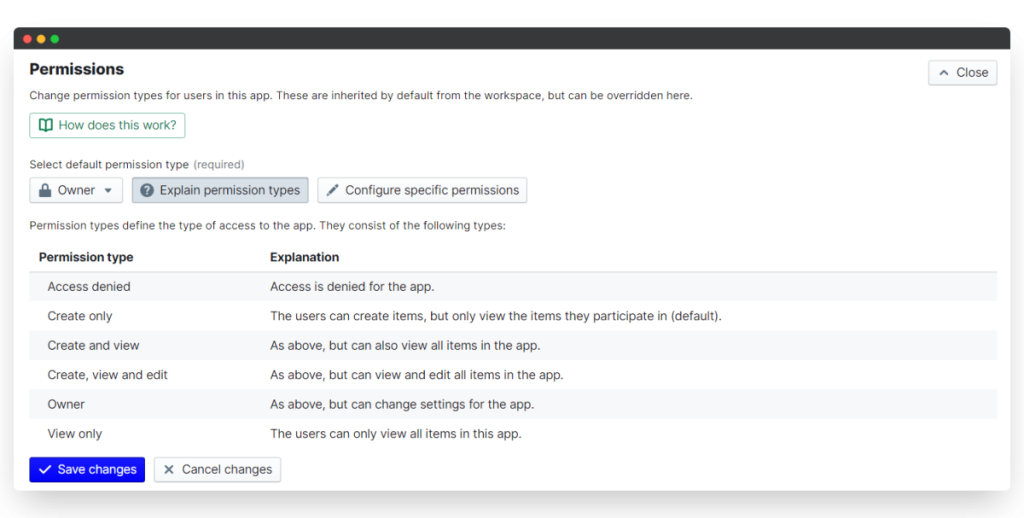
I set the default app permission to Create only so employees can submit their own survey without seeing anyone else’s responses. For leadership and HR partners who need visibility, I assign Create and View access specifically to those individuals. This keeps the data appropriately visible without opening everything to everyone.
Step 5: Communicate before you launch
Before the link goes out, I send a short message to the team explaining why we are running the survey, what we will do with the results, and confirming that responses are fully anonymous. Three short paragraphs. This one step consistently improves participation because people understand the purpose before they open the form.
Step 6: Launch and schedule recurring surveys
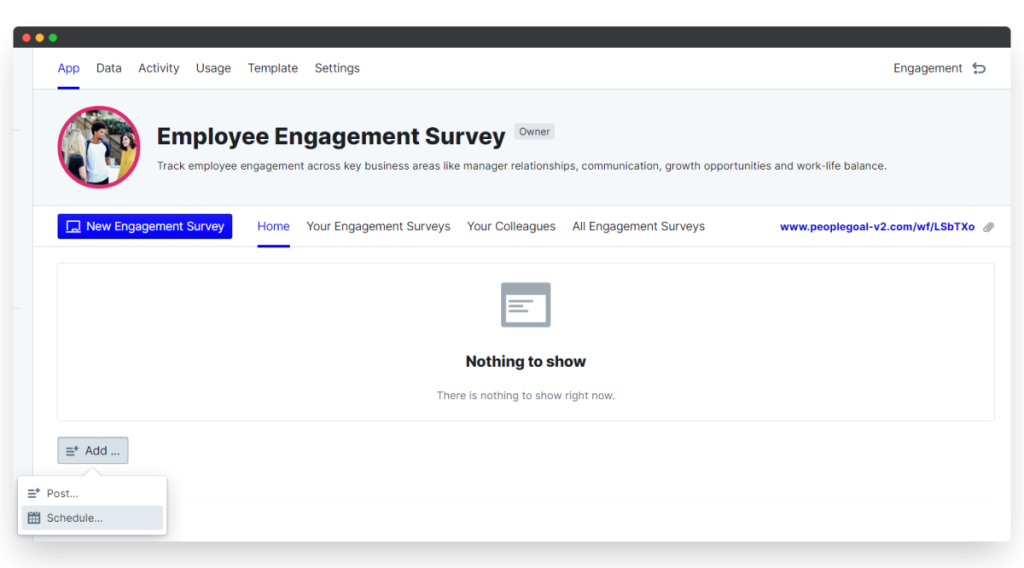
I send the webform link to the full team. For recurring pulse surveys, I set up a schedule inside PeopleGoal with a specific date, a reminder notification, and a recurrence frequency. The system creates new surveys and notifies employees automatically, so the process runs without me having to manually push it each cycle.
Step 7: Analyze by segment before looking at averages
When responses come in, I go straight to the segment view before I look at any overall score. I filter by department, manager, and tenure. A company-wide average of 3.8 can hide a 2.4 in one specific team. PeopleGoal’s Real-Time Analytics updates as responses come in, so I can spot problem areas before the survey cycle even closes.
Step 8: Share results and assign ownership to every action item
I share a results summary with the full company, including the low scores and what we are doing about them. Then every action item gets a named owner, a timeline, and a follow-up date.
5 Most Common Mistakes HR Teams Make With Engagement Surveys
I have seen these patterns across organizations of every size. Here is what to watch for and how to correct it.
Mistake 1: Running a survey with no action plan
The community research on this is unambiguous: it is better not to run a survey at all than to run one and do nothing with the results. Employee cynicism about surveys is almost always caused by this exact history.
Fix: Document your action plan before the survey launches, not after results come in.
Mistake 2: Making surveys too long
A 50-question annual survey feels thorough to HR and overwhelming to employees.
Fix: limit annual surveys to 20 to 25 questions with a 15 to 20 minute target. Use pulse surveys for additional depth between cycles.
Mistake 3: Skipping data segmentation
Averages mask problems. A company-wide score of 3.8 can hide a 2.4 in a specific team or department.
Fix: Always filter by department, manager, and tenure before drawing any conclusions. That is where the actionable signal is.
Mistake 4: Treating anonymity as a promise instead of a structural guarantee
When employees do not genuinely trust that their responses are anonymous, they default to safe, positive answers.
Fix: Use a platform that enforces anonymity through its architecture, not just through policy language in an email.
Mistake 5: Treating engagement as an HR metric instead of a business metric
Surveys that live only in the HR team do not drive change.
Fix: Involve leadership, share results company-wide, and tie engagement outcomes to business metrics like retention rate, productivity, and customer satisfaction. That is what gets it taken seriously at the executive level.
How to Build Internal Benchmarks and Track Engagement Over Time
Comparing your score to an industry benchmark is a starting point, but your most valuable benchmarks are internal ones. Here is how I build them.
- Establish your baseline first: Your first full survey cycle gives you the numbers everything else is measured against. Do not try to benchmark externally until you have at least two internal data points.
- Track the same core questions every cycle: Adding or removing questions mid-cycle breaks your ability to compare over time. Lock in your core 8 to 10 questions and do not change them for at least four cycles.
- Flag significant movements: A drop of 0.3 or more on any theme in a single quarter is worth investigating, regardless of whether the absolute score still looks healthy.
- Segment before you average: Track engagement scores separately by department, tenure band, and manager. Build a rich internal dataset over time that shows you not just where you are, but which way each part of the organization is moving.
- Share trends with leadership quarterly: Engagement data presented as a trendline is far more compelling for executive buy-in than a single snapshot. A score of 3.7 means little in isolation. A score that has moved from 3.2 to 3.7 over three quarters tells a real story.
Build The System Behind the Template To Create Change
A well-designed employee engagement survey template is not just about asking questions. It is about building a system that helps you understand your people and act on what matters.
When used consistently, it helps you catch issues early, improve performance, and reduce attrition by turning feedback into real change.
If you want to move beyond one-off surveys, tools like PeopleGoal make this process much easier. You can launch ready-made templates, automate recurring surveys, ensure anonymity, and track results in real time without manual effort.
Start simple. Pick one template, run your first survey, analyze results by team, and assign clear actions. That is how engagement turns into measurable business impact.
Frequently Asked Questions

How often should you run employee engagement surveys?
The most effective cadence is a combination approach: one comprehensive annual or bi-annual survey for depth, and quarterly or monthly pulse surveys for real-time trend tracking. Running only a single annual survey gives you a snapshot but misses the drift happening in between. Quarterly pulses with the same core questions let you catch issues early and measure whether your actions from the last cycle are actually working.
What is eNPS and why should it be in every survey template?
Employee Net Promoter Score asks one question: on a scale of 0 to 10, how likely are you to recommend this company as a great place to work? Scores of 9 to 10 are Promoters, 7 to 8 are Passives, and 0 to 6 are Detractors. Your eNPS equals the percentage of Promoters minus the percentage of Detractors. It is the single most predictive engagement metric I know of for retention risk and employer brand health, which is why it belongs in every template, every cycle.
What is the difference between employee engagement and employee satisfaction?
Satisfaction measures whether employees are content with their current conditions: pay, environment, and workload. Engagement measures whether employees are emotionally committed to their work and willing to go beyond what is required. An employee can be satisfied but still disengaged, doing just enough to stay. Engagement surveys should cover both, but the questions around discretionary effort, motivation, alignment, and advocacy are what reveal true engagement rather than just surface-level contentment.
How do you handle low survey scores without creating panic or defensiveness?
Low scores are information, not accusations. When you share results, lead with what the data is telling you, not who is to blame. Focus on the theme or driver that scored lowest, not on individuals or teams. Then communicate a specific, time-bound action plan: here is what we heard, here is what we are doing, here is when you will see the change. That framing builds trust rather than anxiety and is what makes people willing to be honest in the next survey cycle.
Can you use the same survey template across different departments or roles?
Yes, for your core questions, and I recommend it because consistency is what makes cross-team comparison possible. But you should layer in department-specific or role-specific questions that address the unique context of each group. A customer support team and an engineering team have different engagement drivers. PeopleGoal's customizable survey templates let you maintain a consistent core and add role-specific modules without rebuilding from scratch each cycle.
What questions should be in every engagement survey, regardless of format or audience?
Every survey should include a question on overall satisfaction, one on manager effectiveness, one on role clarity, one on growth opportunity, and your eNPS question. These five cover the core engagement drivers and give you a consistent baseline to track over time. From there, add theme-specific questions based on what you are most trying to understand in that particular cycle, whether that is psychological safety, collaboration, workload, or something specific to a recent change.
How do you increase survey participation rates?
The three biggest drivers of participation are communication, trust, and demonstrated follow-through. Communicate the purpose of the survey before launch. Guarantee and demonstrate anonymity through your platform settings, not just a verbal promise. And most importantly, show employees that previous survey responses led to real, visible changes. Teams that see action taken on past surveys participate at significantly higher rates in future ones. That pattern compounds over time.
What features should I look for in an employee engagement survey template?
Look for a template that’s easy to customize, covers key areas like culture, leadership, and satisfaction, and supports anonymous feedback. It should also help you track results over time, segment responses, and run surveys regularly. Bonus if it’s simple to share and doesn’t feel like a long, boring form.
Ready to 3x Your Teams' Performance?
Use the best performance management software to align goals, track progress, and boost employee engagement.