
You know that one coworker who can turn a simple task into a mystery novel?
The deadline disappears, the update is “in progress,” and somehow the problem is always weather-related. Then, there is the other person who quietly delivers, flags risks early, and leaves zero loose ends. Same job, wildly different outcomes.
That difference is not luck. It is ownership because a well-written accountability performance review can correct habits without bruising morale.
To help you with this, here is a blog that provides over 100 sharp, real-world phrases you can copy, tweak, and use to praise ownership, coach gaps gently, and keep work moving. Consider these performance review accountability examples your shortcut for direct, practical feedback that actually sounds human.
Let’s start with where accountability matters the most.
Accountability Performance Review Phrases & Examples
Check these accountability performance review phrases and examples when you need to assess follow-through, ownership, and reliability in delivering on commitments. It helps you recognize strong accountability with specific language and address missed handoffs or repeated slips.
1) Phrases for Meeting Commitments & Deadlines

Deadlines are where accountability becomes visible to everyone. When someone meets commitments consistently, the team can plan, execute, and deliver without panic. Great accountability here is not just speed. It is realistic time estimates, steady progress, and early communication when timelines shift.
When deadlines slip repeatedly, it does not mean someone is careless. It usually points to planning gaps, unclear priorities, or late escalation. Coaching can fix that fast when framed well.
Positive Phrases
- Consistently meets deadlines without needing reminders, and delivers work at the expected quality, showing strong ownership of commitments and respect for how timelines affect team coordination.
- Plans work thoughtfully and manages time well, completing assignments on schedule even during busy periods, which helps others rely on timelines and reduces last-minute rush.
- Communicates early when timelines may shift, giving stakeholders time to adjust plans calmly, which reflects accountability through transparency and strong respect for shared commitments.
- Sets realistic delivery dates and follows through as promised, helping the team plan with confidence and reinforcing trust that commitments made will be commitments kept.
- Handles competing deadlines effectively by prioritizing high-impact tasks first, maintaining steady progress, and ensuring deliverables are completed on time without sacrificing quality or clarity.
- Treats agreed deadlines as serious promises, structures work in advance, and avoids last-minute scrambling, which strengthens credibility and supports smooth handoffs across dependent teams.
- Tracks key milestones and keeps work moving steadily, so deadlines are met consistently and project momentum stays strong, even when priorities shift or requests change.
- Delivers time-sensitive work reliably and communicates progress clearly, showing accountability for both timeliness and the broader impact that delays can have on others.
Constructive Phrases
- In a recent deliverable, the timeline shifted, and the team had to adjust quickly. Strengthening time estimates and planning checkpoints will help him deliver more consistently and reduce avoidable last-minute pressure.
- On a few assignments, work landed close to the deadline, which tightened accountability performance review windows. Building a clearer prioritization routine will help her stay ahead and protect quality as timelines approach.
- There have been times when delays were communicated late, leaving others scrambling. Sharing risks earlier, even when solutions are still forming, will strengthen accountability and improve planning across teams.
- During a recent project, the original timeline ended up being tighter than expected. Setting more realistic delivery dates upfront will improve follow-through and reduce the need for rushed execution.
- Occasionally, tasks have needed reminders to stay on track, which adds friction. Using a personal tracking method, like milestones or weekly check-ins, will help her manage deadlines more independently.
- When multiple deadlines stack up, delivery can slip in small ways. Using milestone planning and early progress checks will help him manage competing priorities and keep commitments steadier.
- In a few cases, work started later than ideal and became rushed near the end. Starting earlier on high-effort tasks will reduce stress and improve accountability for both timing and quality.
2) Phrases for Reliability & Follow-Through

Reliability is accountability’s best friend. It is what makes coworkers say, “I’ve got this,” without worrying. Follow-through means finishing tasks completely, not leaving loose ends, and staying steady when work becomes tedious or complicated. Teams run smoothly when people close loops, update progress, and deliver consistent quality.
When reliability dips, it often comes from unclear ownership, weak tracking habits, or inconsistent focus. This category gives you the kind of performance review accountability phrases that help reinforce dependable execution without sounding robotic.
Positive Phrases
- Follows through on responsibilities from start to finish and ensures details are closed properly, reducing rework and giving teammates confidence that assignments will not linger unfinished.
- Maintains consistent performance and quality across tasks, even under pressure, which makes her a dependable contributor and supports team planning without constant check-ins or uncertainty.
- Completes assignments with minimal supervision and manages workload independently, showing strong ownership and a reliable approach to finishing what was started, even during shifting priorities.
- Can be trusted with critical deliverables and completes them without repeated follow-ups, reflecting dependable execution and accountability for final outcomes, not just partial progress.
- Finishes work thoroughly rather than partially, which improves handoffs and reduces friction for reviewers, stakeholders, and teammates who depend on complete information.
- Produces accurate work with strong attention to detail, showing accountability for quality and reducing the time others spend correcting, clarifying, or requesting revisions.
- Stays engaged when obstacles arise and works steadily through challenges, demonstrating accountability through persistence and a strong focus on solving problems instead of avoiding them.
- Delivers steady results over time and consistently meets expectations, making it easy for managers and colleagues to rely on his follow-through and predict his delivery pace.
Constructive Phrases
- A few tasks recently stayed open longer than expected, and the team had to follow up for closure. Building a stronger “close the loop” habit will improve follow-through and reliability.
- At times, delivery has been uneven, which makes planning harder for others. Developing a more consistent execution rhythm will strengthen reliability and help teammates depend on predictable progress.
- There have been moments when reminders were needed before work was completed. Using checklists, milestones, or self-deadlines could help him manage tasks more independently and consistently.
- On a recent commitment, follow-through slipped after the initial agreement, which delayed the handoff. Strengthening completion habits will build stronger trust and reduce workflow disruptions.
- When unexpected challenges appear, progress can slow more than necessary. Leaning into problem-solving earlier will help him maintain momentum and strengthen accountability for completion under pressure.
- Some work has required extra revisions to finalize details. Adding a final review step before submission will reduce rework and strengthen reliability for stakeholders and downstream teams.
- In a few cases, the team was unsure whether the assigned work was progressing. Sharing clearer checkpoints and completion signals will improve predictability and strengthen follow-through.
3) Phrases for Ownership of Mistakes & Responsibilities

Mistakes happen. What matters is what someone does next. Accountability here looks like admitting errors early, correcting them quickly, and learning so the same issue does not return, wearing a fake mustache. Strong ownership builds trust because people know they are getting the full truth, not a polished story.
Coaching in this area should stay gentle but clear: the goal is not blame. It is faster correction, stronger learning habits, and more confident responsibility for outcomes. These are the most practical accountability examples for performance review when you want feedback to feel fair, mature, and future-focused.
Positive Phrases
- Acknowledges mistakes quickly and takes responsibility without excuses, then focuses on fixing the issue and preventing repeats, which strengthens trust and supports a healthy learning culture.
- Owns outcomes openly, including when results fall short, and remains solution-focused, showing maturity and accountability for performance without shifting responsibility to others.
- Communicates transparently when errors occur and proposes practical next steps, demonstrating integrity and ownership that help the team course-correct quickly and avoid repeated issues.
- Accepts feedback with a growth mindset and applies it meaningfully, showing accountability for improvement and a clear effort to strengthen performance over time.
- Avoids blame and focuses on what can be improved, which keeps conversations productive and shows strong ownership of both process and outcomes.
- Holds himself to high standards and takes corrective action quickly, demonstrating accountability for quality and a strong commitment to meeting expectations consistently.
- Reflects on setbacks and adjusts approach based on learning, which strengthens performance and shows accountable decision-making rather than repeating the same patterns.
- Takes on challenging responsibilities and stays committed even when outcomes are uncertain, demonstrating ownership of effort, process, and results under pressure.
Constructive Phrases
- In a recent situation, an error was discussed, and the focus moved quickly to external factors. Practicing clearer personal ownership will help him learn faster and build stronger trust.
- During a recent accountability performance review conversation, feedback felt harder to absorb than it needed to be. Staying open and solutions-focused will strengthen accountability and make improvement easier to apply.
- There have been times when an issue was caught later than it could have been. Flagging mistakes earlier will help the team correct faster and reduce downstream impact.
- On a recent deliverable, expectations were missed, and the next steps were unclear. Adding a stronger “fix and prevent” approach will strengthen ownership and improve learning outcomes.
- Similar feedback has come up more than once in the same area. Applying feedback more consistently will reduce repeat errors and demonstrate stronger accountability for improvement.
- After a few setbacks, the learning takeaway was not always captured clearly. Reflecting on what to change next time will strengthen responsibility and prevent repeat patterns.
- There were moments when difficult tasks were delayed until later. Leaning into challenging responsibilities sooner will build confidence and show stronger ownership under pressure.
If you are also dealing with wider performance issues beyond accountability, this short video breaks down the most common challenges.
4) Communication & Transparency Phrases
Accountability without communication is like a fire drill without alarms. People can only trust commitments when they have visibility into progress, risks, and changes. Transparency keeps teams calm, reduces surprises, and helps leaders make better decisions.
Strong performers share updates early, raise concerns before they explode, and ask clarifying questions instead of guessing. Coaching in this category should focus on better status updates, faster escalation of risks, and clearer messaging so ownership is visible and trusted.
Positive Phrases
- Provides timely project updates and communicates roadblocks clearly, helping stakeholders stay aligned and reducing last-minute surprises that disrupt planning, execution, and team trust.
- Communicates delays early and works collaboratively on solutions, demonstrating accountability through expectation management and ensuring others can adjust priorities without confusion.
- Maintains transparency in reporting progress and outcomes, which strengthens trust, supports better decision-making, and makes projects easier to manage across multiple stakeholders.
- Speaks up when priorities change or risks emerge, helping the team respond quickly and showing ownership through proactive communication rather than waiting for problems to grow.
- Clarifies expectations early and communicates requirements clearly, reducing confusion and helping teammates deliver their responsibilities accurately and confidently.
- Responds quickly to messages and requests, supporting smooth collaboration and showing accountability for being accessible when decisions and approvals are time-sensitive.
- Communicates difficult updates with honesty and tact, preserving trust while ensuring the team stays aligned on reality, next steps, and shared priorities.
Constructive Phrases
- On a recent project, stakeholders had limited visibility into progress, which created uncertainty. Sharing more frequent updates will strengthen transparency and help others plan confidently.
- There were moments when concerns were softened instead of raised early, which delayed solutions. Flagging risks sooner will support faster course correction and stronger trust.
- At times, responses to important messages came later than needed, slowing coordination. Improving response speed will strengthen accountability and keep collaboration moving smoothly.
- In one case, a delay was shared close to the deadline and required quick adjustments. Communicating timeline risks earlier will protect planning and reduce pressure for everyone.
- Some concerns surfaced only when deadlines were near, limiting options. Raising issues earlier will strengthen proactive accountability and give the team more time to respond effectively.
- Important updates have occasionally been shared later than ideal, leading to confusion. Sharing key information earlier will improve coordination and reduce avoidable follow-up questions.
- In a few updates, key details were missing, and extra follow-up was needed. Adding clarity and completeness to progress messages will strengthen transparency and reduce friction.
- There have been times when expectations were unclear, but questions came late. Asking clarifying questions earlier will improve accuracy and strengthen ownership of outcomes.
5) Phrases for Initiative & Proactivity

This is where accountability starts looking like leadership, even in non-leadership roles. Proactive employees do not wait for problems to become urgent. They spot risks early, take action, and prevent small issues from becoming project-sized headaches.
They also step up when work needs a push forward, not a reminder. Coaching here should encourage earlier action, stronger confidence in making decisions, and quicker escalation of obstacles so ownership is visible before things get messy.
Positive Phrases
- Anticipates challenges and takes action early, helping the team avoid preventable delays and showing accountability for protecting outcomes before problems become urgent.
- Volunteers for additional responsibilities when needed and follows through reliably, demonstrating ownership beyond minimum expectations and supporting broader team success.
- Takes initiative to solve problems without waiting for direction, showing confidence, responsibility, and a strong commitment to getting the work done well.
- Proposes process improvements proactively and follows through on implementation, demonstrating accountability for making work smoother, faster, and more effective for the team.
- Prepares backup plans for key deliverables and considers risks early, showing responsible thinking and ownership even when conditions change unexpectedly.
- Looks for ways to support teammates and improve workflows, demonstrating accountability for overall team performance, not just personal output.
- Leads problem-solving when obstacles appear, helping the team respond quickly and modeling shared accountability through steady action and calm decision-making.
- Takes on unfamiliar challenges with a learning mindset and delivers results, showing accountability for growth, adaptability, and long-term contribution.
Constructive Phrases
- In a few situations, problems were noticed, but action came later than needed. Acting earlier will strengthen accountability and reduce last-minute pressure for the team.
- There have been times when new responsibilities were accepted only after prompting. Stepping up sooner will strengthen ownership and improve confidence in initiative.
- In recent work, issues were addressed after they became urgent. Taking a more proactive approach will prevent escalations and strengthen accountability for early risk handling.
- Opportunities to suggest improvements appeared, but ideas were shared less often. Contributing more solutions will strengthen proactive accountability and build leadership presence.
- A few obstacles lingered longer than necessary because help was not requested early. Raising blockers sooner will protect timelines and improve delivery consistency.
- Some learning needs stayed on the back burner, which limited ownership in complex work. Investing earlier in skill-building will strengthen accountability and expand contribution.
- In certain situations, work progressed best with close supervision. Building stronger self-driven execution habits will improve independence and reinforce accountability.
6) Phrases for Teamwork & Shared Accountability

Teamwork is where accountability becomes contagious, for better or worse. If one person misses a handoff, five people feel it. Shared accountability is about doing your part on time, communicating changes, and helping teammates succeed when work overlaps.
Strong performers keep the team moving by making their commitments predictable and supporting others when needed. Coaching here should focus on clearer handoffs, earlier communication, and stronger ownership of how personal work impacts group outcomes.
Positive Phrases
- Completes his part of team projects reliably, ensuring others can move forward without delays and showing strong ownership of shared outcomes and dependencies.
- Steps in when needed and takes responsibility for team success, demonstrating accountability that supports group goals rather than focusing only on personal performance.
- Shares credit for wins and owns mistakes in team settings, reinforcing trust and showing responsible collaboration during both success and setbacks.
- Delivers quality work on time so others are not blocked, demonstrating accountability for workflow continuity and respect for team deadlines.
- Communicates openly and helps solve problems collaboratively, strengthening team coordination and showing accountability for outcomes that affect multiple contributors.
- Models high standards in shared work and maintains consistent delivery, encouraging teammates to match that level of accountability through example rather than enforcement.
- Earns trust as a dependable team contributor, completing responsibilities without repeated follow-ups and helping the team avoid unnecessary escalation or rework.
Constructive Phrases
- On a recent team project, parts of the handoff were delayed, and others had to adjust quickly. Strengthening delivery timing will support team flow and reduce pressure.
- In some shared work, personal priorities took the lead over team needs. Balancing group outcomes more intentionally will strengthen accountability in collaboration.
- During a few team setbacks, the focus shifted toward what others missed. Shifting toward shared problem-solving and personal contribution will strengthen accountability and outcomes.
- There were moments when important updates did not reach the team early enough. Sharing information sooner will strengthen coordination and improve shared ownership.
- A few times, teammates needed support, but assistance was limited. Leaning into team support more often will strengthen trust and shared accountability.
- In group settings, others checked in often to confirm progress. Providing clearer progress signals will reduce follow-ups and strengthen confidence in reliability.
- In some discussions, ownership stayed unclear because input was limited. Taking a more active role in decisions will strengthen shared accountability and execution clarity.
- There were instances where contributions were not consistently recognized. Sharing credit more intentionally will strengthen trust and reinforce a healthy accountability culture.
7) Phrases for Leadership Accountability & Role Modeling
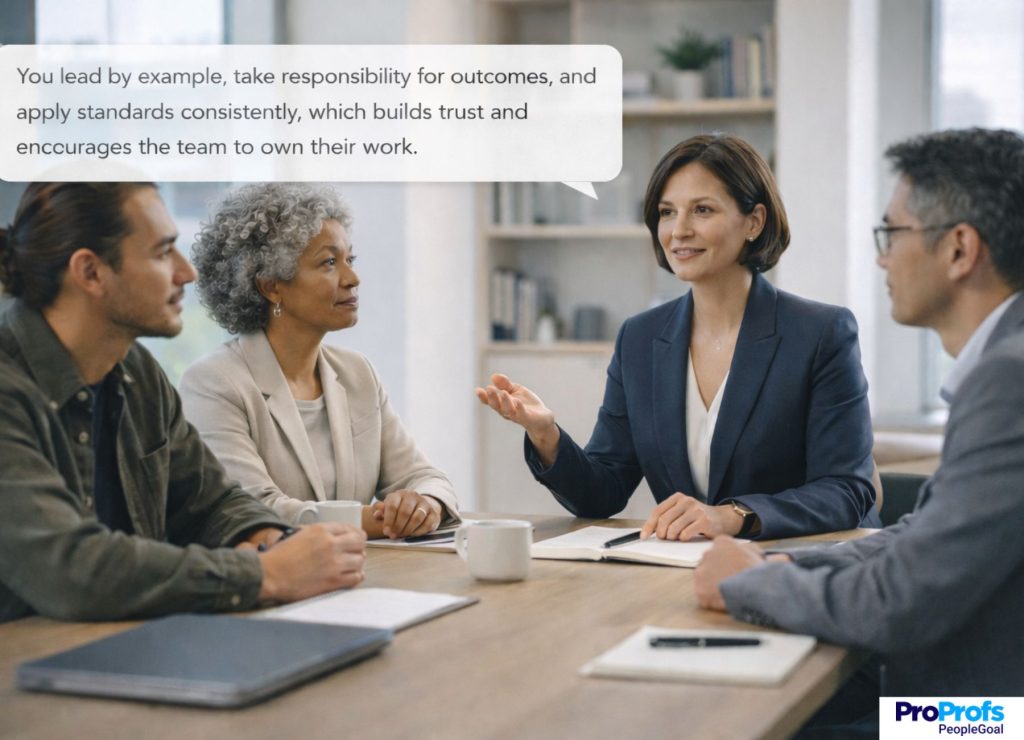
Leadership is where accountability becomes a culture, not just a trait. Teams watch what leaders do more than what they say, especially when results fall short or priorities change. Strong leaders create clarity, enforce standards fairly, and own decisions without drama.
They also communicate openly and correct course quickly when needed. Coaching in this category should strengthen consistency, fairness, delegation, and visibility, so responsibility feels safe and predictable, not stressful or personal.
Positive Phrases
- Sets a strong example by owning decisions and results openly, encouraging the team to take responsibility without hesitation, and creating a culture where problems are surfaced early.
- Holds the team to clear standards while also taking responsibility when outcomes fall short, reinforcing that accountability is shared and leadership does not pass pressure downward.
- Gives full credit to the team for wins and personally owns setbacks, which builds trust, reduces defensiveness, and keeps everyone focused on learning and improvement.
- Sets clear expectations, checks progress thoughtfully, and follows through consistently, helping the team stay aligned and reinforcing a dependable leadership approach people can plan around.
- Responds to mistakes with calm clarity, focusing on root causes and next steps, which encourages openness and helps the team treat setbacks as learning moments.
- Acknowledges leadership oversights quickly and adjusts direction without ego, strengthening credibility and showing the team that responsibility matters more than being “right.”
- Delegates responsibly with clear outcomes and support, then holds people accountable fairly, building independence while maintaining strong leadership ownership of delivery.
Constructive Phrases
- After a recent outcome, the team needed clearer leadership ownership to feel steady and supported. Taking more visible responsibility for decision impact will reinforce trust and reduce uncertainty.
- In a few situations, expectations were applied differently across team members, creating confusion. Using a more consistent approach will strengthen fairness and make accountability feel predictable.
- There were moments when the team needed stronger alignment between the requested standards and the example being modeled. Reinforcing consistency will strengthen trust and improve follow-through.
- After a recent setback, the team would benefit from clearer leadership and learning being shared. Communicating what you would adjust next time builds transparency and strengthens ownership culture.
- A few performance issues stayed unresolved longer than necessary because conversations came late. Addressing concerns earlier, in a supportive way, will protect standards and improve outcomes.
- In some projects, responsibilities were unclear from the start, leading to confusion later. Clarifying roles earlier will strengthen accountability and reduce repeated follow-up efforts.
- During busy periods, delegation remained limited and created bottlenecks later. Delegating earlier with checkpoints will reduce overload and strengthen shared responsibility across the team.
- On a few initiatives, tracking ownership became fuzzy as priorities shifted. Using clearer owners, deadlines, and check-ins will improve follow-through and reduce missed handoffs.
So, there’s your list of over 100 accountability performance review phrases, you can copy and paste directly. You can also check out some ready-to-use performance review templates that make your job easier.
But there’s something I wish every manager knew well, and I will discuss this in the next section:
Common Mistakes Managers Make When Giving Accountability Feedback
Accountability feedback can either strengthen a team or quietly weaken trust. Most problems do not come from what managers notice. They come from how employee feedback is framed, timed, and delivered.
Below are the most common mistakes managers make when giving accountability feedback, along with realistic examples that show how each mistake plays out at work.
1) Using Vague Language Instead of Specific Examples
Many managers say things like, “You need to be more accountable,” and assume the employee will figure out what that means. The problem is that “accountability” is a broad label, not a specific behavior, and it may require clear employee training to serve its purpose.
Without specifics, the employee may fix the wrong thing or ignore the feedback because it feels unclear.
Example:
A manager tells Emily, “You need to be more accountable with deadlines.” Emily assumes the issue is speed, so she rushes future work and makes more mistakes. The real issue was that she did not flag timeline risks early, which could have been fixed with simple progress updates.
2) Giving Feedback Only When Something Goes Wrong
If accountability is only discussed after mistakes, employees start associating feedback with punishment. That creates defensiveness and discourages open communication.
Accountability feedback works best when it includes both reinforcement and correction. When you call out strong follow-through, employees understand what “good” looks like and repeat it.
Example:
Jason meets deadlines consistently for two months, but his manager never acknowledges it. Then one deadline slips due to a dependency issue, and the manager calls him out sharply. Jason feels blindsided and stops giving early updates because he assumes updates only invite criticism.
3) Treating Missed Deadlines Like a Character Flaw
A missed deadline does not always mean someone is careless or lazy. In many cases, it comes from unclear priorities, underestimating effort, last-minute scope changes, or not knowing when to escalate.
When managers attack the person instead of diagnosing the cause, accountability feedback becomes personal and unproductive.
Example:
A manager tells Michael, “You are unreliable,” after one missed deadline. The real issue is that Michael is handling three urgent requests from different teams and is unsure which one takes priority. A better approach would be clarifying priorities and setting milestone check-ins.
4) Waiting Too Long to Address Patterns
When managers delay accountability conversations, small issues grow into recurring habits. Late feedback also feels unfair because the employee did not get a chance to correct course early.
Accountability improves faster when it is addressed close to the event, while details are still fresh and solutions are easy to apply.
Example:
Sarah delivers three reports late over a quarter. Her manager waits until the annual review to bring it up. Sarah is frustrated because she did not realize it was becoming a pattern.
If her manager had addressed it after the first delay, Sarah could have adjusted her planning habits sooner.
5) Correcting Without Offering a Practical Fix
Accountability feedback should not stop at “this needs to improve.” If you do not offer a path forward, the employee is left guessing what change will satisfy you.
A good accountability conversation includes one or two practical habits, tools, or routines that make improvement achievable.
Example:
A manager says, “Your follow-through needs work,” but gives no guidance. Tyler continues working the same way. A simple fix could have been suggesting a weekly task tracker, clearer milestones, or a “close the loop” message after each deliverable.
6) Ignoring Dependencies and Shared Accountability
Many deadlines slip because accountability is spread across multiple people. If one team is late with inputs, another team cannot finish work on time. Managers who blame one person for a system problem create resentment and hide the real issue.
Accountability improves faster when managers clarify ownership, handoffs, and dependencies.
Example:
Lauren is blamed for submitting a project late. In reality, she was waiting on approvals and key data from another team. Instead of criticizing Lauren alone, her manager should have addressed the missing handoff process and created a clear timeline for inputs and approvals.
7) Using a Harsh Tone to Force Urgency
Some managers believe that pressure and bluntness create discipline. In reality, a harsh tone often reduces trust and discourages transparency. Employees stop raising risks early because they fear being blamed.
Calm, direct feedback builds accountability more effectively because it keeps the employee focused on solutions instead of defensiveness.
Example:
A manager snaps at Daniel in a meeting: “Why do you always delay things?” After that, Daniel stops sharing progress updates until work is finished, because he wants to avoid being questioned. A calmer approach, like agreeing on earlier checkpoints, would have improved delivery without shutting communication down.
Turn Your Accountability Performance Review Into Real Growth Outcomes
A strong accountability performance review does more than point out what went well or what needs adjustment. It sets clear expectations, protects team trust, and helps employees understand how their choices affect deadlines, quality, and collaboration. When your feedback is specific and forward-looking, people do not feel judged.
They feel guided. Over time, this creates a culture where commitments are honored, mistakes are owned early, and follow-through becomes the default instead of a struggle.
Now that you have ready-to-use phrases, the next step is making reviews easier to run and easier to track. You can use a performance review tool like PeopleGoal, which helps with structured review cycles, goal tracking, 1:1 check-ins, feedback templates, and performance history, so accountability stays consistent all year.
If you are looking for accountability for performance review language that stays organized across quarters, a tool like this makes it far easier to do well at scale.
Frequently Asked Questions

2) How should I write constructive feedback for accountability?
You should write constructive accountability feedback by describing the exact behavior, the impact it had, and the expectation going forward. Keep it specific and future-focused. Add one practical suggestion, like planning checkpoints, earlier updates, or better prioritization. You can end with support, such as offering clarity on priorities or agreeing on progress check-ins.
3) What are examples of accountability at work?
Common examples include meeting deadlines without reminders, keeping stakeholders updated, completing tasks fully, and escalating risks early. Accountability also shows up when someone admits a mistake quickly, fixes it, and prevents repeat issues. Taking ownership of shared work, delivering clean handoffs, and staying dependable under pressure are strong signals too.
4) How do you address missed deadlines professionally?
Address missed deadlines by staying calm and sticking to facts. Ask what caused the delay, what could have been flagged earlier, and what support was missing. Explain the impact on others, then agree on a prevention plan, such as realistic estimates, milestone check-ins, and earlier risk communication. Document the new expectations clearly.
5) How do you give accountability feedback without sounding rude?
Keep your tone neutral and focus on observable actions instead of personality. Use “I noticed” and “the impact was” language, then state what you need going forward. Avoid sarcasm or loaded words like “careless.” Pair the correction with a path forward, such as clearer updates, stronger planning, or earlier escalation.
6) What is the difference between ownership and accountability?
Ownership is the mindset of treating work as “mine to solve,” even when it is hard or unclear. Accountability is the follow-through that proves it, such as meeting commitments, communicating progress, and accepting responsibility for outcomes. Ownership drives initiative. Accountability is what others can measure through actions, consistency, and results.
Ready to 3x Your Teams' Performance?
Use the best performance management software to align goals, track progress, and boost employee engagement.