
Most sales teams I talk to are still running performance reviews out of Google Sheets, a copied PDF, or a shared doc that nobody updates. The review happens, everyone nods, and nothing really changes.
According to Gallup research in 2024, only 14% of employees strongly agree that their performance reviews inspire them to improve. For sales teams, that number feels even lower, because most templates weren’t built for sales at all.
If you manage a sales team, you need a review process that ties targets to outcomes, surfaces coaching opportunities, and actually helps reps grow.
This guide gives you ready-to-use sales performance review templates, a scoring framework, real feedback examples, and a structure you can run every quarter without the spreadsheet chaos.
What Is a Sales Performance Review and Why Does It Matter?
Done right, it is one of the most high-leverage conversations a sales manager can have. Here is why it deserves more than a filled-in form.
- Coaching Clarity: Reviews give you a documented record of where each rep is struggling, so your coaching is targeted rather than generic. Instead of “improve your close rate,” you can say “your win rate drops by 30% when procurement gets involved, so let’s work on that specific conversation.”
- Goal Continuity: Without a formal review cycle, goals set in January disappear by March. Reviews create a checkpoint that keeps development goals alive across quarters, not just alive until the next busy week hits.
- Fair Compensation Decisions: Promotions and bonuses decided without documented performance data invite resentment and bias. A consistent review process gives you defensible, clear evidence for every comp decision you make.
- Pipeline Visibility: A quarterly review surfaces pipeline problems before they show up in missed revenue. If a rep is at 90% attainment but has two months of coverage left, you catch that in the review, not at the end of the quarter.
- Rep Retention: Top salespeople leave managers, not companies. A review process that actually invests in their development and maps out a path forward is one of the clearest signals that a manager cares about more than just the number.
What Should a Sales Performance Review Template Include?
Every sales performance review template sample I have seen fail does so for the same reason: it was built for HR compliance, not for a sales conversation. Before I share the templates, here is the framework that actually works. Regardless of role or review cycle, every effective sales review covers these six components.
| Component | What It Covers | Why It Matters |
| Performance Against Quota | Quota attainment %, win rate, revenue closed, average deal size, pipeline coverage | Anchors the conversation in objective data pulled from CRM, not memory |
| Activity Metrics | Calls made, demos booked, proposals sent, follow-ups completed, CRM update rate | Catches process problems before they become revenue problems |
| Competency Assessment | Discovery quality, objection handling, negotiation, product knowledge, CRM discipline | Shows you how the results were achieved, not just what was achieved |
| Goal Review and Reset | Status of last quarter’s goals, new SMART goals for next quarter | Creates continuity across cycles so reviews build on each other |
| Self-Assessment | Rep’s own reflection on wins, misses, root causes, and development needs | Transforms the review from a verdict into a two-way dialogue |
| Development and Coaching Plan | Skill gaps, career goals, stretch assignments, manager support commitments | Connects today’s review to where the rep wants to go long-term |
Sales Employee Performance Review Templates by Role and Cycle
Different roles need different templates. A BDR’s success metrics look nothing like an Account Executive’s, and a monthly check-in should not be as heavy as an annual review. Here are templates you can use immediately.
Template 1: Quarterly Sales Performance Review (For Account Executives)
This is the template I recommend as the default for most sales teams. Quarterly reviews sync well with sales cycles, give reps enough runway to show real progress, and keep coaching conversations frequent without feeling constant.
Employee Name: ____________________ Role: Account Executive Review Period: Q__ | From __________ to __________ Manager: ____________________
Section A: Revenue & Quota Performance
| Metric | Target | Actual | Attainment % |
| Revenue Closed | |||
| Quota Attainment | |||
| Win Rate | |||
| Average Deal Size | |||
| Pipeline Coverage Ratio |
Section B: Activity Metrics
| Activity | Weekly Target | Quarterly Actual | On Track? |
| Calls / Outreach | |||
| Demos / Discovery Calls | |||
| Proposals Sent | |||
| Follow-Ups Completed | |||
| CRM Updated (%) |
Section C: Sales Competency Ratings
Rate each competency from 1 (Needs Significant Improvement) to 5 (Outstanding). Include one behavioral example for any rating below 3 or above 4.
| Competency | Rating (1-5) | Example / Evidence |
| Discovery & Qualification | ||
| Objection Handling | ||
| Negotiation & Closing | ||
| Product Knowledge | ||
| Pipeline Management | ||
| CRM Discipline | ||
| Collaboration & Teamwork | ||
| Coachability |
Section D: Self-Assessment (Completed by Rep Before Meeting)
Let your sales rep answer these before the review meeting. Be specific. The more honest they are here, the more useful this conversation will be.
- What was your biggest win this quarter, and what made it happen?
- Where did you fall short, and what was the root cause?
- What support or resources would have helped you perform better?
- What is one thing you want to get significantly better at next quarter?
- How do you feel about your pipeline heading into next quarter?
Section E: Last Quarter’s Goals — Status Check
| Goal Set Last Quarter | Status | Notes |
| Goal 1 | Met / Partially Met / Not Met | |
| Goal 2 | Met / Partially Met / Not Met | |
| Goal 3 | Met / Partially Met / Not Met |
Section F: Goals for Next Quarter
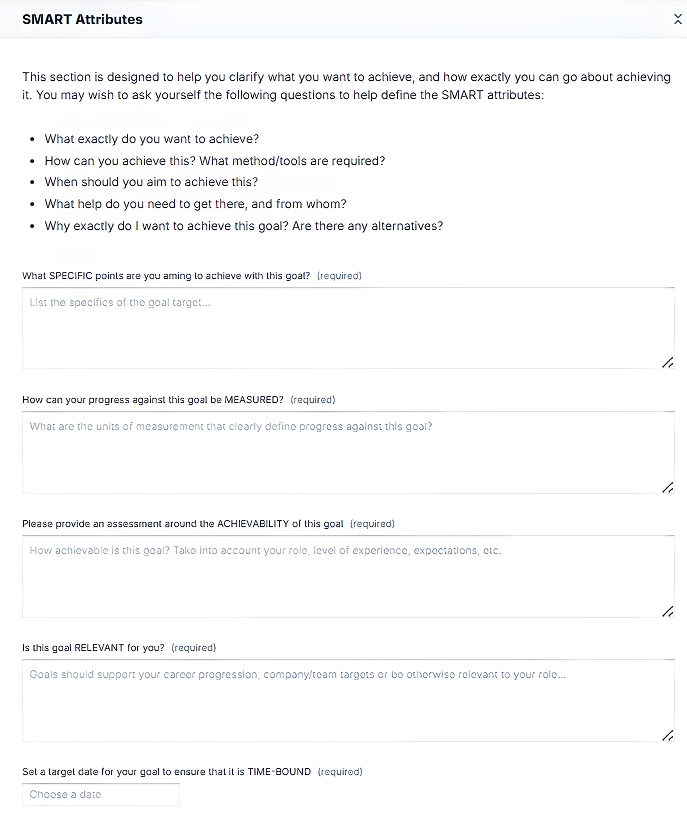
Set 2 to 3 SMART goals. At least one should be a skill or behavior goal, not just a revenue number. Here’s an example:
| Goal | Success Measure (Examples) | Timeline | Support Needed |
| Example: Achieve 110% of quarterly quota | |||
| Example: Increase demo-to-close rate from 20% to 30% | |||
| Example: Maintain CRM updates within 24 hours for 95% of deals | |||
| Example: Reduce response time to inbound leads to under 1 hour | |||
| Example: Generate 10 new qualified opportunities per month | |||
| Example: Improve customer satisfaction score to 8/10 or higher | |||
| Example: Successfully complete advanced negotiation training | |||
| Example: Deliver 3 independent client presentations with positive manager feedback |
Section G: Manager Feedback
Using the SBI framework: describe the Situation, the Behavior you observed, and its Impact. This keeps feedback grounded in facts rather than impressions.
- Strength observed this quarter (SBI format):
- Development area for next quarter (SBI format):
- Overall performance rating: Exceptional / Exceeds Expectations / Meets Expectations / Needs Improvement
Signatures: Employee: ____________ Date: ____ Manager: ____________ Date: ____
Template 2: BDR / SDR Monthly Performance Check-In
BDRs live in a world of activity metrics and pipeline contribution. Monthly check-ins keep them calibrated and give you a chance to catch slumping habits before they become patterns.
Employee Name: ____________________ Role: BDR / SDR Review Month: __________________ Manager: ____________________
Section A: Monthly Pipeline Contribution
| Metric | Monthly Target | Actual | Notes |
| Qualified Leads Generated | |||
| Meetings Booked | |||
| Meetings Accepted by AE | |||
| Pipeline Value Added ($) | |||
| No-Show Rate |
Section B: Outreach Activity
| Activity | Daily/Weekly Target | Monthly Total | On Track? |
| Cold Calls | |||
| Emails Sent | |||
| LinkedIn Touches | |||
| Sequences Enrolled |
Section C: Messaging & Skill Quality
Rate on a 1 to 5 scale with a brief example.
| Skill | Rating | Example |
| Cold Call Opener Quality | ||
| Objection Handling on Cold Calls | ||
| Email Personalization | ||
| Discovery Question Depth | ||
| CRM Logging Consistency |
Section D: Rep Reflection
- What outreach approach worked best this month?
- What did you try that did not work, and why?
- What do you need from me to hit the target next month?
Section E: Manager Coaching Notes
- Pattern observed this month (positive or concerning):
- One thing to focus on before the next check-in:
- Next check-in date: __________
Template 3: Annual Sales Performance Review (All Roles)
Annual reviews are where you zoom out and look at the full picture. Use this when making decisions about compensation, promotion, or significant role changes.
Employee Name: ____________________ Role: ____________________ Review Year: 20___ Manager: ____________________
Section A: Annual Revenue Performance
| Metric | Annual Target | Actual | Attainment % |
| Total Revenue Closed | |||
| Annual Quota | |||
| Year-Over-Year Growth | |||
| Average Win Rate |
Section B: Quarterly Performance Trend
| Quarter | Quota Attainment % | Key Win | Key Challenge |
| Q1 | |||
| Q2 | |||
| Q3 | |||
| Q4 |
Section C: Annual Competency Assessment
| Competency | H1 Rating | H2 Rating | Trend | Notes |
| Revenue Generation | Up/Flat/Down | |||
| Pipeline Management | Up/Flat/Down | |||
| Client Relationships | Up/Flat/Down | |||
| Team Collaboration | Up/Flat/Down | |||
| Coachability | Up/Flat/Down |
Section D: 360 Feedback Summary (Optional)
Summarize feedback from peers, cross-functional partners, and, where applicable, clients. Look for patterns, not outliers.
- Strength themes from 360 feedback:
- Development themes from 360 feedback:
Section E: Compensation and Promotion Decision
| Consideration | Recommendation | Notes |
| Base Salary Adjustment | Yes / No | |
| Quota Adjustment | Yes / No | |
| Promotion Readiness | Ready / Not Yet / In 6 Months | |
| Bonus or Incentive Action |
Section F: Career Development Plan
- Rep’s stated career goal (12-month horizon):
- Rep’s stated career goal (2 to 3 year horizon):
- Key skill to develop this year:
- Stretch assignment recommended:
- Career development resources to provide:
Section G: Manager’s Annual Summary
Summarize the year in 3 to 5 sentences. Focus on impact, not just activity. What did this person contribute to the team? What do they need to do differently to move to the next level?
Overall Annual Rating: ☐ Exceptional ☐ Exceeds Expectations ☐ Meets Expectations ☐ Needs Improvement ☐ Below Expectations
Signatures: Employee: ____________ Date: ____ Manager: ____________ Date: ____
Template 4: 90-Day Ramp Review (New Sales Hires)
New reps cannot be held to the full quota in their first 90 days. But they can be held to clear milestones. This template evaluates onboarding progress, early pipeline activity, and ramp readiness.
Employee Name: ____________________ Start Date: ____________________ Role: ____________________ Manager: ____________________
Section A: 30-Day Milestone Check
| Milestone | Target Date | Completed | Notes |
| Completed onboarding training | Day 14 | ☐ Yes ☐ No | |
| Product demo certification | Day 21 | ☐ Yes ☐ No | |
| First outreach sent | Day 10 | ☐ Yes ☐ No | |
| CRM setup complete | Day 7 | ☐ Yes ☐ No | |
| 1-on-1 cadence established | Day 5 | ☐ Yes ☐ No |
Section B: 60-Day Pipeline Activity
| Metric | 60-Day Target | Actual | Notes |
| Prospects Added to CRM | |||
| Discovery Calls Completed | |||
| Opportunities Created | |||
| First Deal in Pipeline |
Section C: 90-Day Ramp Readiness Assessment
| Area | Rating (1-5) | Notes |
| Product Knowledge | ||
| ICP Understanding | ||
| Sales Process Adherence | ||
| CRM Discipline | ||
| Manager Coaching Responsiveness | ||
| Cultural Fit |
Section D: Manager’s Ramp Decision
☐ On track — proceed to full quota next cycle ☐ Slight gap — extend ramp by 30 days with focused plan ☐ Significant gap — escalate for structured support
Notes:
Sales Performance Review Feedback Examples (Ready to Use)
One of the most common questions managers ask is how to actually word feedback in a review. Here are real-world examples by performance level and category. These use the SBI framework: Situation, Behavior, Impact.
1. Strong Closer with Pipeline Gaps
“In Q3, when we reviewed your pipeline together (Situation), I noticed that you tend to move deals forward without confirming next steps in writing (Behavior). This caused two deals to stall after verbal agreements due to a lack of documented follow-through (Impact). For next quarter, I want to see every deal in Stage 3 or above have a written next step logged in the CRM within 24 hours of the call.”
2. Rep Who Exceeded Quota but Struggles with Collaboration
“This quarter, you closed 118% of your quota, which is outstanding (Situation). The challenge I have observed is that when inbound leads are routed from the SDR team, you sometimes requalify without looping in the SDR (Behavior). This has created friction and reduced SDR motivation, affecting your top of funnel (Impact). Let’s talk about how we can build a handoff protocol that keeps the relationship strong.”
3. Rep Who Missed Target but Showed Significant Growth
“You came in at 74% of quota for Q2, which was below target (Situation). What stood out to me was how you responded to coaching on discovery calls. After we worked on your question framework in May, your demo-to-proposal conversion went from 31% to 52% (Behavior and Impact). That shift in skill is the kind of improvement I want to see continue. Next quarter’s goal is getting overall attainment to 90% while maintaining that conversion rate.”
4. Tenured Rep Showing Decline
“Over the last two quarters, I have noticed your average deal size has dropped from $28K to $17K (Situation). When we reviewed your recent deals, the pattern seems to be discounting early in the negotiation rather than defending value (Behavior). This is leaving significant revenue on the table and setting a precedent with accounts that we will have to manage at renewal (Impact). I want us to do three mock negotiations this quarter, focused specifically on value positioning before price enters the conversation.”
How to Use the SBI Feedback Framework in Sales Reviews
The single biggest reason sales performance reviews feel uncomfortable is vague feedback. “You need to be more proactive,” or “your attitude needs to improve,” tells a rep nothing useful. The SBI framework fixes this.
- Situation: Anchor the feedback to a specific observable event. Not “recently” but “in your October 14th demo with Acme Corp.”
- Behavior: Describe what you saw or heard, not what you interpreted. Not “you seemed unprepared” but “you did not reference any of Acme’s stated pain points from the discovery call.”
- Impact: Connect the behavior to a real outcome. “The prospect asked us to restart the process with a different rep. That deal is now at risk.”
When you write feedback this way, reps cannot argue with it because it is factual. They can disagree with the interpretation, but that is a better conversation than defending vague impressions.
How to Structure a Sales Performance Review Meeting
The sales rep performance review template is the preparation. The meeting is where change actually happens. Here is a structure that takes about 45 to 60 minutes and works consistently.
1. Minutes 1 to 5: Set the Tone
Start by confirming the purpose: this is a two-way conversation, not a verdict. If you have run good 1-on-1s throughout the quarter, nothing in this review should be a surprise.
2. Minutes 5 to 20: Rep Shares First
Go through the self-assessment together. Let the rep anchor the conversation. Where do they think they performed well? Where do they see gaps? Listen more than you talk in this section.
3. Minutes 20 to 35: Manager Feedback
Layer from your perspective. Use SBI for anything developmental. Acknowledge where your view aligns with theirs. Where it differs, stay curious rather than corrective: “Tell me more about why you rated yourself a 4 on pipeline management.”
4. Minutes 35 to 50: Goal Setting
This is the most forward-looking and most important part. Do not let it get cut short because the first half ran long. Set 2 to 3 specific goals with clear success measures and a date for checking in.
5. Minutes 50 to 60: Development Conversation
Ask one question: “What do you need from me that you are not currently getting?” The answers here will tell you more about what actually drives performance than any metric.
How to Connect Sales Reviews to Compensation and Promotions
One of the loudest frustrations I hear from sales reps is that reviews feel disconnected from anything that actually matters to them. If performance reviews do not influence comp decisions, promotion conversations, or career planning, reps stop taking them seriously. And honestly, they are right to.
Here is how to build that link explicitly into your process:
- Tie attainment thresholds to comp bands: If your team knows that 100% to 120% attainment puts them in a specific bonus tier, and that is reviewed every quarter, reviews become financially meaningful. Document this clearly in the review template.
- Use competency ratings to build promotion cases: When a rep asks, “What does it take to move from AE to Senior AE?” you should be able to pull up the last three reviews and show them exactly where they need to improve. If you cannot do that, your review process is not doing its job.
- Reference past reviews in current ones: Each review should explicitly reference the previous one. Did the rep act on the development goal from last quarter? This creates continuity and shows reps that reviews are part of an ongoing conversation, not a one-off formality.
Common Mistakes to Avoid in Sales Performance Reviews
I have sat in enough bad sales reviews to know that the template is rarely the problem. It is how managers use it, or more often, how they don’t. Here are the five mistakes I see most often and how to fix each one.
1. Recency Bias
Most managers walk into a review thinking about the last four to six weeks, not the full quarter. This means strong early months get forgotten, and a rough final month tanks an otherwise solid rep.
Fix: Pull data from a dedicated CRM for SMBs for the full review period before you open the template. Build a habit of adding brief notes after significant wins or losses throughout the quarter so you have a running record to draw from. In PeopleGoal, managers can log real-time observations as part of continuous feedback, so nothing gets lost before review day.
2. Skipping Development for Stars
When a rep is hitting 120% of quota, it is tempting to skip the development conversation. High performers disengage faster than any other group when they feel there is no growth path ahead.
Fix: Spend as much time on the development and coaching section for top performers as you do for anyone else. Ask them what role they want in 12 months and what skill they want to build this quarter. That conversation is what keeps them.
3. Anchors Without Evidence
Rating a rep a 3 out of 5 on “pipeline management” means nothing if you cannot point to a specific behavior that justifies it. Vague ratings feel unfair and provoke defensiveness, shutting down the conversation.
Fix: Before your next review cycle, write one sentence that describes what a 1, 3, and 5 looks like for each competency in observable behaviors. Share this with reps before their self-assessment so they are calibrating against the same scale you are using.
4. No Post-Review Follow-Through
The most common outcome of a performance review is a signed document filed somewhere nobody ever opens. The goals set in the meeting evaporate within two weeks because there is no system holding them.
Fix: Every review should end with at least one scheduled follow-up, whether that is a 30-day check-in or a goal review at the next 1-on-1. Treat the review as the start of a development sprint, not the end of one.
5. Activity Over Quality
A rep logging 200 calls a month with a 1% connect rate is not performing well, but a template that only tracks activity volume will not catch it. Volume metrics without quality metrics reward busy work, not results.
Fix: Add at least one quality metric alongside every volume metric in your template. Pair calls made with the connect rate. Pair proposals sent with proposal-to-close conversion. The combination tells the real story.
What Makes a Sales Performance Review Actually Work
A strong sales performance review is not just about documenting results. It is about building a consistent system that drives better coaching, clearer decisions, and real performance improvement over time.
The sales rep performance review templates and framework shared in this guide give you a practical way to move beyond scattered spreadsheets and run structured, meaningful reviews that your team can actually act on
If you are ready to take the next step, tools like PeopleGoal can help you automate review cycles, continuously track goals, and turn feedback into clear, actionable insights.
Start by using one annual or monthly sales performance review template from this guide in your next review cycle, then gradually build a repeatable process your entire team can rely on. If you want consistency, visibility, and less manual effort, exploring PeopleGoal is a natural next step.
Frequently Asked Questions

How often should you conduct sales performance reviews?
Most sales teams benefit from quarterly formal reviews paired with monthly check-ins for BDRs and SDRs. Annual reviews are useful for compensation and promotion decisions, but should never replace mid-year feedback. The frequency should match your sales cycle: if your average deal takes 90 days to close, a quarterly review cadence gives reps enough time to show real results before being evaluated.
What metrics should be included in a sales performance review?
Include quota attainment percentage, win rate, average deal size, pipeline coverage ratio, and activity metrics like calls made and demos booked. Layer in qualitative assessments of skills like discovery quality, objection handling, and CRM hygiene. The strongest templates balance hard numbers with behavioral evidence so you are evaluating both what was achieved and how it was achieved.
How do you handle a sales performance review for a rep who missed quota?
Start with the data, then dig into root causes. Was the miss driven by activity volume, conversion rates, deal size, or market conditions? Use the SBI framework to share specific observations. Set clear, achievable goals for the next quarter and agree on the support you will provide. Avoid turning the review into a warning unless performance is part of a documented pattern across multiple cycles.
What is the best way to run a self-assessment for sales reps?
Send the self-assessment questions to reps at least three to five days before the review meeting. Ask them to reflect on specific wins, specific misses, and one development goal they want to focus on. When reps come prepared, the review becomes a genuine two-way conversation rather than a one-directional performance verdict. It also dramatically reduces defensiveness.
How do you tie sales reviews to promotions?
Define the competency and performance criteria for each role level before the review season starts. During reviews, explicitly compare the rep's current ratings against the criteria for the next level. Over two to three review cycles, the gap between where they are and where they need to be becomes visible and actionable. This makes promotion decisions transparent and removes the perception of favoritism.
What should go in the "areas for improvement" section of a sales review?
Identify one or two specific skills or behaviors with the clearest link to performance outcomes. Use the SBI framework to anchor each point to a real observation. Pair every improvement area with a specific action, whether that is a training, a coaching session, or a stretch goal. Avoid vague language like "needs to be more proactive." The more specific the feedback, the more likely it is to lead to actual change.
Can you use the same template for all sales roles?
You can use the same structure, but you should customize the metrics and competencies by role. A BDR's review should center on pipeline generation, outreach activity, and meeting quality. An Account Executive's review should emphasize conversion rates, deal size, and competitive positioning. An Account Manager's review should focus on retention, expansion revenue, and the depth of the client relationship. Role-specific templates take more time to build but produce far more useful conversations.
How do you avoid recency bias in a sales performance review?
Pull CRM data and deal records for the full review period before the meeting, not just the most recent month. Keep a running log of notable wins and challenges throughout the quarter. In PeopleGoal, managers can document observations in real time as part of continuous feedback, so the annual or quarterly review draws on a full record rather than just the most recent.
What is the 90-day ramp review, and when should you use it?
A 90-day ramp review evaluates new sales hires at the end of their onboarding period. Rather than measuring quota attainment, it focuses on milestone completion, product knowledge, pipeline activity, and coachability. Use it to confirm whether a new rep is on track, identify early skill gaps, and determine whether the ramp timeline needs to be extended. It sets a performance foundation before full expectations are applied.
Ready to 3x Your Teams' Performance?
Use the best performance management software to align goals, track progress, and boost employee engagement.