

If you’ve ever rolled out OKRs and felt like things got messy fast, you’re not alone. I’ve seen teams start with great intentions, then end up with vague goals, scattered tracking, and performance reviews that feel disconnected from what people actually worked on. That’s why OKR performance management matters. When it’s done right, OKRs stop being a quarterly exercise and become a real way to drive focus, alignment, and better conversations.
Here’s the key lesson I’ve learned: OKRs shouldn’t replace performance management. OKRs help teams stay clear on outcomes. Performance management is where feedback, coaching, and growth happen. The magic is in aligning them without turning OKRs into a scorecard for employee ratings.
In this guide, I’ll show you how to build a practical OKR performance management approach, what mistakes to avoid, and what to look for in an OKR performance management tool so the process stays simple, fair, and scalable.
What Are OKRs vs. What Is Performance Management?
Before we connect the dots, let’s quickly define both.
What are OKRs?
OKRs (Objectives and Key Results) are a goal-setting method where the Objective is the outcome you want to achieve, and the Key Results are the measurable results that show progress. Most teams set OKRs at the company and team level (sometimes individual too), usually on a quarterly cycle. They’re designed to be ambitious, and they work best when goals and progress are visible across the organization.
What Is Performance Management?
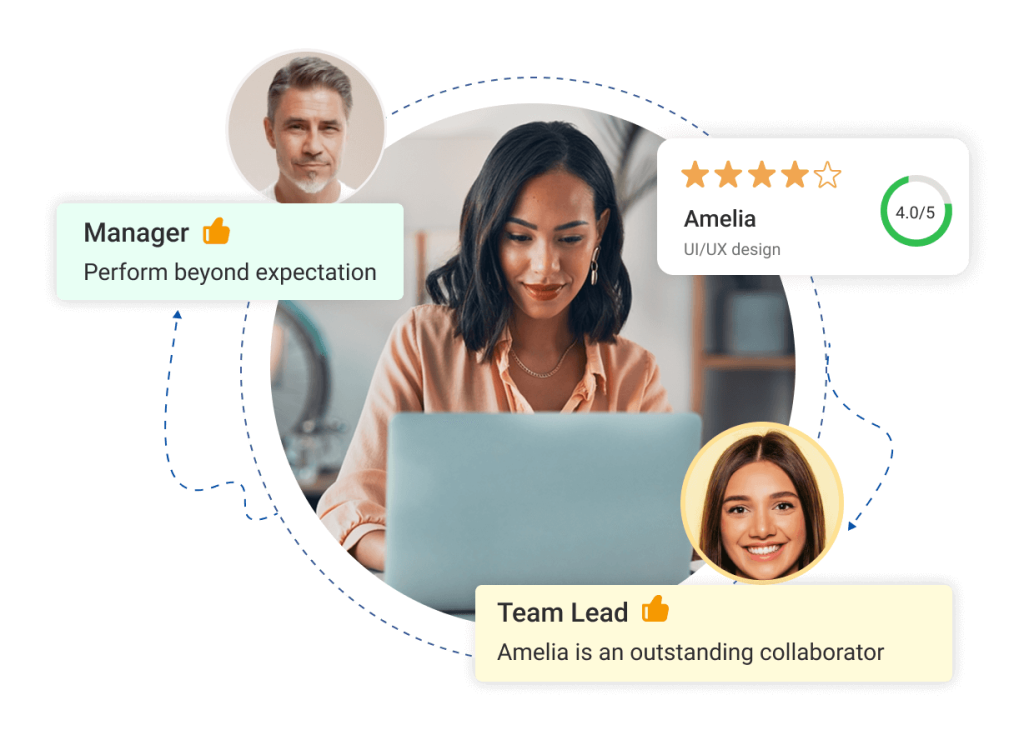
Performance management is the ongoing process of helping employees do great work. It includes setting expectations, giving feedback, tracking progress, and running structured reviews (often annual or mid-year plus annual). It’s usually confidential because it can impact raises, promotions, and development plans.
The Key Difference:
Objectives & key results help teams stay aligned on what matters most. Performance management helps individuals grow, stay accountable, and get recognized for their work.
Key Differences Between OKRs and Performance Management
Although both OKRs and performance management focus on goals and performance, they serve very different purposes. Understanding these differences is essential before trying to align them effectively.
| Aspect | OKRs | Performance Management |
|---|---|---|
| Purpose & Scope | Business- and team-focused, designed to drive organizational priorities and outcomes. | Individual-focused, centered on personal goals, competencies, and role effectiveness. |
| Core Question | What ambitious results can the team or organization achieve? | How well is an employee performing in their role? |
| Timeframe & Cadence | Short cycles, usually quarterly, with frequent reviews and resets. | Longer cycles, typically annual reviews with periodic check-ins. |
| Flexibility | Highly agile and adaptable to changing priorities. | More structured and retrospective in nature. |
| Transparency | Fully transparent. OKRs and progress are visible across teams and departments. | Private. Feedback, ratings, and discussions remain between manager and employee. |
| Focus Level | Emphasizes collective ownership and cross-functional collaboration. | Evaluates individual contribution, growth, and skill development. |
| Ambition Level | Encourages stretch goals and experimentation. Partial achievement is expected. | Focuses on achievable goals aligned with job expectations. |
| Success Measurement | Progress, learning, and impact matter more than perfect completion. | Consistent goal achievement and role performance are key. |
| Link to Compensation | Ideally, not tied to pay or bonuses to encourage bold thinking. | Commonly linked to compensation, promotions, and career decisions. |
Why These Differences Matter
OKRs are designed to push teams toward high-impact outcomes by encouraging transparency, alignment, and ambitious thinking. They work best when teams can experiment, learn quickly, and adjust goals without fear of penalty.
Performance management, on the other hand, exists to ensure fairness, accountability, and individual growth. Because it often influences compensation and promotions, it must remain more measured and role-specific.
This distinction is important. OKRs help organizations decide what matters most right now, while performance management ensures each person is contributing effectively over time. Treating them as the same system can limit the effectiveness of both.
Why You Shouldn’t Mix OKRs with Employee Evaluations (Beware “OKR-Based” Reviews)
Given the differences above, simply merging OKRs into your performance appraisal process can backfire badly. Many companies have learned the hard way that directly using OKR achievement as a basis for individual performance evaluations, or pay, is a mistake.
Here’s why mixing OKRs with traditional performance reviews (what we might call a misguided “OKR-based performance management” approach) is problematic:
1. Sandbagging and Safe Targets
If you start tying bonuses or ratings to whether an employee achieved their OKRs, employees will quickly realize they’re better off setting easy, low-ball goals instead of ambitious ones. “Employees whose bonuses are directly tied to achieving their OKRs will understandably set their goals so low that they will achieve them no matter what,” as one OKR expert explains.
This undermines the whole point of OKRs, which is to stretch beyond the norm. People will begin “sandbagging” (under-promising) on goals to guarantee a reward, rather than aiming high and risking a miss. Over time, you end up with a timid culture and stagnating innovation.
2. Conflicting Focus (Outcomes vs. Outputs)
OKRs emphasize outcomes – the meaningful results that drive the business forward. Performance reviews often end up examining outputs or activities an individual completed. If you mix the two, employees get confused about what really matters.
They might start focusing on checking boxes (to look good in a review) rather than achieving bold outcomes that OKRs call for. The big picture can get lost when people worry that not meeting a key result (even an aspirational one) will harm their personal evaluation.
3. Misaligned Timeframes
As noted, OKRs refresh quarterly while performance reviews are yearly. If a manager tries to evaluate an employee in December based on an OKR set in January, it may be outdated or irrelevant by year-end (the market or priorities likely shifted).
Yet the employee could be unfairly judged on a goal that was set 10+ months ago. The differing cadences mean that coupling OKRs to annual reviews often leads to awkward, misaligned assessments.
4. Collaboration Erodes
OKRs are inherently about teamwork – often, cross-functional collaboration is needed to move the needle on key results. But traditional performance ratings are individual. If you attach individual rewards to team OKRs, team members may start to compete or withhold cooperation because now their personal stake is involved.
For example, if only one sales rep can get a bonus for hitting a team revenue OKR, why would they help their peers close deals? Tying OKRs to individual evaluation can pit people against each other and hurt collaboration.
5. Lack of Context for Missed Goals
Not hitting an OKR isn’t always a sign of poor individual performance – there are many possible reasons for missing a stretch target. Maybe the objective was too ambitious, market conditions changed, or another team’s dependency failed.
In an OKR system, failing to meet 100% is expected occasionally, and the focus is on learning. But a traditional performance review might interpret any missed goal as the employee’s failure. This can feel unfair and demoralizing, especially when OKRs are supposed to encourage taking smart risks.
Perhaps the biggest reason not to directly mix OKRs with performance evaluations is the impact on motivation and culture. Google itself discovered this early on: when they once tied product OKRs to employee bonuses, “people started gaming the system to get their bonuses,” and the spirit of bold goal-setting was lost.
The lesson? OKRs are a leadership and alignment tool, not an employee evaluation tool.
As OKR coach Felipe Castro puts it,
“OKR is a management tool, not an employee evaluation tool… a building block of the OKR framework is to separate OKRs from compensation and promotions.”
In other words, keep OKRs decoupled from pay and use them to guide direction, not as a scorecard for individuals.
Here is a tip for you: If you’re tempted to implement “OKR-based performance management” where hitting 100% of OKRs equals a top performance rating, think twice. The most innovative companies (Google, Intel, etc.) explicitly separated OKRs from their formal appraisals for all the reasons above. Instead, consider the strategies below to align OKRs with performance management in a healthy way.
How to Align OKRs With Performance Management
OKRs and performance management can work well together, as long as you keep the boundaries clear. The goal is simple: use OKRs to create alignment and focus, and use performance management to support growth and accountability.
1. Use OKRs to Guide, Not Grade
Talk about how someone contributed to team OKRs, but don’t treat OKR completion like a personal scorecard. OKRs add context to performance discussions; they shouldn’t decide the final rating.
2. Align Goals During Planning
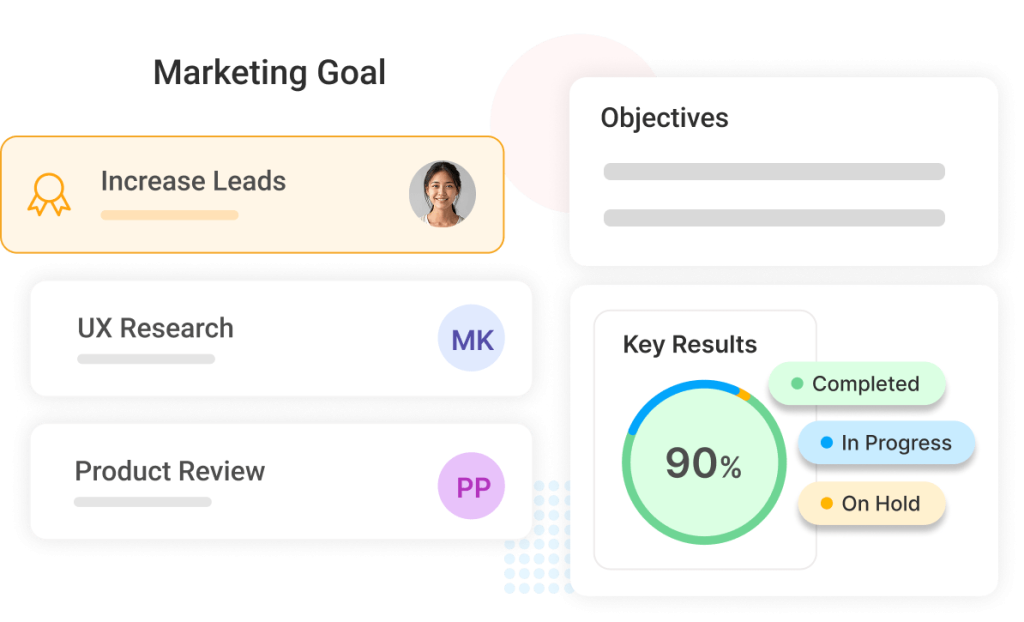
Make sure individual goals connect to team and company priorities. But avoid creating individual OKRs for every employee in large orgs. It adds admin work and can shift focus away from shared outcomes.
3. Build Regular Check-Ins Into the Cycle
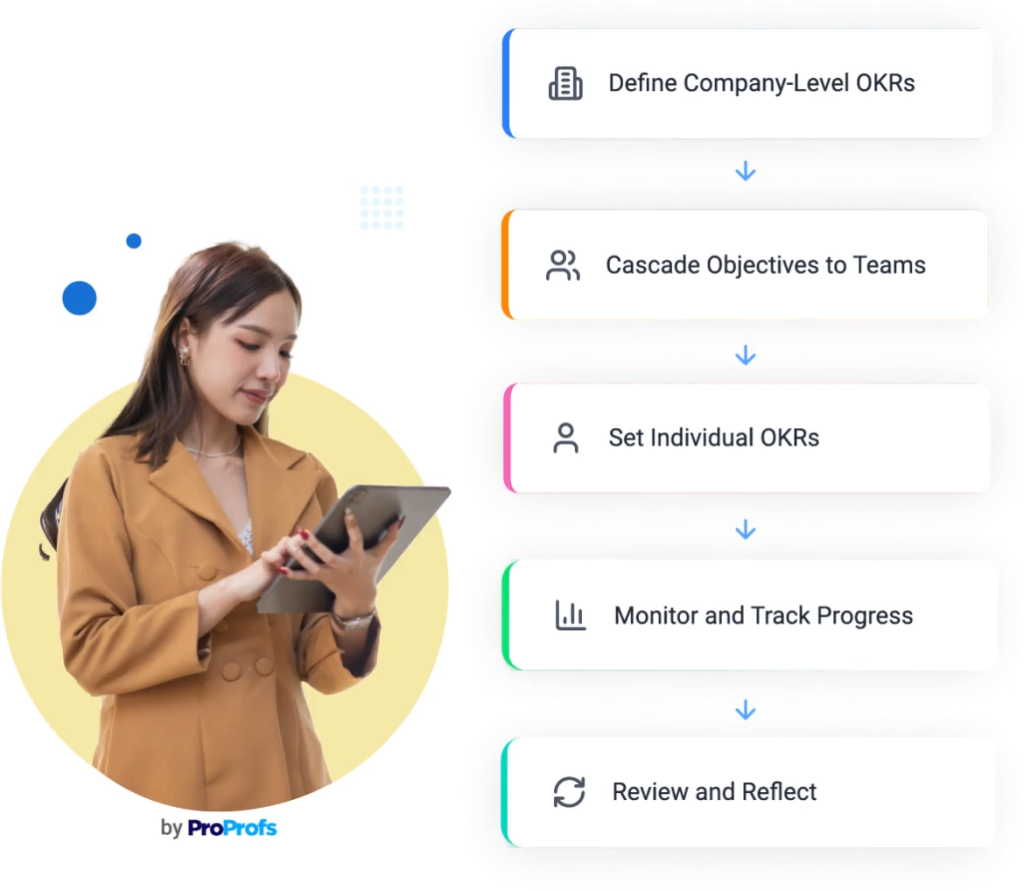
OKRs work best with ongoing conversations. Monthly or quarterly check-ins help managers remove blockers, adjust priorities, and give feedback before review season arrives.
4. Keep OKRs Separate From Ratings and Pay
Evaluate employees using a broader view: impact, skills, behaviors, consistency, and growth. Recognize OKR progress, but avoid linking bonuses to a percentage of OKR completion.
5. Treat OKRs as Learning Signals
If an OKR isn’t fully achieved, use it to understand what happened and what can be improved. This keeps goals ambitious and builds a healthier performance culture.
Quick takeaway: Don’t merge OKRs and performance reviews. Align them. OKRs set direction, and performance management supports people as they deliver in that direction.
Using an OKR Performance Management Tool or System
Running OKRs and performance reviews in spreadsheets (or in separate tools) gets messy fast. That’s why many teams use an OKR performance management tool to manage goals, check-ins, feedback, and tracking in one place.
Here’s what to look for in an OKR performance management system:
1. Goal Alignment & Cascading
You should be able to connect company goals to team and individual goals so everyone understands what their work supports.
2. Flexible Goal Cycles
The tool should support quarterly OKRs, easy updates, and closures without creating admin chaos. Bonus if it also supports longer-term goals like annual development plans.
3. Clear Separation From Compensation
OKRs should stay visible for context, but the system shouldn’t force you to tie OKR completion directly to ratings or pay.
4. Transparency + Continuous Feedback
Look for dashboards, progress updates, and built-in check-ins (1:1s, feedback, 360s) so managers can coach in real time, not just during review season.
5. Reporting & Analytics
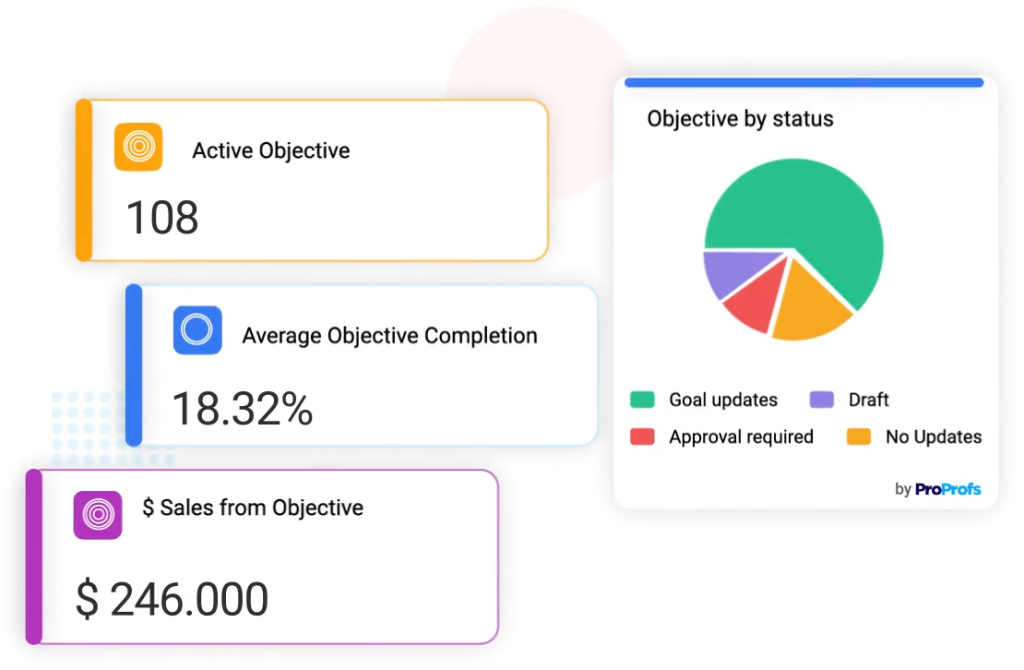
Good software helps you spot goal progress, participation gaps, and performance trends without turning OKRs into a simplistic scorecard.
Quick takeaway: Choose a tool that improves alignment and visibility, reduces manual work, and supports continuous performance conversations. That’s what makes OKRs actually usable at scale.
Build a High-Alignment Performance Culture With OKRs
OKRs and performance management work best when you treat them as partners, not substitutes. OKRs help teams stay focused on the outcomes that matter most, while performance management helps individuals grow through feedback, clarity, and consistent support. When you keep that distinction clear, you avoid turning OKRs into a scorecard and instead use them to create a shared direction.
The real win is momentum. With OKRs setting priorities and regular check-ins keeping progress visible, you get fewer “surprise” reviews, stronger ownership, and better conversations between managers and employees. Over time, people understand what success looks like, how their work contributes, and what to improve, without feeling boxed into rigid targets.
If you’re trying to make this easier to run at scale, it helps to use a simple system that keeps goals, check-ins, and feedback connected in one place. A platform like PeopleGoal can support that flow without forcing OKRs into compensation decisions, which makes it easier to keep goals ambitious and performance conversations fair.
Ready to 3x Your Teams' Performance?
Use the best performance management software to align goals, track progress, and boost employee engagement.