
I’ve noticed that the employee lifecycle rarely breaks down because teams don’t care. It usually happens because everything is scattered, as if you were trying to run an orchestra where every instrument is playing from a different sheet of music.
Performance reviews live in spreadsheets, onboarding depends on the manager, and engagement issues only surface when it’s already too late.
Employees start slipping through the cracks quietly, while People teams are left trying to connect data from five different places with no real unified view.
That’s the real chaos behind the employee lifecycle, not the stages themselves, but the lack of structure holding them together.
In this blog, I’ll walk through what employee lifecycle management looks like today, the modern stages companies follow, the metrics that matter, common mistakes to avoid, and how tools and AI can make the whole process more consistent and proactive.
What is Employee Lifecycle Management
Employee lifecycle management is how a company supports employees through every important phase of work life. It’s not just about hiring and paperwork. Instead, it focuses on helping people settle in, understand expectations, get regular feedback, grow in their roles, and stay motivated over time.
When these stages are handled with care, employees feel more connected, managers stay aligned, and HR spends less time fixing gaps. It becomes a smoother, more organized way to build a better employee experience.
How to Create a Strong Employee Lifecycle Management Process
I’ve always found that employee lifecycle management makes the most sense when I stop treating HR as a bunch of separate activities and start seeing it as one continuous journey.
From the first moment someone hears about your company to the way they grow, contribute, and eventually move on, every stage leaves an impact.
That’s why I like breaking the lifecycle into clear phases; it helps spot where employees feel supported, where things slip, and where small changes can create a much better experience.
To make this more practical, I’ve also included simple real-world scenarios along the way, so you can clearly picture what each stage looks like in action and how to manage it more effectively.
Let’s go!
1. Attraction
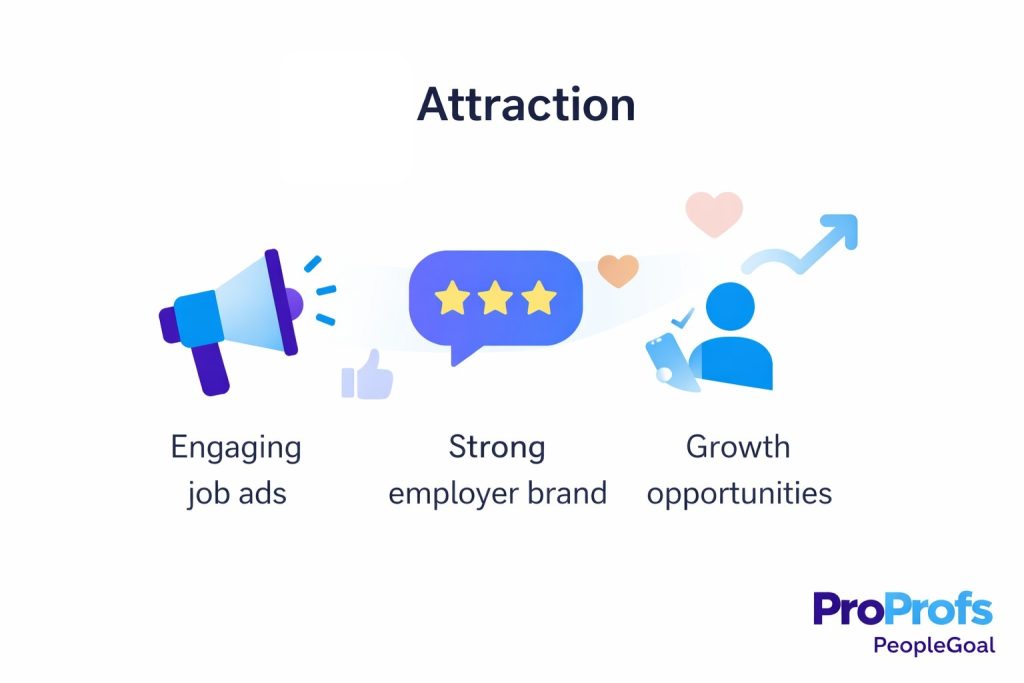
This is where the employee lifecycle really begins, even before someone applies. Attraction is all about the first impression your workplace makes on people. When I think about this stage, I see it as the moment someone quietly decides, “Yes, I’d like to be part of that team.”
It’s not just about job ads. It’s about the culture you show, the way employees talk about the company, and whether your values feel real or just written on a careers page.
Example: When Daniel first noticed the company, it wasn’t through a job ad alone. The People team invested in authentic employer branding by sharing real employee stories and clear role expectations online. HR tracked qualified applicant ratios and offer acceptance rates to ensure the company was attracting the right-fit talent, not just more applications.
Strategies to strengthen attraction:
- Share real employee stories, not polished marketing slogans.
- Clearly explain what the role includes and what it does not.
- Highlight growth opportunities, flexibility, and the everyday work environment early.
Metrics to track at this stage:
- Measure employer brand engagement through career page visits and social interest.
- Track application quality rather than focusing only on application volume.
- Monitor the offer acceptance rates to gauge how attractive the company perceives itself to be.
- Track the qualified-to-total applicant ratio to measure the quality of applicants per role.
2. Recruitment
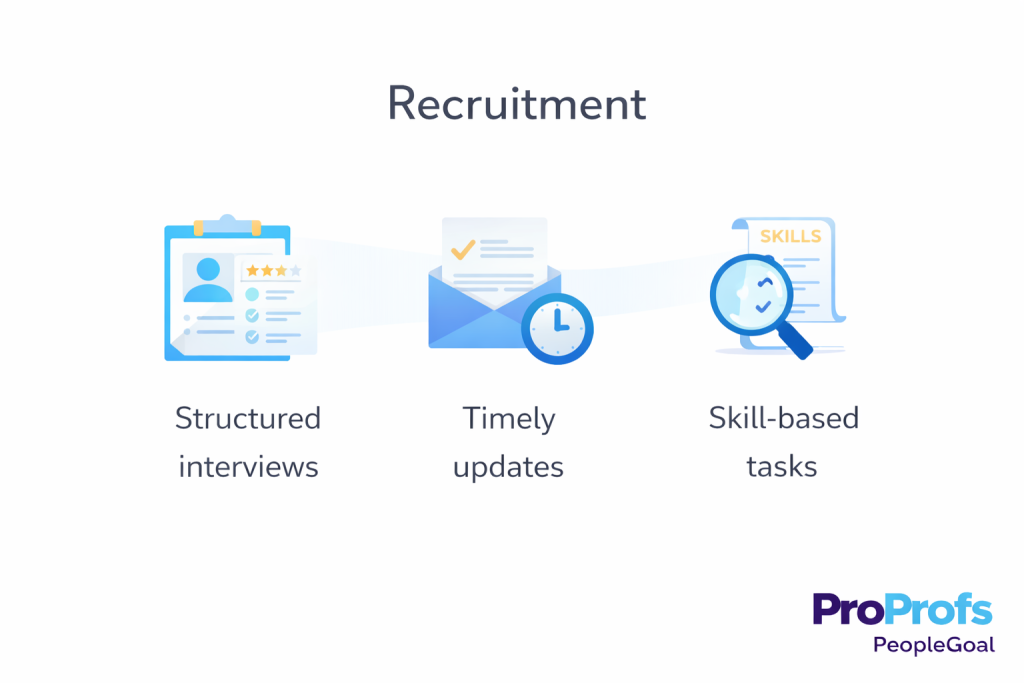
Recruitment is the stage where interest turns into a real conversation. This is where companies stop broadcasting and start listening. The goal isn’t just to fill an open position quickly, but to find someone who truly fits the role and the team.
A good recruitment process feels clear and respectful. Candidates should walk away thinking, “That was thoughtful,” even if they don’t get hired. This stage also sets expectations early, which prevents mismatches later.
Example: Once Daniel applied, the talent acquisition team used structured interview scorecards and role-based evaluations to reduce bias. They also maintained a consistent communication cadence, updating him within 48 hours at each stage. HR monitored time-in-stage metrics to identify bottlenecks between screening, interviews, and offers.
Strategies to improve recruitment:
- Use structured interview questions and scorecards so every candidate is judged on the same role-based criteria.
- Send updates at each hiring step within 48 hours to keep candidates informed and engaged.
- Screen for job-relevant skills through practical tasks or role scenarios, not just resume keywords.
Metrics to track at this stage:
- Track time-to-hire from job posting to offer acceptance to spot delays in the process.
- Measure candidate experience using short post-interview surveys or Candidate NPS scores.
- Monitor quality of hire by reviewing new-hire performance and retention after 3–6 months.
- Monitor time in each hiring stage (screening → interview → offer) to spot bottlenecks faster.
3. Onboarding
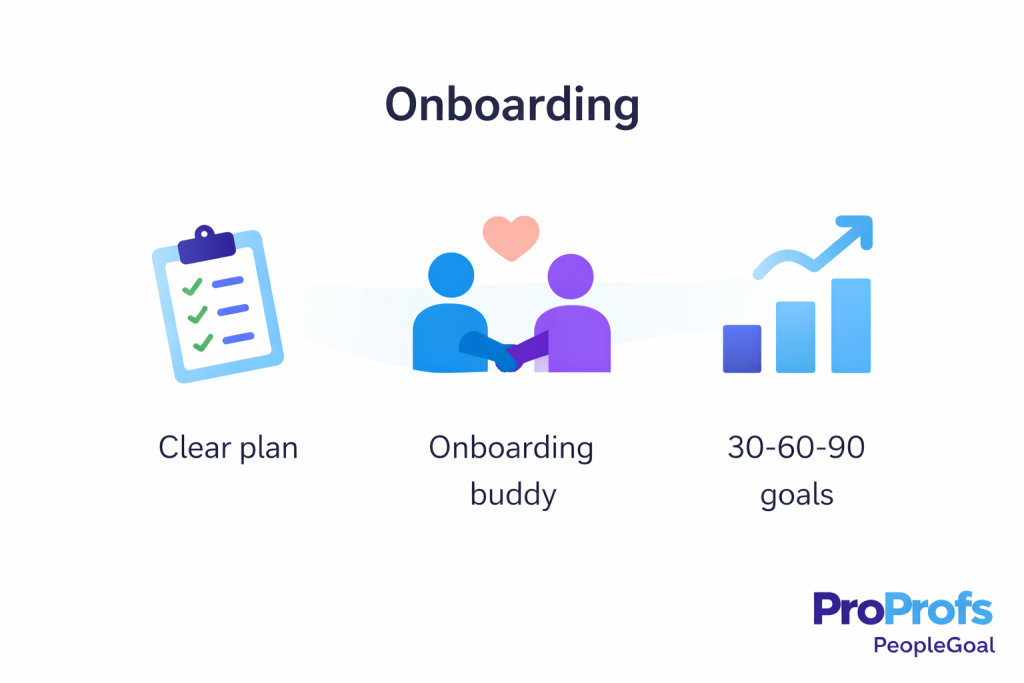
Onboarding employees is the first chapter of the employee experience, and honestly, it’s where most companies either build confidence or create stress. A new hire may look settled on the outside, but inside, they’re still figuring out everything, from tools to team dynamics to unspoken expectations.
The goal here is simple: help people feel like they belong and can start contributing without having to guess their way through the first few weeks.
Example: When Daniel joined, the People Ops team implemented a day-by-day first-week plan, assigned him an onboarding buddy, and scheduled Day 14 and Day 30 ramp-up pulse surveys. His manager also set clear 30-60-90 goals, helping HR track time-to-productivity instead of relying on informal impressions.
Ways to make onboarding feel thoughtful:
- Share a day-by-day first-week schedule so new hires know exactly what’s coming.
- Pair each new employee with a buddy and schedule 2–3 check-ins in the first month to build comfort fast.
- Define success early with simple 30-, 60-, and 90-day goals so expectations are never a mystery.
Signs onboarding is working:
- New hires complete core training and start contributing within the first few weeks.
- Pulse feedback shows employees feel supported, clear on priorities, and connected to the team. Capture new hire ramp-up confidence through pulse surveys at Day 14 and Day 30.
- Early attrition drops because fewer people feel lost or disengaged in the first 90 days.
4. Probation & Early Success
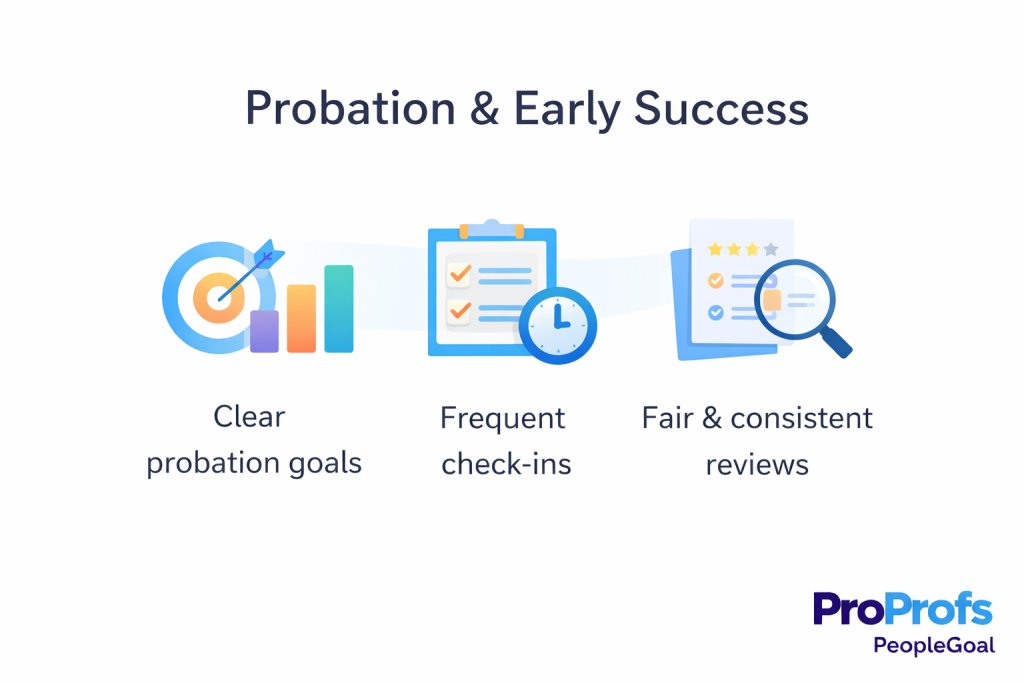
This stage is the “are we on the right track?” phase. The excitement of joining has settled, and now the real work begins. Probation is where employees start proving themselves, and managers start noticing what support is missing.
Handled well, this stage feels encouraging. Handled poorly, it becomes a silent stress test where people aren’t sure if they’re doing okay until it’s too late.
The smartest teams treat probation as a coaching window, not a judgment period.
Example: During Daniel’s probation period, the company didn’t wait until month six for evaluation. HR triggered automated check-ins every 2–3 weeks and used consistent probation scoring criteria across teams. Low goal progress, combined with limited manager touchpoints, was flagged early as a performance risk indicator, enabling coaching before problems escalated.
What helps employees succeed early:
- Set clear expectations by defining 2–3 measurable goals for the probation period (projects, targets, or key responsibilities).
- Schedule short check-ins every 2–3 weeks so feedback comes early, not only at the probation deadline.
- Use a consistent evaluation form with the same criteria for every employee to keep reviews fair and structured.
What to keep an eye on:
- Track progress by reviewing goal completion and skill growth at the 30, 60, and 90-day marks.
- Monitor how often managers give feedback through documented check-ins, not just final probation decisions.
- Compare probation pass rates across teams to identify where onboarding or support may be weaker.
- Flag early performance risks when low goal progress combines with infrequent manager check-ins.
5. Performance & Feedback
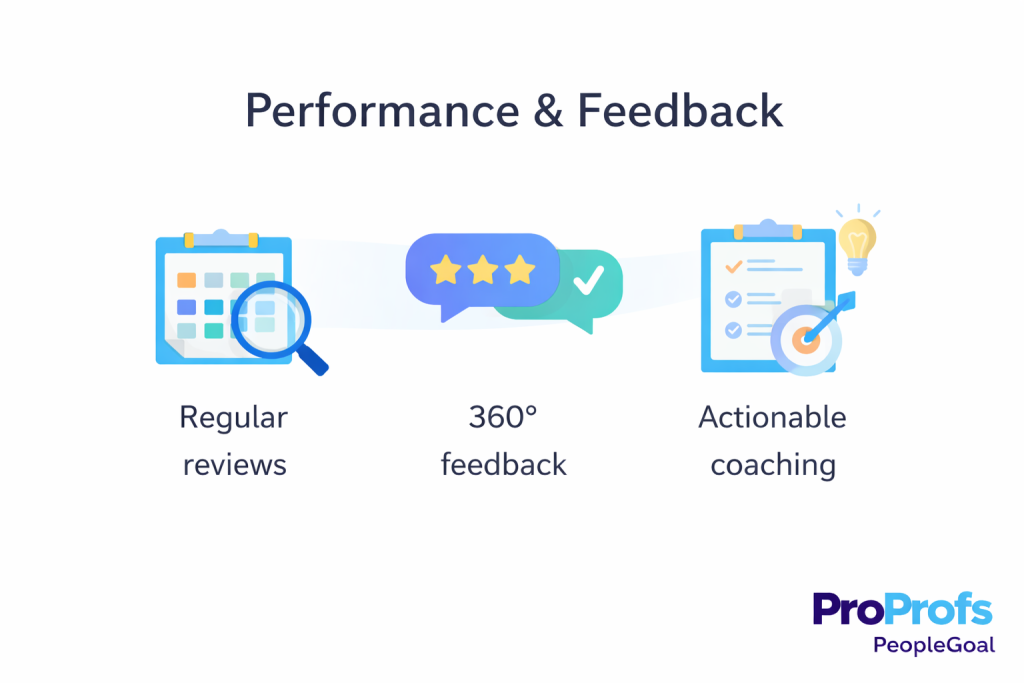
Once daily work becomes routine, feedback is what keeps people moving forward rather than getting stuck in the same loop. This is the part of the lifecycle where employees start asking questions like, “Am I doing well?” What should I improve? Where am I headed next?
Performance management works best when it feels like guidance, not judgment. Regular conversations help employees stay clear, motivated, and confident, rather than waiting for a single big review months later.
Example: After Daniel settled into his role, performance management shifted into quarterly feedback cycles rather than annual-only reviews. The company incorporated peer and self-input through lightweight 360 feedback, and managers documented follow-ups. HR tracked the frequency of feedback per employee per quarter to ensure performance conversations remained continuous, not sporadic.
Ways to keep feedback useful and ongoing:
- Hold shorter review cycles throughout the year so feedback reflects real work, not distant memory.
- Bring in peer and self-input through 360 reviews to avoid one-sided evaluations.
- Turn feedback into next steps by connecting it with coaching, goals, or learning plans.
Metrics to track here:
- Review participation rates across teams to spot gaps in consistency.
- Performance trends over time instead of relying on one-time ratings.
- Employee trust in the process through post-review pulse surveys.
- Track feedback frequency per employee per quarter to measure consistency beyond review completion.
6. Development & Internal Mobility
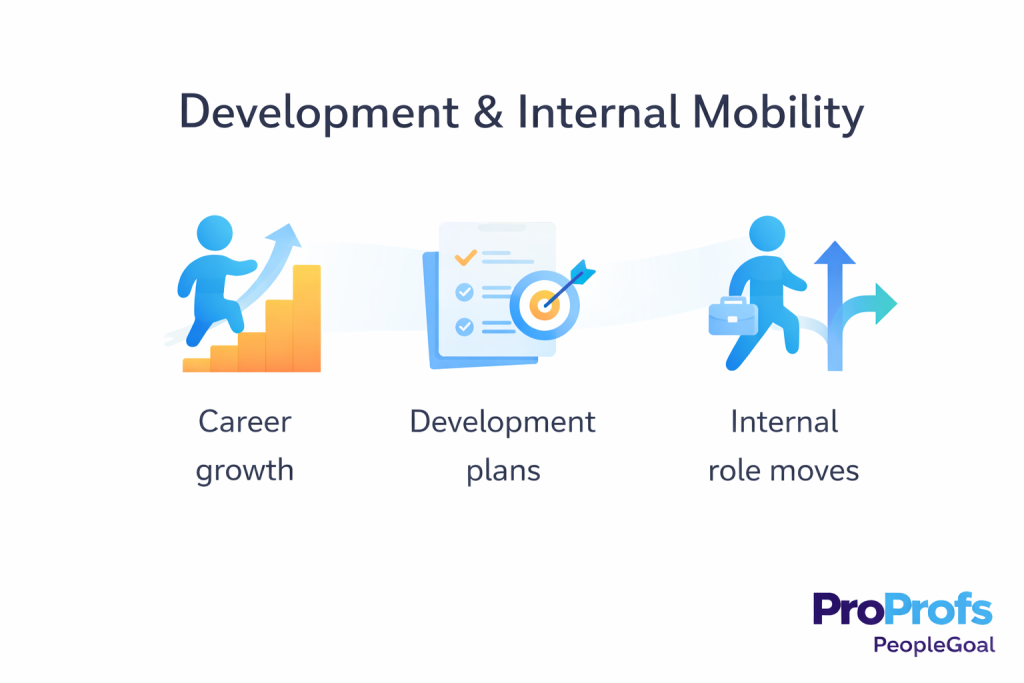
This is one of my favorite stages because it’s where employees stop thinking, “I have a job,” and start thinking, “I have a future here.”
Employee development isn’t only about training courses. It’s about progress. People want to feel like they’re learning something new, taking on bigger responsibilities, or moving closer to the kind of work they actually care about. If that growth doesn’t happen, even strong performers eventually start looking elsewhere.
Internal mobility matters just as much. Sometimes the best retention strategy is helping someone move into a better-fit role within the company rather than losing them to the outside.
Example: After a year, Daniel expressed interest in moving from support into onboarding. Instead of losing him externally, HR created a development plan tied to specific career goals and assigned stretch projects. Internal fill rate and skill progression velocity helped the organization measure whether employees like Daniel were truly advancing inside the company.
Ways to support real growth:
- Create development plans tied to real career goals, not generic training checklists.
- Offer stretch projects or new responsibilities to help employee learning flow in the work.
- Encourage internal role moves through clear promotion paths and open opportunities.
Metrics to watch at this stage:
- Internal promotion and role-change rates across teams.
- Employee participation in learning and development plans.
- Retention of high performers over 12–18 months.
- Measure internal fill rate to see what percentage of roles are filled through internal moves.
- Track skill progression velocity by monitoring new skills gained year over year.
7. Engagement & Retention
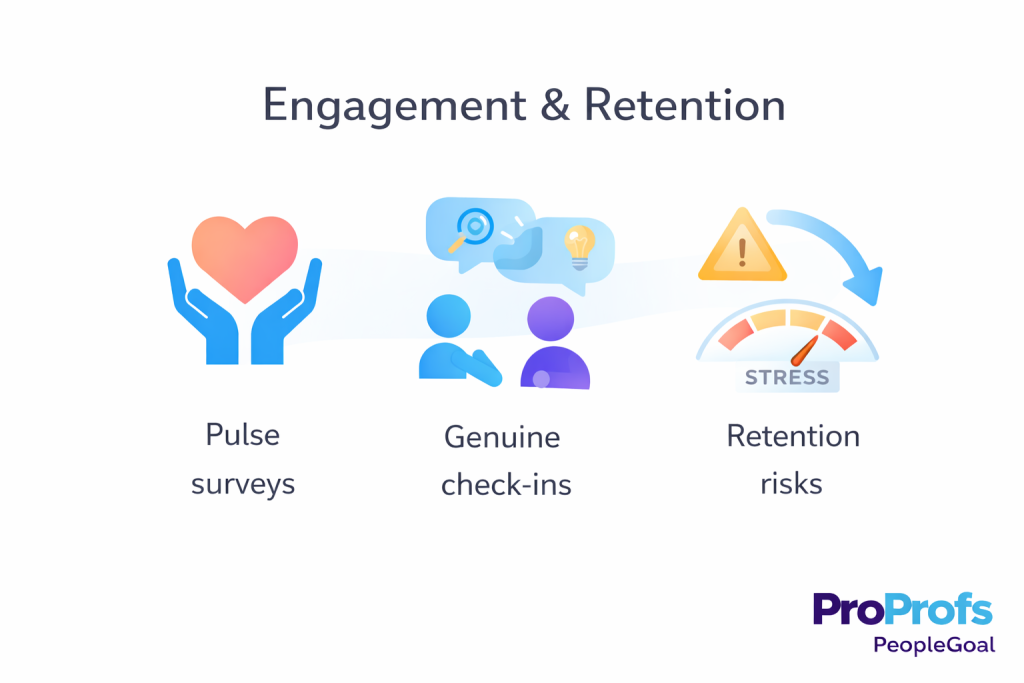
This is the stage where I can usually tell whether employees are truly with you or just… present. The work is happening, but the bigger question becomes: do people still feel connected, motivated, and valued, or are they quietly running on empty?
Employee engagement isn’t something you fix with one survey or a random team lunch. It’s built in the small moments, like whether feedback is heard, whether managers check in with care, and whether people feel their effort actually matters.
Retention, to me, is simply the result of that feeling over time.
Example: As Daniel’s workload increased, the company relied on pulse survey trends and manager check-in consistency to monitor engagement. When sentiment signals showed rising stress, his manager adjusted priorities and support before burnout set in. HR tracked retention risk indicators like low engagement, high workload, and limited mobility opportunities.
Ways to keep people engaged for the long run:
- Ask for employee input often, then follow up with visible action.
- Make check-ins more human by talking about growth, not just deadlines.
- Create space for flexibility and balance before burnout becomes normal.
Metrics to track here:
- Engagement score movement over time, not just one snapshot.
- Patterns in voluntary exits across roles or teams.
- Monitor retention risk indicators, including low engagement, high workload, and limited mobility.
8. Recognition
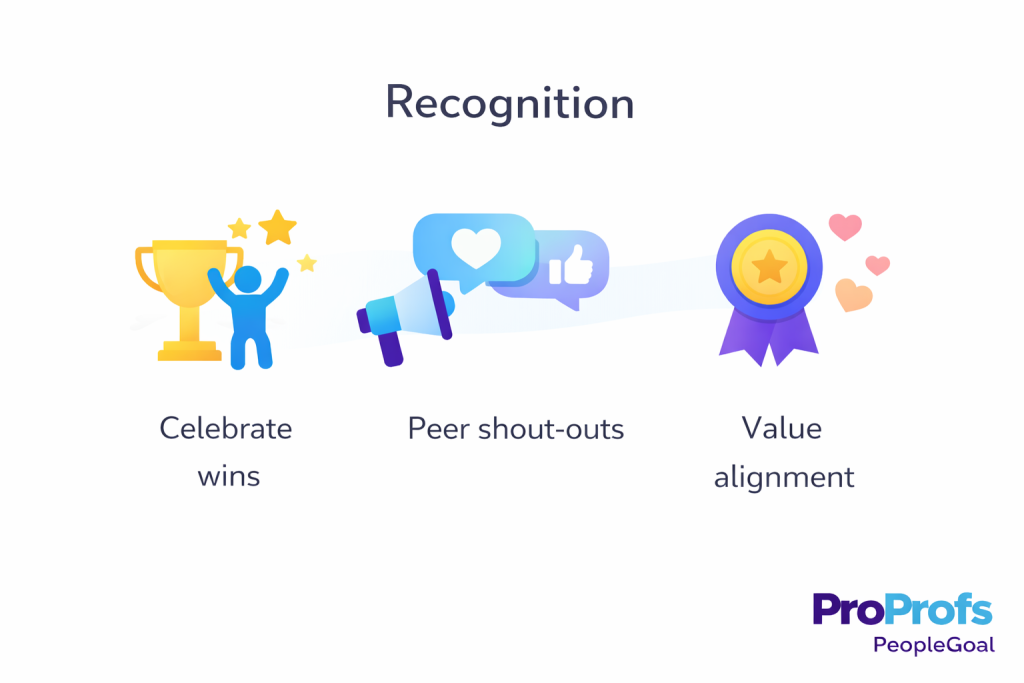
Recognition is one of those stages people underestimate until it’s missing. I’ve seen employees work incredibly hard, hit goals, support teammates, and still feel invisible because no one ever pauses to acknowledge it.
This stage isn’t about awards or big announcements. It’s about making appreciation part of everyday culture. When recognition is consistent, people don’t just feel happier; they feel motivated to keep showing up and putting in effort.
What’s interesting is that employee recognition also protects retention. People can handle tough work, but they struggle with feeling unnoticed.
Example: When Daniel successfully handled a major customer escalation, recognition wasn’t left to chance. The company had peer shout-out rituals and manager-led appreciation built into weekly routines. HR tracked recognition frequency per employee per month to ensure high effort was consistently acknowledged across teams.
Ways to build meaningful recognition:
- Celebrate small wins in real time instead of waiting for annual events.
- Encourage peer recognition so appreciation isn’t only top-down.
- Tie recognition to values and impact, not just output or hours worked.
Metrics to track here:
- Employee perception of appreciation through engagement surveys.
- Participation in recognition programs or peer shout-outs.
- Retention rates in teams where recognition is consistent.
- Track recognition frequency per employee per month to ensure appreciation is consistent, not occasional.
9. Offboarding
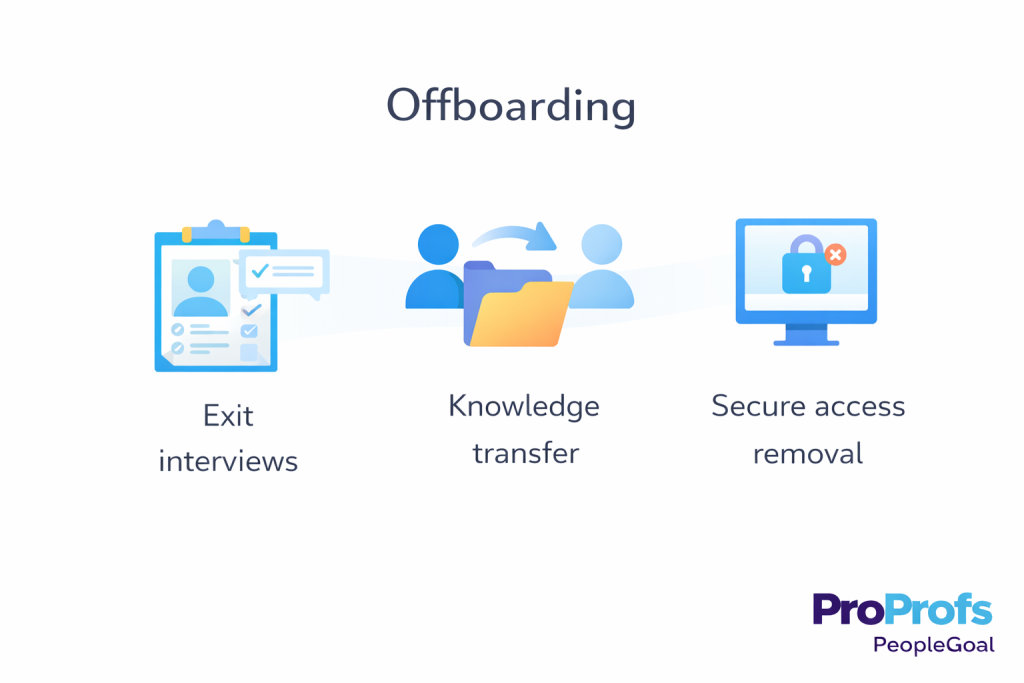
When an employee leaves, most teams treat it like a checklist: return the laptop, finish the paperwork, move on. But I see offboarding as something much bigger. It’s the final experience someone has with your company, and that experience sticks.
A good exit process gives people closure, helps teams transition smoothly, and prevents important knowledge from walking out the door unnoticed. It’s also one of the best chances to understand what worked, what didn’t, and what could be improved for the people still inside.
Example: Years later, when Daniel decided to leave, HR followed a structured offboarding workflow: exit conversations, knowledge transfer planning, and access removal within hours of departure. Patterns from exit themes were logged for lifecycle improvement. Access revocation time was tracked as a compliance KPI to prevent security gaps.
Ways to handle exits with more care:
- Hold honest exit conversations to learn, not just to wrap things up.
- Start handovers early so work doesn’t collapse after someone leaves.
- Remove access and accounts quickly to avoid loose ends and security risks.
Metrics to pay attention to:
- Common exit reasons that show up across teams.
- Handover completion time and disruption levels after departures.
- Post-exit sentiment, like whether employees would still recommend the workplace.
- Measure access revocation time after exit to strengthen IT-HR compliance and reduce security gaps.
10. Alumni
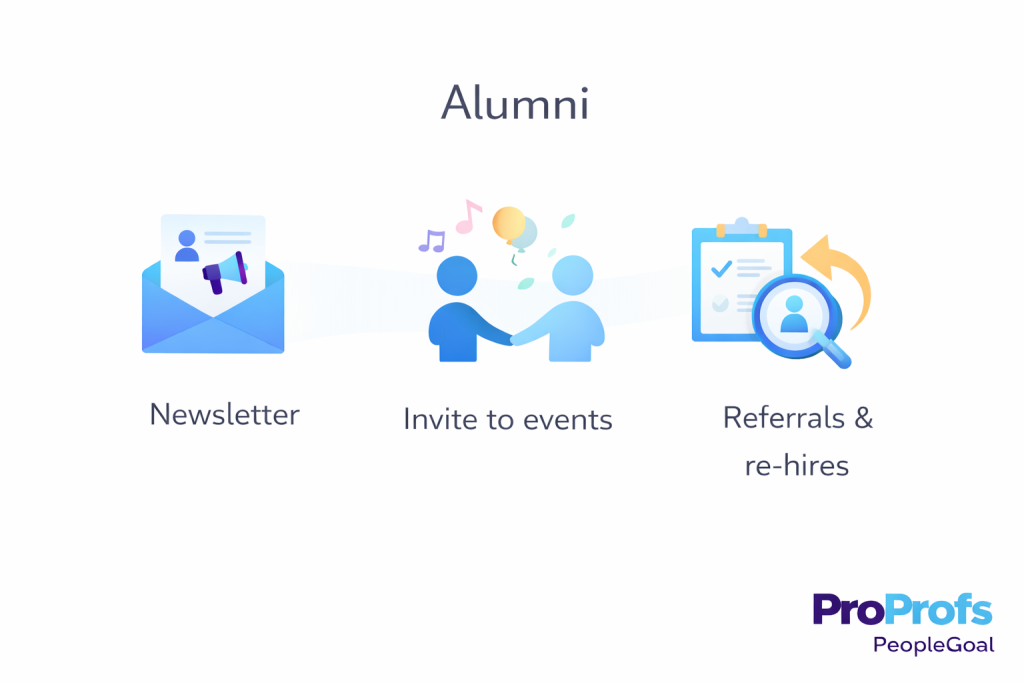
Most employee lifecycle models stop once someone leaves, but I don’t think the relationship ends there. In many ways, this is where a new kind of connection begins.
Former employees carry your culture into the world. Some become future clients, partners, referral sources, or even “boomerang hires” who return with new skills. When companies treat exits respectfully, alumni are often more supportive rather than disappearing.
This stage is about turning goodbye into goodwill.
Example: Even after Daniel left, the company maintained an alumni network through occasional updates and re-engagement touchpoints. HR tracked alumni participation and referral activity to keep the relationship warm. This created long-term advocacy and increased the likelihood of boomerang hires or talent referrals.
Ways to build a strong alumni experience:
- Stay in touch through occasional updates, newsletters, or alumni groups.
- Invite former employees to events or communities when it makes sense.
- Make re-hiring easy for strong performers who may want to return.
Metrics to track here:
- Referral hires coming through former employees.
- Track alumni re-engagement rate through event participation, newsletter opens, or community activity.
- Alumni advocacy, such as recommendations or positive reviews.
The Strategic Layer Across All Stages: Workforce Planning
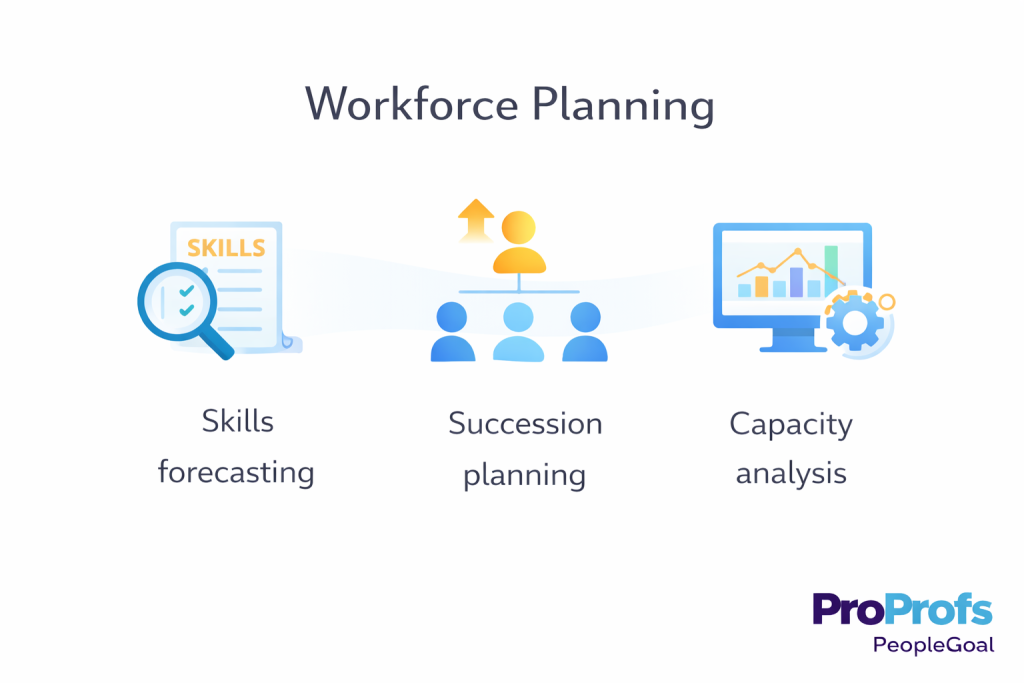
When I think about the future of employee lifecycle management, this is where everything starts coming together. It’s no longer just about managing today’s onboarding or this quarter’s reviews. It’s about looking ahead and asking smarter questions: Do we have the skills we’ll need next year? Are certain teams at risk of burnout? Who’s ready to step into bigger roles?
Workforce planning adds that long-term lens. It turns lifecycle data into direction, helping organizations prepare instead of constantly scrambling. And this is also where AI becomes genuinely useful, spotting patterns humans may miss and supporting better decisions.
Example: Daniel’s journey didn’t just end as an individual case. His onboarding speed, development path, engagement trends, and exit feedback became lifecycle data that fed workforce planning. HR used skills inventory readiness and critical role coverage metrics to ensure future teams had internal successors and fewer surprise gaps.
Ways to plan more proactively:
- Identify future skill gaps early based on business growth and upcoming priorities.
- Use engagement and performance trends to catch retention risks before they escalate.
- Strengthen internal talent pipelines so key roles don’t always depend on urgent hiring.
Metrics to track here:
- Measure workforce capacity against demand-forecasting accuracy to improve hiring and resourcing decisions.
- Track the critical role coverage ratio to ensure key positions have ready successors.
- Monitor skills inventory readiness to support skills-based workforce planning.
Implement Employee Lifecycle Management in 30 Days
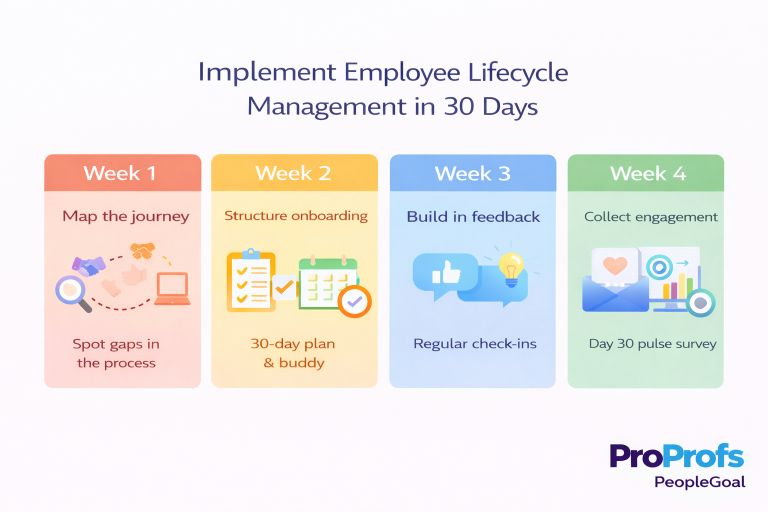
When I think about rolling out employee lifecycle management, I always imagine it like building a rhythm, not launching a giant HR project. The easiest way to start is with one month of focused improvements that show real progress quickly.
To make this more real, let’s say a company hires a new employee named Julie, a customer support manager joining a growing team. Here’s how the first 30 days of lifecycle structure could look.
Week 1: Map the Journey Before Fixing It
In the first week, I wouldn’t rush into tools or templates. I’d start by mapping what Julie’s experience actually looks like right now.
- Who welcomes her on Day 1?
- Does she know what success looks like?
- Where do managers usually drop the ball?
Example: Julie gets her laptop and onboarding docs, but no one explains how her role connects to team goals. That’s a lifecycle gap. This week is about spotting those gaps across stages, from hiring to feedback to exit.
Week 2: Make Onboarding and Probation Feel Structured
Now I focus on the early stage of managing employee lifecycle, because the first few weeks decide whether Julie feels confident or lost.
Instead of leaving things informal, I’d put a simple structure in place:
- A 30-day onboarding plan
- A buddy she can message without hesitation
- A probation check-in already scheduled
Example: Julie’s manager sets three clear goals: learn the product, handle tickets independently, and lead one team improvement idea by Day 60. This week prevents the “figure it out as you go” experience.
Week 3: Build Feedback Into the Flow of Work
By Week 3, Julie is doing real work. This is where feedback matters most, because small course corrections now save bigger problems later.
Rather than waiting six months, I’d introduce a light feedback rhythm:
- A short manager check-in every two weeks
- Peer feedback on whether she’s collaborating across teams
- Notes that actually lead to action
Example: Julie shares she’s unsure about escalation rules. Her manager adjusts training immediately rather than discovering the issue during an annual review. This is how feedback becomes support, not judgment.
Week 4: Add Engagement Signals and a Reporting Habit
By the fourth week, the lifecycle starts becoming measurable. Now I want to know: is Julie settling in well, and are other employees having the same experience?
This is where engagement and reporting cadence come in:
- A quick pulse survey at Day 30
- Recognition for early wins
- A dashboard view of onboarding and feedback consistency
Example: Julie reports feeling supported but notes that the first week was unclear. HR notices the same theme across new hires and improves Day 1 orientation for everyone. That’s lifecycle management working in real time.
A 30-day rollout won’t perfect the entire employee journey, but it builds the foundation quickly. And once you see Julie’s experience improving, it becomes much easier to scale the same structure across every stage.
Employee Lifecycle Management Mistakes to Avoid
Even with the best intentions, employee journey structure can fall apart in small, familiar ways.
I’ve noticed that most problems don’t come from missing a big strategy; they come from overlooking the everyday gaps that quietly build up across stages.
Here’s what usually goes wrong and how you can avoid it easily:
| Mistake | Solution |
|---|---|
| Treating the lifecycle as an HR-only responsibility | Make managers and leaders accountable for key employee moments, not just HR workflows. |
| Running performance reviews without real follow-through | Convert feedback into clear development actions, coaching plans, and measurable next steps. |
| Overlooking internal mobility as a retention strategy | Build career pathways and internal role movement before employees feel stuck. |
| Fragmenting the lifecycle across too many disconnected tools | Connect onboarding, feedback, engagement, and development into one consistent experience. |
| Treating offboarding as the end instead of a relationship shift | Create respectful exits and alumni connections that support advocacy and re-hires. |
| Measuring activity instead of employee outcomes | Track impact metrics like time-to-productivity, engagement movement, and retention risk, not just completion rates. |
| Collecting feedback but not acting on it | Close the loop by sharing what changed after surveys or check-ins so employees trust the process. |
| Designing lifecycle processes that feel “one-size-fits-all.” | Customize workflows for different roles, regions, and teams instead of forcing the same experience on everyone. |
| Waiting too long to address disengagement | Use early signals from pulse surveys, manager check-ins, and sentiment patterns to intervene sooner. |
| Overloading employees with too many surveys and forms | Reduce noise by focusing on fewer, higher-quality touchpoints that lead to action. |
| Ignoring the manager’s experience in lifecycle systems | Support managers with simple tools, reminders, and coaching so processes don’t become an extra burden. |
| Treating lifecycle management as a yearly project instead of a continuous rhythm | Build lightweight, recurring cycles that run throughout the year rather than one-off HR events. |
Make Employee Lifecycle Management Proactive With Predictive AI
In employee lifecycle management, the AI’s impact on HR processes is most evident when it works with the feedback, check-ins, and data that teams already collect.
Most teams already collect feedback through surveys, review forms, check-ins, and internal communication, but the challenge is spotting patterns early and acting on them consistently.
That’s where AI can add real value, not as a buzzword, but as a practical layer across the lifecycle.
1. Detect Turnover Risk Through Sentiment Patterns
AI can analyze employee sentiment by scanning data from pulse surveys, engagement comments, check-in notes, and even internal communication channels like Slack or Teams (when enabled).
Using natural language processing, it can flag rising frustration, burnout language, or disengagement trends. This helps People leaders intervene early with workload adjustments, manager coaching, or retention conversations before resignations happen.
Example: If a team’s survey comments start shifting from “busy but manageable” to “constantly overwhelmed,” AI can alert People leaders before resignations begin.
This helps teams intervene early with workload adjustments, manager coaching, or retention conversations.
2. Summarize Open-Text Feedback From Reviews and Surveys
Many organizations collect rich open-ended feedback during performance reviews, 360 cycles, and engagement surveys, but reading hundreds of responses manually is slow.
AI can automatically group comments into themes, highlight repeated concerns, and generate summaries for managers or HR teams. This makes feedback easier to act on instead of getting buried in spreadsheets or long reports.
Example: Instead of reading 200 review comments one by one, HR can instantly see that “unclear career growth” is the most repeated theme across departments.
This makes feedback easier to act on instead of getting buried in spreadsheets or long reports.
3. Model Workforce Scenarios Using Lifecycle Data
AI can support workforce planning by combining lifecycle data like promotion rates, internal mobility trends, attrition patterns, and skills development progress.
For example, it can simulate what happens if turnover rises in a critical role group, or if a new capability becomes essential next year. Scenario modeling helps teams plan hiring and development pipelines with more confidence.
4. Automate Lifecycle Workflows That Usually Get Missed
AI-driven automation can ensure key lifecycle moments don’t slip through the cracks. For instance, systems can automatically trigger probation reviews at the 6-month mark, send reminders when feedback cycles are overdue, or flag employees who haven’t received check-ins in months. This reduces manual follow-up and keeps lifecycle processes consistent at scale.
AI works best when it’s applied directly to real employee data sources, not as a separate tool. Used thoughtfully, it helps People teams move from reactive HR to proactive lifecycle management.
Example: If a manager hasn’t had a check-in with a new hire in 60 days, the system can nudge them before the employee starts feeling ignored. This reduces manual follow-up and keeps lifecycle processes consistent at scale.
Turn Employee Lifecycle Management Into a Growth Engine
The employee lifecycle management process works best when it’s treated as a connected journey, not a set of scattered HR tasks. From attraction and onboarding to feedback, development, recognition, and even alumni relationships, every stage shapes how employees experience your organization.
The strongest teams don’t just run processes; they build rhythms: clear onboarding plans, consistent check-ins, meaningful growth paths, and measurable KPIs that keep everything on track.
What I’ve found is that small improvements at the right moments often create the biggest impact on engagement, performance, and retention. And when you start using predictive insights and automation, lifecycle management becomes proactive instead of reactive.
If you’re looking for a practical way to bring all of this together, PeopleGoal makes it easier to run structured reviews, 360 feedback, probation workflows, and engagement cycles in one place.
Ready to build a smoother employee journey? Start with one stage today.
Frequently Asked Questions

How does lifecycle management improve retention?
Managing employee lifecycle improves retention by giving employees more support, feedback, growth opportunities, and recognition at the right moments. When people feel valued and guided, they’re more likely to stay.
What is the difference between employee journey and lifecycle?
The lifecycle is the structured stages employees move through, like onboarding or reviews. The journey is more about how employees feel during those stages and the experience they have along the way.
How do you measure employee lifecycle success?
You measure it through KPIs like time-to-productivity, engagement trends, review completion, internal mobility, and retention rates. These metrics show where employees are thriving or slipping away.
Ready to 3x Your Teams' Performance?
Use the best performance management software to align goals, track progress, and boost employee engagement.