
I’ve reviewed enough failed employee development programs to know the pattern by heart. HR launches a shiny new initiative, a training calendar gets built, a budget gets approved, and six months later, nobody remembers the last real conversation about it.
It’s not because the ideas were bad. It’s because the practices behind them were never built to last. If you’re running employee development for a team of anywhere between 50 and 1,000 people, you don’t need more inspiration.
You need practices you can actually run this quarter, not another list of employee development strategies you’ll forget by Friday. That’s exactly what I’m covering here: the 10 best practices for employee development and training that hold up once real deadlines hit, the common challenges that quietly derail them, and how to tell if any of it is actually working.
10 Employee Development Best Practices
I’ll be straightforward: you don’t need all ten of these methods running at once. Pick two or three, build them into a cadence you already have, and give them a full quarter before judging whether they worked.
Here’s what each of these employee development methods actually looks like when it’s done right, not just what it’s called.
1. Individualized Plans
I’ve seen too many companies hand every employee the same training curriculum, whether they’re a junior analyst or a team lead heading into their first leadership role. That never works, because their gaps aren’t the same, and neither are their goals.
What I build instead is a plan around the specific person, their actual skill gaps, and where they want to go next, not a generic template every department reuses.
- Start from the gap, not the catalog. Ask what this specific person needs to close, not what course is already available.
- Write the plan down somewhere both the employee and manager can see and update it, not in a notebook that only the manager touches.
- Revisit it monthly. A plan that’s reviewed once a year isn’t a plan; it’s a document you filed.
This is one place where a system genuinely helps. PeopleGoal’s training & learning plans let you build a development roadmap per employee and manage a competency library aligned to what the role actually needs, so the plan lives somewhere both sides can track, instead of in someone’s personal notes.
2. Mentorship And Coaching
I’ve watched mentorship programs fail for one simple reason: the pairing was random, and nobody followed up after the first meeting.
When I set it up deliberately, matching people for a specific reason and building in real check-ins, it actually sticks. That’s the difference between a program that exists on paper and one people actually use.
- Match mentors based on the specific skill gap, not just seniority or department.
- Set a check-in cadence upfront, biweekly, or monthly, so it doesn’t quietly stop after the first meeting.
- Give mentors a light structure to work from (a few questions to ask, a goal to track toward) so the conversation has direction beyond “how’s it going.”
3. Stretch Assignments
If I had to pick the highest-impact, lowest-cost practice on this list, it’s this one. Most managers skip it anyway, because handing over a high-visibility project feels riskier than sending someone to a course. But that risk is exactly what makes it work; real stakes teach faster than any classroom.
- Identify the project first, then the person, not the other way around. Look for work that’s slightly outside someone’s current scope but still recoverable if they stumble.
- Pair the assignment with a check-in partway through, not just at the end, so course correction happens early.
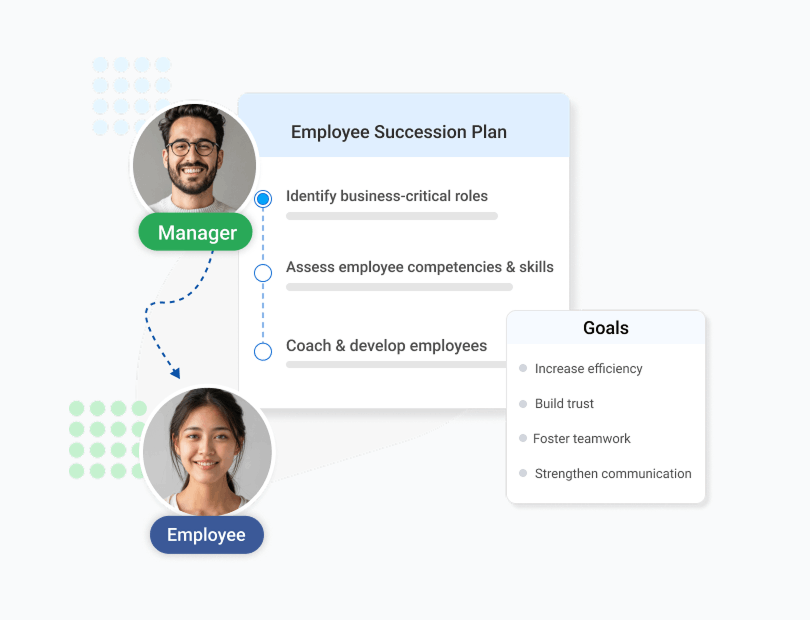
- Use what you learn from the assignment to inform who’s actually ready for the next role up. This is exactly the kind of signal PeopleGoal’s build career & succession plans are meant to capture, tracking long-term goals and the skills needed to reach them, so you’re not guessing who’s ready when a role opens up.
4. Continuous Feedback
I stopped trusting annual reviews to catch a skill gap early a long time ago; they’re simply too slow. By the time the review rolls around, a small gap has usually already turned into a real performance problem. Development needs a faster feedback loop than that, one built into the rhythm of the month, not the year.
- Move development conversations into the same meeting as your existing 1:1s instead of creating a separate calendar invite nobody attends.
- Ask two questions every time: what’s working, and what’s the next specific thing to work on. Vague check-ins produce vague progress.
- Adjust the plan in the moment. If something isn’t landing, change it that week, not at the next quarterly review.
This is exactly what PeopleGoal’s Development 1-to-1s are built for, bridging performance management with training and development plans directly, so career conversations happen inside the same structured space managers already use for regular check-ins, instead of a separate process that quietly falls off the calendar.
5. Microlearning Modules
Every time I’ve scheduled a long training session, something urgent has come up and bumped it. What actually survives a busy week is a ten-minute module, because it fits inside a normal workday instead of requiring someone to block off an entire afternoon.
- Break any existing course into standalone ten to fifteen-minute pieces that can be finished between meetings.
- Attach one small task to each module so it’s applied immediately, not just watched and forgotten.
- Track completion at the module level, not the course level, so partial progress still counts as progress.
6. Cross-Department Rotation
I like giving people real time in a different function, not a one-day shadow day that barely scratches the surface. When someone actually works inside another team for a few weeks, they start to understand how the business runs end-to-end. That kind of exposure is hard to build any other way.
- Set a minimum rotation length, a few weeks at least, long enough to do real work rather than just observe.
- Pair the rotation with a specific deliverable so it’s a contribution, not a distraction from someone else’s team.
- Use rotations to surface hidden talent. The person who thrives outside their usual lane is often the one worth investing in next.
7. Soft Skills First
I make it a point to fund communication, emotional intelligence, and leadership development with the same seriousness as technical training, not whatever’s left over once everything else is paid for. Technical skills go out of date.
The ability to communicate clearly and lead a room doesn’t, and that’s exactly why I don’t treat it as optional.
- Build soft skills into every development plan by default, not as an optional add-on.
- Practice through real scenarios (a difficult conversation, a project retro, a client call) rather than abstract workshops disconnected from actual work.
- Revisit soft skill goals in the same 1:1 cadence as technical goals so they don’t quietly get deprioritized.
8. Incentivized Learning
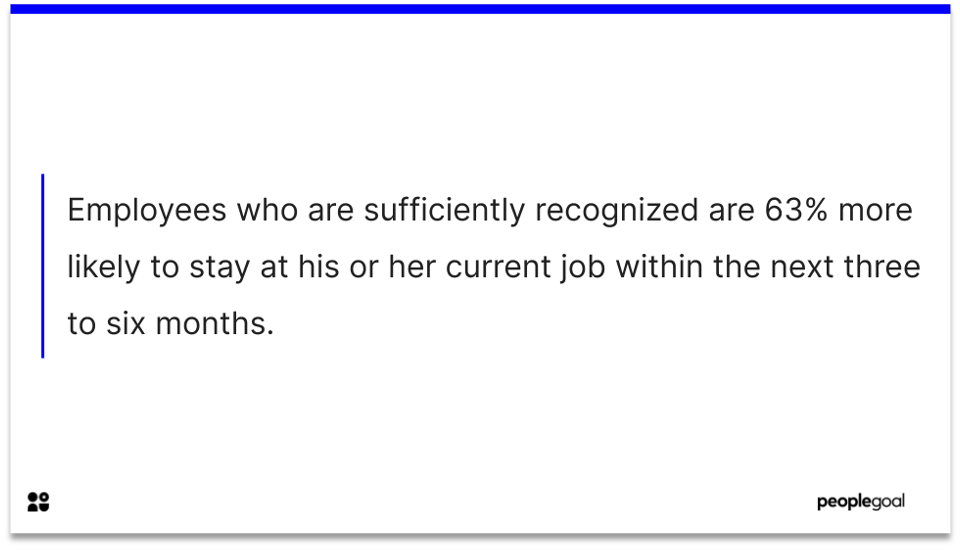
In my experience, people finish what they’re recognized for, and not much else really moves the needle.
A completion badge that actually shows up in a promotion conversation drives far more follow-through than an optional course link buried somewhere in an email. If the recognition feels real, the completion rate follows.
- Tie certifications or badges to something visible, a skills profile, a performance conversation, not just an internal LMS record nobody looks at again.
- Offer tuition or certification support for skills tied directly to the person’s development plan, not a blanket policy disconnected from actual goals.
- Recognize completion publicly where it makes sense. Visibility is often a stronger incentive than the credential itself.
9. Peer-To-Peer Learning
I’ve found that most teams already have the expertise they need; it’s just sitting in silos nobody’s tapped into. Peer learning is the cheapest way I know to surface it, and it barely costs anything to run. All it really takes is a recurring slot on the calendar.
- Set a recurring cadence, monthly lunch-and-learns, or a rotating internal knowledge share, so it doesn’t rely on someone remembering to organize it.
- Ask employees to teach what they already know well, not research something new. The value is in surfacing existing expertise, not creating more content.
- Keep sessions short and specific. One skill, thirty minutes, is more useful than a broad hour-long overview.
10. On-The-Job Application
I’ve noticed a skill that isn’t applied within a week of learning it fades fast, almost like it was never taught at all. That’s why I never let training end without a real task attached to it. The application is the part that actually makes it stick, not the training itself.
- Pair every module or course with a specific, assigned task due within the week, not “whenever you get a chance.”
- Ask the employee to walk their manager through how they applied it, not just confirm they finished the training.
- Build this expectation into the workflow itself so it’s not an extra step someone has to remember. PeopleGoal’s Custom Development Processes, built with a no-code custom workflow builder, let you design that kind of follow-through directly into a program instead of hoping it happens informally.
Common Employee Development Challenges (and How to Fix Them)
Every one of the ten practices above eventually runs into the same handful of walls. Here’s what actually derails them, and the fix for each.
| Roadblock | What’s Really Happening | The Fix |
| The time crunch paradox | Managers and employees feel too busy for development | Build development into existing 1:1s instead of creating a separate meeting |
| Fear of “training for the competition” | Leadership worries upskilling makes people more hireable elsewhere | Reframe it, people leave when they feel stuck, not when they feel invested in |
| Lack of management buy-in | Development gets treated as a cost, not a strategy | Bring retention and internal mobility numbers to the budget conversation, not just training completion rates |
| Low LMS engagement | Traditional learning platforms feel clunky and irrelevant | Swap long courses for microlearning and tie completion to a real, visible outcome |
| Skill gap misalignment | Companies train for skills they assume matter, not what employees use daily | Pull skill priorities from actual performance data and manager input, not assumptions |
| Difficulty proving ROI | No clear link between training and business results | Track internal promotions, retention of trained employees, and manager-rated skill improvement, not just attendance |
| Static content | Training materials go stale faster than HR can update them | Assign an owner to review and refresh content on a fixed quarterly schedule |
| Budget fluctuations | Development is often the first line item cut in a downturn | Keep a lightweight, low-cost core (peer learning, stretch assignments, coaching) that survives budget cuts |
How to Measure Employee Development Program Success
Most HR teams measure training by attendance. That tells you almost nothing about whether development is actually happening. Track these instead:
- Internal mobility rate: How many roles were filled internally versus externally last year?
- 1:1 completion rate: Are development conversations actually happening on schedule, not just calendared?
- Skill progress against goals: Are employees closing the specific gaps identified in their plan, not just completing modules?
- Retention of high performers: Are the people you’re investing the most in staying longer than the org average?
- Application rate: Of everyone who completed training this quarter, how many used it on a real task within two weeks?
Build a More Consistent Employee Development Process
Employee development doesn’t fail because HR ran out of good ideas. It fails because good ideas never got turned into a repeatable system. Pick two or three practices from this list, build them into the 1:1 cadence you already have, and give them a full quarter before you decide what’s working.
If manual tracking is the thing standing between your team and actually running these practices consistently, that’s worth fixing first, and it’s exactly where PeopleGoal helps, since the plans, 1-to-1s, and progress tracking behind several of these practices already live in one place instead of scattered spreadsheets.
If that’s the gap you’re facing, try the tool to see how it fits your team.
Frequently Asked Questions
Is employee development the HR department's job or the manager's job?
Both, but in different ways. HR builds the framework, templates, and tracking system. Managers are the ones who actually run the conversations and spot opportunities day to day. Programs stall when HR builds a system that managers never use.
How much should a mid-market company budget for employee development?
There's no universal number, but the more useful question is where the budget goes within your employee development strategy. Prioritize low-cost, high-impact practices first, such as coaching, stretch assignments, and peer learning, before spending heavily on formal courses or certifications.
How often should a development plan be reviewed?
Monthly, tied to your existing 1:1 cadence, works better than a quarterly or annual review cycle. Development plans built once a year are usually outdated by month three.
Should employee development be tied to promotions or compensation?
It should influence both, but shouldn't be the only trigger for either. Tying development purely to promotion timelines makes people disengage the moment they're not up for a role change.
Does employee development work differently for remote or hybrid teams?
The core practices don't change, but the format does. Mentorship, stretch assignments, and 1:1s all need to be scheduled deliberately for remote teams since they don't happen organically in a hallway conversation the way they might in an office.
What's the biggest mistake HR teams make with employee development?
Treating it as a single annual initiative instead of an ongoing system. The practices in this guide only work if they're built into recurring conversations, not launched once and revisited when engagement scores dip.
Ready to 3x Your Teams' Performance?
Use the best performance management software to align goals, track progress, and boost employee engagement.