
It’s performance review season. Your inbox is full, tickets never stop, and you’re searching for the right customer service performance review phrases to capture a year’s worth of effort.
You remember the moments clearly: a tough escalation handled perfectly, a heartfelt thank-you from a customer, a few rushed replies during peak hours, and a lot of steady, reliable work in between.
But turning those moments into clear, fair, professional feedback? That’s where many managers hesitate.
Customer service is emotional work, yet it’s also business-critical. Studies show that 86% of customers are willing to pay more for a better customer experience. How your team communicates and solves problems directly affects growth.
The wrong phrasing can feel generic or overly harsh. The right language drives clarity and improvement. In this blog, I’m sharing ready-to-use phrases and common mistakes to help you write reviews that are specific, human, and effective.
Here’s a quick glance at what we’ll be diving into today:
- Customer service reviews require balancing empathy and metrics.
- Specific, behavior-based feedback drives performance growth.
- Strong reviews cover communication, problem-solving, ownership, KPIs, and teamwork.
- Avoid vague praise and personality-based criticism.
- Structured performance systems improve consistency.
What are Customer Service Performance Review Phrases?
Customer service performance review phrases are structured feedback statements managers use to evaluate service quality, communication, problem-solving, accountability, and overall KPI performance.
The strongest reviews balance measurable results, like CSAT and resolution rate, with behavioral strengths such as empathy, clarity, and professionalism.
To make that balance fair and consistent, you need clear performance metrics. So what actually defines customer service performance?
Here are the core indicators most teams rely on:
| Metric | What It Means | Where It Is Used |
|---|---|---|
| Customer Satisfaction Score (CSAT) | Measures how satisfied customers are with a service interaction, usually collected through post-support surveys. | Used by customer support teams and managers to understand customer experience and improve service quality. |
| First Contact Resolution (FCR) | Indicates the percentage of issues resolved during the first interaction without needing follow-ups. | Used in support centers to evaluate agent effectiveness and reduce repeated customer contacts. |
| Average Handle Time (AHT) | Tracks the average time an agent spends handling a customer request, including talk time, hold time, and after-call work. | Used in call centers and support teams to manage efficiency and workload balance. |
| Quality Assurance (QA) Score | Evaluates the quality of customer interactions based on predefined standards such as communication, accuracy, and professionalism. | Used by QA teams and supervisors to monitor agent performance and ensure service standards are met. |
| Response Time | Measures how quickly a support team replies to a customer inquiry after it is received. | Commonly used in help desks, live chat, and email support to track responsiveness. |
| Escalation Rate | Shows how often issues need to be escalated to higher-level support or management. | Used to identify complex cases, training gaps, or process issues within support teams. |
| Case Documentation Accuracy | Assesses how accurately agents record details of customer interactions and case resolutions. | Used in support operations to ensure clear records, better collaboration, and consistent follow-up support. |
These metrics provide the measurable side of the story, while behavior-based feedback brings the human side into focus.
What Are Customer Service Performance Review Phrases Managers Can Use?
When I sit down to write a customer service performance review, I don’t want to stare at a blank screen, wondering how to sound clear without being robotic or harsh. Having the right phrases ready makes all the difference.
In customer service, feedback isn’t one-size-fits-all. Sometimes you’re recognizing excellence. Other times, you’re refining habits. Poorly written reviews create confusion, lower motivation, defensiveness, missed growth, and stalled KPIs.
Structured tools like PeopleGoal connect KPIs, 360 feedback, and development goals in one place.
Now let’s walk through practical phrases you can use right away.
Positive Customer Service Performance (Top Performers)
When someone is truly strong in customer service, it shows consistently. It’s not one heroic interaction. It’s the daily standard they maintain. I look at whether they elevate the experience without supervision and whether customers feel that difference.
When to use these phrases: I use these comments when someone consistently delivers exceptional service without needing reminders. They’re ideal for your most dependable reps, the ones customers genuinely remember.Industry fit: Especially useful in high-touch industries like hospitality, retail, healthcare support, and premium SaaS, where service quality directly affects loyalty.

Positive Feedback Comments
1. Consistent High-Level Service Delivery: “You consistently provide a level of service that sets the standard for the team. Across multiple interactions this quarter, customers have left conversations with clarity and reassurance, even in complex situations. Your ability to combine efficiency with warmth directly contributes to strong satisfaction scores and repeat positive feedback.”
2. Professional Presence Under Pressure: “During high-volume periods, you maintain steady professionalism without letting urgency affect tone or quality. Even when handling back-to-back escalations, you remain composed and solution-focused. That stability has helped prevent customer frustration from escalating further and supports overall team morale.”
3. Reliability and Work Ethic: “You consistently meet your workload expectations while maintaining quality. Your cases rarely require follow-up corrections, and your documentation is clear and complete. That reliability reduces rework and allows the team to operate more smoothly.”
Constructive Feedback Comments
4. Leadership Potential Development: “You are performing at a strong level, and the next opportunity is stepping into more informal leadership by sharing your approaches during team meetings. Your experience could help newer team members improve more quickly.”
5. Consistency During Peak Load: “While your overall performance is strong, there are moments during peak demand when response speed slightly dips. Focusing on workflow prioritization during busy periods will help maintain consistency across all conditions.”
6. Stretching Beyond Core Role: “You consistently meet expectations within your role, and expanding into cross-functional collaboration would further increase your impact. Taking initiative on interdepartmental issues could elevate your overall contribution.”
Communication & Empathy
In customer service, tone can either calm a situation or unintentionally escalate it. I always evaluate how someone listens, reassures, and explains next steps. Customers don’t just remember the solution, they remember how they were treated.
When to use these phrases: These are the phrases I reach for when I want to highlight how someone speaks, listens, and reassures customers, especially in emotional or high-pressure conversations.Industry fit: Critical for industries like healthcare, insurance, financial services, and education, where customers often feel anxious and need clarity as much as solutions.

Positive Feedback Comments
7. Active Listening: “You demonstrate strong active listening skills by acknowledging customer concerns before offering solutions. In multiple calls reviewed this cycle, you took time to reflect the issue back to the customer in their own words, which helped them feel understood rather than rushed. This habit reduces miscommunication, prevents unnecessary back-and-forth, and leads to faster, more accurate resolution outcomes.”
8. Clear Explanations: “You consistently explain policies, processes, and next steps in a way that feels straightforward, respectful, and easy for customers to follow. Even when topics are complex, you break information down into manageable steps and confirm understanding before moving forward. Because of these communication skills, customers leave interactions with confidence, and we see fewer repeat contacts or confusion-driven escalations.”
9. Empathy in Difficult Conversations: “When customers express frustration or urgency, you respond with genuine empathy rather than scripted reassurance. You remain calm, validate their experience, and guide the conversation toward solutions without dismissing emotions. This approach consistently helps de-escalate tense situations, rebuild trust in the moment, and ensure customers feel supported even when the answer isn’t immediate.”
Constructive Feedback Comments
10. Reassurance Depth: “There are opportunities to add more reassurance in challenging conversations, especially when customers are anxious or dissatisfied. While your responses are accurate and solution-oriented, including brief empathy statements or acknowledgment before moving into policy can make the interaction feel more human. Strengthening this emotional layer will improve customer trust and reduce frustration during sensitive cases.”
11. Tone Under Pressure: “During high-volume moments, your tone can occasionally feel rushed, even when the information you provide is correct. Customers may interpret speed as impatience, especially when they are already stressed. Slowing slightly, using more calming language, and confirming understanding before closing will improve clarity and ensure customers feel fully supported, even during peak workload periods.”
12. Follow-Up Questions: “In some interactions, solutions are offered quickly without fully exploring the underlying concern. While decisiveness is valuable, asking one or two clarifying questions upfront can prevent missed context and reduce repeat contacts. Strengthening this habit will improve first-contact resolution and help customers feel that their situation was fully understood before action was taken.”
Problem-Solving
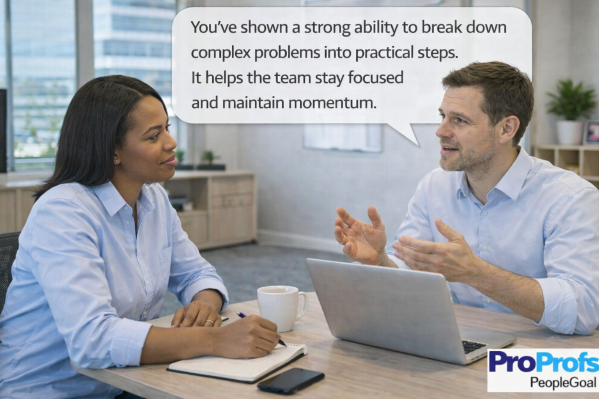
Good customer service reps don’t just close tickets. They resolve root causes. I look at whether someone thinks critically, explores alternatives, and prevents repeat issues.
When to use these phrases: I use these comments when someone goes beyond closing tickets and actually solves root problems. They’re great for recognizing critical thinking and strong troubleshooting habits.
Industry fit: Most valuable in technical support, IT services, SaaS platforms, and telecom, where complex issues require structured resolution.
Positive Feedback Comments
13. Root-Cause Resolution: “You consistently identify the underlying cause of customer issues rather than addressing only surface symptoms. Instead of stopping at the immediate complaint, you dig into what triggered the problem and ensure the customer receives a complete resolution. This approach reduces repeat contacts, improves first-contact resolution, and strengthens customer trust because issues are truly solved, not temporarily patched.”
14. Efficient Troubleshooting: “You approach complex cases methodically, breaking problems into manageable steps rather than jumping to assumptions. You gather the right context, test solutions logically, and troubleshoot with structure and clarity. This disciplined problem-solving improves both speed and accuracy, and it helps customers feel confident that their issue is being handled professionally.”
15. Judgment in Escalations: “You escalate issues appropriately and only when necessary, showing strong judgment about what requires additional support versus what can be resolved independently. In many cases, you thoroughly troubleshoot before handing off, reducing unnecessary escalations and preventing customers from being passed between teams. This strengthens operational efficiency and creates a smoother experience for both customers and internal stakeholders.”
Constructive Feedback Comments
16. Escalation Threshold: “There are instances where cases could likely be resolved independently with deeper troubleshooting before escalation. While escalation is sometimes necessary, building more confidence in working through complex scenarios will reduce handoffs and improve customer continuity. Strengthening your troubleshooting depth will help you close more cases end-to-end and increase overall efficiency.”
17. Resolution Speed: “While your solutions are accurate, resolution time can occasionally extend longer than expected, particularly in multi-step cases. Refining your troubleshooting flow, prioritizing the most likely causes earlier, and using available internal resources more proactively could improve speed. Faster resolution will enhance customer satisfaction and reduce backlog pressure without compromising quality.”
18. Pattern Recognition: “Some recurring issues you encounter have not yet been consistently flagged for broader improvement opportunities. Bringing forward patterns you notice, even informally, would help the team address root causes at a process level. Developing this habit will strengthen team-wide learning and reduce repeated friction points for customers.”
Teamwork
No customer issue lives in isolation. Even the simplest ticket can involve billing, product, operations, or another support agent. I pay close attention to how someone handles those internal touchpoints. Do they provide clear context when looping others in? Do they follow up? Do they help prevent work from bouncing back and forth? Strong teamwork reduces friction behind the scenes, and that directly improves the customer experience.
When to use these phrases: These phrases work best when a rep contributes beyond their own queue, collaborates smoothly across departments, and helps prevent customer issues from bouncing around internally.
Industry fit: Especially relevant in enterprise support, logistics, billing-heavy businesses, and multi-team service organizations, where resolution depends on cross-functional coordination.

Positive Feedback Comments
19. Cross-Team Collaboration: “You coordinate effectively with other departments to ensure customer issues are fully resolved, reducing delays and confusion. When cases require input from billing, product, or technical teams, you communicate clearly, provide the right context upfront, and help move the resolution forward smoothly. This cross-functional collaboration prevents customers from being stuck in limbo and strengthens overall service continuity.”
20. Peer Support: “You consistently assist teammates during high-volume periods without being prompted, strengthening overall team performance. Whether it’s jumping in to help clear queues, answering quick questions, or supporting newer agents, you contribute beyond your own workload. This reliability creates a stronger team environment and helps ensure customers receive timely support even during peak demand.”
21. Knowledge Sharing: “You actively share insights from complex cases, helping improve team-wide expertise. Instead of keeping solutions siloed, you communicate what you learned so others can handle similar issues more confidently in the future. This habit improves consistency across the team, reduces repeated escalations, and builds a stronger collective knowledge base.”
Constructive Feedback Comments
22. Communication Across Teams: “There are opportunities to communicate updates more proactively when cases require collaboration. At times, cross-team handoffs could benefit from clearer timelines, status updates, or additional context. Strengthening this communication will reduce delays, improve alignment, and ensure customers receive smoother resolution without unnecessary back-and-forth.”
23. Sharing Best Practices: “Your experience could benefit the team more if shared consistently during team discussions. You’ve developed effective approaches through your work, and bringing those insights into team conversations more regularly would help raise overall performance. More active knowledge sharing will also support newer team members as they build confidence.”
24. Seeking Support Earlier: “Bringing in teammates earlier on complex cases would reduce delays and strengthen outcomes. While independence is valuable, involving the right people sooner can prevent cases from stalling and ensure faster resolution for customers. Developing this habit will improve collaboration and reduce unnecessary pressure on you to solve everything alone.”
Customer Satisfaction & KPI Performance
Metrics matter. I always balance the human side with measurable performance outcomes. Customer service isn’t just about sounding good on a call; it’s about delivering results that show up in CSAT, resolution rate, QA scoring, and response consistency. When I evaluate this category, I look for alignment between effort, experience, and numbers.
When to use these phrases: To connect customer experience directly to measurable outcomes like CSAT, resolution rate, and QA performance. These are perfect for metric-driven reviews.Industry fit: Ideal for call centers, high-volume support teams, ecommerce, and subscription-based businesses, where service performance impacts retention.

Positive Feedback Comments
25. Consistent Customer Satisfaction: “Your CSAT scores consistently reflect strong customer confidence and satisfaction. Across multiple interactions this quarter, customers have rated their experience highly, not just because issues were resolved, but because they felt supported and informed throughout the process. Your performance shows a clear link between service quality and measurable outcomes.”
26. Balanced Speed and Quality: “You maintain strong quality standards while meeting response-time expectations. Even during high-volume periods, you avoid sacrificing clarity or empathy for speed. This ability to balance efficiency with thoroughness supports both customer experience and operational work performance.”
27. Strong First-Contact Resolution:
“Your first-contact resolution rate demonstrates clear issue comprehension and structured troubleshooting. Customers rarely need to return with the same concern, which indicates that you fully understand and address the root problem the first time. This directly reduces backlog pressure and improves overall service efficiency.”
Constructive Feedback Comments
28. Response Consistency Improvement: “Improving response consistency, particularly during peak hours, will help align your effort more closely with measurable targets. While many interactions are strong, maintaining that same performance level across all shifts will strengthen both CSAT and internal benchmarks.”
29. Reducing Repeat Contacts: “There are opportunities to reduce repeat contacts by confirming understanding before closing cases. Strengthening final recap statements and next-step clarity will improve first-contact resolution and reduce customer re-engagement.”
30. QA Alignment Opportunity: “Aligning troubleshooting steps more tightly with QA scoring criteria will improve consistency in evaluations. While solutions are generally accurate, small adjustments in documentation and phrasing can positively influence scoring reliability.”
Ownership & Accountability
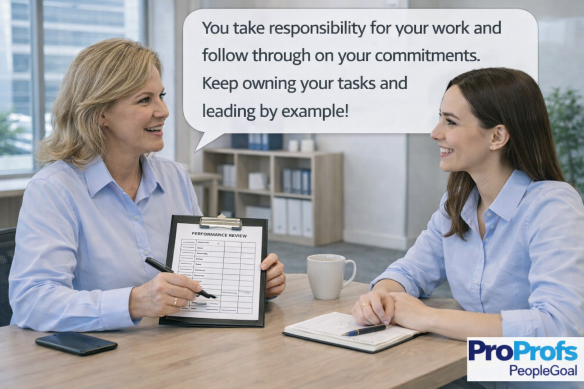
Ownership is what separates reactive reps from reliable ones. I pay attention to whether someone treats cases as transactions or responsibilities. Strong ownership means customers don’t need to chase updates, and teammates don’t need to fill gaps later.
When to use these phrases: These are the phrases I use when someone truly treats customer issues as their responsibility, not just a transaction. They’re great for reinforcing follow-through and reliability.
Industry fit: Especially important in B2B SaaS, managed services, healthcare admin support, and compliance-heavy industries, where customers expect updates and continuity.
Positive Feedback Comments
31. End-to-End Case Ownership: “You take full ownership of customer cases from start to finish. Rather than transferring responsibility prematurely, you follow through until the issue is resolved or clearly transitioned. This consistency builds trust and reduces customer frustration.”
32. Proactive Follow-Up: “You proactively follow up with customers without requiring reminders. When timelines extend or updates are needed, you communicate clearly before the customer asks. This level of accountability strengthens customer confidence in our service.”
33. Clear and Responsible Documentation: “Your case documentation reflects strong accountability and clarity. Notes are thorough, next steps are clearly outlined, and handoffs are seamless. This reduces confusion and supports stronger collaboration across the team.”
Constructive Feedback Comments
34. Proactive Update Opportunity: “There have been instances where customers waited longer than necessary for updates, even though progress was happening behind the scenes. While the issues were resolved correctly, earlier communication during delays would have improved customer confidence.”
35. Closing Feedback Loops Faster: “I’ve noticed that some cases remain open longer than needed due to delayed final confirmations or wrap-up communication. Even when resolved, leaving the loop open can create backlog and tracking confusion. Confirming resolution promptly, documenting outcomes clearly, and formally closing cases will improve workflow efficiency and ensure customers feel the issue is fully complete.”
36. Strengthening Follow-Through Habits: “There are moments when stalled or complex cases could benefit from earlier follow-up. While your approach is thorough, some cases sit longer than ideal before the next action is taken. Building a consistent habit of reviewing open cases daily and prioritizing follow-ups will improve reliability, reduce delays, and reinforce customer confidence in our responsiveness.”
Handling Difficult Customers
This is where customer service performance becomes highly visible. Anyone can handle a routine call. The real test is how someone responds when emotions run high. I pay close attention to tone control, de-escalation technique, emotional awareness, and the ability to stay solution-focused under pressure.
When to use these phrases: I use these comments when someone stays calm, professional, and solution-focused even when emotions run high. This is where customer service performance becomes most visible.
Industry fit: Highly relevant for airlines, telecom, utilities, healthcare, and any industry with frequent escalations or urgent service needs.

Positive Feedback Comments
37. Calm Under Pressure: “You remain calm and composed during emotionally charged conversations, even when customers are visibly frustrated or upset. Your steady tone and controlled pacing prevent situations from escalating further and help shift the focus back to resolution. That composure not only protects the customer experience but also sets a strong example for the rest of the team.”
38. Effective De-Escalation: “Your de-escalation approach is thoughtful and consistent. You acknowledge frustration directly, validate concerns without overpromising, and clearly outline next steps. By doing this, you move conversations from confrontation toward collaboration, which reduces repeat complaints and strengthens customer trust in our process.”
39. Professionalism During Criticism: “You maintain professionalism even when customers express direct criticism or dissatisfaction. Rather than reacting defensively, you remain composed, focused, and respectful. This ability to separate emotion from action protects both the customer relationship and the company’s reputation during difficult moments.”
Constructive Feedback Comments
40. Confidence in High-Conflict Calls: “There are moments where building additional confidence during high-conflict conversations would improve consistency. While you remain accurate in your responses, reinforcing empathy statements and maintaining steady pacing will help you regain control of tense situations more quickly.”
41. Tone Adjustment During Escalations: “In certain escalations, small adjustments in tone and phrasing could reduce friction faster. Even when delivering policy-based decisions, softening language slightly and reinforcing understanding can significantly improve emotional impact.”
42. Structured De-Escalation Practice: “Developing a more structured de-escalation framework will strengthen consistency in challenging conversations. Having a repeatable approach, such as acknowledge, clarify, reassure, resolve, will help you feel more confident and maintain control under pressure.”
Growth & Career Readiness
Reviews aren’t just about today’s performance. They’re about trajectory. I always look at whether someone is expanding their capability, applying feedback meaningfully, and preparing themselves for greater ownership or leadership in the future.
When to use these phrases: These phrases are perfect when someone is ready to take on more responsibility, mentor others, or grow into a senior support or team lead role.
Industry fit: Useful across all industries, but especially for scaling teams in fast-growing SaaS, startups, and customer success organizations.

Positive Feedback Comments
43. Readiness for Increased Responsibility: “You demonstrate readiness for increased responsibility through consistent performance and growing confidence in more complex cases. Your ability to handle challenging scenarios independently, while maintaining quality and composure, indicates strong potential for expanded leadership or senior-level responsibilities.”
44. Applying Feedback Effectively: “Your growth mindset is clearly visible in how you apply feedback. Areas we discussed in previous cycles have shown measurable improvement, particularly in communication and case ownership. That willingness to reflect, adjust, and implement change shows maturity and long-term potential.”
45. Initiative Beyond Core Role: “You regularly take initiative beyond your assigned responsibilities, whether by volunteering for process improvements, assisting peers, or offering ideas during team discussions. This proactive mindset reflects leadership qualities and positions you well for advancement opportunities.”
Constructive Feedback Comments
46. Expanding Complexity Handling: “Taking on more complex or cross-functional cases will accelerate your development and strengthen your readiness for higher-level responsibilities. Stretching into more challenging scenarios will help build deeper confidence and broaden your impact.”
47. Deepening Expertise: “Building deeper expertise in product knowledge, advanced troubleshooting, or cross-department workflows will better prepare you for leadership-level expectations. Strengthening subject-matter depth will increase both your independence and strategic value.”
48. Consistency for Advancement: “Strengthening consistency across metrics, communication channels, and case ownership will support your progression toward higher-impact roles. Maintaining steady performance across all conditions is key to demonstrating readiness for advancement.”
If you want more structured support beyond these customer service performance review phrases, I’ve also put together 50+ employee performance review templates you can copy, customize, and start using right away.
And remember, the phrases matter, but how you deliver them matters just as much. Customer service feedback works best when it feels clear, fair, and coaching-focused, not stiff or uncomfortable.
This short video will walk you through a simple way to lead these conversations smoothly.
Why Are Customer Service Performance Reviews Different From Other Roles?
If you’ve ever written a performance review for someone in customer service, you already know it’s a little different from reviewing most other roles. Because customer service isn’t just about completing tasks. It’s about how someone shows up in real conversations, often with frustrated customers, tight timelines, and pressure to solve problems fast.
Customer service performance is usually judged on two sides at once:
The human side (what customers feel):
- How empathetic and patient the agent sounds, even on difficult calls
- How clearly they communicate and reassure customers
- How well they stay calm under pressure
- How consistently they represent your brand’s tone and values
And the measurable side (what the numbers show):
- Customer Satisfaction Scores (CSAT)
- First Contact Resolution (did they solve the issue without follow-ups?)
- Response and handle time
- Quality assurance (QA) scores from call monitoring
And honestly, this is where most managers get stuck. A strong customer service performance review needs language that reflects both. It should feel fair, specific, and grounded in reality, not just generic praise or vague criticism. That’s exactly why having the right performance review phrases matters so much in this role.
What are the Common Mistakes Managers Make in Customer Service Reviews?
I’ll be honest, I’ve seen performance review phrases for customer service go wrong even when the manager has good intentions.
Not because they don’t care, but because customer service is such a nuanced role. It’s emotional work, it’s metric-driven, and it’s often high-pressure. And when review language is unclear or poorly framed, it can leave employees confused, defensive, or completely unsure of how to improve.
Here are the most common mistakes I see managers make, and what I’ve found works better instead.
1. Vague Praise That Sounds Nice but Says Nothing
It’s easy to write things like “Great job” or “You’re doing well.” But the problem is… the employee walks away thinking: Okay, but what exactly should I keep doing?
Fix: Tie praise to a specific behavior and impact.
Instead of: “You’re a strong performer.”
Try: “You consistently reassure customers during tense situations, which has helped reduce escalations and improve satisfaction.”
Specific praise builds clarity, not just confidence.
2. Using Metrics Without Any Human Context
Customer service teams live in numbers: CSAT, response time, QA, and resolution rate. But if a review is only metrics, it starts to feel like the person behind the work doesn’t matter.
Fix: Connect the numbers to what’s driving them.
Instead of: “Your handle time needs improvement.”
Try: “I’ve noticed longer handle times on complex cases, which makes sense given how thoroughly you troubleshoot. Let’s work on balancing depth with efficiency.”
That framing feels fair and actionable, not punitive.
3. Introducing Criticism as a Surprise at Review Time
This is one of the fastest ways to break trust. If an employee is hearing something for the first time in a formal review, it immediately feels like a gotcha, not coaching.
Fix: Reviews should summarize, not ambush.
A performance review should sound like: “This is what we’ve been working on, and here’s the next step.”
Not: “By the way, you’ve been doing this wrong all year.”
The best feedback is consistent, not sudden.
4. Personality-Based Feedback Instead of Behavior-Based Feedback
This one shows up a lot in customer service. Phrases like:
- “You need a better attitude.”
- “You’re too emotional.”
- “You’re not friendly enough.”
…are vague, subjective, and honestly unhelpful.
Fix: Focus on observable actions, not personality labels.
Instead of: “You come across as impatient.”
Try: “In a few calls, customers seemed unsure they were being heard. Slowing down slightly and adding reassurance would improve the experience.”
Behavior is coachable. Personality judgments aren’t.
Make Reviews Easier, More Human, More Useful
Writing performance review phrases for customer service doesn’t have to feel forced or overly formal. The strongest reviews balance empathy with metrics, behavior with outcomes, and clarity with accountability. When feedback is specific, grounded in real examples, and focused on growth, it stops feeling like a formality and starts becoming a leadership tool.
And as your team grows, structure becomes just as important as wording. Having a system that connects goals, feedback, and measurable performance can make reviews far more consistent and less stressful to manage. Tools like PeopleGoal can help organize 360 feedback, KPIs, and development plans in one place, keeping conversations focused on progress, not paperwork.
At the end of the day, great review phrases matter. But how you use them to build better performance matters even more.
Frequently Asked Questions

What are the 3 C’s of feedback?
The 3 C’s of feedback are Clear, Constructive, and Consistent. Feedback should be specific enough to understand, focused on improvement rather than blame, and delivered regularly instead of only during formal reviews.
What are the 5 R’s of feedback?
The 5 R’s typically stand for Respectful, Relevant, Reasonable, Reliable, and Realistic. Good feedback should feel fair, be connected to actual performance, be grounded in facts, and aim for achievable improvement.
What is the most powerful positive feedback?
The most powerful positive feedback is specific and tied to impact. Instead of saying “Great job,” explain what they did and how it helped customers or the team. When people understand their impact, their motivation naturally increases.
What are the 5 key performance indicators for employees?
Common KPIs include productivity, quality of work, attendance, customer satisfaction, and goal achievement. In customer service specifically, metrics like CSAT, response time, resolution rate, QA score, and adherence often matter most.
What are positive performance review phrases for leadership?
Strong leadership phrases highlight clarity, accountability, and team development. For example: “You provide clear direction during high-pressure situations,” or “You create an environment where team members feel supported and motivated to perform.”
What are powerful words to use in a customer service review?
Words like proactive, reliable, empathetic, consistent, accountable, solution-oriented, and collaborative carry weight because they describe observable behavior. Pairing them with examples makes them even stronger.
How do I write a call center performance review?
Start by reviewing both metrics and behavior. Balance numbers like CSAT, AHT, and QA with communication style, de-escalation skills, and teamwork. Keep feedback specific, behavior-based, and tied to measurable outcomes.
What should I write if an employee disagrees with feedback?
Acknowledge their perspective first. Then clarify your observations with examples and measurable data. Keeping the tone professional and open to discussion helps maintain trust while reinforcing accountability.
How do I document attendance or reliability professionally?
Focus on observable patterns and business impact, not assumptions. For example, note the frequency of absences, missed shifts, or delayed follow-ups, and explain how it affects team workflow or customer experience. Keep it factual, neutral, and solution-oriented.
Ready to 3x Your Teams' Performance?
Use the best performance management software to align goals, track progress, and boost employee engagement.