

Customer service performance dips happen, even in the best teams. And in my experience, the real challenge isn’t spotting the issue; it’s fixing it without crushing morale or losing people who still have potential.
With customer support moving faster than ever, tickets pile up quickly, customers expect instant empathy, and every interaction is tied to a metric. I’ve seen that “quick coaching chats” alone rarely create lasting improvement anymore.
That’s where a customer service performance improvement plan becomes essential. When done right, it’s not a punishment. It’s a structured, fair, and human-first way to help agents improve with clear goals, real support, and measurable progress.
In this guide, I’ll share a practical step-by-step framework, role-based examples, and templates you can apply immediately.
What Is a Customer Service Performance Improvement Plan?
A customer service performance improvement plan is a structured way to help support agents get back on track when performance starts slipping. It’s not a vague warning or a casual “do better” conversation. Instead, it’s a documented agreement that outlines the specific issues, clear goals, required actions, and a realistic timeline for improvement.
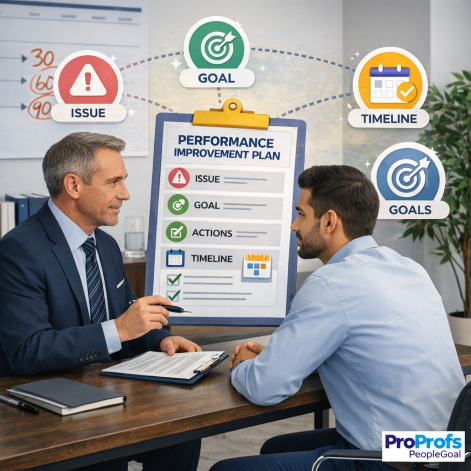
For customer service managers and team leads, it works like a practical roadmap. You can focus on measurable service metrics, schedule regular check-ins, and support the agent with coaching rather than leaving them to guess what success looks like. Think of it as a shared contract: “Here’s where things are falling short, and here’s how we’ll fix it together.”
That said, PIPs come with a bit of a paradox. On paper, they’re developmental. But employees often fear that they signal termination. The best way to ease that fear is to frame the plan as a growth process with milestones, not a countdown clock.
Why Customer Service Teams Need an Improvement Plan
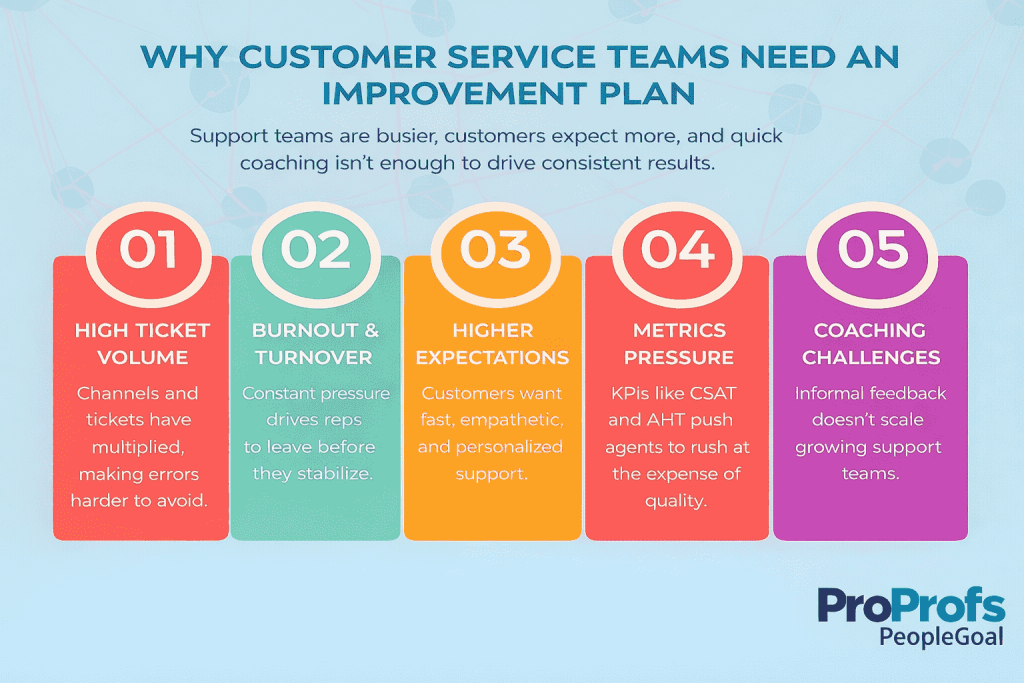
Modern customer support isn’t what it used to be, and the pressure on service teams keeps growing. From my perspective, a performance improvement plan is no longer just an HR formality. It has become a practical system for helping agents succeed in today’s fast-moving support environment.
1. High Ticket Volumes Leave Little Room for Error
Support teams are handling more customer requests than ever, often across multiple channels at once. When volume spikes, even strong agents can struggle to keep up. I’ve found that a structured plan helps teams spot performance gaps early and respond before service quality drops.
2. Burnout and Turnover Are Rising Fast
Customer service roles are emotionally demanding, and constant pressure leads to exhaustion. Many reps leave before they can improve or stabilize. A clear improvement plan provides coaching, direction, and support, which can reduce frustration and improve retention.
3. Customer Expectations Keep Getting Higher
Customers now expect fast, empathetic, and personalized help every single time. One poor interaction can damage loyalty instantly. Performance improvement plans help agents build the skills needed to meet these expectations consistently.
4. Metrics Pressure Makes Every Interaction a Scorecard
KPIs like CSAT (Customer Satisfaction), AHT (Average Handle Time), and NPS (Net Promoter Score) are always being tracked, which adds stress and can push agents into rushed behavior. In my experience, a PIP creates clarity around what matters most and how improvement will be measured fairly.
5. Informal Coaching Doesn’t Scale Anymore
Quick feedback chats may work in small teams, but growing support organizations need consistency. A work performance improvement plan turns coaching into a repeatable process with clear goals, check-ins, and accountability.
When Should You Put a Customer Service Agent on a PIP?
A performance improvement plan should never be your first move. In customer service, I firmly believe that performance dips can happen for many reasons, from unclear expectations to workload spikes to simple training gaps. The key is to respond thoughtfully, not emotionally.
Before starting a PIP, I always recommend spending a few weeks observing patterns, offering informal feedback, and checking whether the issue improves with basic support. If it doesn’t, and the same problems keep repeating, that’s usually the point where a formal plan becomes necessary.
For example, let’s say an agent has had three coaching conversations over the last month about incomplete ticket resolution. At first, it seemed like a small issue. But now customers are reopening cases, QA audits show the same missed steps, and the team lead is spending extra time fixing escalations. At that point, a PIP isn’t about punishment. It’s about giving structure before the gap becomes permanent.
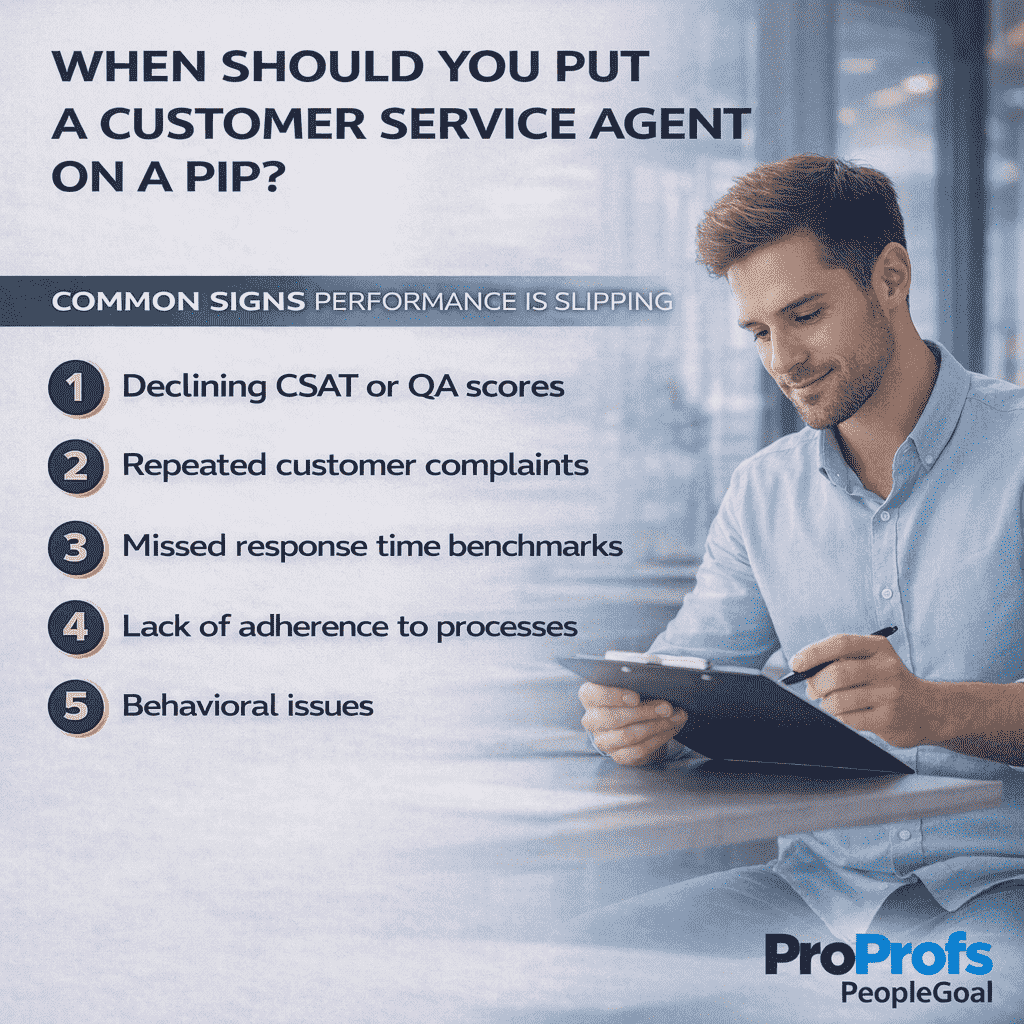
Common Signs Performance Is Slipping
There are a few clear signals that an agent may need structured improvement:
- Declining CSAT or QA scores often signal a sustained decline in service quality. If the team average is steady but one agent’s scores keep falling, it’s worth investigating early.
For instance, if the team average QA score stays around 90%, but one agent has dropped to 78% for four straight audits, that’s not a one-off mistake. It’s a sustained trend that usually points to skill gaps or burnout.
- Repeated customer complaints are a red flag, especially when feedback repeatedly highlights the same issues, such as poor empathy or unresolved problems.
For example, a clear pattern is when multiple customers independently write comments like “I had to explain twice” or “the agent didn’t seem to listen.” That’s often a signal that the issue is empathy or active listening, not technical ability.
- Missed response time benchmarks can erode trust quickly. Agents regularly exceeding expected handling or resolution times may need process coaching.
For instance, if an agent regularly exceeds resolution benchmarks by 20–30%, it may not be laziness. It could be hesitation, lack of confidence, or inefficient workflows that need coaching.
- Lack of adherence to processes, such as skipping documentation steps or failing to follow escalation workflows, creates inconsistency across the support team.
Behavioral issues such as an inappropriate tone, low collaboration, or weak empathy can impact both the customer experience and team morale.
5 Mistakes to Avoid When Building Performance Improvement Plans
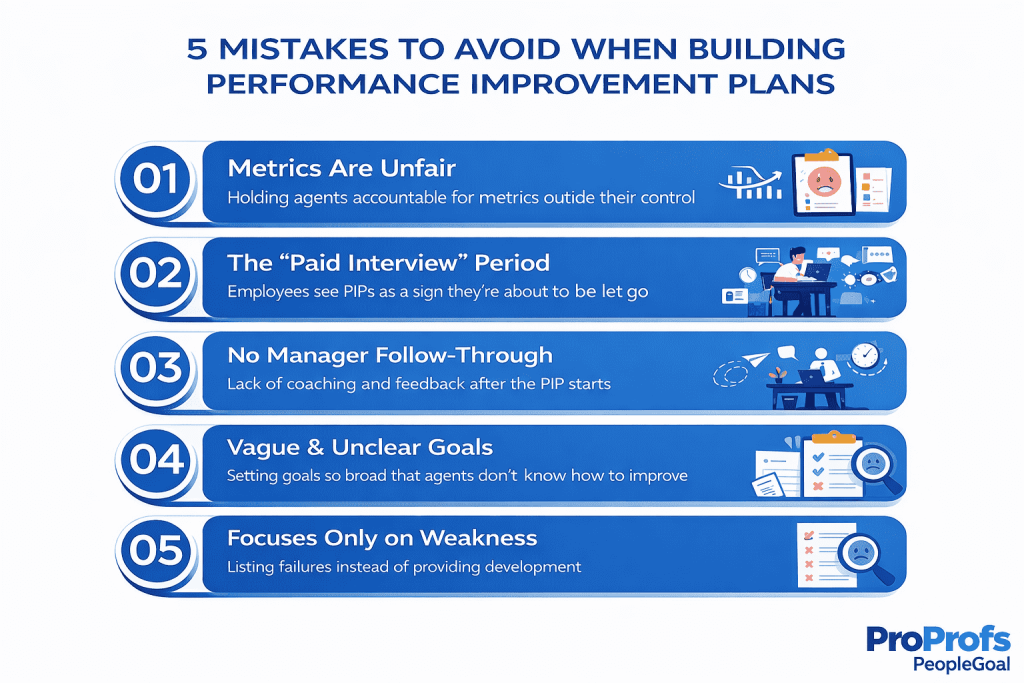
PIPs often get a bad rap, and honestly, I understand why. I’ve noticed too many performance improvement plans handled poorly, which is exactly why employees don’t always view them as support tools.
In conversations with managers and agents, when a PIP is done wrong, it feels less like development and more like a trap. This section is about building trust by naming the common mistakes, so you can avoid them.
1. PIPs Feel Like Traps When Metrics Are Unfair
One of the biggest mistakes I can think of is tying a PIP too tightly to metrics that aren’t fully in the agent’s control. CSAT scores can drop due to long hold times, understaffing, or even pricing complaints, yet the agent still gets blamed. That creates frustration fast.
At the same time, AHT pressure often pushes agents to rush calls, sacrificing empathy and resolution quality just to beat the clock. And when QA becomes script policing, skilled agents feel punished for handling real situations naturally rather than reading perfect lines.
I’ve known managers who place an agent on a PIP for low CSAT during a month when hold times were 15 minutes because the team was understaffed. Customers were angry before the agent even spoke. The agent’s service was solid, but the metric made it look like a failure. That’s how PIPs start feeling unfair.
2. Employees Often Experience the “Paid Interview Period”
Here’s the uncomfortable truth: many employees assume termination is coming the moment a PIP starts. I’ve come across people who shift mentally from “How do I improve?” to “How fast can I find my next job?”
That’s why PIPs sometimes turn into a paid interview period, where job searching replaces growth. The anxiety alone can drag performance down further, even if the person genuinely wants to succeed.
3. Lack of Manager Support Makes PIPs Fail
Another major issue is what I call the support gap. Managers issue the plan, then disappear. No follow-up, no coaching, no real guidance.
Without consistent check-ins and hands-on support, the PIP becomes a paperwork exercise instead of an employee development plan. And this is exactly what employees complain about most online: the plan exists, but the help doesn’t.
4. The Goals Are Too Vague to Be Actionable
PIPs fail when the expectations aren’t clear enough. Telling an agent to “improve communication” or “be more professional” doesn’t give them anything specific to work on.
Without concrete targets, the plan becomes confusing and subjective. Clear milestones, measurable performance outcomes, and practical next steps make all the difference.
5. The Plan Focuses Only on Weakness, Not Development
Another common mistake is treating the PIP as a list of failures rather than a growth opportunity. When the plan focuses only on what’s wrong, employees feel discouraged rather than supported.
The strongest PIPs include development actions, such as coaching sessions, training resources, or role-specific skill-building. That balance is what turns the process into improvement, not humiliation.
When you avoid these five mistakes, a PIP stops feeling like a countdown and starts working like the growth tool it was meant to be.
What Makes a Customer Service PIP Actually Work
This is where the rubber meets the road. In my experience, an effective customer service performance improvement plan isn’t a generic checklist.
It’s a tailored, human-first strategy that gives agents clarity, support, and a real path forward. When you build a PIP around the right elements, it becomes actionable, fair, and results-driven.
1. Clear Performance Expectations
Vague goals are where most improvement plans fall apart. Agents can’t improve if they don’t know exactly what success looks like.
Bad: “Improve customer interactions.”
Good: “Achieve an 85% QA score within 30 days by focusing on active listening and proper resolution steps.”
When expectations are specific, agents can track their own progress, and managers can coach with clarity instead of assumptions.
2. Goals Linked to Service Outcomes and KPIs
A strong PIP should connect individual improvement to real service outcomes. I always recommend using cascading goals, where agent-level targets roll up into team OKRs.
For example, goals might focus on:
- Reducing escalations by 15% by helping agents ask better probing questions before transferring cases.
- Improving First Call Resolution from 65% to 80% by strengthening product knowledge and troubleshooting confidence.
- Increasing customer satisfaction by building stronger empathy skills and ensuring every customer feels heard and supported.
Making goals SMART (Specific, Measurable, Achievable, Relevant, Time-bound) ensures the plan drives both personal growth and business impact.
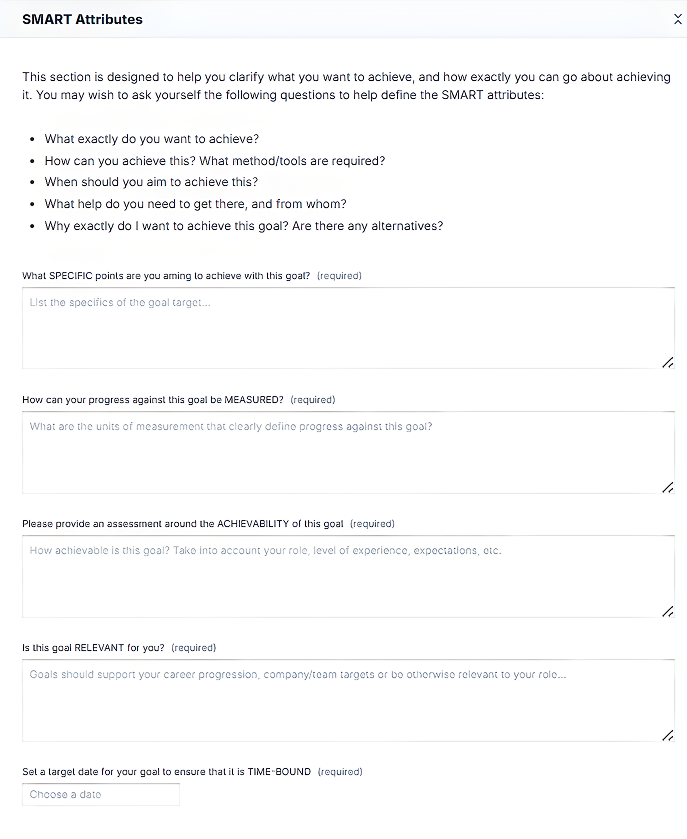
Here’s what a strong customer service SMART goal actually looks like in practice:
“In the next 60 days, the agent will increase First Contact Resolution from 68% to 80% by completing two product refresher sessions, using the troubleshooting checklist on every ticket, and participating in weekly call reviews with their manager.”
That level of clarity removes guesswork for everyone.
3. Balanced Metrics That Reflect Real Support Work
One metric alone never tells the full story. Customer service work is too complex for that. The best plans use a balanced set of KPIs, while staying cautious about what each one misses.
| Metric | What It Measures | Risk If Used Alone |
|---|---|---|
| CSAT | Customer satisfaction after interaction | Influenced by hold times, product issues, or policies beyond the agent’s control |
| NPS | Overall loyalty and brand perception | Penalizes agents for company-wide frustrations like pricing or outages |
| AHT | Speed and efficiency | Encourages rushing through calls instead of resolving issues properly |
| FCR | Resolving issues on first contact | Doesn’t account for complex problems that naturally require follow-up |
| CES | How easy the experience felt | Misses emotional factors like tone, patience, and reassurance |
| QA Score | Audit-based service quality | Can become overly focused on scripts instead of real problem-solving |
| Ticket Backlog | Pending workload | Ignores workload spikes or staffing shortages that affect volume |
| Resolution Time | End-to-end issue closure | Punishes agents for delays caused by dependencies on other teams |
I’ve found that pairing metrics, like AHT with FCR, creates a much fairer and more realistic view of performance.
For example, if an agent’s AHT is high but their FCR is also improving, that may actually be a good sign. They’re taking longer because they’re solving problems fully. On the other hand, if AHT drops sharply but repeat tickets rise, the agent may be rushing just to hit a timer.
4. Coaching, Not Surveillance
A PIP should feel like mentoring, not monitoring. This is where many organizations get it wrong.
The most effective plans include:
- Weekly check-ins where managers discuss progress, obstacles, and small wins instead of only reviewing numbers.
- Side-by-side call or ticket reviews that allow agents to learn in real time through practical examples.
- Skill-building conversations focused on areas like de-escalation, empathy, or handling complex customer situations with confidence.
A weekly check-in shouldn’t sound like “Your numbers are still low.”
It should sound like:
“This week, I noticed you handled a difficult refund case really well. Let’s build on that. The one area we’ll focus on next is closing tickets with clearer next-step summaries so customers don’t reopen them.”
That’s coaching, not policing.
This directly addresses the “support deficit” employees complain about, where managers disappear rather than coach.
5. Continuous Feedback and 360 Input
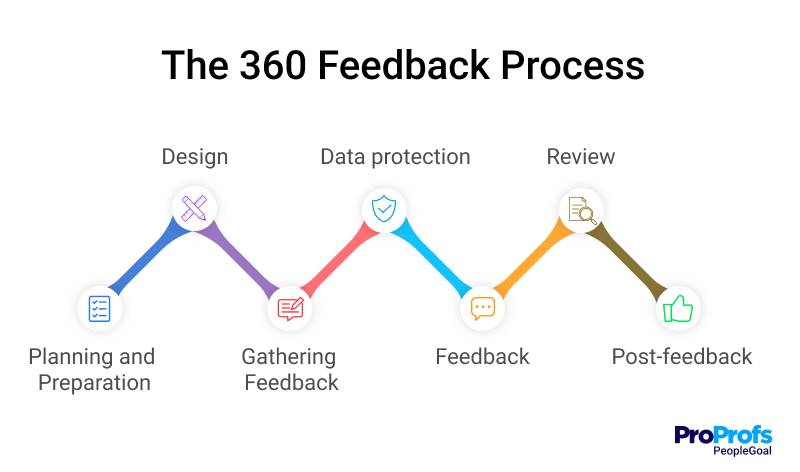
Customer service performance isn’t just about numbers. It’s also about behavior, collaboration, and communication. That’s why employee feedback should come from multiple angles:
- Peer feedback that highlights teamwork issues, collaboration gaps, or knowledge-sharing opportunities.
- Manager feedback that connects day-to-day performance with service quality expectations and metrics.
- Self-reflection that encourages agents to take ownership and recognize where they personally want to improve.
- Anonymous feedback options that help ensure honesty and fairness, especially in peer-driven evaluations.
This continuous feedback matches exactly what modern support teams want: improvement that feels equitable, not biased.
6. Documentation That Protects Both Employee and Company
Documentation doesn’t have to feel cold. When done neutrally, it creates transparency.
A good PIP should:
- Track progress clearly so both the agent and manager can track improvement milestones over time.
- Avoid surprises by ensuring feedback is shared consistently during weekly one-on-ones, not saved for the final review meeting.
- Provide a shared record of coaching conversations, agreed actions, and performance trends.
This protects both sides and keeps the plan focused on facts rather than feelings.
7. Automation and Reminders to Ensure Follow-Through
One of the biggest challenges is execution. Manual tracking leads to forgotten check-ins and inconsistent follow-up.
That’s why strong plans include:
- Scheduled 360 review process that ensures performance discussions happen regularly, not randomly.
- Email nudges that remind both managers and agents about upcoming milestones and deadlines.
- Recurring check-ins that stay on the calendar, making improvement a consistent process rather than an afterthought.
Teams expect the process to actually happen, not fade out.
8. Reporting and Visibility for Managers
Finally, leaders need visibility, not guesswork. The best improvement plans make it easy to analyze:
- Who is improving steadily and responding well to coaching support.
- Who is stuck and may need additional training or a different type of intervention.
- Which teams are struggling with similar gaps, signaling the need for group workshops or process fixes?
- Whether evaluations, check-ins, and action steps are being completed on time across the organization.
Custom employee performance reports help managers allocate coaching time wisely and prevent the same issues from spreading across the team.
When these eight elements are in place, a customer service performance improvement plan becomes what it should be: a structured, supportive system that strengthens both the agent and the customer experience.
How to Create a Customer Service Performance Improvement Plan
Ready to implement? This is where the plan becomes real. In my experience, the best customer service performance improvement plans follow a simple, structured process that feels supportive, not stressful.
These five steps help you create quick wins while building long-term performance habits.
Step 1: Identify the Performance Gap With Context
The first mistake I try to avoid is jumping straight to conclusions. A performance gap isn’t always about effort; it’s often about context.
Before writing a plan, look closely at:
- The agent’s workload and whether ticket volume has been unusually high
- The tools they’re using and whether system glitches or slow processes are affecting speed
- Customer types they handle, since complex accounts naturally take longer
For example, if AHT is rising, it may not be because the agent is inefficient. It may be because they’re stuck navigating multiple tools or dealing with difficult escalations. I’ve found that involving the agent early and asking for their perspective makes the plan far more accurate and fair from the start.
Step 2: Hold the Right Conversation (Script Included)
This conversation sets the tone for everything that follows. I’ve found that if it feels accusatory, the plan fails before it even begins.
Here’s a manager script that keeps it supportive and clear:
| “Hi [Agent Name], I’ve noticed a few trends in your recent metrics, like CSAT dipping below the team average. I really value your contributions, and my goal is to help you get back on track.Let’s walk through what’s been challenging, set clear goals together, and outline the coaching and resources that will help. What’s your perspective on what’s been hardest lately?” |
What matters here is the intent. You’re not announcing failure. You’re opening a shared problem-solving conversation. End the meeting with clear next steps, like scheduling the first check-in and sharing a draft plan, because uncertainty is what creates fear.
Step 3: Build a 30–60–90 Day Improvement Plan
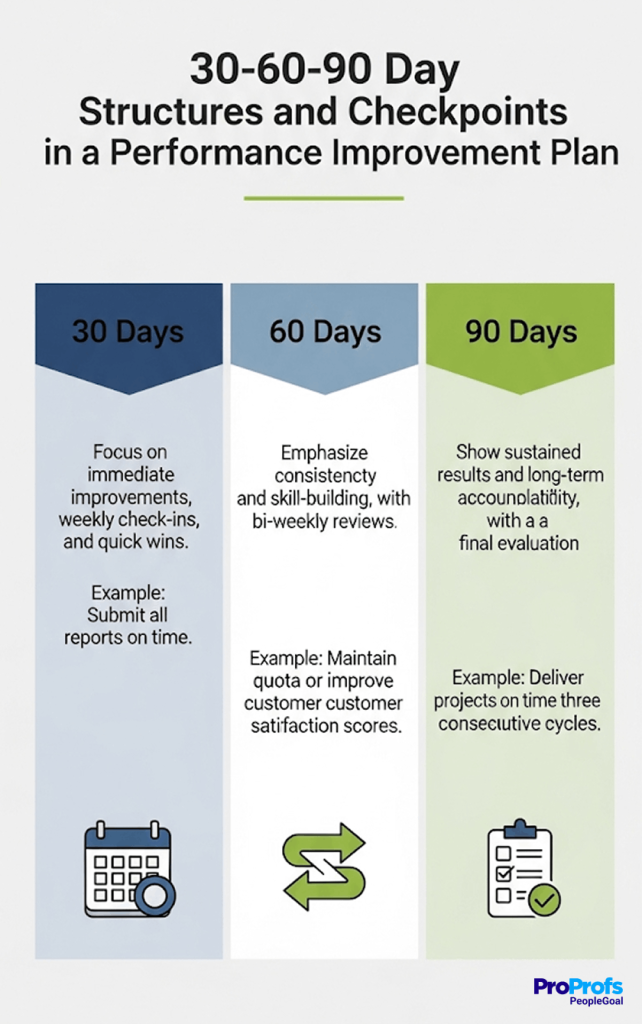
A phased timeline keeps the process realistic. I like using a 30–60–90 day structure because it creates momentum without overwhelming the agent.
- 30 days: Quick wins
This phase should focus on small, achievable changes, like improving documentation habits, following escalation workflows, or reducing repeat tickets through better questioning.
- 60 days: Skill-building
Once the basics are stable, this is where deeper coaching matters. You might focus on empathy training, de-escalation techniques, or product knowledge refreshers that improve QA and FCR.
- 90 days: Consistency
The final phase is about sustaining progress. The goal is for the agent to perform confidently and consistently, without needing constant reminders or intervention.
Here’s an example of this plan:
In the first 30 days, you might focus on something simple like consistent documentation. By day 30, the agent is no longer missing escalation notes.
By 60 days, you might note improvement in QA because they’ve practiced empathy and de-escalation.
And by 90 days, the real win is consistency: the agent isn’t just “passing the plan,” they’re performing confidently without constant reminders.
That’s what long-term improvement looks like.
Step 4: Track Weekly Progress With Checkpoints
A plan only works if it’s actively followed. Weekly checkpoints prevent the PIP from becoming forgotten paperwork.
Here’s the checklist I recommend using every week:
- Review key metrics against the agreed targets, so progress feels measurable and fair
- Document coaching notes and action items, so both sides stay aligned
- Ask for employee reflection, because improvement is faster when agents feel ownership
- Make adjustments when external blockers appear, like workload spikes or system issues
Consistency here is what turns the performance improvement plan for customer service into real results.
Step 5: Decide Outcomes Fairly
At the end of the timeline, outcomes should be based on data and progress, not gut feelings. A fair process makes the result easier for everyone to accept.
Possible outcomes include:
- Improvement achieved, where the agent meets goals and transitions back into standard performance reviews
- Extension needed, where partial progress is visible, and the plan is adjusted for another 30 days
- Role change, if the agent may succeed better in a different support function
- Exit (last resort), only when there is no improvement despite coaching, clarity, and support
The goal should always be growth first, not punishment. A well-run PIP helps you strengthen both the employee and the customer experience.
Customer Service Performance Improvement Plan Template
If there’s one part of this guide that managers tell me they appreciate most, it’s having a ready-to-use template. A customer service performance improvement plan becomes much easier to implement when you don’t have to start from a blank page.
You can copy the sample performance improvement plan for customer service below into a document, customize it for your agent, and use it as a structured, fair starting point. If you want an even faster option, I’d also recommend offering this as a downloadable Word or PDF asset so teams can apply it instantly.
Employee Details
- Name: [Agent Name]
- Role: [e.g., Customer Support Agent]
- Manager: [Your Name]
- Start Date: [Date]
Issue Summary
- [Briefly describe the specific performance gaps, for example:
- “CSAT has remained below 80% over the past month due to incomplete resolutions, and AHT has exceeded the expected 7-minute benchmark.”]
Example issue summary: Over the past 5 weeks, CSAT has averaged 78% due to incomplete closure steps. QA audits show missed empathy statements in 6 out of 10 calls, and the escalation rate has increased by 12%.
Target KPIs
- CSAT: Reach 85% within 60 days
- FCR: Improve to 75% by the end of the plan
- QA Score: Maintain an average of 90% on weekly audits
Support Actions
- Weekly coaching sessions focused on [specific skills such as empathy, probing, or de-escalation]
- Access to training resources such as [courses, playbooks, knowledge base articles]
- Peer shadowing sessions scheduled twice per month for practical learning
Timeline
- 30 Days: Quick wins, early progress check, process reinforcement
- 60 Days: Mid-plan review with adjustments if needed
- 90 Days: Final evaluation based on sustained improvement
Review Schedule
- Weekly check-in meetings held on [Days/Times]
- Progress tracking through a shared document updated bi-weekly
Final Outcome Criteria
- Success: All KPIs met and sustained for 30 days after the plan
- Extension: Partial improvement achieved, plan extended by 30 days with updated goals
- Other Outcomes: Role adjustment or separation only if no progress occurs despite coaching and support
This template keeps the plan clear, measurable, and supportive, which is exactly what makes a PIP feel fair instead of intimidating.
4 Customer Service PIP Examples to Improve Support Performance
One thing I’ve learned is that performance improvement plans work best when they’re not one-size-fits-all. A call center agent, a technical support specialist, and a social media rep face very different pressures, so their improvement plans should reflect that.
Tailoring your PIP to the role is actually a competitive advantage. It makes the plan feel more fair, more realistic, and far more effective.
1. Call Center Agents (AHT + Empathy Balance)
Take Maria, a call center agent who’s known for being friendly with customers. Recently, though, her calls have been running much longer than expected, and CSAT has started slipping because conversations feel rushed toward the end.
Performance concern: Maria is taking longer than expected on calls, and customer satisfaction has started dropping due to incomplete resolutions.
Improvement goal: Reduce Average Handle Time to 6 minutes while maintaining a CSAT score of 90% or higher over the next 60 days.
Support actions included in the plan:
- Weekly coaching sessions to help Maria structure calls more efficiently without losing empathy
- Side-by-side call reviews to spot where conversations get stuck or off track
- Role-play exercises to strengthen tone, active listening, and de-escalation
- Script and workflow guidance so she knows what to prioritize during high-volume periods
Success criteria: Maria consistently meets time benchmarks while maintaining service quality, without sacrificing the customer experience for speed.
2. Technical Support (Accuracy Over Speed)
Now consider David, a technical support specialist handling complex troubleshooting cases. He works hard, but repeat tickets have increased because solutions aren’t always fully verified before closing.
Performance concern: David resolves tickets slowly, and repeat contacts are rising because fixes aren’t always confirmed thoroughly.
Improvement goal: Increase First Contact Resolution to 85% by improving troubleshooting accuracy and reducing repeat tickets within 90 days.
Support actions included in the plan:
- Product knowledge refreshers and access to updated troubleshooting playbooks
- Peer “tech huddles” twice a month to review complex cases and solution paths
- Manager-guided ticket audits focused on resolution quality, not just response speed
- Reduced emphasis on AHT so David isn’t pressured into quick but incorrect fixes
Success criteria: Customers receive correct solutions the first time, and repeat ticket volume declines steadily.
3. Remote Teams (Coaching Over Zoom)
Then there’s Jason, a remote support agent who performs well independently but has been struggling with consistency and collaboration. Resolution times have slowed, and internal handoffs are occasionally missed because real-time guidance is harder remotely.
Performance concern: Jason is struggling with consistency and collaboration in a remote environment, leading to slower resolutions and missed handoffs.
Improvement goal: Improve workflow consistency and team coordination over the next 60 days, with clear progress in response times and internal communication.
Support actions included in the plan:
- Daily or biweekly stand-ups to provide structure and reduce isolation
- Virtual side-by-side coaching sessions using screen-share for real-time support
- Written async feedback after ticket reviews to bridge time zones
- Clear expectations around documentation, escalation, and handoff workflows
Success criteria: Jason shows stronger collaboration, fewer missed steps, and improved consistency across remote processes.
4. Social Media Support (Tone + Brand Risk)
Finally, think about Aisha, a social media support rep. Her replies are technically correct, but they sometimes come across as too blunt. Since every response is public, even small tone issues increase the risk of escalations and reputational damage.
Performance concern: Aisha’s responses lack empathy or brand tone, creating the potential for public escalations.
Improvement goal: Maintain CSAT at 95% while achieving zero brand-risk escalations across public channels over the next 30–60 days.
Support actions included in the plan:
- Tone and communication coaching focused on empathy, clarity, and brand voice
- Weekly response audits reviewing real examples of what worked and what didn’t
- Templates for high-risk situations (angry customers, sensitive complaints, refunds)
- Practice exercises for writing calm, human replies under pressure
Success criteria: Aisha consistently delivers professional, empathetic, brand-aligned responses without triggering escalations.
How to Execute a Customer Service Performance Improvement Plan
Earlier, I walked through the step-by-step process of running a strong customer service performance improvement plan. But in real support environments, I’ve found that knowing the steps is only half the battle. The bigger challenge is executing them consistently, especially when you’re managing multiple agents, tight schedules, and constant ticket volume.
This works fine when you’re managing one agent. But what happens when you’re managing five? Or fifteen?
To help you out, I’m including this section. Tools like PeopleGoal don’t replace coaching or leadership, but they do make it much easier to stay organized, follow through on check-ins, and keep a performance improvement plan for customer service fair and structured over time.
To make this even easier, I’ve put together a short video on how to build a customer service performance improvement plan the right way.
Here’s how I’d use PeopleGoal in practice:
Step 1: Start With a Ready-to-Use Template
When I don’t want to build a plan from scratch, I start with a pre-built performance improvement template inside the PeopleGoal App Store. It already includes the right stages, criteria, and structure, so I can launch quickly without missing key elements.
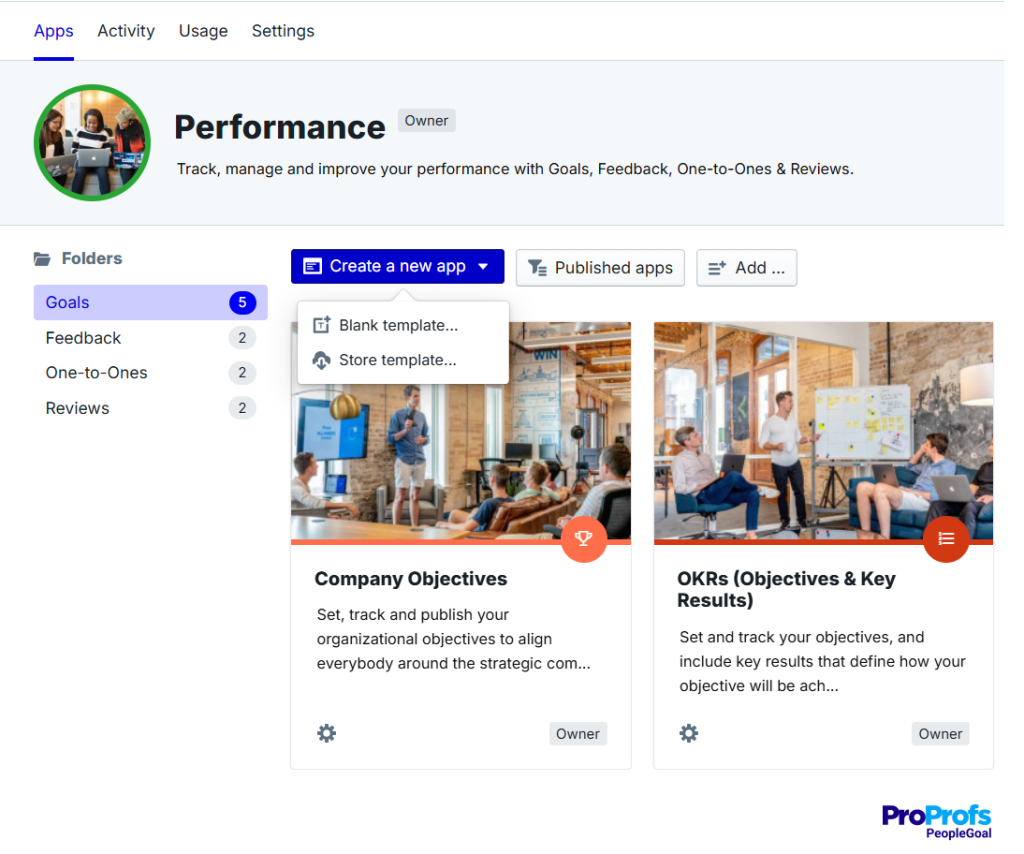
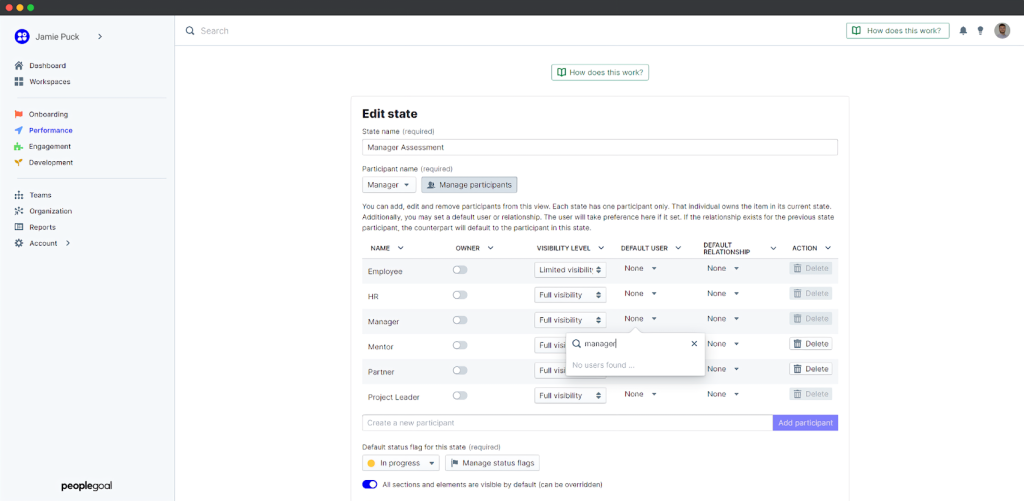
Step 2: Assign Roles and Set Visibility
One thing I appreciate is being able to clearly define who’s involved. I can assign managers, employees, and HR to the plan, and control what each person sees at different stages. That keeps feedback structured, confidential, and much less stressful for everyone.
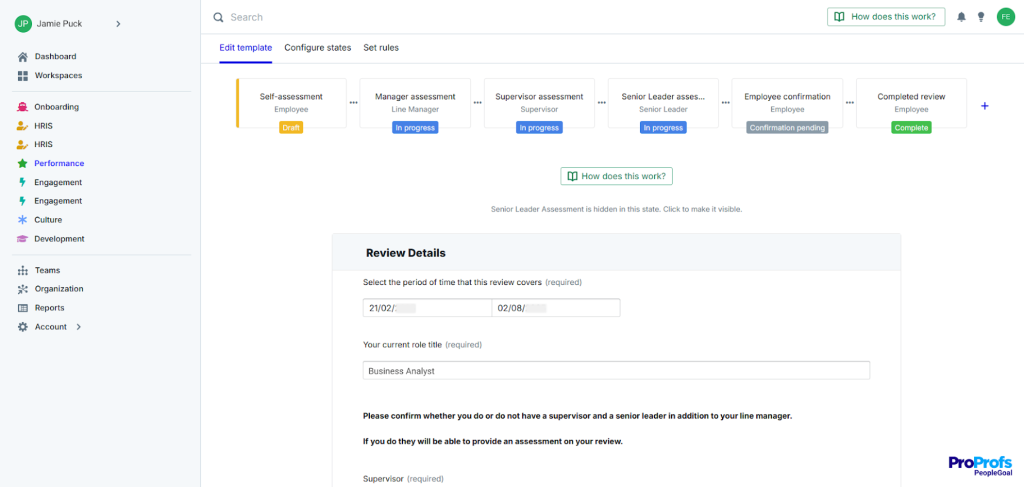
Step 3: Customize the Review Workflow
Since every support team operates differently, I like that I can adjust the custom workflow to match our process. For example, I can start with employee self-reflection, then move into manager coaching, and include HR review only when needed.
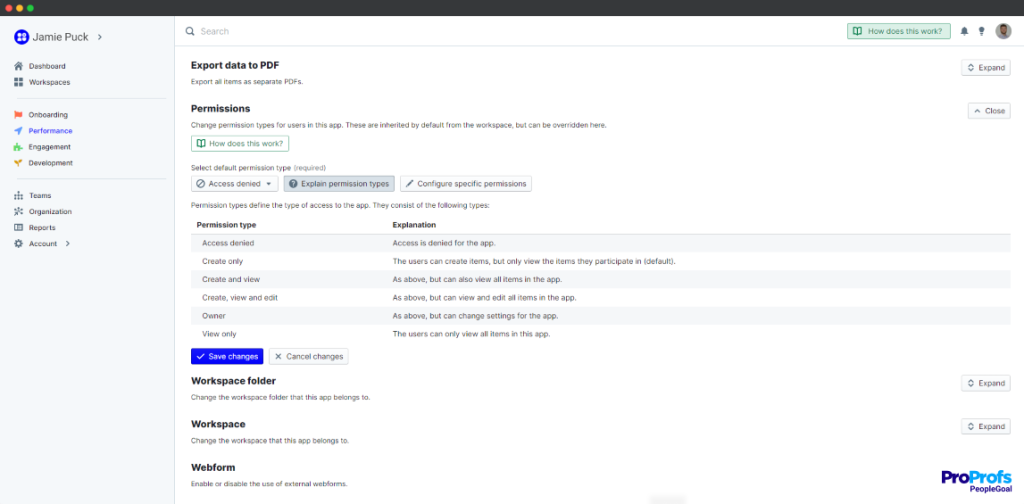
Step 4: Set Permissions and Launch at Scale
As teams grow, consistency becomes harder to maintain manually. With PeopleGoal, I can manage permissions across departments and roll out improvement plans for entire teams when needed, instead of juggling separate documents for each person.
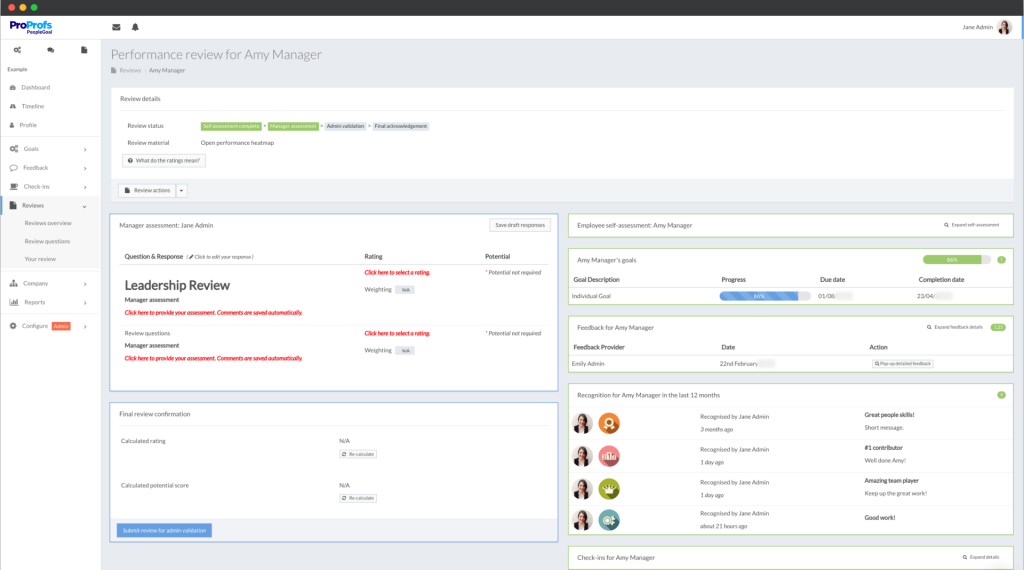
Step 5: Track Progress and Build Reports
Instead of chasing updates through spreadsheets or email threads, I can monitor progress in real time. PeopleGoal also helps me generate reports that highlight completion status, improvement trends, and employee development needs, which becomes especially useful when multiple agents are on plans at once.
And that’s really it. I still believe performance improvement is ultimately about people and coaching, but having a tool that keeps the process structured makes it far easier to run improvement plans consistently as a customer service organization scales.
Build Stronger Support Teams With Customer Service PIPs
A customer service performance improvement plan works best when it feels like a growth path, not a threat. As we now know, the strongest plans are built on clear expectations, balanced metrics, real coaching support, and consistent follow-through.
When managers focus on context, fairness, and development, a PIP becomes a tool that strengthens both employee confidence and the customer experience, rather than creating fear or frustration.
The key is simple: don’t treat improvement as paperwork. Treat it as a structured partnership that helps agents succeed in today’s high-pressure support environment.
And if you’re managing multiple plans or want a more organized way to track goals, feedback, and progress, tools like PeopleGoal can help keep everything running smoothly without adding complexity.
Want to build a plan your team can actually follow? Start with a simple template and take the first step today.
Frequently Asked Questions

How long should a customer service performance improvement plan last?
Most customer service PIPs run 30–90 days. Many managers use 30 days for quick fixes, 60 for skill-building, and 90 for long-term consistency.
What metrics should managers include in a support agent PIP?
A balanced plan may track CSAT (Customer Satisfaction Score), NPS (Net Promoter Score), AHT (Average Handle Time), FCR (First Contact Resolution), CES (Customer Effort Score), QA (Quality Assurance), ticket backlog, and resolution time.
Can performance improvement plans actually lead to stronger support teams?
Yes. When goals are clear and coaching is consistent, PIPs often help agents improve skills, regain confidence, and deliver better customer experiences.
How can managers make a PIP feel fair and supportive?
Involve the agent early, focus on measurable goals, provide ongoing coaching, and document progress transparently so the plan feels developmental, not punitive.
Ready to 3x Your Teams' Performance?
Use the best performance management software to align goals, track progress, and boost employee engagement.