
What if I told you the world of Trakstar Alternatives is far bigger, sharper, and more powerful than what most HR teams ever discover?
That single thought pulled you in, and it should, because choosing the wrong platform can quietly drain productivity for years.
I have spent more than a decade testing HR tools, reviewing over 150 platforms, and gathering real stories from teams who use them every day, which is why I can sort the pretenders from the performers.
From this extensive experience, here’s a detailed guide for you that covers:
- The tools that genuinely outperform Trakstar in critical areas
- The real experiences that shaped my selection
- The criteria that helped me evaluate every option
Check this out right till the end, and you will know exactly which platform fits your team’s next stage. Here’s a sneak peek into the tools, before we talk about them in more detail:
| Tool Name | Best For | Pricing |
|---|---|---|
| PeopleGoal | Boosting Employee Performance and Improving Engagement | FREE 14-day trial. Paid starts at $4/user/month. |
| Workable | Employee Data Management | Starts at $299/month. |
| Zoho Recruit | Zoho Suite Users | Starts at $25/recruiter/month. |
| Greenhouse | Application Tracking | Custom pricing. |
| Lattice | HRIS in Large Enterprises | Starts at $11/seat/month. |
| factoHR | Automating Payroll and HR Workflows | Starts at $125/month. |
| PerformYard | Flexible Review Cycles | Starts at $5/user/month. |
| Crelate | Recruiting and Talent Relationship Management | Starts at $99/user/month. |
| Achievers | Unbiased Employee Recognition | Custom price. |
| Sogolytics | Employee Surveys and Feedback Analytics | Starts at $25/month. |
10 Best Trakstar Alternatives and Competitors in 2026
Here is a list of the best Trakstar alternatives you can explore this year. It contains detailed insights, personal experience, real scenarios, and the practical strengths that set each tool apart so you can choose the one that fits your HR needs with confidence.
1. PeopleGoal
Best for Boosting Employee Performance & Improving Engagement
I’ve used PeopleGoal for over a year, and it genuinely changed how our performance cycles felt: less like a compliance task and more like a shared mission. I remember when we first set up OKRs; the visual dashboards made it effortless to align everyone’s goals.
My favorite feature was how seamlessly we could link individual objectives and results to team-level outcomes. During quarterly reviews, employees didn’t just talk numbers but stories of progress because everything was traceable. I once used its “Feedback and Recognition” module during a product launch sprint, and within days, engagement metrics spiked.
The tool’s customizable workflows felt like having an HR operations assistant who never missed a beat. If you’re aiming to strengthen accountability and morale at once, PeopleGoal brings that rare combination of structure and energy that keeps performance management human yet data-driven.
Why PeopleGoal Is One of the Best Trakstar Alternatives
- Custom Workflow Builder: With its no-code, drag-and-drop workflow builder, PeopleGoal lets HR teams design custom apps and processes suited to their internal operations. Trakstar Perform also allows you to configure performance workflows, but it does not provide the same app-style, no-code builder for entirely new HR processes that PeopleGoal offers.
- Pre-Built Templates and App Store: PeopleGoal provides an entire library of HR templates and an app marketplace to quickly deploy new modules. Trakstar offers templates within its own modules, but it does not have an equivalent public app marketplace where you can install new HR solutions in the same way.
- Career Pathing and Succession Planning: The platform includes tools for succession planning and career development, helping managers map internal growth opportunities. Trakstar Perform also supports succession planning through features such as a 9-box grid and development tools, but PeopleGoal goes further on structured career-path visualizations and employee-facing growth journeys.
- Integrated Core HR Functions: Beyond performance management, PeopleGoal automates onboarding, offboarding, and time-off tracking in one system. Trakstar concentrates on performance, learning, and hiring rather than full HRIS coverage, so organizations usually pair it with separate systems for core HR records and time-off management.
- Fast and Open Integrations: PeopleGoal provides an open API and a growing ecosystem of integrations so you can connect it tightly with your existing HR stack. Trakstar also integrates with key systems across its modules, yet PeopleGoal is typically the more flexible choice for teams that want to design highly customized, multi-tool workflows.
Pricing: FREE 14-day trial. Paid starts at $4/user/month.
2. Workable
Best for Employee Data Management
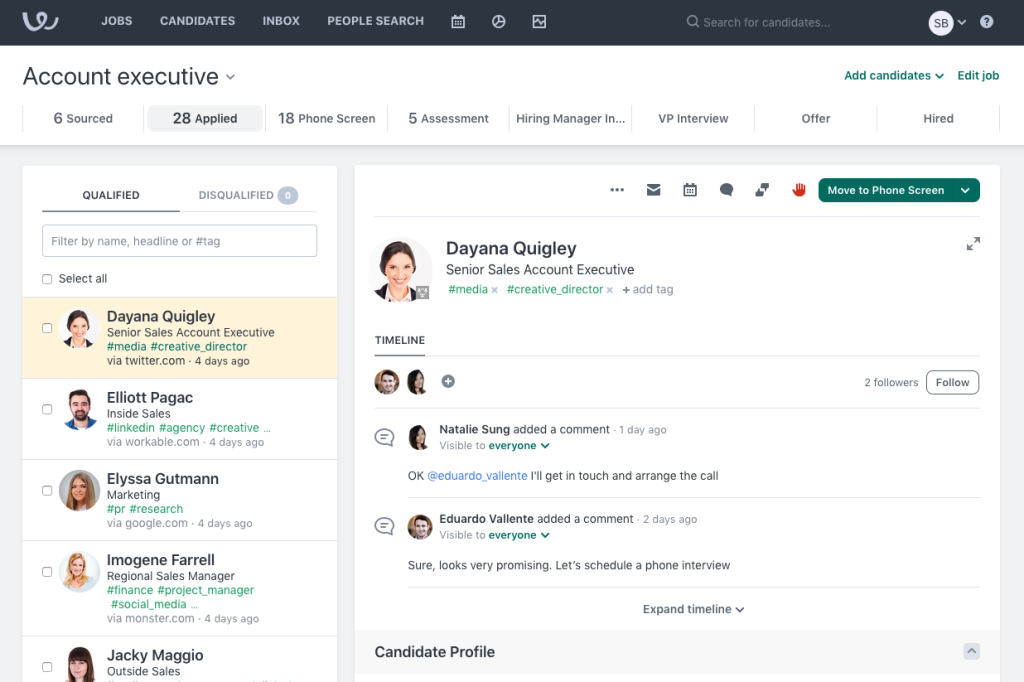
Workable became our HR backbone when spreadsheets could no longer keep up. What impressed me most was its structured database that turned scattered resumes and employee details into organized intelligence.
I remember onboarding a class of ten marketing hires, and instead of losing track of documents, everything, from offer letters to training plans, was centralized. It also syncs beautifully with background checks and scheduling tools, which reduced my administrative time by half. The reporting dashboard became my go-to every Friday, showing headcount trends and sourcing performance at a glance.
A colleague once joked that Workable made HR “feel like managing a CRM for humans,” and honestly, it does. You can filter, search, and connect people with such precision that employee data management stops being a chore and becomes a smart, ongoing narrative about your workforce.
Why Workable Is One of the Best Trakstar Alternatives
- Global Job Board Distribution: Workable allows recruiters to post jobs to more than 200 free and premium job boards in a single submission, reaching a vast network of potential candidates. Trakstar Hire also offers multi-channel job posting, but Workable typically connects to a broader range of boards in one place, which is valuable for high-volume recruiting.
- AI-Powered Talent Search: Workable’s AI tools scan over 400 million passive candidate profiles to recommend qualified applicants automatically. Trakstar Hire has started to incorporate AI-driven matching through integrations, but Workable provides a larger native talent pool and more extensive built-in AI sourcing capabilities.
- Video Interviews and Assessments: The platform includes one-way video interviews and built-in assessments to streamline candidate evaluation. Trakstar Hire relies on integrations for video and assessments rather than native one-way video interviewing and testing, so Workable feels more all-in-one for evaluation flows.
- Mobile Recruiting and Self-Scheduling: Workable’s mobile app and calendar-integrated self-scheduling tools simplify coordination between candidates and hiring teams. Trakstar Hire is mobile responsive in the browser, but does not currently offer the same level of dedicated mobile apps and automated self-scheduling that Workable provides.
- All-in-One HR Capabilities: In addition to its ATS, Workable includes HRIS functions like employee records, time-off management, and payroll integrations. The Trakstar suite focuses on performance management, learning, and recruiting, so many organizations still rely on a separate HRIS for core employee records, leave tracking, and payroll.
Pricing: Starts at $299/month. Billed annually.
3. Zoho Recruit
Best for Zoho Suite Users
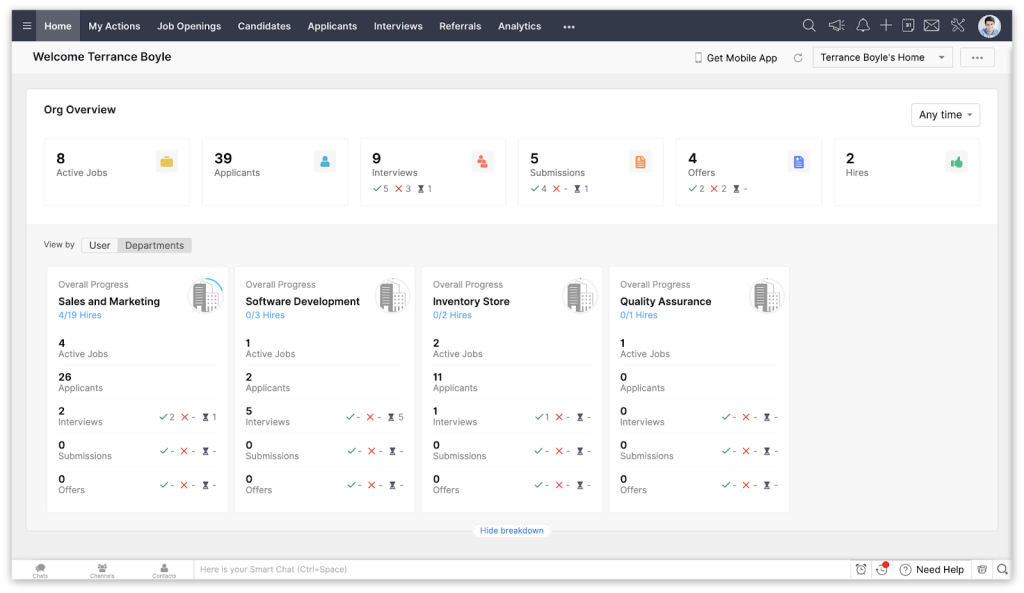
A close friend who runs an HR consulting agency swears by Zoho Recruit. She’s deeply embedded in the Zoho ecosystem, and the integration magic between Recruit and Zoho CRM is what won her over. She once told me about handling a bulk recruitment drive for a logistics firm, with hundreds of applications pouring in daily.
Zoho Recruit auto-parsed resumes, tagged them by skills, and updated candidate statuses without manual input. She said, “It felt like watching a coordinated dance between all the Zoho tools.” The collaboration tools, built-in email templates, and custom reports made her small team handle enterprise-level volume effortlessly.
She particularly liked that once a candidate was hired, the data flowed directly into Zoho People for onboarding. For organizations already living in the Zoho world, this tool doesn’t just fit; it amplifies everything.
Why Zoho Recruit Is One of the Best Trakstar Alternatives
- Multi-Channel Sourcing: Zoho Recruit supports job postings across boards, social networks, referrals, and career sites for greater reach. Trakstar Hire also handles multi-channel sourcing, but Zoho Recruit is especially attractive if you want this tightly coupled with the rest of the Zoho stack, including Zoho CRM.
- Highly Customizable ATS: Recruiters can customize fields, layouts, pipelines, and approval blueprints in Zoho Recruit to match unique hiring needs. Trakstar Hire lets you configure stages and workflows, yet Zoho Recruit generally exposes more granular customization, especially for teams already standardizing processes in Zoho.
- Automated Recruitment Processes: The platform automates key hiring actions such as interview reminders, email notifications, and status updates. Trakstar Hire also supports workflow automation, though Zoho Recruit tends to offer a wider set of automation triggers and blueprints across the broader Zoho ecosystem.
- AI Candidate Matching (Zia): Zoho’s AI assistant, Zia, scans resumes and matches candidates to roles using skill and assessment data. While Trakstar Hire can plug into AI partners, it does not currently offer an in-platform AI assistant as deeply embedded as Zia across the rest of the Zoho suite.
- Comprehensive Hiring Analytics: Zoho Recruit’s dashboards track KPIs, bottlenecks, and hiring ROI across all channels. Trakstar Hire includes core recruiting reports and pipeline analytics, but Zoho Recruit adds more out-of-the-box dashboards tailored to organizations that already centralize analytics inside Zoho.
Pricing: Starts at $25/recruiter/month. Billed annually.
4. Greenhouse
Best for Application Tracking
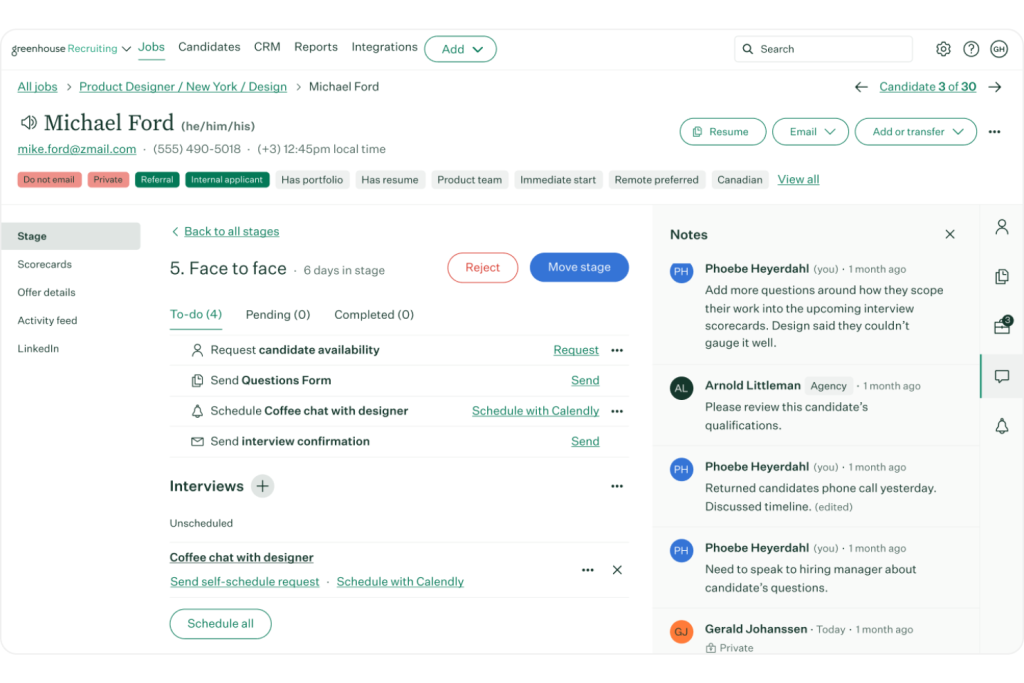
Greenhouse taught me the meaning of structure in hiring. When I joined a team using it, I noticed immediately how organized our candidate pipeline became. Every recruiter had visibility into where an applicant stood, and the feedback loops were instantaneous.
I recall one instance when we needed to hire a designer within a week; Greenhouse helped us score candidates collaboratively and track every conversation. The interview kits and scorecards made the process consistent, and the analytics afterward showed exactly where delays happened.
I also appreciated how it encouraged structured interviews rather than gut-based hiring. “Greenhouse doesn’t just track applications—it disciplines your recruiting process,” my manager once said, and that summed it up perfectly. If you crave order and transparency in your hiring workflow, this is your ally.
Why Greenhouse Is One of the Best Trakstar Alternatives
- Structured Interview Framework: Greenhouse provides interview kits and standardized scorecards to ensure consistent candidate evaluation. Trakstar Hire also offers structured evaluation forms, yet Greenhouse gives you a more extensive library of interview kits and scorecards, which is helpful for organizations that want a very formal interview playbook.
- Diversity and Inclusion Tools: The platform includes anonymized resume reviews, bias alerts, and DEI analytics to promote equitable hiring practices. Trakstar’s recruiting suite does not emphasize DEI automation to the same depth, so Greenhouse is often the stronger choice when DEI metrics and structured de-biasing are central priorities.
- Extensive Integration Ecosystem: Greenhouse supports over 500 pre-built integrations with HR and recruiting systems for seamless data flow. Trakstar Hire integrates with key tools such as calendars, video platforms, and assessment providers, but Greenhouse is widely known for a larger partner marketplace and deeper third-party coverage.
- Recruiting CRM for Talent Nurturing: Its CRM module helps maintain relationships with passive candidates and build long-term pipelines. Trakstar Hire maintains candidate databases and pipelines, but it does not provide a dedicated, full-featured recruiting CRM module on the same level as Greenhouse.
- Advanced Hiring Analytics: Greenhouse tracks metrics such as time-to-hire, diversity ratios, and conversion rates through detailed dashboards. Trakstar Hire includes recruiting reports and analytics, while Greenhouse typically offers more granular and customizable reporting for complex hiring operations.
Pricing: Custom price
5. Lattice
Best for HRIS in Large Enterprises
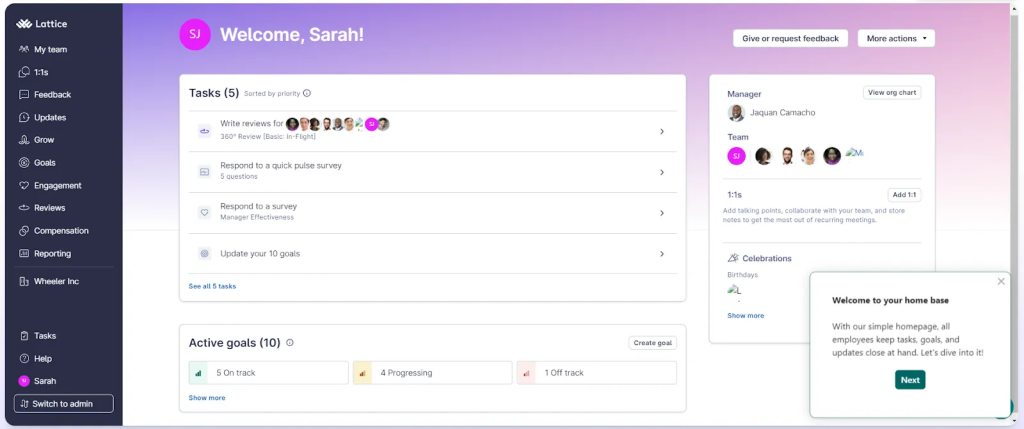
A senior HR leader I know at a Fortune 500 company once described Lattice as “the nervous system of their people operations.” Her story stuck with me. She explained how, before Lattice, their HRIS was fragmented across multiple systems, and leaders couldn’t see real-time performance trends.
When they switched, everything, from goal alignment to compensation planning, sat under one roof. She shared how, during their annual talent review, executives could visualize performance clusters instantly instead of waiting weeks for reports.
Lattice’s user interface also made adoption smoother across departments. “It finally made HR data feel alive,” she said. For large enterprises juggling complexity, Lattice doesn’t just centralize, it contextualizes every metric so leaders can act, not guess.
Why Lattice Is One of the Best Trakstar Alternatives
- Comprehensive Performance Reviews: Lattice offers structured performance reviews with customizable templates that help managers run consistent and thoughtful evaluations. Trakstar provides performance reviews as well, but its templates and configuration options are more limited, which reduces the level of flexibility teams may need for tailored review cycles.
- Continuous Feedback and Praise: Lattice supports ongoing feedback through real-time comments and public praise that help strengthen communication between employees and managers. Trakstar does not provide the same depth of continuous feedback features, so recognition and quick performance check-ins are not as seamlessly integrated into daily workflows.
- Advanced Goal and OKR Management: Lattice includes a mature OKR system with progress tracking, cross-functional alignment, and visibility throughout the company. Trakstar offers OKRs but with fewer options for alignment, visibility, and long-term goal monitoring, which limits how fully organizations can connect individual efforts to strategic objectives.
- Employee Engagement Surveys: Lattice provides engagement surveys with benchmark comparisons, sentiment insights, and detailed analytics to uncover trends. Trakstar’s engagement module is more basic, offering surveys but without the same analytical strength or benchmarking depth that many organizations rely on for data-driven decisions.
- Growth and Competency Frameworks: Lattice includes tools to map skills, define competency expectations, and guide career development conversations with employees. Trakstar Perform also offers a competency library and individual development plan tools, but Lattice more tightly integrates growth frameworks with talent reviews, promotion decisions, and compensation planning for large enterprises.
Pricing: Starts at $11/seat/month.
6. factoHR
Best for Automating Payroll and HR Workflows
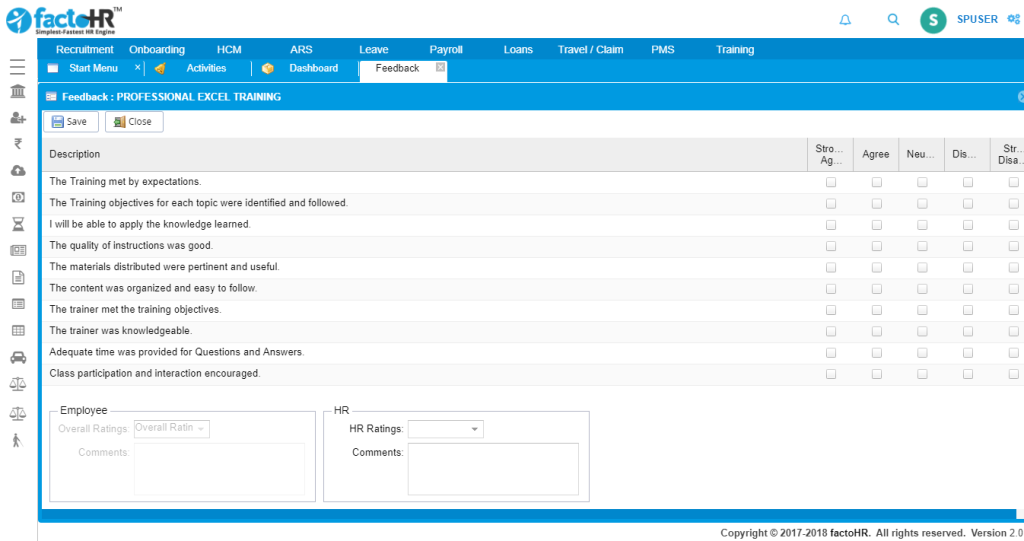
When I first explored FactoHR, it was during a phase when manual payroll was haunting our Fridays. The automation it brought felt like salvation. Salary disbursement, tax computation, and attendance tracking, all synced in one place. I remember setting up leave policies that automatically calculated payouts, and it worked flawlessly.
The app’s mobile access also became a hit among field employees who could mark attendance remotely. Once, during audit season, the preformatted compliance reports saved us hours.
FactoHR may not have the glitz of newer platforms, but it’s rock-solid where it counts: automation accuracy and dependability. For HR teams who dread month-end chaos, this tool turns it into a predictable, two-click routine.
Why factoHR Is One of the Best Trakstar Alternatives
- Automated Payroll and Compliance: factoHR automates salary computation, tax deductions, and statutory compliance across regions. Trakstar has no payroll management module, requiring users to handle pay and compliance externally.
- Attendance and Leave Tracking: The platform includes leave requests, approvals, and real-time attendance tracking through mobile tools. Trakstar doesn’t offer any leave or attendance management options.
- Integrated Recruitment Automation: factoHR combines performance management with a built-in recruitment automation system. Trakstar provides applicant tracking through Trakstar Hire rather than combining ATS and payroll in a single product, so factoHR can feel more unified if you want hiring tightly tied to pay and core HR.
- Employee Self-Service Portal: Employees can access payslips, mark attendance, and manage leave from a personal portal. Trakstar gives employees self-service access for reviews, goals, and learning, but it does not function as a full HR self-service portal for payroll and attendance in the way FactoHR does.
- Configurable HR Workflow Automation: HR teams can build automated approval chains and notifications for diverse processes. Trakstar’s automation is strong in performance, engagement, and learning flows, while factoHR extends workflow automation into broader HR processes such as payroll approvals and statutory compliance.
Pricing: Starts at $125/month for up to 50 employees.
7. PerformYard
Best for Flexible Review Cycles
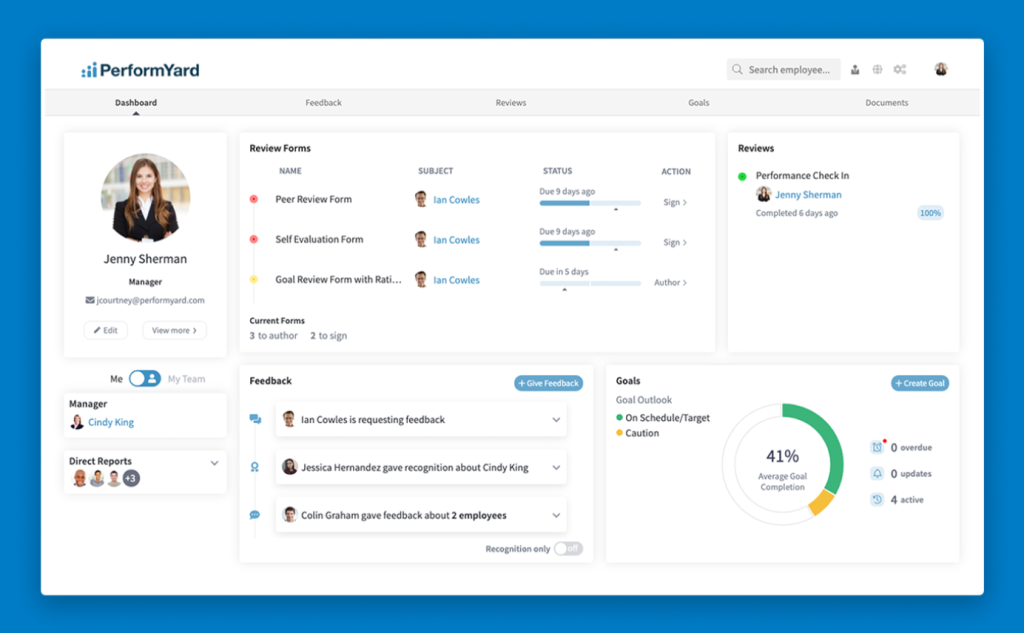
PerformYard became our go-to when we wanted to move away from rigid annual reviews. I admired its modular setup that let us run quarterly reviews for some teams and project-based ones for others.
I recall using it during a major product overhaul where feedback had to flow fast. Managers could initiate ad-hoc reviews mid-cycle, which helped catch performance issues before they snowballed. I also liked how it visualized performance data without overcomplicating it; the charts were clean, actionable, and easy to present in leadership meetings.
Its integration with Slack turned reminders into natural nudges. “Finally, a tool that respects how teams actually work,” my HR partner remarked. PerformYard is for those who want structure but not straitjackets in their review processes.
Why PerformYard Is One of the Best Trakstar Alternatives
- Performance Improvement Plans (PIPs): Managers can create step-by-step improvement plans to support underperformers. Trakstar also supports improvement plans and coaching workflows, but PerformYard emphasizes PIPs as a distinct, configurable object in the product, which some HR teams find easier to operationalize.
- Cohort-Based Analysis: PerformYard segments employees by department, role, or tenure to analyze collective trends. Trakstar Perform allows segmentation and group-level views as well, yet PerformYard leans heavily into cohort analysis in its reporting design, which can appeal to data-focused HR teams.
- Historical Performance Records: The system keeps historical performance data to track growth over time. Trakstar similarly maintains historical reviews and goals; the difference is that PerformYard puts more emphasis on visualizing multi-year performance narratives in a compact way.
- Goal Cascading System: Organizational goals can be broken into smaller, aligned objectives throughout the hierarchy. Trakstar supports linking strategic goals to individual reviews and measurements, while PerformYard foregrounds cascading structures more explicitly for leaders who want to design multi-level goal trees.
- 9-Box Talent Matrix: PerformYard uses a 9-box model to evaluate performance against potential for better talent decisions. Trakstar Perform also offers 9-box and succession tools; PerformYard’s strength lies in how those views are embedded in calibration and talent review workflows rather than the existence of the grid itself.
Pricing: Starts at $5/user/month.
8. Crelate
Best for Recruiting & Talent Relationship Management
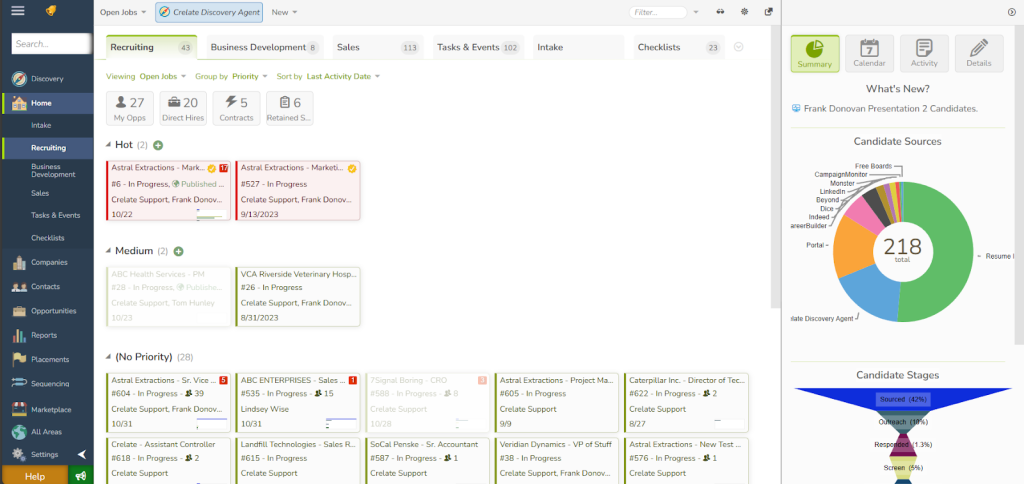
A colleague I worked with in a staffing firm once introduced me to Crelate, and her enthusiasm was contagious. She described it as her “digital Rolodex for talent.” She ran recruitment for creative agencies and relied on Crelate’s tagging system to remember who excelled in copywriting, UX design, or brand strategy.
Once, she reopened an old requisition and found the perfect candidate in seconds because of how she had categorized resumes. The built-in CRM-style pipelines helped her maintain long-term candidate relationships. “Recruiting isn’t about transactions, it’s about timing,” she said, and Crelate helped her stay ready for that moment.
For anyone managing multiple talent pools, this tool blends sourcing with relationship management so naturally that it almost feels personal.
Why Crelate Is One of the Best Trakstar Alternatives
- Unified ATS and CRM System: Crelate combines applicant tracking with a CRM to manage candidates and client relationships simultaneously. Trakstar Hire focuses on in-house hiring, not agency-style client relationship management, so it does not function as a full recruiting CRM in the same way Crelate does.
- End-to-End Staffing Capabilities: Its Omni suite supports contractor timesheets, invoicing, and back-office operations. Trakstar’s products do not include contractor billing or staffing back-office tools, which makes Crelate a better fit for staffing and recruiting firms that run their entire business on one system.
- Secure Client Portal: Clients can log in to view submissions, provide feedback, and monitor hiring progress in real time. Trakstar Hire does not provide a dedicated external client portal for agencies that need to collaborate with multiple paying clients inside one environment.
- Built-In Email Campaign Tools: Recruiters can send automated outreach campaigns directly within Crelate. Trakstar Hire supports email templates and bulk messages to candidates, but it does not provide the same level of multi-step campaign automation and nurture flows as Crelate’s recruiting CRM.
- AI Recruiting Co-Pilot: Crelate’s AI assistant automates routine tasks like scheduling and email drafting to save recruiters time. Trakstar Hire can integrate with AI partners, yet Crelate focuses more directly on embedded AI workflows for agency-style recruiting and client management.
Pricing: Starts at $99/user/month.
9. Achievers
Best for Unbiased Employee Recognition
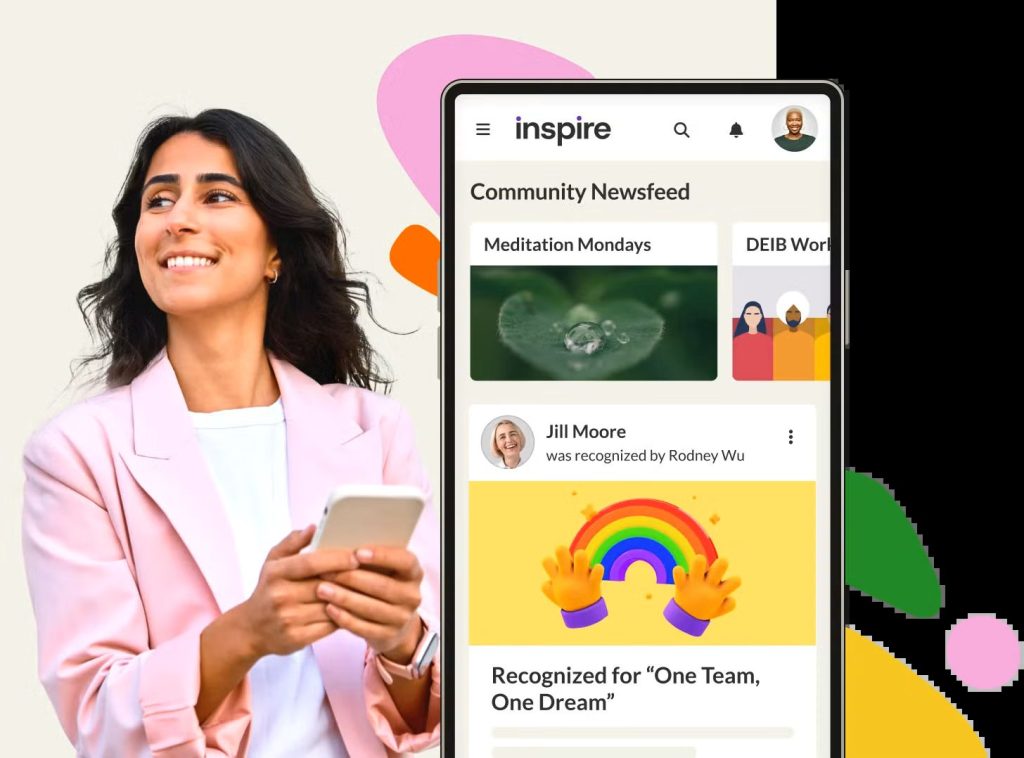
When I first encountered Achievers, it was during a company-wide engagement initiative where peer recognition had lost steam. What made Achievers different was how it embedded recognition into daily work life. Employees could celebrate wins instantly, whether through points, badges, or heartfelt notes.
I remember one developer saying, “I finally feel noticed even when I’m not in meetings.” The analytics were also revealing; you could see which teams were under-recognized and act on it. Leadership used these insights to balance recognition equity across departments. What I appreciated most was how genuine the culture shift felt.
Achievers doesn’t gamify appreciation, it dignifies it. If you’ve ever wished for recognition that feels real and bias-free, this is one of the Trakstar Alternatives that delivers exactly that.
Why Achievers Is One of the Best Trakstar Alternatives
- Real-Time Recognition Feed: Achievers allows instant peer-to-peer and manager recognition through a live social feed. Trakstar Perform includes recognition features such as shoutouts and awards, but Achievers is built around a richer social feed experience and is far more centered on recognition as the primary use case.
- Global Rewards Marketplace: Employees can redeem rewards from a catalog of over three million items across 190 countries. Trakstar focuses on feedback and performance outcomes rather than operating a large global rewards marketplace, so Achievers is stronger when tangible, localized rewards are central to your recognition strategy.
- Automated Milestone Recognition: The system automatically celebrates birthdays, work anniversaries, and achievements. Trakstar can support reminders and recognition around key events, yet Achievers offers more packaged, globally scalable milestone and service-award programs tied directly to its rewards catalog.
- Voice of Employee Feedback: Built-in pulse surveys and polls gather continuous engagement feedback. Trakstar also includes engagement and pulse survey capabilities, while Achievers combines surveys tightly with recognition data for a more unified view of culture and reward behavior.
- Culture and Communication Tools: Achievers includes announcements, push notifications, and social interactions to build community. Trakstar provides notifications and messaging within its performance and engagement flows, but Achievers functions more like a social hub dedicated to culture-building and recognition.
Pricing: Custom price.
10. Sogolytics
Best for Employee Surveys & Feedback Analytics
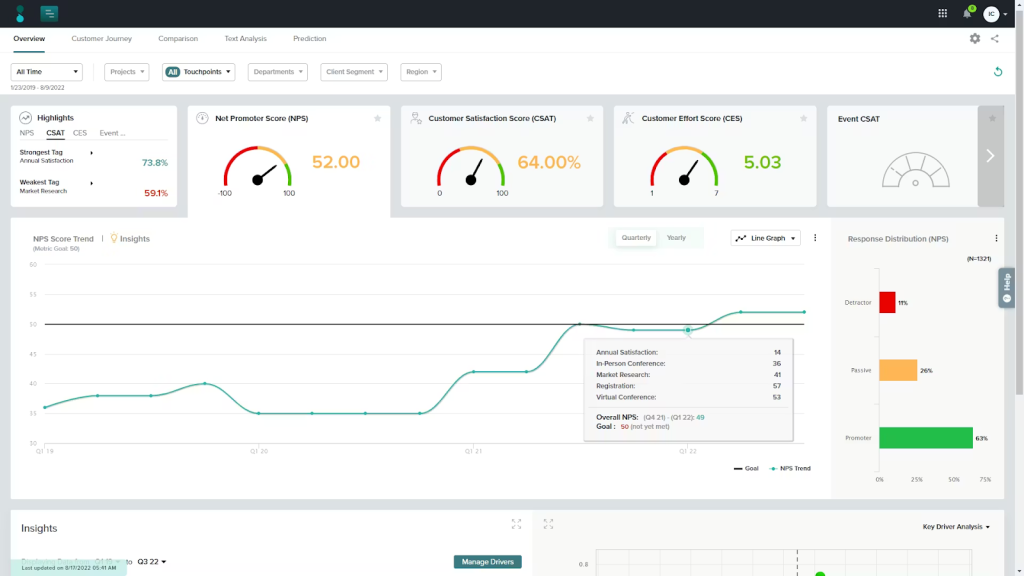
A friend of mine in organizational development once showed me how Sogolytics reshaped their feedback process. She ran quarterly surveys for a healthcare organization and said, “It’s like having an analyst who never sleeps.”
The tool’s branching logic made even complex questionnaires easy to deploy, and its sentiment analysis uncovered patterns that would’ve taken weeks manually. She once used it to investigate why employee satisfaction dipped in one department and found communication gaps that managers hadn’t noticed. The visualization tools helped her present insights directly to leadership without external data crunching.
I saw her dashboards: sleek, insightful, and built for decisions. Sogolytics doesn’t just collect opinions; it converts them into organizational intelligence. For teams serious about listening deeply, it’s worth every click.
Why Sogolytics Is One of the Best Trakstar Alternatives
- Automated Pulse Surveys: Sogolytics enables recurring pulse surveys that run automatically to capture real-time sentiment. Trakstar’s engagement module also supports recurring and automated surveys, but Sogolytics gives you more advanced control over survey design, branching, and multi-program cadence from a dedicated survey platform.
- Advanced Anonymity Settings: The platform offers layered anonymity controls to ensure honest and secure responses. Trakstar provides anonymity options for engagement surveys as well, while Sogolytics goes deeper with fine-grained configuration for large or complex organizations that have strict confidentiality requirements.
- Lifecycle Feedback Triggers: Surveys can be timed for onboarding, post-training, or exit stages to map employee experience. Trakstar supports engagement around key lifecycle points through its performance and learning modules, whereas Sogolytics specializes in building very detailed, trigger-based feedback programs across the entire employee journey.
- Text and Sentiment Analysis: Natural language processing tools analyze qualitative responses to reveal key engagement drivers. Trakstar offers reporting and analytics on survey responses, but Sogolytics is stronger in advanced text analytics and sentiment scoring for large volumes of open-ended feedback.
- Multi-Channel Distribution: Sogolytics sends surveys via email, SMS, QR codes, or web embeds for higher participation. Trakstar primarily distributes engagement surveys through email and in-app experiences, so Sogolytics is preferable if you need a wide range of channels, including SMS and QR-based distribution.
Pricing: Starts at $25/month. Billed annually.
How I Selected these Trakstar Alternatives/Evaluation Criteria
I wanted every recommendation in this list to stand on solid ground, so I evaluated each tool the same way I would if I were choosing software for my own HR team. Here is the exact framework I followed.
1. User Reviews and Real Conversations
I always start by studying how actual users describe their daily experience. I read through recurring praises, repeated complaints, and thoughtful discussions in community spaces. This helps me move past surface impressions and understand how the tool behaves in real workplaces.
2. Essential Features and Practical Usefulness
I examined each platform’s core features and looked at whether they solve real HR problems. I kept asking myself questions such as “Would this feature matter in a fast-moving team?” and “Does this tool offer something Trakstar cannot?” I focused heavily on how features work in practice, not just how they appear in brochures.
3. Ease of Use in Daily Work
I paid close attention to how intuitive each tool felt. I noted how many clicks routine tasks required, how smooth the navigation was, and whether new users could get comfortable quickly. If anything felt cumbersome, I marked it down.
4. Customer Support You Can Rely On
I checked the quality of support by looking at response times, available help resources, and stories from teams that relied on support during onboarding or operational hiccups. A good tool loses its value if help is slow or difficult to reach.
5. Value for Money
To judge value, I compared each tool’s pricing with its features, scalability, and long-term usefulness. I wanted to understand whether a team would genuinely feel the subscription pays for itself over time.
6. Personal Experience and Expert Insight
I drew from my own firsthand experience with several tools and relied on trusted opinions from colleagues and HR leaders who use the others daily. These conversations often reveal strengths or weaknesses that never show up in marketing pages or public reviews.
My Top 3 Choices as Trakstar Alternatives
After reviewing every tool in detail, let me narrow the list to the three platforms that consistently impressed me in real use and expert conversations.
1. PeopleGoal
I chose PeopleGoal first because I have used it long enough to trust how well it handles performance, engagement, and workflow design. Its flexibility, goal alignment tools, and recognition features create a rhythm that teams can feel. It replaces scattered HR processes with one coherent system that keeps people focused, supported, and accountable.
2. Workable
Workable earned a spot because of its strength in consolidating HR data and simplifying recruitment. Its structured records, reporting tools, and smooth integrations turn hiring and employee management into a clean, dependable system. Every time I used it for onboarding or sourcing, it saved hours and reduced errors, which matters when you want operational stability.
3. Sogolytics
Sogolytics made the top three because of how effectively it captures and analyzes employee sentiment. I have seen it reveal issues that teams were missing and turn survey data into clear, actionable insight. Its branching logic, sentiment analysis, and flexible distribution options make it a dependable partner for leaders who want to listen deeply and respond with clarity.
Ready to Pick the Best Trakstar Alternatives?
As we wrap up this, let me tell you that choosing the right Trakstar alternative comes down to understanding how each tool fits the way your team works.
The platforms I reviewed offer stronger recruiting features, deeper analytics, smoother workflows, and broader HR capabilities that help you build a system you can grow with. Whether you need better performance management, more accurate hiring pipelines, or clearer employee insight, there is a solution in this list that will meet you where you are and carry you forward with confidence.
And if you are wondering which one I lean toward, I often return to PeopleGoal for its balance of structure and flexibility. It has supported my own work in ways that left a lasting impression.
Ready to 3x Your Teams' Performance?
Use the best performance management software to align goals, track progress, and boost employee engagement.