

Performance management in manufacturing is a completely different beast than what most corporate playbooks prepare you for. I’ve seen it firsthand. What looks great on paper often falls apart the moment it hits the shop floor. Reviews vary wildly across shifts, teams feel confused, and frustration builds fast.
KPIs can also turn into a numbers game, where people chase targets instead of real improvement, sometimes even taking shortcuts that hurt quality. And the Excel sheets that worked when the plant was smaller don’t scale for long.
Meanwhile, managers get stuck in admin mode, spending more time tracking forms than coaching. This impacts productivity, safety, retention, and the bottom line. That’s why I put this guide together as a practical blueprint for manufacturing teams.
What Makes Manufacturing Performance Management Different (Not Corporate HR)
Manufacturing isn’t an office job, so performance management can’t feel like one either. As a plant or operations leader, you know your teams aren’t sitting at desks, filling out review forms, or checking emails. Operators are running machines, managing materials, and staying focused on safety. That’s why corporate-style performance systems often fall short on the shop floor.
Manufacturing also runs 24/7. Performance plays out across day, night, and weekend shifts, with constant handoffs between teams. If goals and expectations aren’t clear across shifts, productivity and accountability slip quickly.
Safety and quality raise the stakes even higher. In an office, mistakes may cause delays. In manufacturing, they can mean damaged equipment, defective products, or serious injuries. Performance can’t be measured only by output. It must reflect how safely, consistently, and reliably work gets done.
For manufacturing leaders, the right approach supports frontline teams, drives continuous improvement, and delivers results that hold up over time.
Operational Pain Points Manufacturing Teams Face Today
Performance issues in manufacturing rarely come from a lack of effort. Most of the time, they come from systems that don’t match shop-floor reality. These gaps aren’t minor. They affect productivity, quality, retention, and overall plant performance.
That’s why I’m highlighting these pain points, so you can clearly see what manufacturing teams are facing today and what needs to improve next:
- Still relying on spreadsheets and paper reviews: Many plants track performance in Excel or on paper rather than using a structured performance management system that scales across shifts and teams.
For example, a supervisor may be updating shift performance in one spreadsheet, while HR is tracking reviews in another, leaving no single source of truth. - No consistent process across shifts, plants, or departments: One team gets structured reviews, another gets ad-hoc feedback. This often shows up when the day shift gets regular coaching, but the night shift only hears feedback when something goes wrong.
- Goals don’t reach the frontline: Leadership may have clear targets, but operators often don’t know how their daily work connects to bigger plant objectives.
- Feedback is too rare or unsafe to give: In high-pressure environments, feedback can feel biased, rushed, or avoided altogether, which blocks growth and trust.
- Managers lack real-time visibility: Without clear dashboards or reporting, issues surface only after defects, delays, or downtime have already escalated.
- Frontline workers are left out: Deskless employees can’t participate in systems built around emails and desktops, widening the gap between plans and execution.
- Turnover keeps draining resources: When performance processes feel unclear or unfair, employees disengage or leave, increasing hiring and training costs.
Manufacturing KPIs That Actually Work
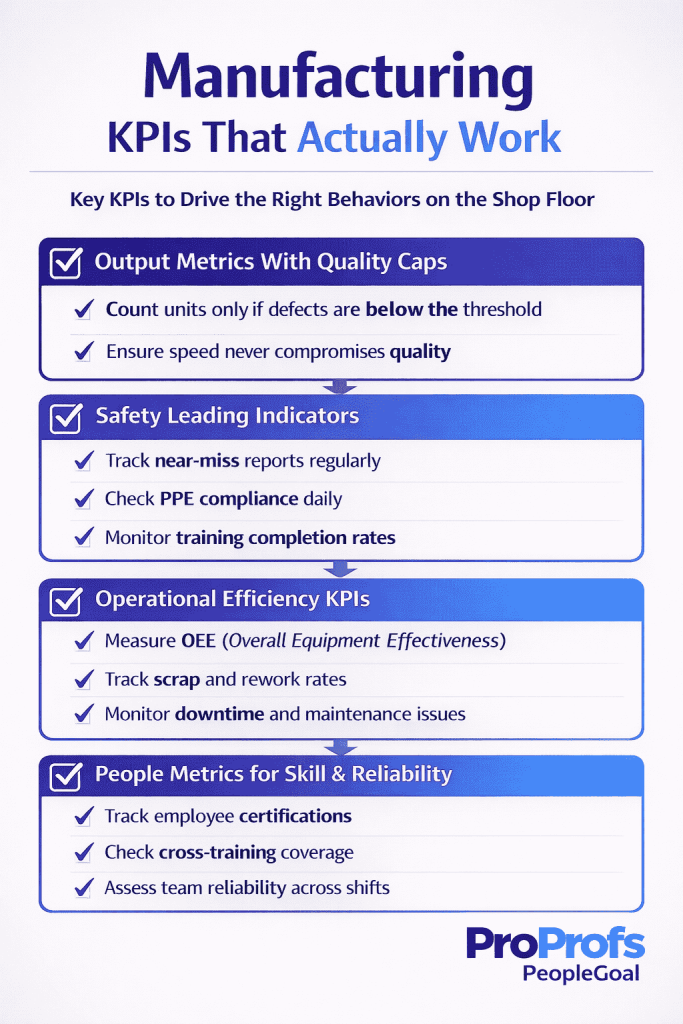
In manufacturing, KPIs can either push real improvement or create the wrong behaviors. If numbers only reward speed, people rush. If they ignore safety or quality, the cost shows up later as defects, downtime, or worse.
That’s why choosing the right KPIs matters, because effective employee performance management in manufacturing depends on metrics that drive the right behaviors on the floor. Here are the ones that actually work on the shop floor:
1. Output Metrics With Quality Caps
Tracking production volume is important, but it should never come at the cost of quality. Measure units produced per shift, but only count them if defect rates stay within limits. This keeps teams focused on doing the job right, not just fast.
Example: A line only “hits target” if the output is high and scrap stays below the agreed threshold.
2. Safety Leading Indicators
Safety shouldn’t be measured only after something goes wrong. So, it’s important to consider proactive signals like:
- Near-miss reporting to catch risks early
- PPE compliance to ensure daily safety discipline
- Training completion rates to keep teams prepared
These metrics work best when shift managers review them weekly, not only after incidents.
3. Operational Efficiency KPIs That Reveal Bottlenecks
As a manufacturing leader, you need visibility into where performance breaks down. Metrics like these help pinpoint inefficiencies early:
- OEE (Overall Equipment Effectiveness) to measure true equipment productivity
- Scrap and rework rates to spot quality and process waste
- Unplanned downtime and maintenance delays to reduce disruptions
4. People Metrics That Support Long-Term Capability
Performance isn’t just about machines. It’s also about building skilled, reliable teams. Useful people-focused KPIs include:
- Certifications earned to track workforce or employee development
- Cross-training coverage to strengthen shift flexibility
- Team reliability across shifts to ensure consistent execution
You can use these KPIs to spot bottlenecks early, before downtime becomes a full production loss.
How to Align Performance Review Cycles Across Shifts, Teams & Roles
One thing I’ve learned about manufacturing environments is this: performance management falls apart the moment it becomes inconsistent.
If one shift gets detailed employee feedback and another gets a rushed, once-a-year form, people stop taking the process seriously. It starts to feel like performance depends more on timing and managers than on actual work.
A strong review cycle in manufacturing has to match the rhythm of operations, not corporate calendars, which is exactly what makes performance management in the manufacturing sector so different from office environments.
When the review cycle is structured, predictable, and role-aware, performance management stops being a paperwork exercise and starts becoming part of how the plant actually runs.
A simple cadence many manufacturing teams follow is:
- Quarterly shift check-ins
- Mid-year goal reset
- Annual review + development plan
- 60–90 day probation reviews for new hires
Here’s what tends to work best:
1. Fix Performance Gaps With a Mid-Year Check
Annual reviews are still useful for looking at overall growth, promotions, and long-term progress. But waiting 12 months to address gaps is too slow for a plant setting. A mid-year reset keeps goals relevant and gives teams a chance to course-correct before issues pile up.
2. Spot Issues Early With Quarterly Team Check-Ins
Manufacturing priorities change at the speed of light. Equipment breaks, demand shifts, and new safety concerns show up. Quarterly check-ins create a steady cadence for supervisors to talk through what’s working, what’s slowing production, and what needs support right now.
For example, a 15-minute shift-start conversation can focus on safety, output blockers, and support needs for the next cycle.
3. Catch Performance Signals With Probation Reviews
New hires can’t wait until “review season.” I always recommend automating probation checkpoints around 60 or 90 days. It brings clarity early, improves retention, and helps managers coach instead of react.
4. Customize Reviews for Different Floor Roles
A machine operator, a process engineer, and a shift supervisor shouldn’t be evaluated with the same template. Operators need simple, practical measures tied to safety, quality, and output. Engineers need space for innovation and technical mastery. Supervisors need leadership and team execution metrics.
Common mistake: Using the same performance review form for operators, engineers, and supervisors makes the process feel irrelevant and checkbox-driven.
5. Collect Layered Feedback Beyond Manager Reviews
Manufacturing feedback can’t stay top-down. Adding structured peer and 360-degree input brings fairness, especially in environments where shift dynamics can influence perception. It also helps surface day-to-day performance insights that managers may not always see directly.
6. Encourage Honest Input With Anonymous 360 Reviews
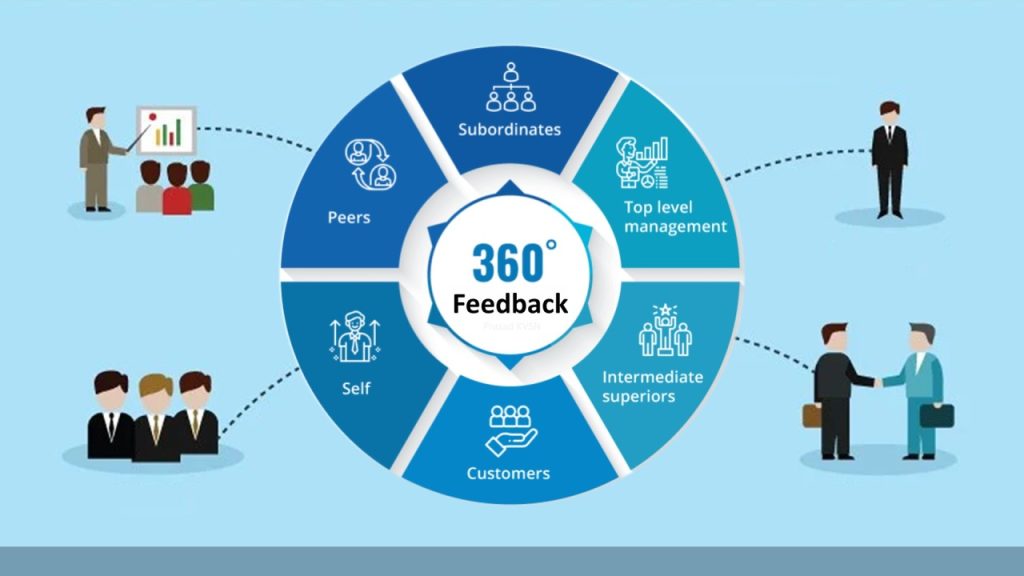
Image Source: LinkedIn
Biannual, anonymous 360-degree feedback helps peers, managers, and direct reports share input without fear of backlash. This improves honesty and reduces bias. Over time, it creates a culture where feedback feels safe, consistent, and focused on growth rather than judgment.
The easiest way to make this stick is to map the review calendar upfront, automate reminders, and keep the conversations short, consistent, and shift-friendly. Choose software for email/SMS alerts and approval chains. Integrate multi-language support for diverse teams.
How to Set Goals in Manufacturing Operations
One of the biggest performance gaps I see in manufacturing is not effort, it’s direction. Leadership may have clear plant targets, but somewhere between the boardroom and the production line, those goals lose visibility. Operators end up focused on tasks rather than outcomes.
That’s why goal alignment has to cascade clearly so everyone knows what they’re driving toward. When goals cascade properly, performance stops feeling like a top-down scorecard. People see the bigger picture, feel ownership in the work, and stay far more engaged over time.
Here’s how manufacturing teams can set goals that actually drive results:
Step 1: Start With Company and Plant-Level Priorities
Begin by clarifying what the plant is ultimately responsible for delivering. High-level business goals should translate into measurable plant priorities like throughput, quality yield, safety, or downtime reduction. These targets give every shift a clear performance anchor, so teams aren’t just “working hard,” they’re working toward the same outcomes.
Step 2: Translate Those Into Line-Level Execution Goals
Once plant priorities are clear, break them down into goals that apply directly to production lines and daily operations. This is where strategy becomes actionable. Line-level goals might include cycle time improvements, scrap reduction, or hitting on-time completion targets for a specific area.
Step 3: Connect Individual Work to Measurable Contributions
Goal alignment becomes real when each role can see how their work affects results. Operators, supervisors, and team leads should each have goals tied to what they can control. For example, an operator may focus on defect-free runs, while a supervisor may focus on shift consistency and team performance.
Example: “Run three consecutive shifts with zero rework on Line 2” is far clearer than a vague goal like “improve quality.”
Step 4: Use SMART Goals for Frontline Clarity
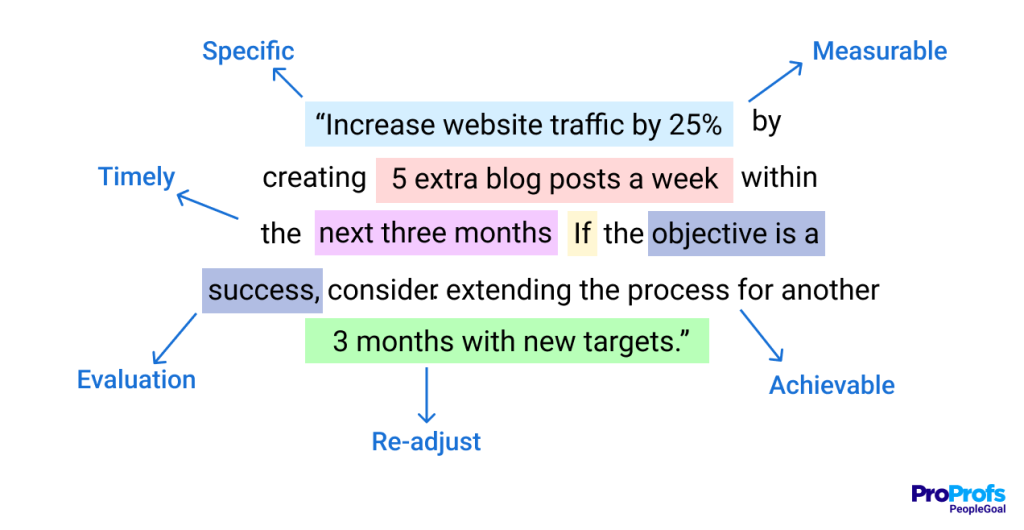
Frontline teams perform best when goals are specific and easy to track. I’ve found SMART goals work especially well for operators because they remove ambiguity and make expectations concrete. Goals should be measurable, time-bound, and directly tied to daily work, such as:
- Reduce scrap by 5% this quarter
- Improve changeover time by 10 minutes
- Complete safety training by month-end
Step 5: Set Technical Goals Differently for Engineers and Specialists
Engineers and specialists contribute differently from operators, so their goals should reflect long-term improvement and system reliability. Instead of daily output metrics, focus on optimization, automation, preventive maintenance, or process innovation milestones that strengthen operations over time.
Step 6: Build Continuous Improvement Into Every Role
To keep performance management connected to operational progress, embed improvement into everyone’s objectives. Kaizen-linked objectives (continuous improvement goals), such as identifying one waste-reduction opportunity each month, ensure that even small improvements become part of ongoing performance, not just one-time initiatives.
How to Manage Performance in Manufacturing
Managing performance in manufacturing doesn’t have to mean chasing paper forms, juggling Excel sheets, or running different review processes across shifts. The right system helps you stay consistent across plants, collect feedback fairly, and keep operators, supervisors, and engineers aligned, without adding extra admin work.
To make this practical, let’s use PeopleGoal to run performance management in a structured, shop-floor-friendly way.
Step 1: Start With a Ready-to-Use Review Template
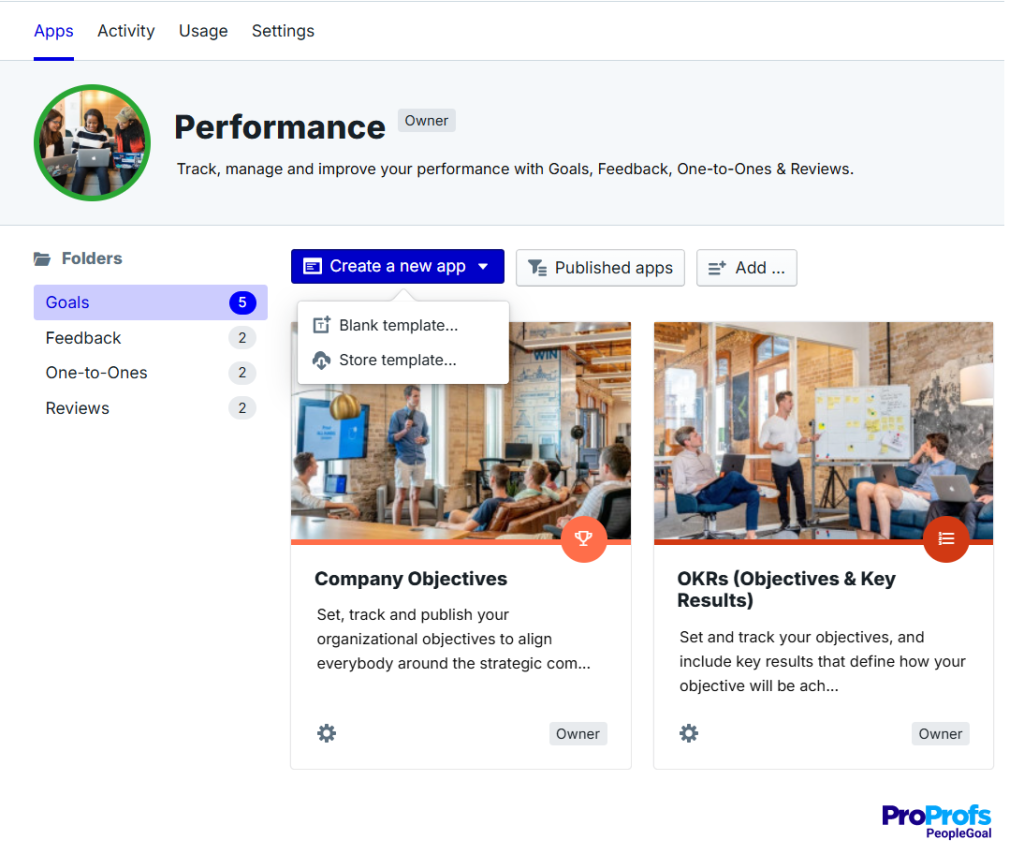
Instead of building everything from scratch, you can install a pre-built performance review template in from the PeopleGoal App Store. It gives you a structured starting point with default stages and criteria, so you can launch quickly across departments.
Step 2: Assign Roles Across Shifts and Plants
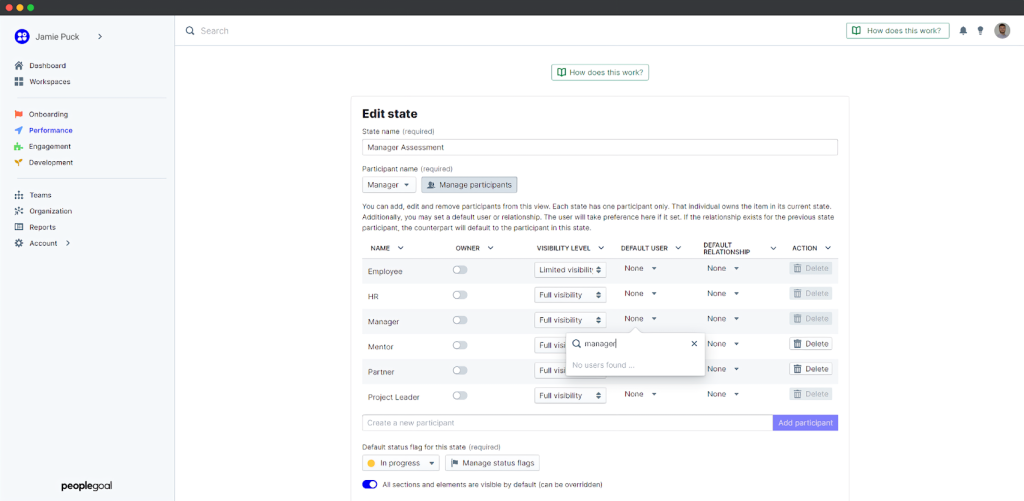
Manufacturing reviews involve multiple layers, operators, supervisors, plant leadership, and HR. PeopleGoal lets you define who participates and what each role can see, keeping the process clear and consistent across shifts.
Step 3: Customize Workflows for Different Manufacturing Roles
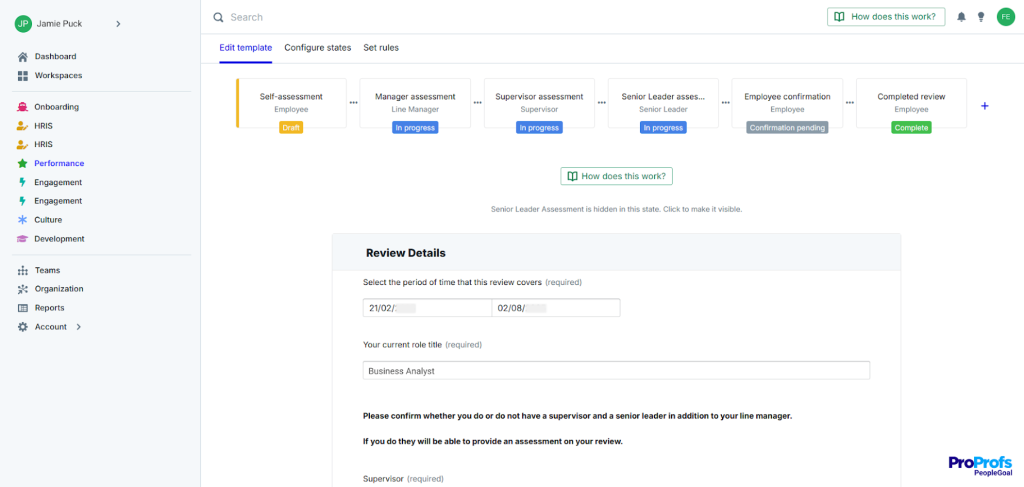
A machine operator and a process engineer shouldn’t follow the same review flow. With PeopleGoal, you can tailor workflows based on role, focusing operators on safety, quality, and output, while engineers track technical mastery and improvement projects, making employee performance management in the manufacturing industry easier to run at scale.
Step 4: Set Cascading Goals With Shop-Floor Visibility
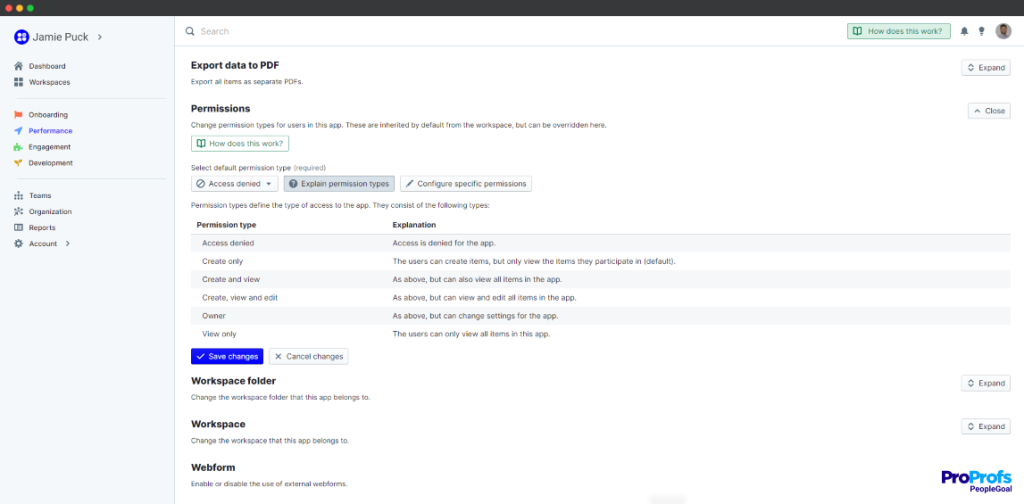
You can set plant-level goals and cascade them down into line and individual goals using SMART templates. This helps frontline teams understand how their work connects to throughput, scrap reduction, or downtime improvement.
Step 5: Launch Anonymous 360 Feedback to Build Trust
PeopleGoal makes it easy to run confidential 360-degree feedback cycles every six months. Peer input becomes structured and safe, helping reduce bias and strengthen development conversations.
Step 6: Track Completion and Performance Insights in Real Time
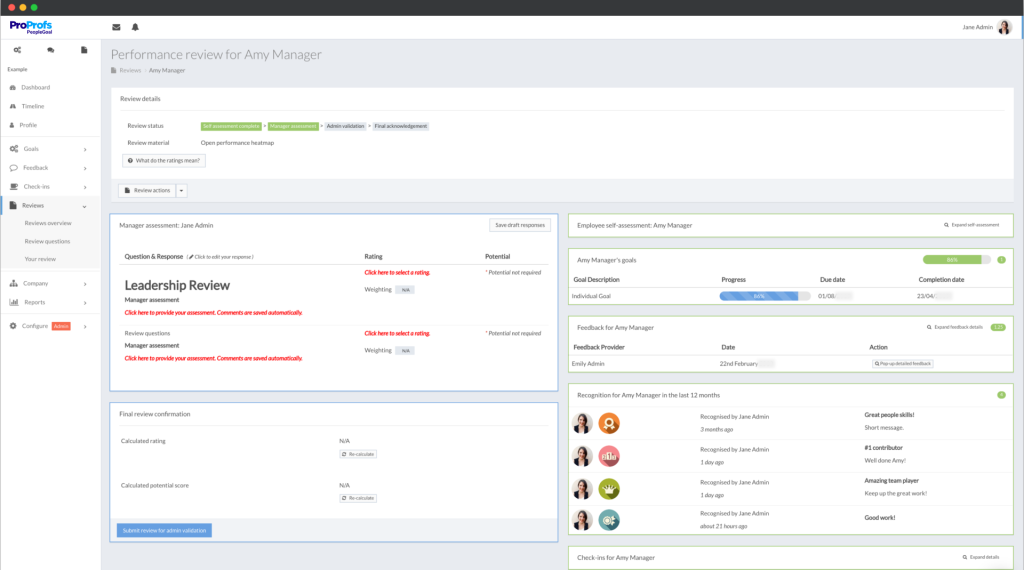
Instead of waiting until the end of the year, managers can monitor review progress, goal tracking, and performance trends through dashboards by plant, shift, or department.
Step 7: Enable Frontline Participation With Mobile Access
Deskless workers can participate through mobile-friendly reviews and even QR-code access, removing the common barrier of corporate email dependence.
And that’s really the difference. With a system like PeopleGoal, manufacturing leaders can move from scattered reviews to a consistent performance process that scales across shifts, improves accountability, and supports continuous improvement.
From Managing by Spreadsheet to Managing by Value
Performance management in manufacturing works best when it reflects the reality of the shop floor. It has to be consistent across shifts, built on KPIs that reward the right behaviors, and focused on safety, quality, and long-term improvement, not just output numbers.
The biggest takeaway is simple: plants perform better when frontline teams are included, goals are clearly connected from leadership to the line, and feedback becomes part of daily operations rather than a once-a-year event.
For many manufacturing leaders, the challenge isn’t knowing what to do, it’s running it at scale without getting buried in spreadsheets or inconsistent processes. That’s where structured systems like PeopleGoal can help bring reviews, goals, and feedback into one repeatable workflow that works across plants and roles.
If you’re looking to strengthen performance, start small: standardize your review cadence, fix the KPIs that drive shortcuts, and make feedback easier and safer on the floor. Over time, that shift is what turns performance management into real operational value.
Frequently Asked Questions

How do you prevent KPI manipulation on the floor?
Involve frontline teams in KPI design, track leading indicators, and review metrics regularly. A no-blame culture makes people report issues honestly instead of hiding them.
How often should manufacturing reviews happen?
Most plants work best with annual reviews, a mid-year reset, and quarterly check-ins. This keeps teams aligned across shifts without waiting too long to course-correct.
How do you manage performance across multiple shifts?
Use standardized workflows, clear goal cascading, and digital access for every shift. Dashboards help ensure no team gets missed due to timing or handoffs.
What tools work best for deskless teams?
Mobile-first tools with QR-code access make it easy for frontline workers to participate. Performance management platforms like PeopleGoal help run reviews, feedback, and goal tracking without relying on corporate email.
Ready to 3x Your Teams' Performance?
Use the best performance management software to align goals, track progress, and boost employee engagement.