
Your best employees are not leaving the company. They are leaving one leader, one conversation, and one “everything’s fine” performance review at a time. Leadership performance review phrases help you replace vague feedback with comments that actually change behavior, strengthen leadership skills, and protect team morale.
In this guide, you will get ready-to-use phrases across the most important leadership categories, including both positive feedback and constructive criticism, so your reviews stop being paperwork and start becoming real leadership upgrades.
Leadership Performance Review Phrases & Examples
Performance reviews can shape leadership quality when they go beyond generic praise and vague criticism, providing meaningful feedback that fosters growth. When you evaluate leadership skills with clear, behavior-based feedback, you help leaders understand what they should keep doing, what they should change, and why it matters.
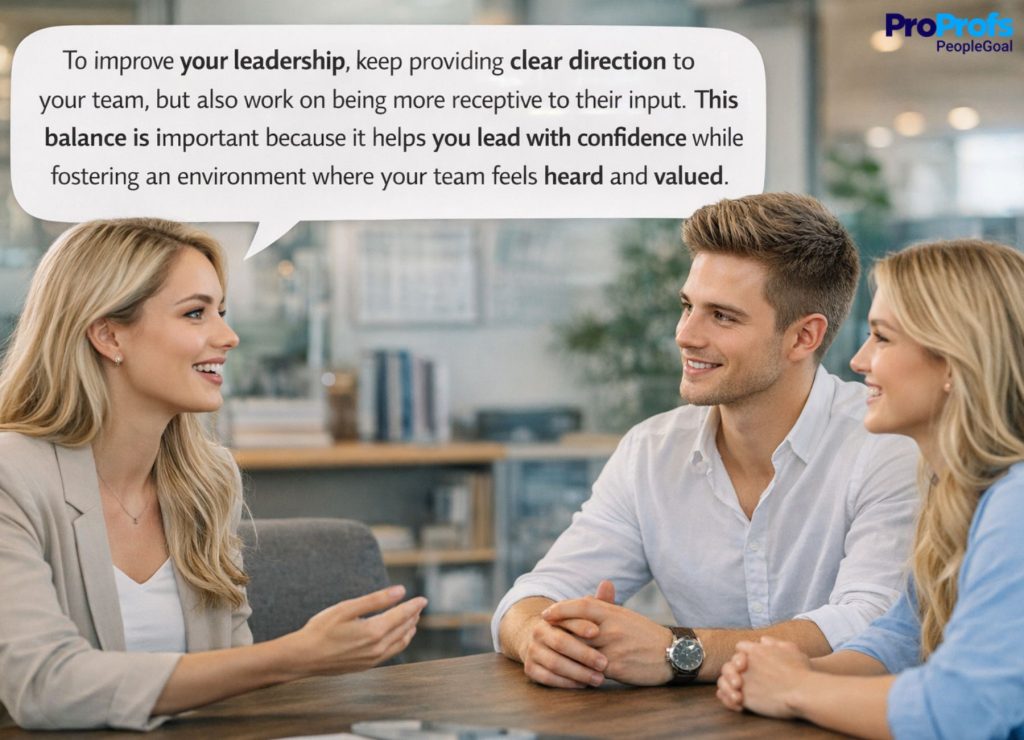
The phrases below are written as leadership performance review phrases you can directly use in leadership appraisals, manager evaluations, and performance evaluation meetings.
1. Communication and Listening Skills
Strong leaders communicate with clarity, consistency, and respect, but they also listen with intent, rather than simply waiting to respond.
In daily work, this reduces confusion, prevents rework, and keeps teams aligned during shifting priorities, tight deadlines, and high-stakes stakeholder conversations. When communication is strong, employees raise concerns earlier, execution improves, and trust becomes easier to sustain.
Positive examples
- Communicates project expectations with clear structure and context, ensuring team members understand what needs to be done, why it matters, how success will be evaluated, and what decisions they can make independently without waiting for approval.
- Listens carefully during team conversations and one-on-one meetings, responding in a way that shows understanding, which helps employees feel respected and reduces the likelihood of frustration building quietly over time.
- Explains complex ideas in language that matches the audience, so both technical and non-technical stakeholders understand priorities, constraints, and next steps without misinterpreting what the team is trying to achieve.
- Encourages open discussion by inviting questions and concerns early, creating a space where team members can speak honestly, raise risks, and share ideas before problems become harder to fix.
- Shares decisions and changes quickly and clearly, helping the team adjust priorities early so work stays aligned, and employees do not waste effort on tasks that are no longer important.
- Runs meetings with strong structure and follow-through, ensuring discussions stay focused, different voices are included, and every meeting ends with clear ownership, decisions, and timelines.
Constructive examples
- Could improve communication efficiency by delivering shorter and more direct instructions, because longer explanations sometimes dilute the key message and leave employees unsure about what should be done first.
- Needs to strengthen active listening habits by avoiding interruptions and slowing down conversations, since rushing through discussions sometimes causes important details to be missed and repeated later.
- Should communicate decisions more promptly after leadership discussions, because delays sometimes leave the team working under outdated assumptions and create avoidable last-minute changes.
- Would benefit from using a more welcoming tone when inviting feedback, because a firm or rushed style can unintentionally discourage employees from speaking up when they notice risks.
- Could simplify information shared with broad audiences, because overly detailed explanations sometimes confuse stakeholders and reduce alignment on the most important priorities and outcomes.
Before we move forward, here’s a quick video to help you learn better about employee performance management, if you are still in doubt:
2. Teamwork and Collaboration
Strong leaders build a culture where collaboration is normal, trust is protected, and disagreements are handled fairly instead of avoided. Leadership collaboration also includes cross-functional cooperation, workload fairness, and ensuring each person’s strengths support team goals.
When teamwork is strong, employees share ownership, communicate faster, and solve problems without relying on one person.
Positive examples
- Builds strong team cohesion by encouraging shared ownership and cooperation, ensuring people feel valued for their contributions, and reinforcing that team success matters more than individual recognition.
- Promotes an inclusive team culture where employees feel safe sharing ideas, asking for help, and raising concerns early, which improves engagement and strengthens trust across working relationships.
- Collaborates effectively across departments by aligning priorities early, clarifying responsibilities, and reducing friction between teams, which helps projects move faster and prevents confusion during execution.
- Assigns responsibilities based on strengths and development goals, ensuring work is completed efficiently while also helping team members grow into higher-impact roles over time.
- Leads by example by supporting colleagues during high-pressure situations, sharing credit generously, and demonstrating respect consistently, which encourages others to collaborate in the same way.
- Manages team disagreements calmly and fairly, focusing on facts and outcomes rather than personalities, which protects relationships and helps the group resolve tension without lasting conflict.
Constructive examples
- Could involve quieter team members more intentionally in discussions, because relying on the same voices can overlook valuable perspectives and cause less assertive employees to disengage over time.
- Needs to address conflict earlier instead of allowing tension to linger, because unresolved issues often grow quietly and eventually affect trust, morale, and collaboration across the team.
- Should communicate key information more openly and promptly, because delayed updates sometimes prevent employees from coordinating well and lead to confusion when priorities shift.
- Would benefit from encouraging more team-based problem-solving, because a heavy focus on individual execution can limit creativity and reduce shared accountability for outcomes.
- Could distribute workload more evenly across the team, because repeated overload on the same people can lead to burnout, while other available capacity remains unused.
3. Decision-Making and Problem-Solving
Strong leaders make decisions with speed and sound judgment, especially when pressure is high and information is incomplete. They do not just choose an option; they explain the reasoning, bring the right people into the process, and make sure execution stays aligned after the decision.
When this skill is weak, teams slow down, risks grow quietly, and employees become hesitant because they are unsure what direction is truly supported.
Positive examples
- Makes decisions with clear logic and balanced judgment, reviewing key facts, assessing trade-offs, and choosing an option that protects both delivery and long-term outcomes, so the team can execute confidently without second-guessing leadership direction.
- Approaches complex problems by identifying root causes instead of surface symptoms, exploring practical options, and selecting solutions that reduce recurring issues, which improves team efficiency and prevents the same blockers from returning repeatedly.
- Handles urgent situations with calm reasoning and focus, making tough calls when necessary while still considering impact on people, timelines, and customers, so pressure does not cause rushed choices that create problems later.
- Finds creative solutions when constraints appear, encouraging alternative thinking and helping the team work around limitations without compromising quality, which keeps progress steady even when the obvious path is blocked.
- Involves the right team members in decision-making at the right time, using their expertise to strengthen accuracy and buy-in, while still keeping the final decision clear so the group avoids confusion or endless debate.
- Communicates decisions after they are made with clear expectations, ensuring team members understand what changed, why it changed, what success now looks like, and which actions should begin immediately to stay aligned.
Constructive examples
- Could make time-sensitive decisions more quickly, because extended analysis sometimes delays action and forces the team into last-minute execution, which increases stress and reduces the ability to deliver high-quality outcomes.
- Needs to explain decision reasoning more consistently, because employees execute better when they understand the “why,” the risks being avoided, and the trade-offs being made, rather than feeling direction changed without context.
- Should remain more open to alternative solutions, because focusing heavily on one preferred approach can prevent better options from being explored and can cause the team to miss improvements that would reduce cost or effort.
- Would benefit from trusting personal judgment more in ambiguous situations, because seeking repeated validation can slow execution and create hesitation across the team when clarity and leadership confidence are needed.
- Could consult a broader range of perspectives, since relying on the same few voices can create blind spots, limit innovation, and cause decisions to reflect a narrow viewpoint rather than the reality of the full team.
- Needs to address smaller problems earlier, because postponing difficult decisions can allow manageable risks to grow into larger disruptions that eventually require more time, cost, and emotional energy to resolve.
Here’s a quick video to help you solve the key performance management challenges that one might face during the process:
4. Strategic Vision and Planning
Strategic leaders connect daily tasks to long-term goals, helping teams understand why the work matters beyond the current week or project.
Strong planning includes anticipating obstacles, aligning priorities with the company’s direction, and adjusting plans when conditions change without losing momentum. When strategic vision is unclear, teams stay busy but often drift, and employees struggle to understand what deserves focus when resources are limited.
Positive examples
- Communicates a clear long-term vision for the team, connecting priorities to business goals so employees understand why certain projects matter, what outcomes leadership is aiming for, and how their work contributes to future success.
- Anticipates roadblocks and risk factors early, preparing the team with proactive plans and realistic timelines so execution stays steady and employees are not forced into rushed delivery when challenges appear unexpectedly.
- Sets goals with clear milestones and measurable outcomes, ensuring the team knows what success looks like, how progress will be tracked, and what adjustments should happen if targets are missed.
- Aligns team priorities to company strategy in a visible way, helping employees focus time and effort on high-impact work rather than tasks that feel urgent but do not support major organizational outcomes.
- Reviews progress consistently and adjusts plans based on results, ensuring the team stays aligned with reality instead of forcing outdated strategies that no longer match market conditions or internal needs.
- Helps employees understand the bigger picture behind daily tasks, reinforcing how individual contributions support larger objectives, which improves motivation and helps people take ownership instead of working mechanically.
Constructive examples
- Could communicate strategic direction more consistently, because employees sometimes feel unclear about where the team is headed, which priorities matter most, and how to make the right decisions without frequent clarification.
- Needs to spend more time on big-picture planning rather than daily operational detail, since excessive focus on short-term execution can weaken long-term progress and cause important goals to drift.
- Should connect team goals more clearly to company objectives, because some initiatives feel siloed and employees struggle to see how their work supports broader business outcomes.
- Tends to plan reactively rather than proactively, and stronger anticipation of external and internal changes would reduce last-minute pivots that create pressure and harm quality.
- Could reinforce the vision more often and more clearly, because teams stay engaged when they regularly hear what the long-term goal is, why it matters, and how progress will be measured.
- Would benefit from involving stakeholders earlier in planning, because broader input improves alignment, prevents surprises, and increases the likelihood that execution will be supported across departments.
5. Coaching and Mentorship
Coaching is one of the strongest indicators of leadership maturity because it builds long-term team capability instead of short-term output.
Strong mentors give consistent guidance, tailor support to the individual, and create opportunities for employees to grow through real ownership. When coaching is weak, teams may deliver in the moment but struggle to develop future leaders, and employees may feel stuck or dependent on constant direction.
Positive examples
- Holds regular coaching conversations focused on skill growth, giving employees clear guidance on what to improve, what strengths to build on, and what actions will help them progress in responsibility over time.
- Mentors junior employees through practical advice and shared experience, helping them avoid common mistakes while also building confidence to handle larger tasks without constant supervision.
- Encourages learning by providing relevant training, resources, and stretch assignments, ensuring development is tied to role needs and future growth rather than vague encouragement.
- Recognizes employee achievements with specific feedback, reinforcing exactly what was done well and why it mattered, which increases confidence and motivates continued strong performance.
- Supports career development by helping employees define realistic goals and then creating opportunities to build those skills through meaningful projects, not just theoretical planning discussions.
- Balances guidance with autonomy, providing support when needed while still allowing employees to make decisions, learn from challenges, and develop stronger judgment over time.
Constructive examples
- Could provide coaching feedback more frequently, because employees improve faster when guidance is given during regular work rather than being saved for formal performance review discussions.
- Needs to tailor mentoring style more to individual learning needs, because different employees require different types of support, and a single coaching approach does not help everyone grow equally.
- Should show more patience when coaching less experienced employees, since rushing explanations can leave them dependent on leadership instead of helping them build the confidence to solve problems independently.
- Could acknowledge smaller improvements more consistently, because celebrating progress during long development journeys keeps employees motivated and helps them see growth even before major milestones are reached.
- Needs clearer development plans with measurable steps, because some employees feel uncertain about what specific actions will help them grow into the next level of responsibility.
Wish to learn how to lead, coach, and mentor remote teams? Here’s a quick video for you:
6. Giving and Receiving Feedback
Feedback is most effective when it is timely, specific, and balanced, and when the leader delivers it in a way that preserves trust while still driving accountability.
Strong leaders also receive feedback without defensiveness and model openness, which shapes a culture where people feel safe being honest. When feedback habits are weak, performance issues linger, misunderstandings grow, and employees feel unclear about what “good” actually looks like.
Positive examples
- Gives feedback that is specific, actionable, and tied to real behavior, ensuring employees understand what they should continue doing, what needs adjustment, and how improvement will be measured going forward.
- Delivers constructive feedback with professionalism and empathy, addressing issues directly while maintaining respect, which helps employees accept correction without feeling attacked or discouraged.
- Recognizes strong work consistently and explains why it mattered, helping employees understand the impact of their efforts and reinforcing the behaviors that contribute most to team success.
- Actively asks for feedback on personal leadership performance and responds openly, which builds trust and encourages employees to speak honestly instead of staying silent when problems arise.
- Creates a safe feedback environment by remaining approachable and calm, so employees feel comfortable bringing up concerns early rather than waiting until small issues become bigger problems.
Constructive examples
- Could deliver feedback more promptly, because delayed feedback reduces its usefulness and can allow avoidable mistakes or missed opportunities to continue longer than necessary.
- Needs to balance praise and correction more consistently, because employees perform best when they clearly hear what is working as well as what needs improvement, instead of receiving feedback that feels one-sided.
- Should provide clearer next steps along with feedback, because pointing out an issue without guidance can leave employees uncertain about what actions will actually lead to improvement.
- Sometimes reacts defensively to feedback and could respond with more openness, since leaders who accept feedback calmly set a stronger cultural example and encourage honesty across the team.
- Needs to deliver critical feedback privately more consistently, because public correction can harm confidence and reduce openness, even when the intent is improvement rather than embarrassment.
- Could revisit feedback themes over time, because tracking progress across review cycles builds accountability and helps employees see growth rather than viewing feedback as isolated events.
7. Management Style and Delegation
Management style shapes how employees experience leadership day to day, including motivation, clarity, accountability, and trust. Strong leaders delegate with clear expectations and real authority, helping employees grow through ownership rather than dependence.
They also adapt their involvement based on experience level and urgency. When delegation is poor, teams either feel micromanaged or unsupported, and performance becomes inconsistent.
Positive examples
- Leads inclusively by seeking input, listening to different viewpoints, and considering team feedback before deciding, which improves engagement and helps employees feel their expertise is valued.
- Delegates responsibilities thoughtfully based on strengths and development needs, ensuring work is completed efficiently while employees gain new skills and confidence through real ownership.
- Maintains a calm and steady presence under pressure, helping employees stay focused on solutions and execution rather than reacting emotionally when deadlines or priorities shift suddenly.
- Adjusts leadership involvement appropriately, being hands-on when guidance is needed and stepping back when autonomy is appropriate, which supports growth while still protecting accountability.
- Demonstrates trust by giving employees authority to make decisions within their work, supporting them when needed, but avoiding unnecessary interference that would reduce ownership and confidence.
Constructive examples
- Could step back from minor details more often, because micromanagement can limit ownership, slow execution, and signal a lack of trust even when the team is capable.
- Needs to clarify expectations earlier when delegating, including what success looks like, what decisions the employee can make, and what deadlines matter most, since ambiguity sometimes causes rework.
- Should communicate shifting priorities more clearly, because inconsistent direction can leave employees confused about what matters most and can weaken accountability when goals change without explanation.
- Would benefit from being more approachable during high-stress periods, because intensity can discourage employees from asking questions early and cause issues to surface only when they become urgent.
- Needs to balance results focus with team well-being, because sustainable performance depends on workload fairness, realistic timelines, and employees feeling supported rather than pressured nonstop.
- Could distribute responsibilities more evenly, because repeatedly relying on the same employees can cause burnout and reduce morale, while other team capacity remains underutilized.
Want a 3-step performance management system that actually works? There you go:
8. Adaptability and Change Management
Change is constant in modern workplaces, and leaders are judged by how well they guide others through uncertainty. Strong change management includes early communication, empathy for resistance, clear reprioritization, and consistent follow-through so new processes actually stick. When leaders handle change poorly, teams become reactive, morale drops, and people lose confidence in direction and planning.
Positive examples
- Responds to change with steady leadership and a constructive mindset, helping employees focus on what can be controlled while clarifying expectations so the team stays calm and productive.
- Adjusts plans quickly when priorities shift, protecting core objectives while still adapting tactics, which helps the team maintain progress instead of becoming stuck in outdated execution.
- Leads calmly during transitions, staying solution-focused and consistent in communication, which reduces anxiety and prevents employees from feeling overwhelmed or uncertain about what matters.
- Communicates change with clarity and timing, sharing what is changing, why it is changing, how it affects team priorities, and what actions employees should take immediately.
- Encourages adaptability by framing challenges as learning opportunities, supporting experimentation, and reinforcing resilience so employees stay engaged rather than fearing mistakes during change.
Constructive examples
- Could address resistance earlier by listening more carefully to concerns and explaining the reasoning behind changes, since empathy and clarity usually increase buy-in and reduce friction.
- Needs stronger contingency planning, because relying on last-minute adjustments can cause stress, reduce quality, and make employees feel the team is always reacting instead of leading.
- Should stay more open to new approaches and tools, because defaulting to familiar methods can block efficiency improvements and prevent the team from adopting better solutions.
- Could communicate upcoming changes earlier, because advance notice helps employees prepare, reduces uncertainty, and prevents last-minute scrambling when expectations shift suddenly.
- Needs to reprioritize faster during major changes, because slow alignment can waste time on work that no longer matters and creates confusion about what success looks like.
- Could reinforce change follow-through more consistently, because changes stick better when leaders revisit expectations, address confusion, and support adoption beyond the initial announcement.
9. Integrity and Accountability
Integrity and accountability are foundational leadership qualities because they determine trust, fairness, and cultural stability. Leaders with integrity behave ethically even under pressure, apply rules consistently, and communicate honestly.
Accountable leaders own outcomes, admit mistakes, and follow through on commitments. When these qualities are poor, teams become cautious, employees lose confidence, and performance standards feel negotiable.
Positive examples
- Demonstrates integrity by acting ethically and consistently, even when pressure is high, which strengthens trust and sets a clear standard for professional behavior across the team.
- Takes ownership of outcomes by admitting mistakes openly and focusing on solutions, which models accountability and encourages employees to speak honestly rather than hide problems.
- Follows through reliably on commitments, deadlines, and promises, helping employees plan confidently and trust leadership direction without needing repeated reassurance.
- Reinforces company values through daily decisions, ensuring actions match expectations and encouraging employees to follow the same standards rather than treating values as empty words.
- Communicates transparently about setbacks and challenges, sharing information early so the team can respond quickly instead of discovering issues late when options are limited.
Constructive examples
- Needs to communicate more transparently during difficult situations, because withholding hard updates limits collaboration and can leave employees feeling unprepared to respond effectively.
- Should avoid shifting blame during setbacks, because accountability strengthens leadership credibility and helps teams focus on improving outcomes rather than protecting personal reputation.
- Could demonstrate company values more consistently under pressure, since exceptions can weaken trust and create the perception that rules depend on performance or status.
- Needs to enforce expectations more consistently across employees, because uneven standards create resentment and reduce trust in fairness, even when the intent is to protect high performers.
- Should model the same standards expected from others, because leadership credibility declines when punctuality, responsiveness, or accountability is expected from the team but not demonstrated consistently by the leader.
10. Orientation and Goal Achievement
Strong leaders deliver results while protecting quality, sustainability, and morale. Results orientation includes setting clear goals, tracking progress, removing obstacles, and keeping people focused on priorities that matter.
It also requires balancing urgency with realistic workload management so teams can repeat success instead of burning out. When the focus is inconsistent, teams may work hard but fail to deliver outcomes that align with expectations.
Positive examples
- Sets ambitious but realistic goals and rallies employees around clear priorities, ensuring the team understands what success looks like, what milestones matter, and how progress will be measured.
- Delivers results consistently without compromising quality, meeting deadlines through steady execution and planning rather than relying on last-minute urgency to hit targets.
- Tracks progress regularly and adjusts direction early when risks appear, preventing surprises near deadlines and helping employees feel confident that goals are achievable with proper focus.
- Removes obstacles quickly by coordinating resources, resolving bottlenecks, and escalating risks appropriately, which keeps execution steady and prevents delays from becoming major disruptions.
Constructive example
- Could improve results sustainability by involving employees more in goal-setting, delegating earlier when workload rises, and recognizing wins, since shared ownership and morale strengthen long-term performance and reduce burnout.
Use Leadership Performance Review Phrases to Build Stronger Leaders (and Better Mondays)
Leadership performance review phrases work best when they sound like real feedback, not polite filler. When you name the behavior, explain the impact, and set a clear next step, leaders stop guessing what you mean and start improving what matters.
Use these phrases to sharpen communication, strengthen decision-making, improve team leadership, and build accountability that does not disappear after review season. Over time, you will see fewer repeat problems, faster alignment, calmer teams, and leaders who handle pressure without spreading it like a virus. To keep this momentum going, you can use tools like PeopleGoal that help you run reviews without chaos. With features like 360-degree feedback, goal and OKR tracking, check-ins, review templates, and continuous feedback, you can turn smart phrases into steady progress.
Ready to 3x Your Teams' Performance?
Use the best performance management software to align goals, track progress, and boost employee engagement.