
Teams rarely miss goals because people are lazy. They miss them because no one can see what is actually happening.
When visibility breaks, everything else follows. Leaders lose clarity, managers fall out of rhythm, and employees struggle to connect their work to bigger priorities.
That is exactly where employee goal tracking software proves its value. It brings structure, connects individual efforts to team outcomes, and keeps progress part of everyday conversations instead of buried in spreadsheets.
The best tools go a step further. They help align goals without turning the process into a quarterly chore. Some rely on OKRs, others on one-on-ones, dashboards, or task-linked execution.
I have shortlisted ten strong options based on usability, reporting, workflows, and pricing transparency.
What Is Employee Goal Tracking Software?
That is why the best goal management software usually goes beyond a simple goal list. It gives you structure. It lets managers spot drift early. It helps HR run cleaner cycles. Most importantly, it makes it easier to align employee goals with strategy instead of asking people to guess what matters this quarter.
What to Look for in Goal Management Software
Choosing the right tool is not just about features. It is about how naturally it fits into the way your team already works and communicates.
Here are the key things I always look for before shortlisting any goal management software:
1. Clear Goal Cascading
If company goals sit in one corner and employee goals sit in another, alignment breaks almost immediately. Look for software that links individual, team, and organizational goals in a visible hierarchy. That one capability saves a surprising number of meetings.
2. Progress Tracking That Feels Natural
Manual chasing is where good intentions go to die. The better tools update progress through connected tasks, check-ins, or recurring reminders. That makes employee goal tracking feel like part of work, not an extra admin duty.
3. Manager Workflows That Keep Goals Alive
Goals matter more when they show up in one-to-ones, reviews, coaching notes, and status updates. If the software cannot support that manager’s rhythm, it may look polished but still fail adoption.
4. Reporting That Answers Real Questions
Good reporting should tell you which goals are healthy, which teams are blocked, and where support is needed. It should not force you to build a detective board every Friday afternoon.
5. Pricing You Can Actually Verify
A surprising number of vendors hide pricing. For this list, I favored tools with public pricing on their official websites, because budget conversations go faster when the first answer is not “book a demo and hope.”
10 Best Employee Goal Tracking Software Tools
I have spent time looking at these tools from a practical, day-to-day usage lens, not just feature lists. Here are the ones that actually make goal tracking feel clear, usable, and worth sticking to.
| Tool | Best For | Pricing |
|---|---|---|
| PeopleGoal | Flexible Goal Tracking Across HR | Free 14-day trial; starts at $4/user/month |
| TMetric | Bringing Time Visibility Into Goal Progress | Free for up to 2 users; paid team plans available |
| Lattice | Connecting Goals to Performance Conversations | Starts at $8/seat/month |
| 15Five | Manager-Led OKRs With Frequent Check-Ins | Starts at $11/user/month (billed annually) |
| Engagedly | Structured OKRs With Talent Tools | Starts at $5/user/month (annual billing, $7,500 minimum) |
| Weekdone | Weekly Goal Cadence for Small Teams | Free for up to 3 users |
| Perdoo | Strategy Mapping for Goal Visibility | Starts at €8/user/month |
| ClickUp | Linking Daily Tasks to Goals | Free plan available; paid starts at $7/user/month |
| Asana | Cross-Functional Goals Tied to Work | Starts at $24.99/user/month |
| monday.com | Visual Portfolio Goal Tracking at Scale | Starts at $9/seat/month |
1. PeopleGoal
Flexible Goal Tracking Across HR
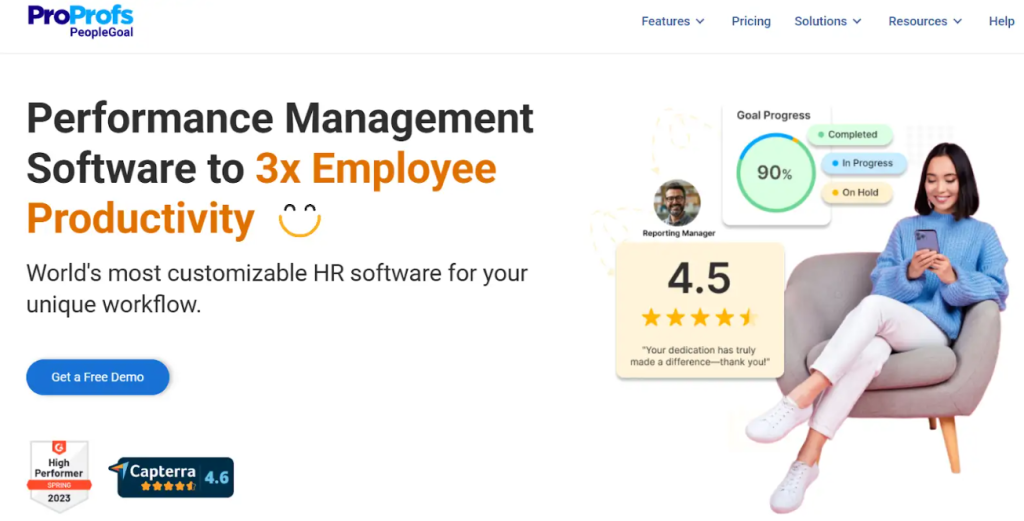
PeopleGoal is the tool I would put in front of most growing companies first, especially when they want goal tracking to live inside a broader people system instead of sitting off to the side like an afterthought. Its big advantage is flexibility.
You can work with SMART goals or OKRs, connect individual, team, and company objectives, then carry those goals into one-to-ones, check-ins, reviews, peer feedback, and reporting.
That matters because adoption usually improves when people do not need five different tools to stay aligned. What stands out most here is balance. PeopleGoal feels substantial without becoming overengineered. For teams that want structure, visibility, and room to tailor workflows, it does a very convincing job.
Pros:
- Supports SMART goals and OKRs with customizable tracking workflows.
- Connects individual, team, and company objectives for stronger alignment.
- Brings goals into one-to-ones, check-ins, reviews, and feedback cycles.
- Offers custom reports, recurring reports, and real-time reporting visibility.
- Includes 360-degree feedback, multi-manager assessments, and performance analytics.
Cons:
- Best results come after thoughtful setup and workflow design.
- Smaller teams may not use every HR feature immediately.
Pricing: Free 14-day trial available. Paid starts at $4/user/month.
2. TMetric
Bringing Time Visibility Into Goal Progress
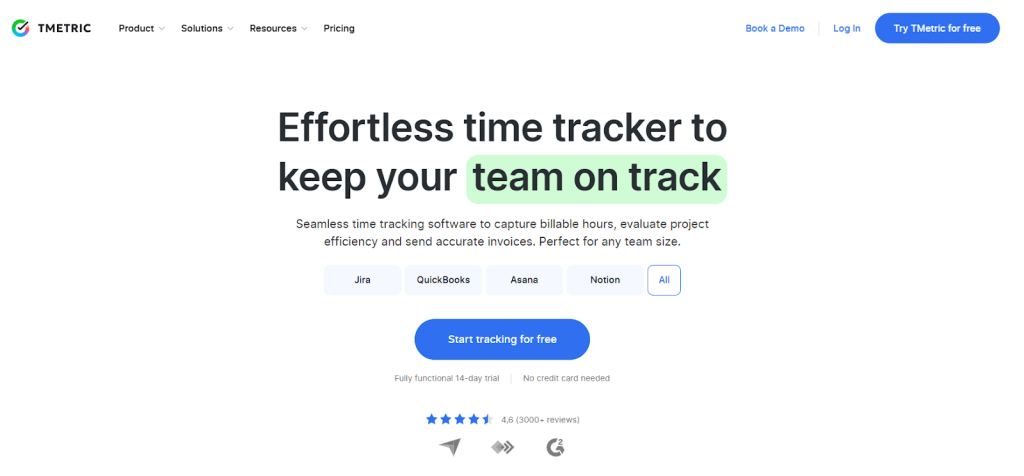
TMetric works best for teams that want to understand where effort is actually going, not just what goals are planned. Instead of relying on assumptions, it shows how much time is being spent on tasks tied to projects and priorities. That clarity makes it easier to spot when teams are drifting away from important work or over-investing in the wrong areas.
I find it especially useful when teams are already using tools like Asana or Trello and need a simple way to layer time tracking on top. The one-click timers, idle detection, and detailed reports help turn time data into meaningful insights without adding friction. It is a practical choice for teams that want better visibility into execution, though it focuses more on effort tracking than structured goal alignment.
Pros:
- Tracks time against tasks and projects with minimal setup.
- Highlights where effort is being spent across priorities.
- Integrates smoothly with tools like Asana, Trello, and Jira.
- Includes idle detection to improve accuracy of time logs.
- Provides clear reports on time allocation and workload patterns.
Cons:
- Does not offer deep goal-setting frameworks like OKRs.
- Less suited for organizations needing structured performance workflows.
Pricing: Free plan available for up to 2 users; paid plans offered at the team level with Professional and Business tiers.
3. Lattice
Connecting Goals to Performance Conversations
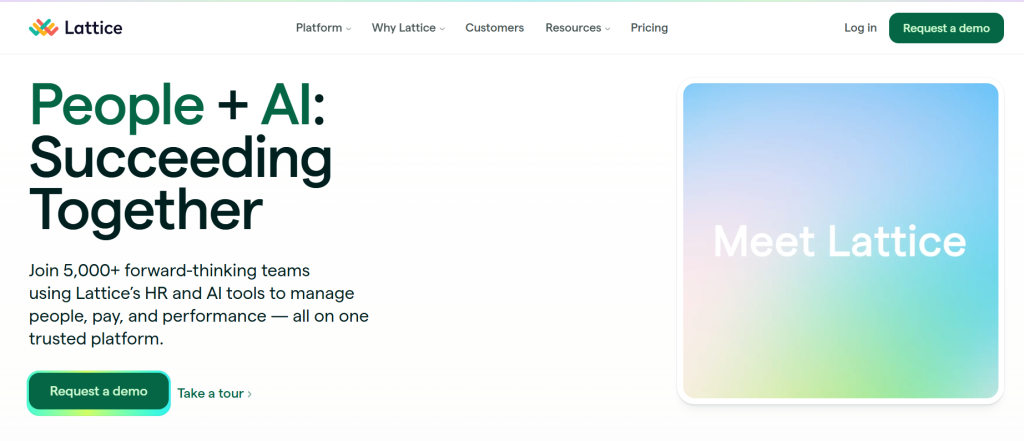
Lattice makes the most sense for companies that want goals to stay visible inside manager conversations rather than vanish between quarterly planning sessions. Its Goals and OKRs product is built around transparent alignment, real-time progress, and the idea that goals should influence one-to-ones, status updates, and performance check-ins.
That is useful for organizations that already have managers talking regularly with their teams and simply need a better place to keep goals visible and accountable. I like Lattice best when a business wants structured alignment without a huge operational reinvention.
The experience feels manager-friendly, and the integrations with tools like Jira, Salesforce, Slack, and Teams help keep progress closer to day-to-day work. It is a focused, practical option, though not as configurable as PeopleGoal.
Pros:
- Aligns employee goals with company and team OKRs clearly.
- Tracks progress in real time through visual dashboards and trackers.
- Connects goals with one-to-ones, check-ins, and status updates.
- Integrates with Jira, Salesforce, Slack, and Microsoft Teams.
- Can be purchased separately from broader performance modules.
Cons:
- Customization depth is more limited than highly configurable platforms.
- Best value appears when managers already use a strong feedback rhythm.
Pricing: Goals & OKRs can be purchased separately starting at $8/seat/month.
4. 15Five
Manager-Led OKRs With Frequent Check-Ins
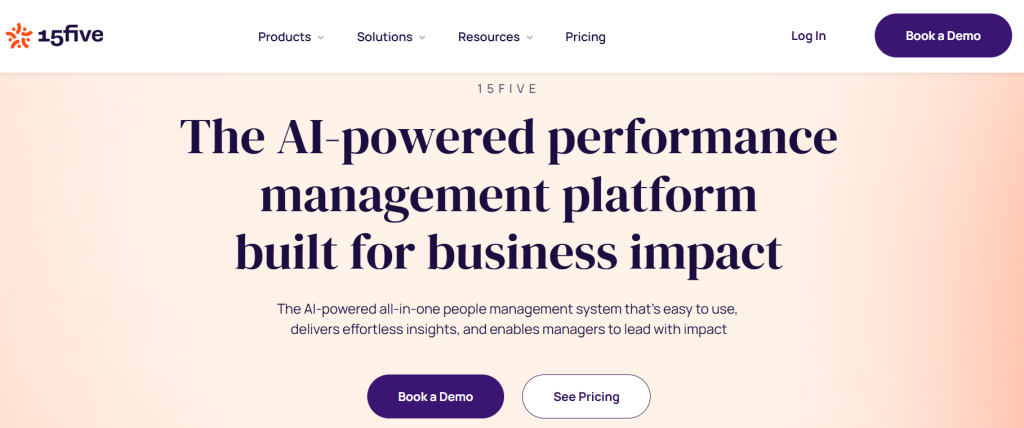
15Five is strongest when you want managers to coach toward goals instead of merely reviewing them at the end of a cycle. Its structure blends short-term priorities, longer-term objectives, and check-ins in a way that encourages a steady cadence.
That makes it useful for teams that do not just want to set goals, but want a rhythm around them. The product supports company, group, individual, and self-development objectives, plus dashboards and regular status updates.
What I find compelling here is the mix of clarity and routine. 15Five nudges goal progress into ongoing conversations, which is often where real momentum comes from. It is a good choice for performance-minded teams, though companies wanting broader workflow customization may still prefer a more flexible platform.
Pros:
- Supports company, group, individual, and self-development objectives.
- Blends weekly priorities with longer-term OKR-style objectives.
- Lets users update objective status from check-ins or the objectives area.
- Includes objective dashboards and filtering for manager visibility.
- Bundles goals with performance reviews, feedback, and career tools.
Cons:
- The best goal experience sits inside the higher Perform package.
- Teams wanting deep process customization may outgrow its structure.
Pricing: Perform starts at $11/user/month billed annually.
5. Engagedly
Structured OKRs With Talent Tools
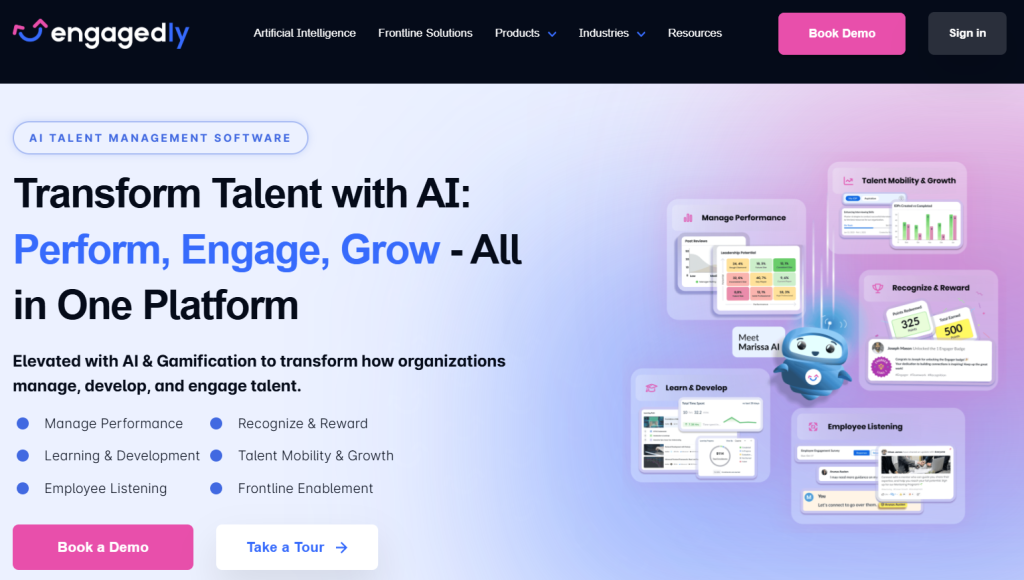
Engagedly is worth Cons:idering when your company wants goals to sit near performance, learning, feedback, and development instead of being handled as a separate process. Its Goals and OKRs module supports templates, directories, discussions, goal alignment, weighted tracking, and real-time dashboards.
That makes it appealing for HR teams that want one platform to cover a wider talent conversation. The product leans more structured than lightweight, which can be a plus when you need a formal process.
I would look at Engagedly for mid-sized organizations that want deliberate goal governance, especially when performance reviews and development plans already matter internally. It is capable and broad, though its annual minimum spend means it is not the easiest starting point for smaller teams watching budget closely.
Pros:
- Offers AI-powered goal suggestions and goal template libraries.
- Supports goal directories, discussions, and visibility controls.
- Lets teams align individual goals with larger company objectives.
- Integrates goals with performance reviews and real-time feedback.
- Includes dashboards and reports for progress monitoring.
Cons:
- Annual minimum pricing may rule out smaller organizations.
- The platform breadth may feel heavier than needed for simple use cases.
Pricing: Starts at $5/user/month billed annually, with a $7,500/year minimum.
6. Weekdone
Weekly Goal Cadence for Small Teams
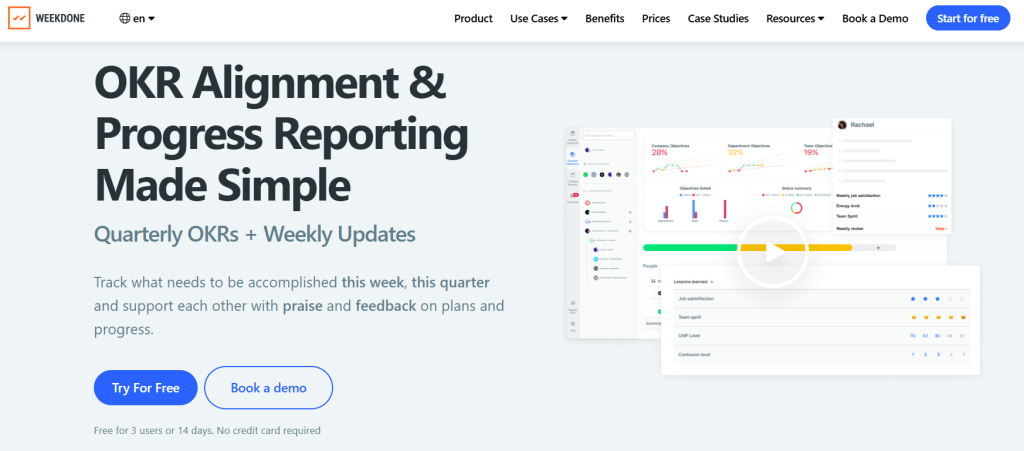
Weekdone has a clear personality. It wants goals to stay visible every week, not just every quarter, and that makes it especially appealing for small teams that want discipline without a bulky system.
The platform combines quarterly OKRs with weekly planning, progress updates, feedback, and recognition. I like the way it makes the goal hierarchy visual, because employees can see where their work ladders up instead of hearing vague alignment speeches on Monday and forgetting them by Thursday.
This is one of the more focused tools on the list. It is not trying to be your full HR system. It is trying to keep goals, plans, and progress moving. For companies that value rhythm and transparency, that narrower focus can be a real strength.
Pros:
- Combines quarterly OKRs with weekly plans and progress reports.
- Shows visual hierarchy and tree views for company-wide alignment.
- Supports KPIs, initiatives, and linked OKRs in one workspace.
- Includes conversations, feedback, and recognition alongside goal tracking.
- Offers dashboards, reports, and OKR coaching support.
Cons:
- Broader HR capabilities are lighter than full performance suites.
- Published paid pricing is less transparent beyond the free tier.
Pricing: Free for up to 3 users.
7. Perdoo
Strategy Mapping for Goal Visibility
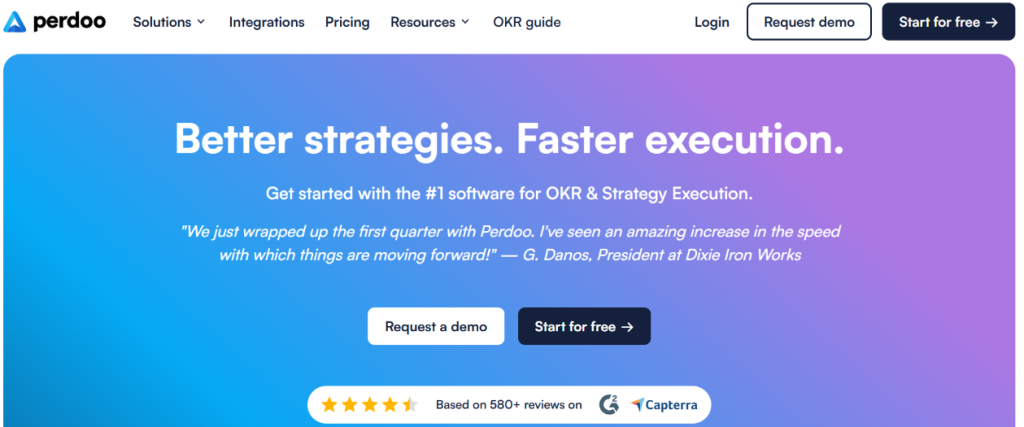
Perdoo is a strong pick for organizations that care deeply about strategy maps and want everyone to see how OKRs and KPIs connect. The software is very explicit about turning strategy into visible execution.
That sounds simple, but in practice it is one of the hardest things companies get right. Perdoo helps by combining strategy maps, OKR and KPI tracking, progress reports, check-ins, reviews, and communication through integrations like Slack and Teams.
I would shortlist it for leadership teams that want sharper visibility across goals and performance without wandering into project management sprawl. It feels purpose-built for structured goal alignment. That said, it is more OKR-centric than broad HR suites, so companies wanting richer people workflows may still lean elsewhere.
Pros:
- Combines strategy maps with OKR and KPI tracking.
- Includes progress reports to keep teams focused and accountable.
- Supports check-ins, reviews, one-to-ones, pulse, and kudos.
- Integrates with Slack, Teams, Google Sheets, and Zapier.
- Offers private goals and custom reports in higher plans.
Cons:
- More strategy-centered than full performance management platforms.
- Advanced reporting and privacy controls sit in higher tiers.
Pricing: Premium starts at €8/user/month billed annually.
8. ClickUp
Linking Daily Tasks to Goals
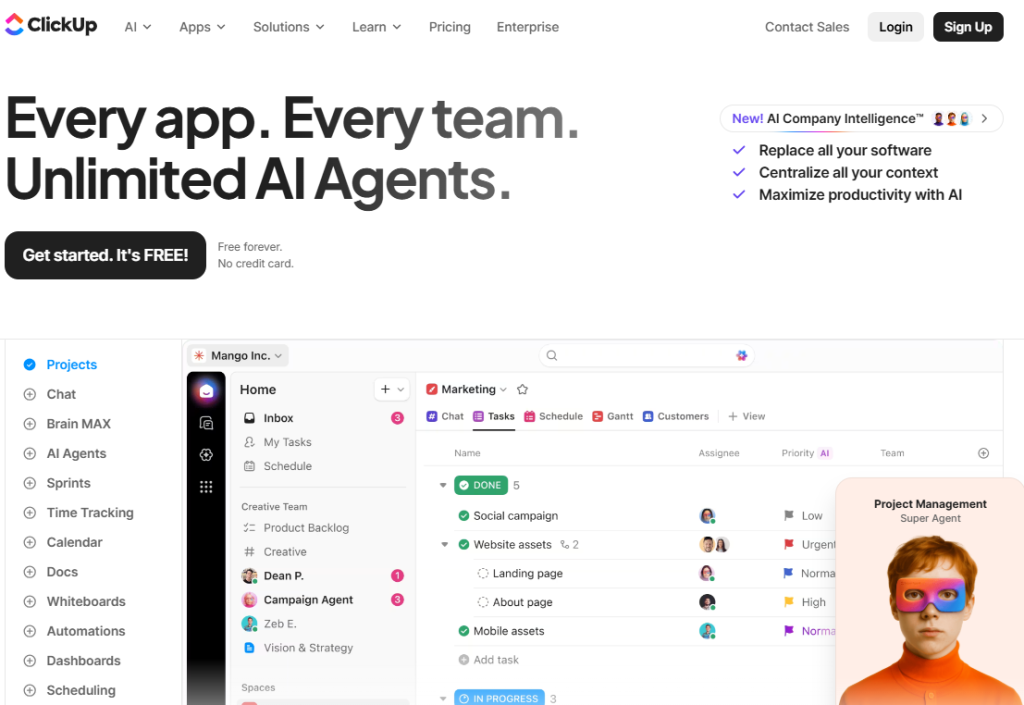
ClickUp is the strongest fit here when the real need is not classic HR performance management, but connecting goals directly to work execution. Its Goals feature lets teams build objectives from smaller measurable targets, including tasks, numbers, and true-or-false milestones.
That means progress can move automatically as work gets done, which is helpful for operations, product, marketing, and project-heavy teams. I would not choose ClickUp first for a people-team-led review culture, but I would absolutely Cons:ider it for organizations that already live inside project workflows and want goal visibility without leaving that environment.
The value is practical. Teams can see whether work is moving the needle, and leaders can avoid the old problem of goals living in one tool while actual execution lives somewhere else entirely.
Pros:
- Turns tasks into measurable goal targets with automatic progress updates.
- Supports numerical, true-false, and task-based target types.
- Organizes goals in folders for OKRs, sprints, and scorecards.
- Shares goals with permissions and surfaces them on dashboards.
- Offers limited goal access free and unlimited goals on paid plans.
Cons:
- It is more work management than dedicated HR goal software.
- Teams may need setup discipline to avoid messy goal structures.
Pricing: Free plan available. Paid plans with unlimited goals start at $7/user/month billed yearly.
9. Asana
Cross-Functional Goals Tied to Work
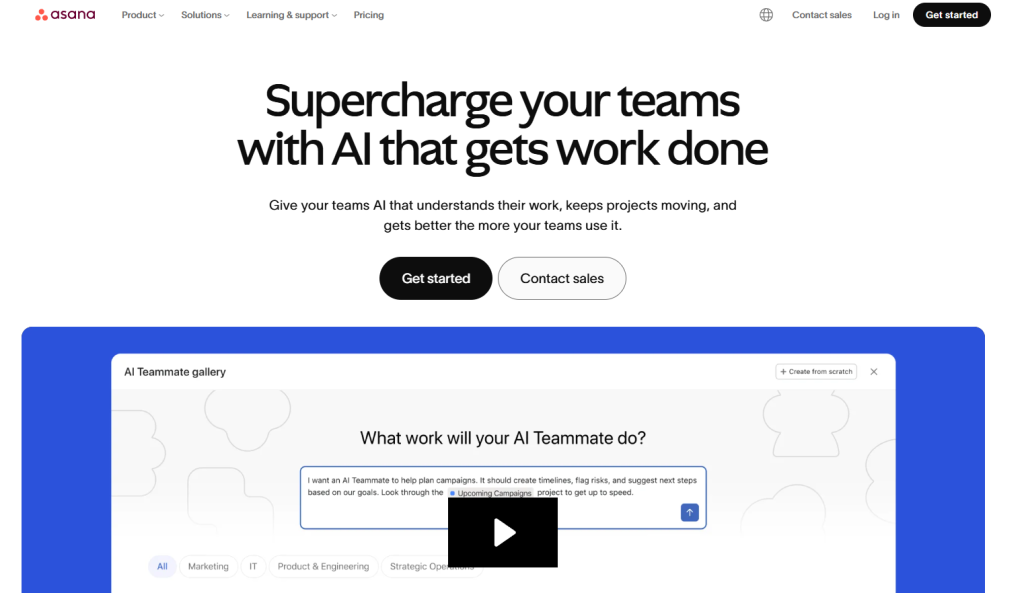
Asana works best when a company wants strategic goals connected to cross-functional projects, portfolios, and tasks in one place. Its Goals product lets teams create company, team, and individual goals, add sub-goals, define timelines, track status, and update progress automatically through linked work.
That is useful when alignment issues are less about HR process and more about execution across departments. I think Asana earns its place on this list because it makes strategy feel visible to people actually doing the work.
You can see what a goal supports, what supports it, and where risk is emerging. It is not the most people-ops-centric tool here, but it is one of the most useful for turning strategic intent into coordinated, cross-team movement.
Pros:
- Supports company, team, and individual goals in one system.
- Connects goals to projects, portfolios, tasks, and sub-goals.
- Updates goal progress automatically through linked work.
- Lets teams track on-track, at-risk, or off-track statuses.
- Includes dashboards and templates for standard goal-setting processes.
Cons:
- Goals are only available on Advanced and higher plans.
- HR-specific review and feedback workflows are not its core strength.
Pricing: Advanced starts at $24.99/user/month billed annually.
10. monday.com
Visual Portfolio Goal Tracking at Scale
monday.com is a good option when your company wants visual oversight across projects, portfolios, resources, and goals, all inside one adaptable workspace. It is especially useful for PMO-heavy or operations-heavy environments where the question is not only “What is the goal?” but also “Which workstreams are helping or hurting it?”
The platform supports goals and OKRs inside monday work management, along with dashboards, automations, portfolio reporting, and customizable boards. I would look at it when leadership wants a high-level view with room to tailor workflows by team.
Its great strength is visibility. Its limitation is that goal tracking is part of a broader work platform, not a people-first performance system. For some organizations, that is exactly right. For others, it will feel too operational.
Pros:
- Connects company goals to projects, portfolios, and execution workflows.
- Supports dashboards and reporting for stakeholder-level progress visibility.
- Uses automations and integrations to reduce manual update work.
- Offers customizable OKR boards and templates for goal tracking.
- Includes resource and portfolio views for broader operational alignment.
Cons:
- It is more of a work platform than pure HR software.
- Goal processes may require more setup than dedicated OKR tools.
Pricing: Basic starts at $9/seat/month billed annually.
How I Chose These Employee Goal Tracking Software Tools
I did not just look at feature lists. I focused on how these tools actually perform when teams use them day to day.
Here is the checklist I used to narrow down the options and pick the ones that genuinely stand out:
1. Favored Tools That Help Align Employee Goals
A tool can look polished and still fail at the basic job of alignment. I prioritized products that let companies connect individual goals to team and company priorities in a way employees can actually see and understand.
2. Looked for More Than Just Goal Creation
Plenty of tools let you enter goals. That is the easy part. I gave more weight to products that support progress tracking, regular follow-up, visibility, and course correction, because that is what makes employee goal tracking useful in real teams.
3. Balanced HR Depth With Work Execution
Some companies want classic goal management software tied to reviews and feedback. Others want goals linked directly to tasks and project delivery. I included both categories, but ranked people-first platforms higher when they handled alignment, reporting, and performance more cleanly.
4. Checked Official Pricing Only
This list uses starting prices taken from official vendor pages. That matters because third-party directories often go stale, flatten nuance, or skip annual minimums. If the vendor did not show public pricing clearly enough, I was less enthusiastic.
5. Gave PeopleGoal the Top Spot for a Reason
PeopleGoal came first because it handles the full story well. It supports goal frameworks, conversations, feedback, reviews, and reporting in one place without forcing you into a narrow operating model. For many growing teams, that combination is hard to beat.
My Top 3 Employee Goal Tracking Software Picks
If you want the shortlist inside the shortlist, start here. These three stood out for different reasons, but PeopleGoal came out ahead for overall balance.
1. PeopleGoal
PeopleGoal is my top pick because it combines flexible goal frameworks, strong alignment, one-to-ones, reviews, feedback, and reporting inside one coherent system. It feels like a platform built for real manager and HR workflows, not just quarterly goal entry. It is also easier to justify on price than many broader talent suites.
2. TMetric
TMetric makes this list because it brings something most goal tools miss completely, actual effort visibility. I like it when teams struggle not with setting goals, but with understanding where time is going. It helps you see if priorities are reflected in day-to-day work, which is often where alignment breaks. It is especially useful for teams already working in tools like Asana or Trello and wanting a simple, reliable layer of time tracking to stay on track.
3. Asana
Asana earns a place here because it links goals directly to work execution across teams. For companies where alignment problems show up inside projects rather than review cycles, that is powerful. It is not my first pick for people-ops-led goal management, but it is excellent for cross-functional operational clarity.
Ready to Pick the Employee Goal Tracking Software?
The best employee goal tracking software is the one that makes goals easier to see, easier to discuss, and easier to act on. Some teams need an OKR specialist. Some need a work management platform with goal visibility. Others need a more complete people system that can handle goals, reviews, feedback, and reporting together.
That is why I lean slightly toward PeopleGoal. It gives you SMART goals and OKRs, links individual, team, and company objectives, pulls goals into one-to-ones and reviews, supports 360-degree feedback, and offers strong reporting, all in one system at a very approachable starting price.
Ready to 3x Your Teams' Performance?
Use the best performance management software to align goals, track progress, and boost employee engagement.